Key takeaways
- A village group cooking class on the south coast runs 4,000 to 9,000 rupees per person, and that includes the full meal you eat at the end.
- A private class costs roughly two to three times the group rate per person. For two people that usually lands between 12,000 and 25,000 rupees total.
- Hotel and resort classes cost several times the village rate. You are paying for air conditioning, printed recipes and a shorter session.
- Group size is the single biggest price lever. Per person cost falls sharply as numbers rise, which is why a family of five often pays barely more than the group rate.
- Transport is the cost most people forget. If your kitchen is forty minutes out and you need a driver for the day, budget for that separately.
The short answer
Most travellers pay somewhere between 4,000 and 9,000 rupees per person for a village cooking class on the south coast, and that price includes everything: the ingredients, three to four hours of teaching, and the full rice and curry meal you sit down to at the end.
That is the number to hold in your head. Everything below is about why it moves.
Rupee rates shift, so convert with something live like XE rather than trusting a figure in an article. Numbeo’s Sri Lanka page is useful for sanity-checking what other things cost around it.
Prices by class type
Village group class
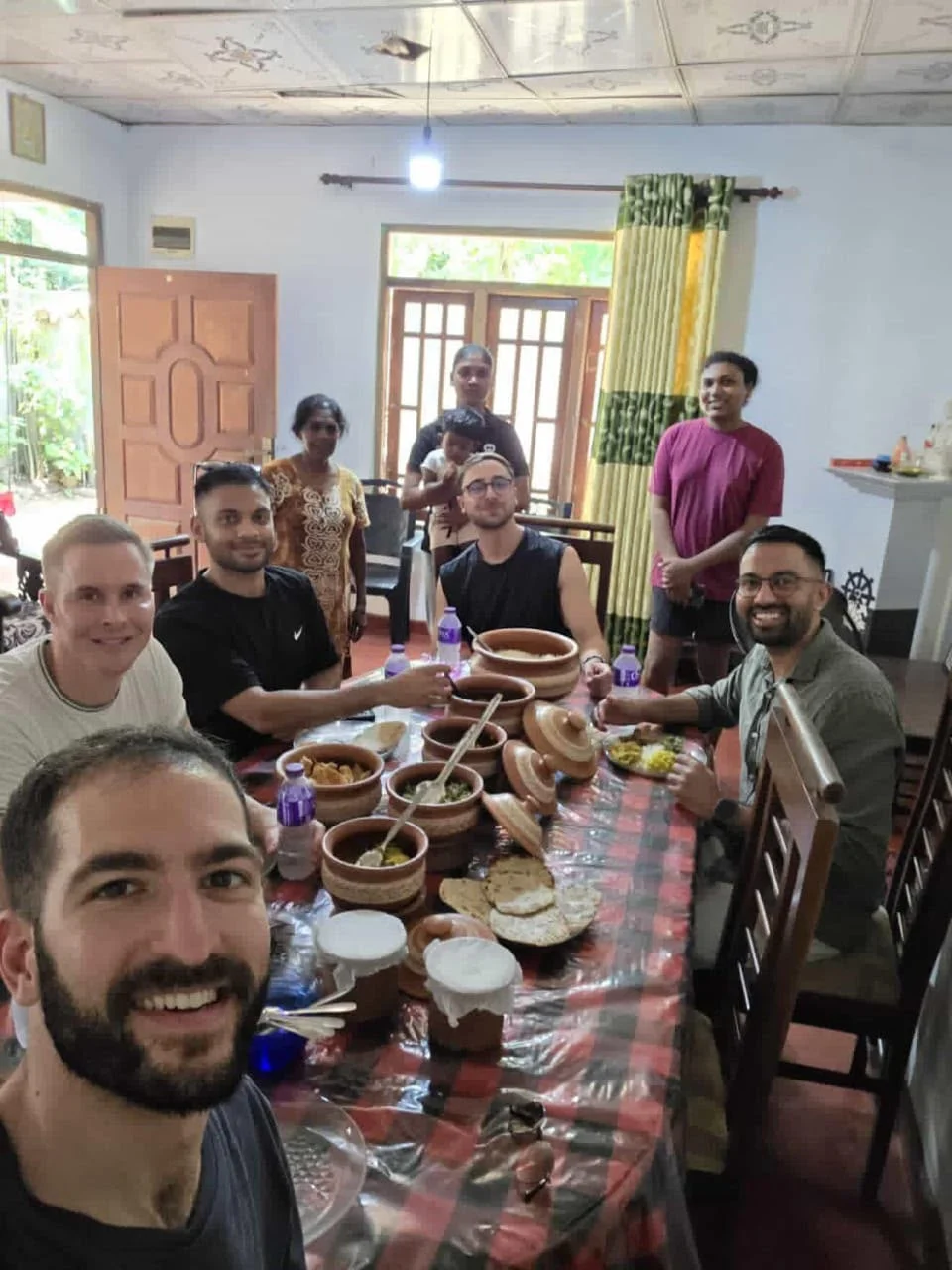
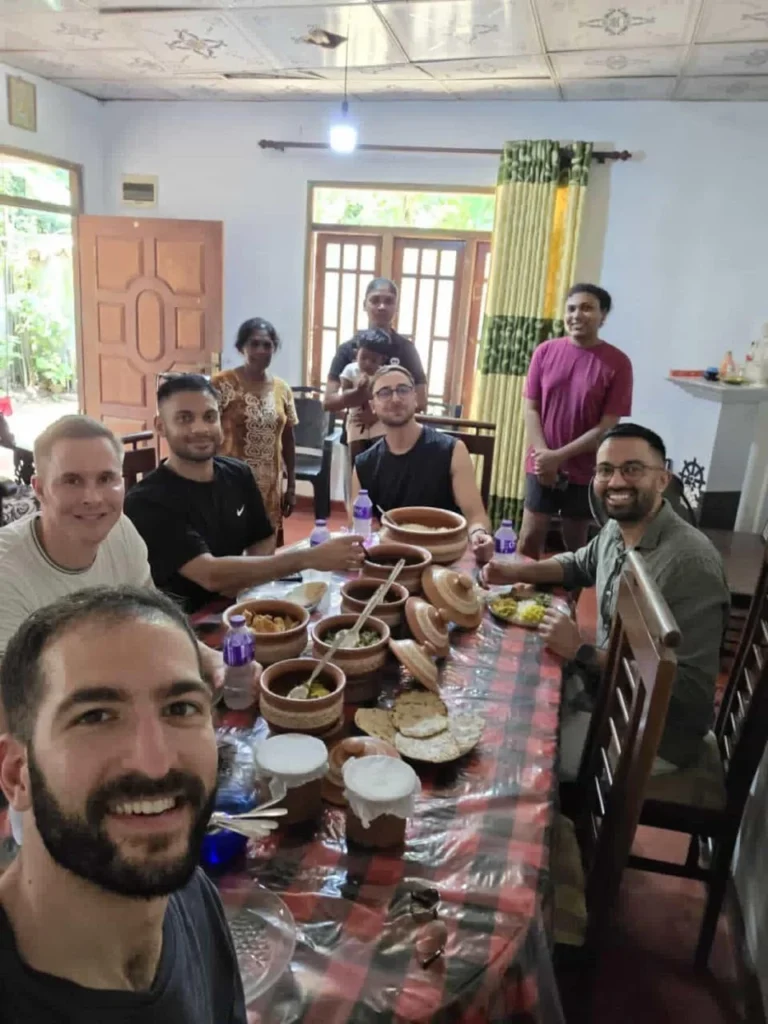
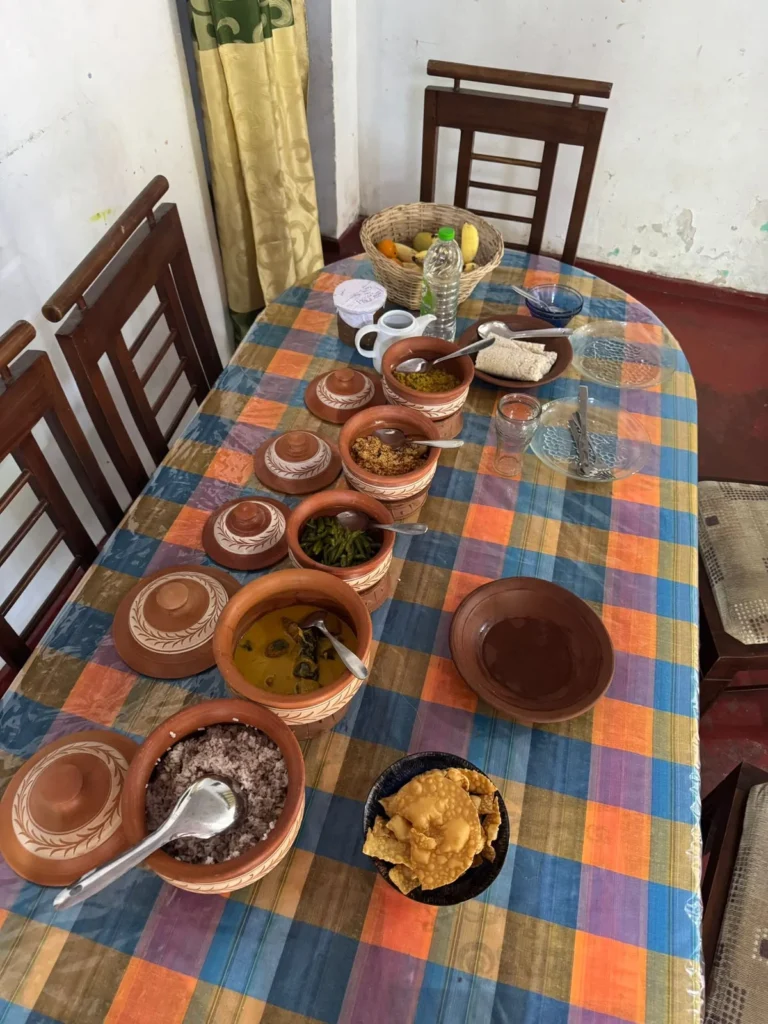
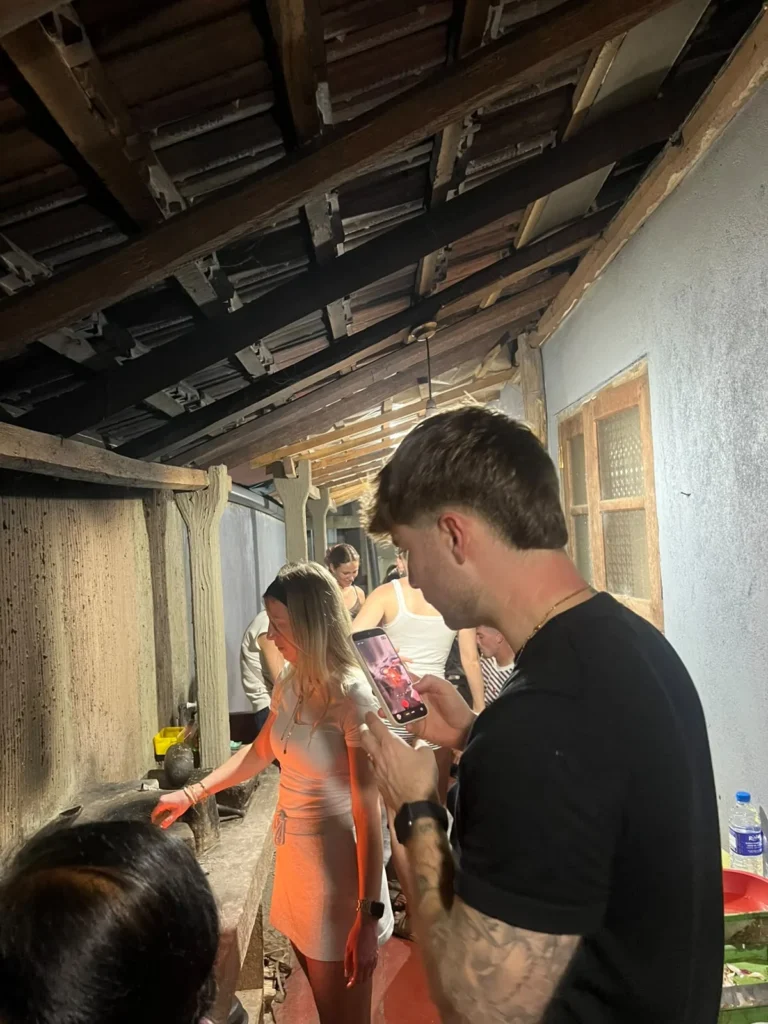
4,000 to 9,000 rupees per person, meal included. Six to ten guests, three to four hours, a family kitchen with a wood fire and clay pots. The household shops that morning for whatever you agreed on.
This is the one we book for guests and the one most people mean when they search.
Private class
Two to three times the group rate per person. On the south coast a private session for two typically comes to 12,000 to 25,000 rupees in total, including the food.
The per person cost drops fast as your group grows, so “private for two” and “private for six” are very different numbers. A family of five booking privately often pays close to what they would have paid joining a group anyway. We went through when the premium is worth paying in a separate piece on private classes.
Hotel or resort class
Several times the village rate. Air conditioning, a stainless steel bench, an English-speaking chef, laminated recipe cards, and usually a shorter session of ninety minutes to two hours.
You will learn real recipes. You will also be paying resort pricing for them.
Guesthouse class
Wildly variable, because the quality is. Sometimes the owner’s mother cooks with you for a few thousand rupees and it is one of the best afternoons of the trip. Sometimes it is a hired cook running through a script. Ask how many dishes and whether you eat together.
What moves the price
Group size. The dominant factor. Ingredients and the host’s time are largely fixed, so the more people share them, the less each pays.
Whether the market is included. A morning class that starts at a market adds roughly an hour and sometimes a small premium. It is usually the better version.
How many dishes. A class producing eight dishes costs more to run than one producing four. Fewer than five and you are being shown recipes rather than taught a meal.
Protein. Vegetable-led menus cost less than fish or chicken ones. This is one reason vegetarian and vegan classes are often slightly cheaper, though most households will not bother adjusting the price.
Where you are. South coast village classes are the best value on the island. Hill country prices are similar. Colombo and resort areas cost more for the same thing.
Season. Peak season on the south coast, December through March, pushes prices to the top of the band.
The costs nobody quotes you
Transport. This is the big one. Most real village kitchens are fifteen to forty minutes out of whichever town you are staying in, and the class price usually does not include getting there. A tuk tuk each way is modest. A driver for the day is not, though it buys you a lot more than the class. Our guide to what a driver costs in Sri Lanka has the numbers.
Tips. Not obligatory, genuinely appreciated, and it goes straight to the household. A few hundred rupees per person is normal and lands better in cash, handed over directly.
Spices to take home. You will want them. Ceylon cinnamon is a different species from the cassia sold as cinnamon in most Western supermarkets, and buying it here costs a fraction of buying it at home. Budget a little for the spice shop afterwards. Most hosts will point you at a good one.
The early start. Morning market classes mean either an earlier taxi or a driver already booked. Worth it, but plan it.
Is it good value?
Compare it to what else that money buys on the same coast. A cooking class costs roughly what you would spend on dinner for two at a decent beach restaurant, and it runs four hours, feeds you the same amount of food, and teaches you something you can repeat.
Set against cooking classes elsewhere, Sri Lanka is cheap. The equivalent class in Chiang Mai or Bangkok generally costs more, and a larger share of that money goes to an operator rather than the household teaching you. We compared the wider picture in our piece on whether Sri Lanka is cheaper than Thailand.
The genuinely poor value option is the resort demonstration, where you pay several times the village rate for ninety minutes and a printed handout.
How to pay, and how not to overpay
Pay in cash where you can. Card facilities in village households are rare, and cash means more of it stays with the family rather than going to a payment processor or a booking platform.
Book direct or through someone local rather than through a large international activity marketplace. The listing price on those platforms includes a commission that can be substantial, and the household sees less of it.
Confirm what the price includes before you turn up. Specifically: how many people, how many dishes, whether the meal is included, whether transport is included, and whether the market visit is part of it.
Be sceptical of anything unusually cheap. Below the normal band you are almost certainly buying a demonstration with a tasting rather than a class you cook in.
And book two days ahead. Households shop for the menu you asked for, so a same-day booking means whatever happens to be in the kitchen.
Frequently asked questions
How much does a cooking class cost in Sri Lanka?
A village group class on the south coast costs 4,000 to 9,000 rupees per person, including the meal. Private classes cost two to three times the group rate per person, usually 12,000 to 25,000 rupees for two people. Hotel classes cost several times more.
Is the meal included in the price?
In a village class, almost always. You cook a full rice and curry plate and eat it at the household’s table. Confirm it when booking, because hotel classes sometimes charge separately.
Why are hotel cooking classes so much more expensive?
You are paying resort overheads: air conditioning, a professional kitchen, a salaried chef and printed materials. The recipes are real, the session is usually shorter, and the setting is a demonstration room rather than a home.
Does a private cooking class cost much more?
Roughly two to three times the group rate per person. The gap narrows quickly as your group grows, so families of four or five often pay close to the group rate anyway.
Do I need to pay in cash?
It is easier and better. Village households rarely take cards, and cash means the money reaches the family rather than a platform.
Should I tip after a cooking class?
Not required, but welcome. A few hundred rupees per person handed directly to the household is normal.
Is transport included in the price?
Usually not. Most village kitchens are fifteen to forty minutes from the main towns, so budget for a tuk tuk or driver on top.
Are cooking classes cheaper outside the tourist season?
Slightly. Peak season on the south coast runs December to March and pushes prices to the top of the range. The difference is small compared with what accommodation does.