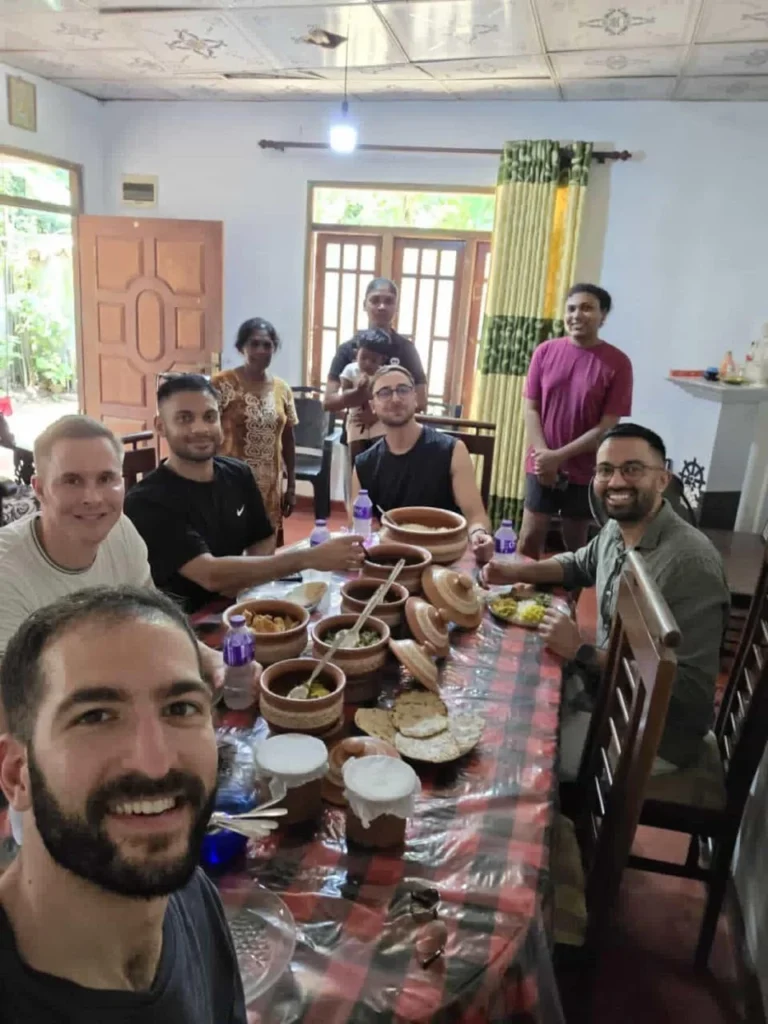
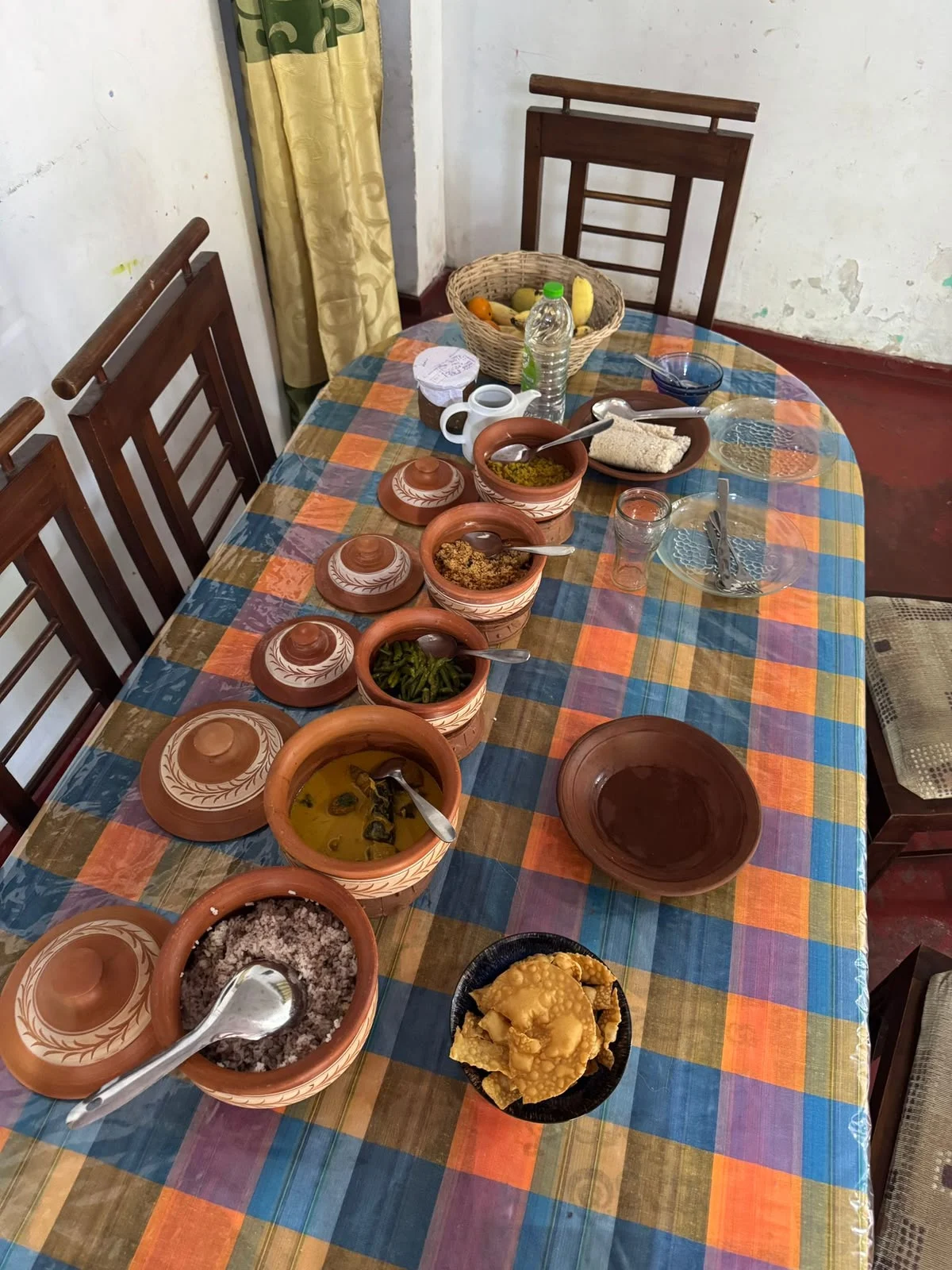
Food in Sri Lanka centres on rice and curry. That means boiled or steamed rice with a fish or meat curry, plus several more made from vegetables, lentils or fruit (Wikipedia). Hoppers and string hoppers turn up at breakfast and dinner, and Love Sri Lanka calls kottu the most popular Sri Lankan dish of all (Love Sri Lanka). The cheap, filling lunch is in the small local restaurants confusingly called ‘hotels’, and most of the food is spicy (Wikivoyage). Two things need planning: the tap water isn’t safe to drink, and alcohol isn’t sold on Poya days (Sri Lanka Tourism).
Key takeaways
- Rice and curry is the staple. Hoppers, string hoppers, kottu, lamprais and short eats are the other names to learn.
- For a cheap lunch, follow local crowds into a ‘hotel’, which here means a small restaurant. Wikivoyage’s undated price for a rice and curry there is Rs 300 to 500.
- Don’t drink the tap water. Buy sealed bottles with the SLS mark and be careful with ice.
- Vegetarians eat well, but ask about Maldive fish, a cured tuna that cooks use to season vegetable dishes and sambols.
- Alcohol isn’t sold on Poya (full moon) days. The last three of 2026 fall on 25 October, 24 November and 23 December.
What to eat in Sri Lanka: 11 dishes to know
A warning before you read the vegetarian column: cooks rely heavily on Maldive fish to season vegetable dishes (Wikipedia). It’s a cured tuna (Wikipedia).
| Dish | What it is | When it’s eaten | Heat | Vegetarian? | Sources |
|---|---|---|---|---|---|
| Rice and curry | Rice with a fish or meat curry, vegetable and lentil curries, pickles and sambols | Lunch or dinner | Depends on the curry, from delicate to very hot | Yes without the fish or meat curry, but ask about Maldive fish in the vegetable curries | Wikipedia; Sri Lanka Tourism; Wikivoyage |
| Hoppers (appa) | Dome-shaped pancakes; the batter is rice flour and coconut milk, left to ferment. An egg hopper has an egg set in the centre | Breakfast or dinner | Plain; the chilli is in the lunu miris served with them | Plain hoppers, yes; lunu miris normally contains Maldive fish | Love Sri Lanka; Wikipedia; Wikipedia |
| String hoppers (indiappa) | Flat nests of steamed rice flour noodles | Breakfast or dinner | None of their own; it comes from the curry and sambol | Yes, with dhal or potato curry | Love Sri Lanka; Wikipedia |
| Kottu | Godamba roti chopped and fried on a griddle with vegetables, egg and a meat curry | Evenings | Spicy | Vegetable kottu is a standard version | Wikipedia; Wikipedia; Love Sri Lanka |
| Lamprais | Rice boiled in stock with a mixed-meat curry, frikkadel meatballs, aubergine and sambols, then baked in a banana-leaf parcel | Often made for large gatherings | Sweet spices such as clove and cinnamon in the meat | Traditionally three meats; some modern versions are vegetarian | Wikipedia; Wikipedia; CNN Travel |
| Pol sambol | Freshly grated coconut with chilli, shallots, lime juice and salt | With rice, hoppers and string hoppers | Hot | Only when made without Maldive fish, which some versions include, so ask | Wikipedia; Wikivoyage |
| Dhal (parippu) | Lentils simmered with coconut milk and spices | With rice or string hoppers | Love Sri Lanka calls it creamy and comforting | Usually; ask about Maldive fish | Love Sri Lanka; Love Sri Lanka |
| Fish ambul thiyal | Cubes of firm fish such as tuna, cooked dry with black pepper, spices and goraka, a dried fruit that turns it sour | With rice | Sour and peppery | No | CNN Travel; Sri Lanka Tourism |
| Kiribath | Rice cooked in coconut milk until soft, served with lunu miris | Breakfast, often on the first day of the month, and on festive days | No chilli in the rice; the lunu miris supplies it | Yes, without the lunu miris | Wikipedia; Wikipedia |
| Short eats | Patties, cutlets, rolls, fish buns and other small pastries | On the go, mainly at breakfast or in the evening | Often spicy | Some; fillings are potato, fish or chicken | Wikipedia; Sri Lanka Tourism; Wikivoyage |
| Curd and treacle | Buffalo-milk curd, usually sold in clay pots, with kithul palm treacle | Dessert | None | Yes, but not vegan | Wikipedia; Wikipedia |
The best food in Sri Lanka to try first
With only a few days, we’d start with three things: a rice and curry lunch, hoppers and a plate of kottu after dark.
Rice and curry arrives as a big mound of rice with the curries set around it (Wikivoyage). It’s never a single dish, so we wrote a separate post on how a rice and curry plate comes together.
Hoppers come plain or with an egg. The sweet pani appa gets its flavour from kithul treacle. Restaurants serve them at breakfast or dinner, but the roadside shops called kades make them in the evenings only (Love Sri Lanka).
You’ll hear kottu before you find it. The cook chops and mixes the roti with heavy iron blades on a hot griddle, and the sound carries a long way (Wikipedia). For something lighter, ask for string hopper kottu (Love Sri Lanka).
The Dutch Burgher community introduced lamprais. Its name is a version of the Dutch word lomprijst, roughly a packet or lump of rice (Wikipedia). It’s the one dish where we’ll name a place. Love Sri Lanka’s pick for the most authentic version is the Dutch Burgher Union in Colombo (Love Sri Lanka). Its VOC Café at 114 Reid Avenue, Colombo 5, has been open to the public since 2012 and has made its lamprais in-house since 2019. The café’s site listed restaurant hours of 7am to 10pm when we checked on 2 October 2026 (Dutch Burgher Union).
Short eats are snacks such as cutlets, patties, malu pang (a fish bun) and kimbula bunis, a bun shaped like a crocodile (Sri Lanka Tourism).
Sweets, fruit and drinks
The treacle poured over buffalo curd is kithul palm sap, filtered and boiled. UNESCO added kithul tapping to its list of intangible cultural heritage in 2025 (National Commission for UNESCO). Watalappam is a steamed pudding of coconut milk, eggs and jaggery, first brought by Malay immigrants (Wikipedia).
Wood apple has a rock-hard rind that you crack open, and its sticky brown pulp goes into juice (Wikipedia). Roadside sellers cut a king coconut, or thambili, open in front of you (Wikivoyage). Sri Lanka Tourism calls it a safe and refreshing drink, and says to expect Ceylon tea made as it is in the West (Sri Lanka Tourism).
Toddy is the sap of unopened coconut flowers, which ferments on its own into a mildly alcoholic drink; distilled, it becomes arrack, usually 33% to 50% alcohol and drunk neat or with ginger beer (Wikipedia). The UK Foreign Office warns that bars and hotels rarely use measures, so a drink is often stronger than the same order at home (GOV.UK).
Where to eat in Sri Lanka, by type of place
Restaurant names date quickly, so this Sri Lanka food guide sorts places by type.
‘Hotels’ for a rice and curry lunch
A ‘hotel’ in Sri Lanka is often just a small restaurant. These sell rice and curry packets and short eats, and the bill depends on how much you eat. Go where the local crowd goes, says Wikivoyage (Wikivoyage).
Bakeries, street carts and markets
Colombo’s small bakeries sell hoppers, short eats and rotis folded around egg, vegetable or fish (Wikivoyage). For street food, Love Sri Lanka sends first-timers to Galle Face Green, where carts along the promenade sell isso wade (prawns in fried lentil cakes), cassava chips, kottu and pineapple with salt and chilli. It also suggests Jaffna’s market for regional snacks (Love Sri Lanka). On the south coast, an early fish market is among our favourite food experiences in Sri Lanka.
Look out too for Hela Bojun sales centres, which the Department of Agriculture sets up to promote local food. Each gives at least 20 women entrepreneurs a place to run a business (Department of Agriculture). The Daily FT reported in 2015 that the first stalls served hot local food such as hoppers and undu wade (Daily FT).
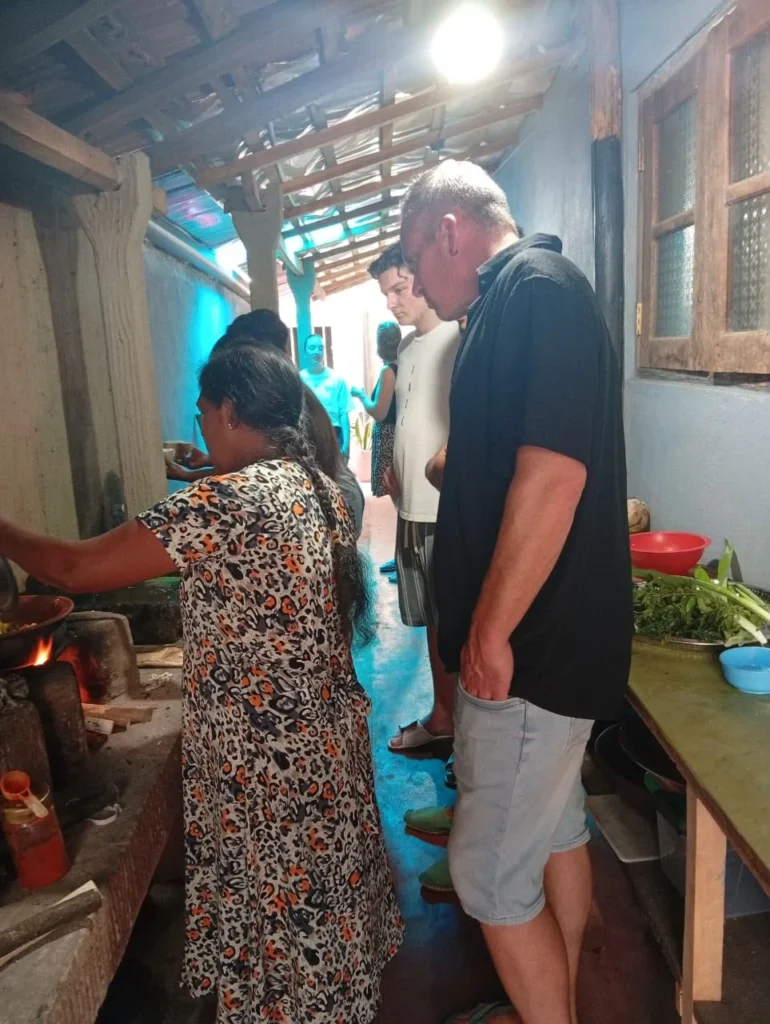
Village kitchens and home cooking
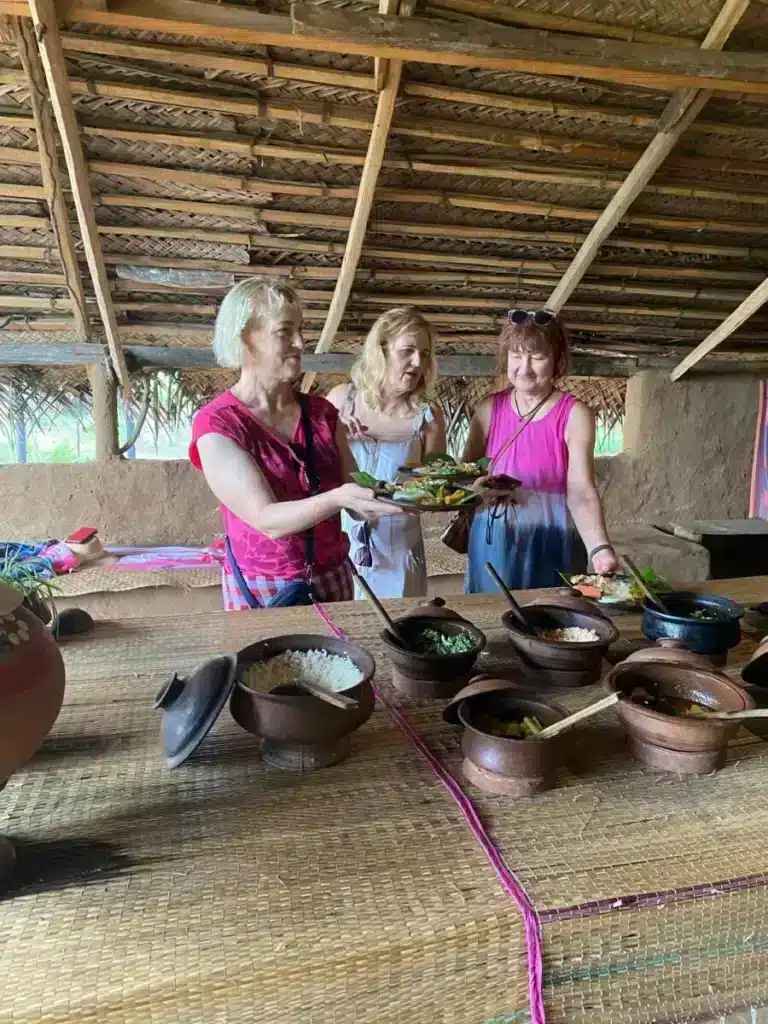
Love Sri Lanka says a curry is at its truest cooked in a clay pot, and that a wood fire leaves a smoky taste. Home cooks, it adds, roast and grind their own curry powder (Love Sri Lanka). A cooking class is the simplest way into a home kitchen, and the first choice to make is a village home or a hotel kitchen.
Rest houses and hotel buffets
Rest houses and hotels along the main roads serve both Sri Lankan and Western menus. Expect generous rice and curry, plus sandwiches or soup for anyone who wants a break from spice (Wikivoyage). They’re easy lunch stops on a day with a private car and driver. At a buffet, take hot dishes only if they’re steaming and cold ones only if they’re properly cold (CDC).
How to choose a restaurant
The nearest thing to an official Sri Lanka restaurant guide is on the Sri Lanka Tourism site, which publishes two searchable lists. Registered restaurants each show whether the licence is current, and Tourist Friendly Eating Places carry a grade of A or B. Eating places have 8 to 39 covers, and their guidelines ask for bottled water or a water dispenser, a sink with soap, a displayed price list and a proper bill (SLTDA).
For kottu, ask locally. Wikivoyage reports closures of several kottu restaurants that used stale roti and made customers ill (Wikivoyage).
Dining in Sri Lanka: eating with your hand
Sri Lankans eat with the right hand, using the fingertips only. Every eatery can give you cutlery if you’d rather. Take your shoes off before you go into a home (Wikivoyage), and wash your hands with soap before you eat (CDC).
Spice levels, vegetarian, vegan and halal food
You can ask for a dish to be made less spicy, but Wikivoyage warns it will still be spicy (Wikivoyage). So ask when you order. One menu word helps: ‘devilled’ means a lot of chilli has gone in (Love Sri Lanka). On the south coast, Love Sri Lanka says cooks in Mirissa are freer with chilli than in most towns (Love Sri Lanka). In our view the gentle things to order are string hoppers with dhal, kiribath, and curd and treacle to finish.
Love Sri Lanka says the local food suits vegetarians as well as meat-eaters, and that Jaffna has plenty for vegans too (Love Sri Lanka). The catch is Maldive fish. It goes into lunu miris, though cooks can make the relish without it (Wikipedia), and into some pol sambol (Wikipedia). Vegans should also skip curd, which is buffalo milk, and watalappam, which contains eggs (Wikipedia). A vegan or vegetarian cooking class is a quick way to learn which dishes are safe.
Muslims made up 10.7% of the population at the 2024 census (Wikipedia). Biryani, watalappam and faluda come from Muslim kitchens (Love Sri Lanka). The Halal Assessment Council describes itself as the only body certifying halal standards in Sri Lanka, and its free app lets you check brands, products and restaurants (HAC). Our post on halal cooking classes covers what to tell a host when you book.
Food safety and water
Sri Lanka Tourism’s own advice is blunt: tap water isn’t safe to drink. Buy bottled water with the SLS mark, have the seal broken in front of you, be wary of ice, and brush your teeth with bottled water too (Sri Lanka Tourism). A litre cost about Rs 150 in January 2025 (Wikivoyage).
The same page blames most stomach upsets on unsanitary food preparation. It says to watch for undercooked fish, shellfish and meat, salads washed in unpurified water, fruit that someone else has peeled, and ice cream from street vendors (Sri Lanka Tourism).
Canada’s travel advice lists a typhoid risk in Sri Lanka and gives a short rule: “boil it, cook it, peel it, or leave it” (Government of Canada). The CDC would rather travellers skipped street food altogether, but says that if you do eat it, you should choose food served cooked and steaming hot and avoid raw vegetables (CDC).
What a meal costs
Wikivoyage’s indicative prices are from 2025, apart from its rice and curry figure, which carries no date (Wikivoyage). Expect them to have moved.
| Item | Price on Wikivoyage |
|---|---|
| Rice and curry at a local restaurant | Rs 300 to 500 (undated) |
| Sri Lankan breakfast (hoppers, tea or coffee) | Rs 1,200 (2025) |
| Chicken kottu | Rs 1,000 (2025) |
| Devilled fish and rice | Rs 1,500 (2025) |
| Seafood platter to share | Rs 5,000 and up (2025) |
| Large bottle of Lion Lager in a restaurant or bar | About Rs 1,000 (2025) |
Businesses registered for VAT charge the standard rate, which has been 18% since 1 January 2024 (Inland Revenue). Hotels and restaurants may add a service charge as well. Department of Labour officials told the Sunday Times in June 2024 that no law governs service charges or tips, so each place sets its own system (Sunday Times). Ask whether menu prices include both. Carry small notes for cheap meals, because change is hard to come by outside hotels and big shops (Sri Lanka Tourism).
Poya days and alcohol
Alcohol isn’t sold on Poya, the monthly full moon holiday (Sri Lanka Tourism). The last three Poya days of 2026 (Central Bank) fall on 25 October, 24 November and 23 December. In 2027 the first three are 22 January, 20 February and 22 March, and Vesak Poya is on 19 May (Central Bank). Christmas Day is among the 19 dry days the Excise Department set for 2026, though approved hotels may serve in-house guests that day (Daily Mirror). Our Weligama nightlife guide lists the rest of the year’s dry days. Canada’s travel advice puts the legal drinking age at 21 and notes a ban on drinking in public places (Government of Canada).
Poya has a generous side too: at Vesak, Buddhist devotees set up stalls called dansalas that give free food and drinks to passers-by (Wikipedia).
How the food changes by region
- South coast: Love Sri Lanka points to Galle for crab and prawn curries, and for fish ambul thiyal (Love Sri Lanka).
- Hill country: Kandyan Sinhalese cooking relies on local hill vegetables and fruit (Wikipedia).
- Jaffna and the north: Tamil cooking here shares idli, dosa, sambar and rasam with South India, and Jaffna crab curry is one of its signature dishes (Love Sri Lanka). Kool, a seafood broth thickened with palmyra root flour, is also from Jaffna (Wikipedia).
- Malay kitchens: the Malay community gave the island achcharu, a sweet, sour and spicy vegetable pickle, and helped make nasi goreng and mee goreng popular street food (Wikipedia).
With this much variety, we think a Sri Lanka food tour works better when it stays in one region for a few days.
Questions about food in Sri Lanka
Is Sri Lankan food very spicy?
Generally, yes. You can ask for less chilli, though Wikivoyage says the dish will still be spicy (Wikivoyage). Curries range from delicately spiced to very hot (Sri Lanka Tourism), so order a mix.
Is street food safe to eat in Sri Lanka?
With care. The CDC’s advice is to avoid street vendors or, if you do eat street food, to pick food served cooked and steaming hot and skip raw vegetables (CDC). Sri Lanka Tourism adds peeled fruit and street-vendor ice cream to the list of things to be careful with (Sri Lanka Tourism).
Can you drink the tap water?
No. Sri Lanka Tourism says tap water isn’t safe to drink and recommends sealed bottled water with an SLS mark, including for brushing your teeth (Sri Lanka Tourism).
Is Sri Lanka good for vegetarians?
Yes. The curries around the rice include ones made from vegetables, lentils or fruit. Ask whether the cook has used Maldive fish, since it seasons many vegetable dishes (Wikipedia).
Cook it yourself in Weligama
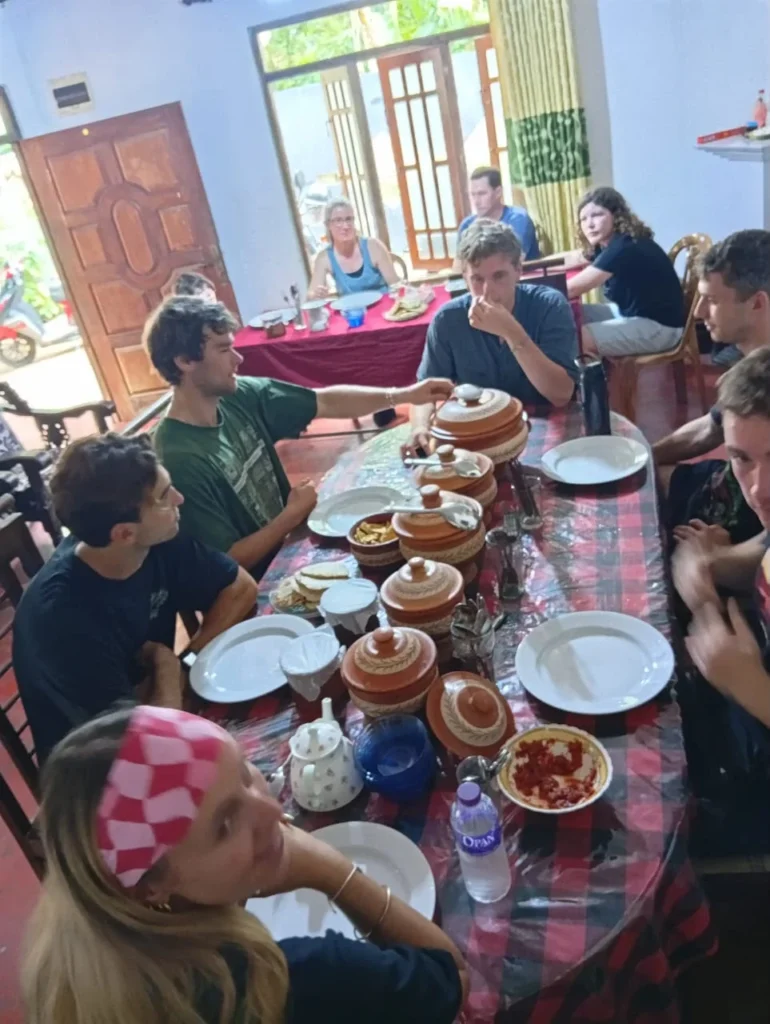
We’re based in Weligama, and we think the quickest way to understand all of the above is to cook it once. Start with our post on a traditional Sri Lankan cooking class in Weligama, then send us your dates and any dietary needs.
We read every dish, price, Poya date and piece of health advice in this Sri Lanka food guide against its linked source on 2 October 2026. Prices and opening hours change, so check again before you travel.