Start with the rock itself, and climb it early, before the heat builds. Stay two or three nights and there’s plenty more. Pidurangala has the view back to the rock, the site museum explains what you’ve just climbed, and Minneriya has the elephants. Dambulla, Polonnaruwa and Ritigala all work as day trips, and a village tour makes a slower half day. This guide to things to do in Sigiriya covers all eight, with how long to allow for each.
Key takeaways
- The ticket counter opens at 7am and closes at 5pm (Central Cultural Fund). A full ticket for Sigiriya costs USD 35, paid in rupees: LKR 11,690 on the fund’s price list, which was still dated 24 September 2026 when we checked on 2 October.
- Climb early and carry water: there are about 1,200 steps, the last staircase runs up an exposed rock face, and there’s no water available inside the complex.
- Pidurangala, the next rock to the north, takes about 20 to 30 minutes to climb and has the classic view of Sigiriya.
- Minneriya and Kaudulla national parks are between 30 minutes and an hour’s drive to the north-east. Book an afternoon drive for the biggest herds.
Sigiriya attractions: Lion Rock, Pidurangala and the museum
The best places to visit in Sigiriya itself sit close together: Lion Rock, the museum by its ticket office, and Pidurangala, the next rock to the north. One ticket covers the first two (Central Cultural Fund).
1. Climb Sigiriya (Lion Rock)
Sigiriya was the capital of King Kassapa I in the late 5th century, and it’s one of the ten sites in our guide to historical places in Sri Lanka. The ruins of his city cover the slopes and summit of a granite rock about 180 metres high, which UNESCO calls the “Lion’s Rock” (UNESCO).
The path starts in the water gardens at the base and climbs past the painted frescoes and the Mirror Wall. On a terrace below the summit, the final staircases start between the paws of a giant brick lion, and steep metal stairs take you up the rock face to the palace ruins. The Central Cultural Fund, which manages the site, counts about 1,200 steps and allows 1.5 to 2 hours for the ascent (Central Cultural Fund). Wikivoyage warns that the stone steps get slippery in the rain (Wikivoyage). For the climb, Love Sri Lanka’s kit list is cotton clothing, walking shoes, a cap, water and snacks (Love Sri Lanka).

About halfway up, a spiral staircase leads to the frescoes, painted in a sheltered hollow of the rock face (Wikivoyage). Hundreds of figures once covered the western face, and 22 survive. Below them runs the Mirror Wall, where visitors scratched poems into the once-polished plaster between the 6th and 14th centuries. More than 1,800 inscriptions have been recorded (Central Cultural Fund).
Keep your voice down on the way up. Signs along the path ask climbers not to disturb the wasps (Wikivoyage), which Love Sri Lanka warns can be dangerous (Love Sri Lanka). In August 2024, 22 visitors were taken to hospital with stings after part of a hive fell in high wind, and the site closed for a short time (Newsfirst).
Tickets are sold at the counter or online. Under the fund’s ticket terms, an online order is valid for 90 days, covers a single entry on the day and can’t be refunded. You still collect the ticket at the counter, with your receipt number. The same terms tell visitors to follow officers’ instructions about wasps and wild elephants, and give children aged 6 to 12 a half ticket (CCF e-tickets). For Sigiriya that was USD 20 on the price list we checked on 2 October 2026 (CCF price list).
2. Hike Pidurangala for the view
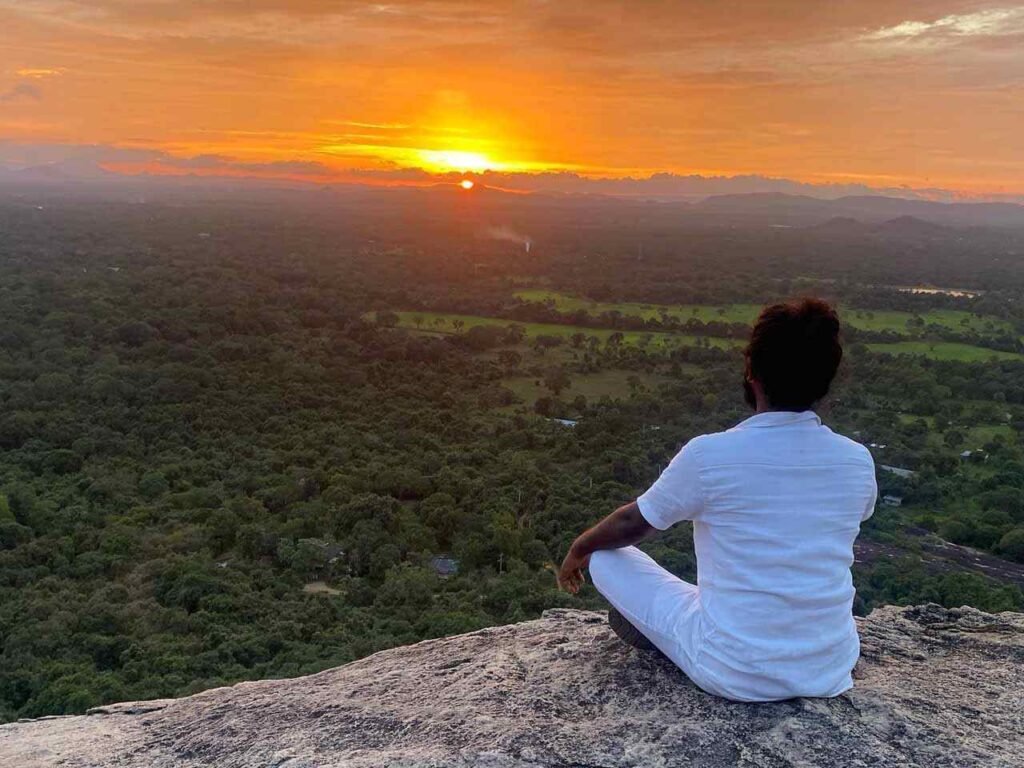
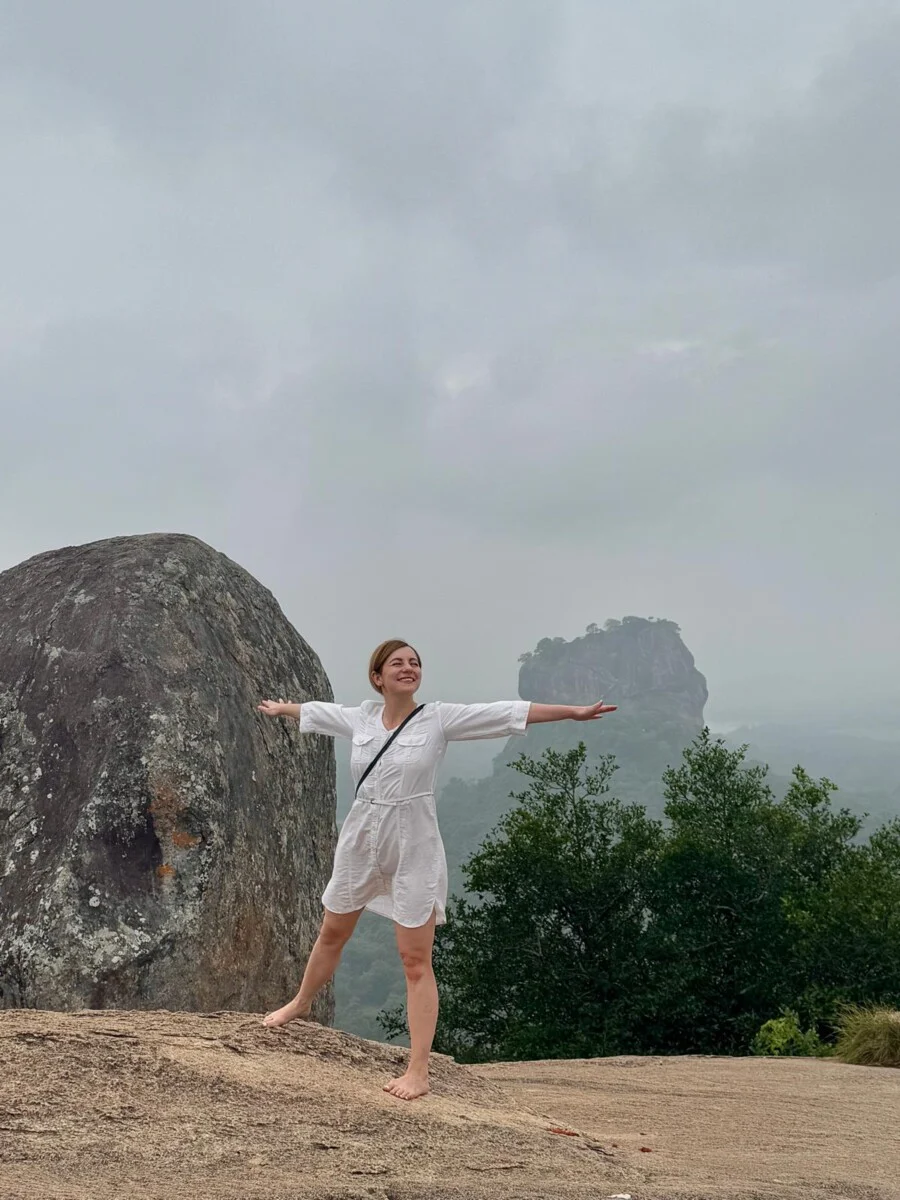
Pidurangala is the rock about 1 km north of Sigiriya (Wikipedia), and from the top you look straight across at Lion Rock. The first part of the walk goes through a working Buddhist temple, so cover your shoulders and knees (scarves are provided). Halfway up you pass a large reclining Buddha. Wear proper shoes rather than flip-flops: the last stretch is a scramble over boulders (Wikivoyage).
The climb takes about 20 to 30 minutes, and the ticket was Rs 1,000 for foreigners when Wikivoyage last checked, in August 2024. Sunrise is the popular time (Wikivoyage), and a torch helps on the walk up in the dark. Love Sri Lanka lists the rock as open from 5am to 5pm and calls the climb a good deal tougher than Sigiriya’s (Love Sri Lanka).
3. Visit the Sigiriya Museum
The museum near the main ticket office opened in 2009, and its galleries cover the site’s history and the excavations. It’s open every day from 8am to 5pm, and photography isn’t allowed inside (Love Sri Lanka). It opens an hour after the ticket counter. Start climbing at 7am and see it on your way out. Your Sigiriya ticket covers it, and if you aren’t climbing, a museum-only ticket was USD 6 on the fund’s price list when we checked on 2 October 2026 (CCF price list).
Places to visit near Sigiriya: day trips
4. Watch the elephants at Minneriya or Kaudulla
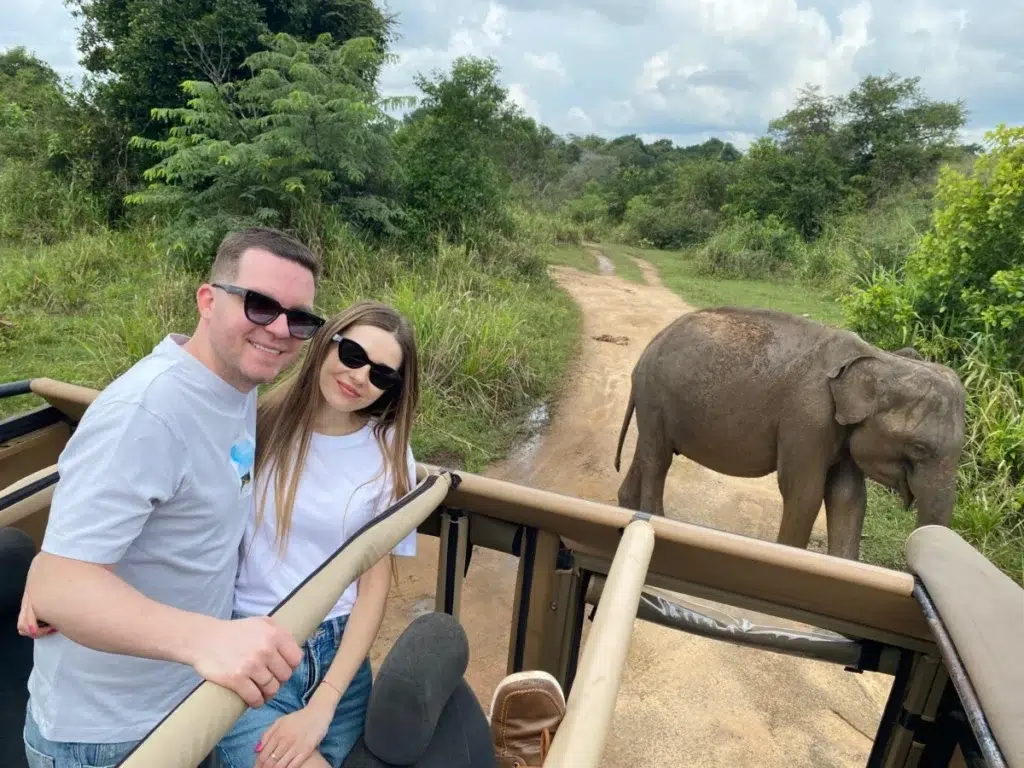
Of the parks in our Sri Lanka safari guide, Minneriya is the one on Sigiriya’s doorstep. Minneriya and neighbouring Kaudulla are 30 to 50 minutes’ drive to the north-east, and most hotels can book a jeep safari. A corridor joins the two parks, and the elephants move between them with the seasons (Wikivoyage). A third option, Hurulu Eco Park, runs jeep safaris on the edge of the Hurulu Forest Reserve (Wikipedia).
The big event is the gathering at the Minneriya tank. As the water recedes in the dry season, fresh grass grows on the exposed shore and the herds come to feed. The biggest numbers arrive in August and September, and Love Sri Lanka recommends an afternoon drive between 3pm and 6pm for the largest herds (Love Sri Lanka). Its Kaudulla page, which puts that park roughly an hour from Sigiriya, says big groups are likelier in Minneriya in August and in Kaudulla in September (Love Sri Lanka). If the herds have crossed to Kaudulla, our Minneriya safari guide suggests letting your guide choose the park on the day.

5. See the Dambulla Cave Temple
The cave temple at Dambulla is about 30 minutes south-west of Sigiriya by car or tuk-tuk. Our Dambulla cave temple guide suggests climbing Sigiriya in the morning and visiting the caves in the late afternoon. Its five cave shrines are painted with Buddhist murals and filled with statues, and the complex has been a World Heritage Site since 1991 (UNESCO). The walk up is 15 to 20 minutes on stone steps. You’ll go into the caves barefoot, with your shoulders and knees covered. Set aside about two hours.

Wikivoyage’s entry, last edited in September 2025, puts the ticket office on the far side of the hill from the Golden Temple building and its huge golden Buddha. It suggests going in from the side road by the car park, and lists the ticket at Rs 3,000 for foreigners, cash only (Wikivoyage).
6. Cycle around Polonnaruwa
Polonnaruwa is about 55 km by road from Sigiriya, a little over an hour’s drive, according to OpenStreetMap’s route planner. It took over as the capital after Anuradhapura fell in 993 (UNESCO), and its ruins stretch across flat ground, which makes a bicycle the easiest way between them. Start at the archaeological museum, where you buy your ticket, then allow at least four hours if you’re cycling, as our Polonnaruwa guide suggests. A full ticket was USD 30 on the Central Cultural Fund’s price list of 24 September 2026. Save the rock-cut Buddhas of Gal Vihara for last: they lie further north than the main ruins.
7. Walk the Ritigala forest monastery
Ritigala is about 37 km by road from Sigiriya, around an hour’s drive, according to the same route planner. Its forest monastery sits at the foot of a mountain whose forest is now a strict nature reserve. The monastery precinct starts at the Department of Archaeology office beside the Banda Pokuna, an ancient reservoir, and stone-paved paths lead on through the trees to the old meditation platforms (Wikipedia). The forest gives shade, and it’s much quieter than the big sites. A full ticket was USD 6 on the same price list.
8. Take a village tour
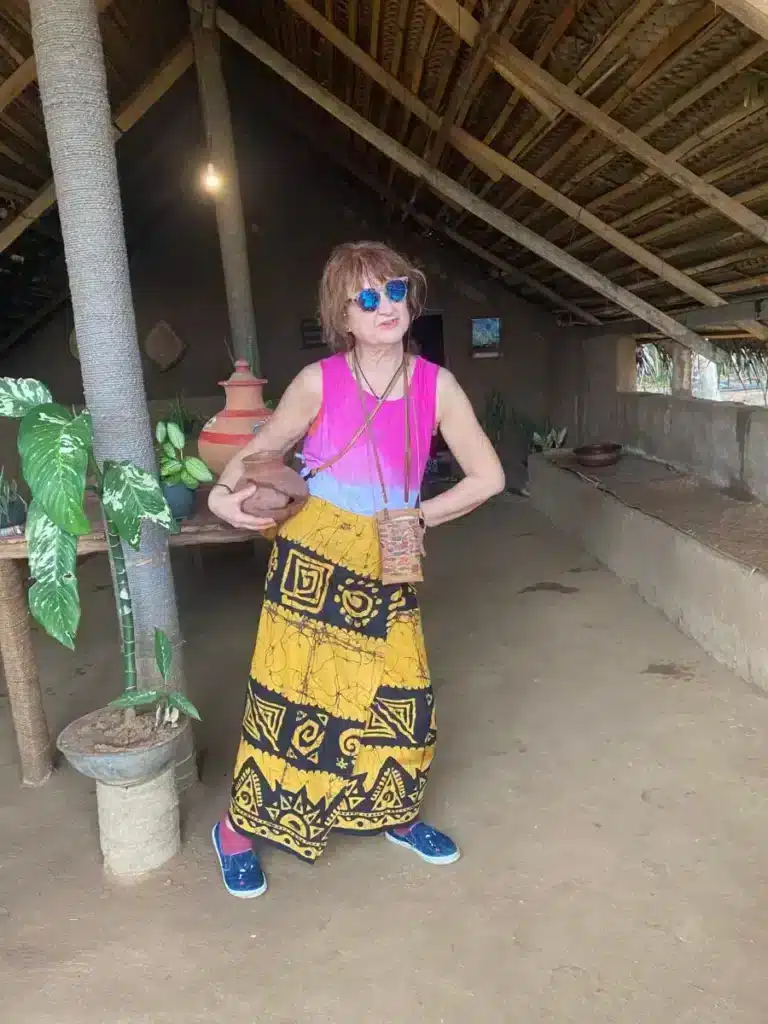
Village tours around Sigiriya make a slower half day: a ride out through the paddy fields, a look at how a village home works, and often a rice-and-curry lunch. Tours vary a lot, so ask what’s included before you book.

More things to do around Sigiriya
Hot-air balloons fly in this area from November to May, and rides need booking in advance (Love Sri Lanka). One operator, Sri Lanka Balloon, says it collects passengers from Sigiriya hotels about an hour before sunrise and takes off from a field at Kandalama, near Dambulla. Its website listed a weather-dependent flight of about an hour at USD 250 per adult when we checked on 2 October 2026 (Sri Lanka Balloon). That’s the operator’s own description, not a recommendation from us.
For a view without a big ticket, Wikivoyage lists three other rocks that look across to Lion Rock: Duwannagala, which it calls the highest free one, Mapagala and Melu’s Rock. Its entries date from January 2025 and suggest the way up Melu’s Rock runs through a resort (Wikivoyage). We’d ask at your hotel about access first, and go in daylight.
Planning your visit
Two or three nights gives you time for both rocks and two or three day trips without rushing. Our Cultural Triangle guide shows how Sigiriya fits with Anuradhapura, Polonnaruwa and Kandy, and our Sri Lanka weather by month guide covers the seasons.
The nearest weather station with World Meteorological Organization normals for 1991 to 2020 is Maha Illuppallama, about 40 km from Sigiriya. June to August are its driest months, each averaging 21 to 40 mm of rain on three or four days. October to December bring 209 to 274 mm a month there, and March and April are the hottest months, with average highs of about 34°C (WMO climate normals).
Dambulla, the closest city, is about 17 km away, and buses between the two ran every half hour from 6.30am to 6pm in 2024 (Wikivoyage). By car, Sigiriya is about 90 km from Kandy, usually two to two and a half hours (OpenStreetMap), so it fits before or after a day in Kandy. From Bandaranaike International Airport it’s about 150 km, usually three to three and a half hours (OpenStreetMap).
For a base, Sigiriya village is closest to both rocks. Habarana, about 17 km to the north (OpenStreetMap), is the starting point for safaris into Minneriya (Wikipedia). Dambulla has the cave temple and a bus station with services from Colombo, Kandy and Anuradhapura (Wikivoyage).
| What to do | Time to allow | Tip |
|---|---|---|
| Climb Sigiriya | 1.5 to 2 hours, plus stops | Start at 7am |
| Pidurangala | 20 to 30 minutes up | Sunrise, in proper shoes |
| Sigiriya Museum | About an hour | After an early climb |
| Minneriya or Kaudulla safari | Half day | Afternoon, 3pm to 6pm |
| Dambulla Cave Temple | About 2 hours | Cover shoulders and knees |
| Polonnaruwa | At least 4 hours by bike | Save Gal Vihara for last |
| Ritigala | Half day | Shade and few crowds |
| Village tour | Half day | Ask what’s included |
| Balloon flight | About 3 hours with transfers | November to May, at sunrise |
Questions about Sigiriya
How long does it take to climb Sigiriya?
The Central Cultural Fund allows 1.5 to 2 hours for the ascent and its 1,200 or so steps (Central Cultural Fund), plus however long you spend on the summit. Add about an hour if you visit the museum afterwards. The stairs get hotter and busier as the morning goes on, which makes a 7am start the easiest.
How many days do you need in Sigiriya?
Two or three nights. One full day covers Lion Rock, the museum and Pidurangala. A second adds Dambulla and an afternoon safari, and a third leaves room for Polonnaruwa or Ritigala.
Is Sigiriya worth the ticket price?
We think so, if the history interests you. At USD 35 on 2 October 2026 (CCF price list), the ticket covers the water gardens, the frescoes, the Mirror Wall, the summit ruins and the museum.
Is Pidurangala better than Sigiriya?
They’re different. Sigiriya has the history, the frescoes and the ruins on top. Pidurangala has the view of Sigiriya itself, for a much lower ticket price. If you have time, climb both.
Is Sigiriya good for children?
Yes, if they can manage a long climb on steep stairs with your help. Start at 7am, when the ticket counter opens, to be down before the midday heat, and carry water. Keep voices down on the path, where signs warn about the wasps. Our guide to things to do in Sri Lanka with kids has gentler options nearby.
Plan your trip
Browse our Sri Lanka tours to see routes through the Cultural Triangle, and we can build Sigiriya and its day trips into a route around your dates.
We rechecked the Central Cultural Fund’s prices, counter hours and ticket terms, Love Sri Lanka’s opening hours and elephant season, the balloon operator’s fare and the OpenStreetMap drive distances on 2 October 2026. The fund’s price list was still the one dated 24 September 2026, and we found no closure notice for Sigiriya, Minneriya or Kaudulla. Rupee prices follow the exchange rate, so look at the list again before you go.