Key takeaways
- Galle sits on a working fishing coast, so a seafood cooking class here starts with fish landed that morning rather than delivered frozen.
- The dish to learn is ambul thiyal, a dark sour tuna curry cured with goraka, which keeps for days without refrigeration.
- Morning classes that include the fish market are worth the earlier start. That is where most of the learning happens.
- Sri Lankan seafood cooking uses very little butter or cream. Coconut milk and souring agents do the work.
- Prawns, cuttlefish and small reef fish are usually better value and better cooked than the tuna steaks aimed at tourists.
Start at the fish market, not the kitchen
The best seafood classes on this coast begin at a market table at seven in the morning, and the first thing you learn has nothing to do with cooking.
You learn what fresh actually looks like. Clear eyes rather than cloudy. Gills that are properly red. Flesh that springs back when a thumb goes in. The vendor will let you press. Do it on four or five fish and the difference stops being theoretical.
You also learn what is actually caught here, which is not what appears on beach restaurant menus. Small reef fish, sardines, seer, skipjack tuna, cuttlefish, prawns. The lobster in the tourist window costs four times more and is often the least interesting thing on the ice.
Buy what is cheap and plentiful that morning. That is what the household would do, and it is how you end up eating well rather than expensively.
Ambul thiyal, the dish this coast is known for
If you learn one thing in Galle, make it this.
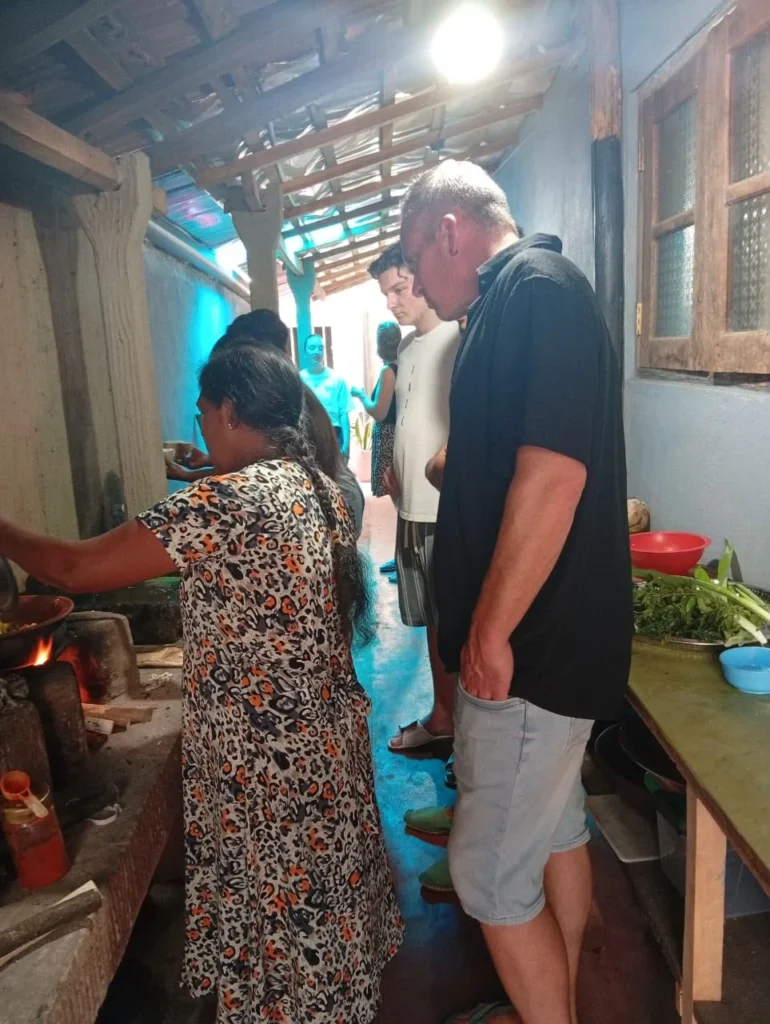
Ambul thiyal is a dry, dark, intensely sour fish curry. Chunks of firm fish, usually tuna, are cooked with black pepper, cinnamon, curry leaves and goraka, a dried fruit that behaves like a very sharp tamarind. There is almost no liquid at the end. The fish goes almost black and the flavour is sour, peppery and concentrated.
The point of it is preservation. Goraka is strongly acidic, and a properly made ambul thiyal keeps for several days in a covered clay pot with no refrigeration at all. On a hot coast without electricity, that mattered. The recipe is older than the fridge and tastes like it was designed for a purpose, because it was.
It is also the dish most likely to go wrong. Too little goraka and it is a bland pepper curry. Too much and it is inedible. Watching someone judge that by eye is the reason to take the class rather than read the recipe.
What else you will cook
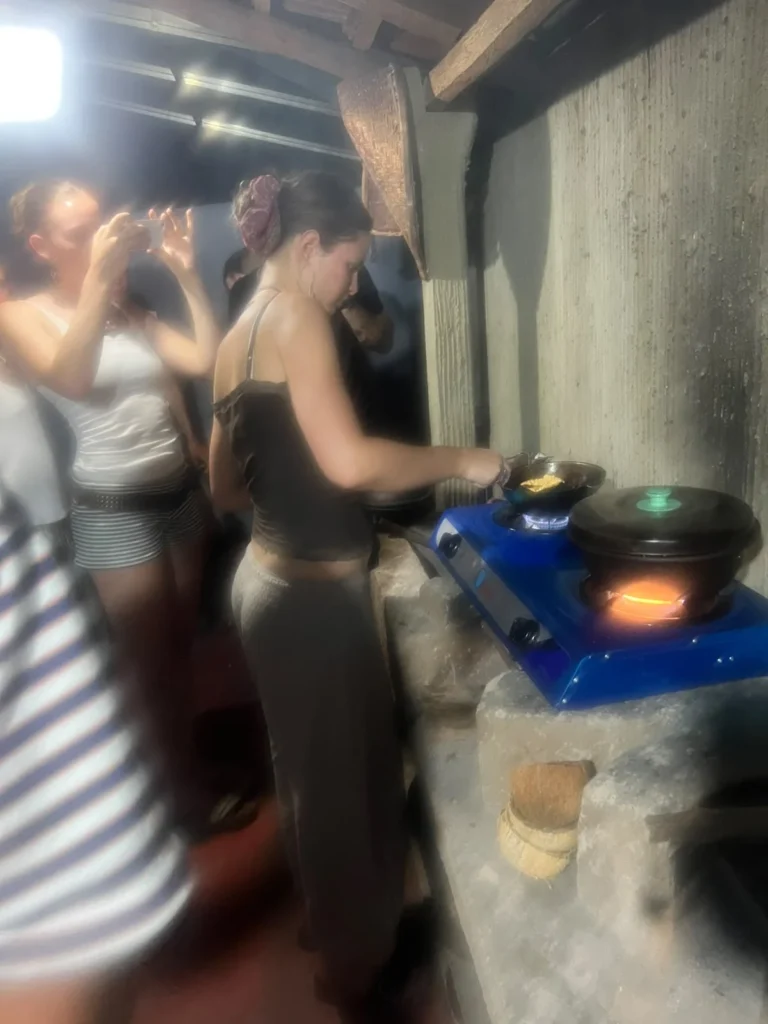
A seafood class usually builds a full plate rather than a single dish, because that is how the food is eaten.
Fish white curry. The opposite of ambul thiyal. Mild, pale, coconut milk heavy, with turmeric and fenugreek. Gentle enough for breakfast, which is when a lot of families eat it.
Prawn curry. Fast, red with chilli, finished with thick coconut milk off the heat so it does not split.
Cuttlefish curry. Chewy and underrated. Cooked either very briefly or for a long time, never in between.
Fried sprats. Tiny whole fish fried crisp with onion and chilli, eaten bones and all as a side.
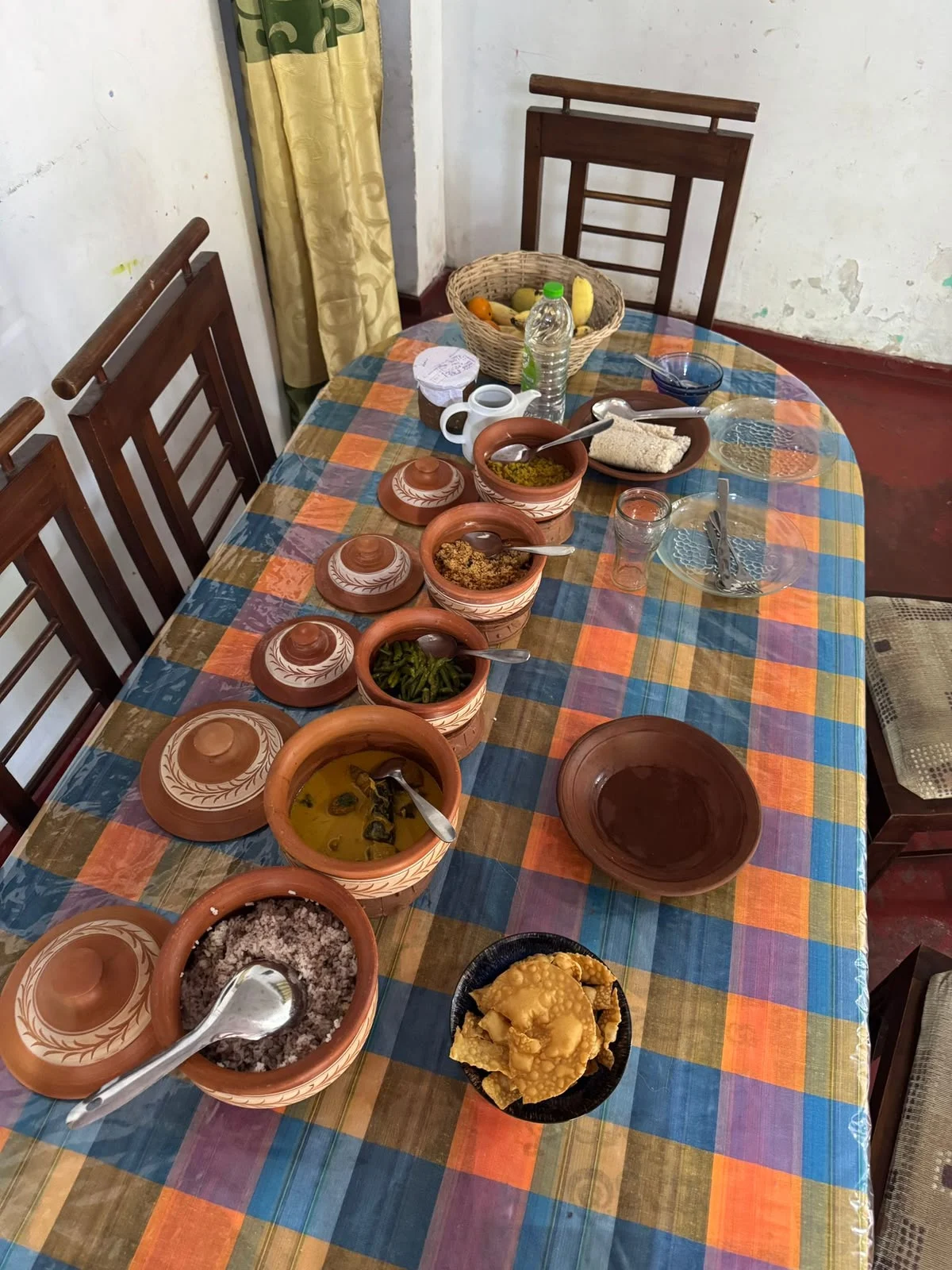
Plus the standard supporting cast: rice, dhal, a coconut sambol, and a green. Sri Lankan cuisine rarely serves a protein alone, and a fish curry on its own is not really the dish.
Why the technique is different from Western seafood cooking
Three things surprise people who cook fish at home.
The fat is coconut, not butter. Nothing gets finished with cream, and the richness comes from the thick first pressing of coconut milk added at the very end, off the heat.
The sourness is structural rather than a garnish. Goraka, tamarind or lime is not a squeeze at the table, it goes in during cooking and shapes the whole dish.
Whole spice goes in early and stays. Cinnamon bark, cardamom pods, curry leaves and pandan are left in the pot and eaten around. The proper Ceylon cinnamon grown here is mild enough to take that treatment, where the harsher cassia sold as cinnamon elsewhere would dominate.
Where to book around Galle
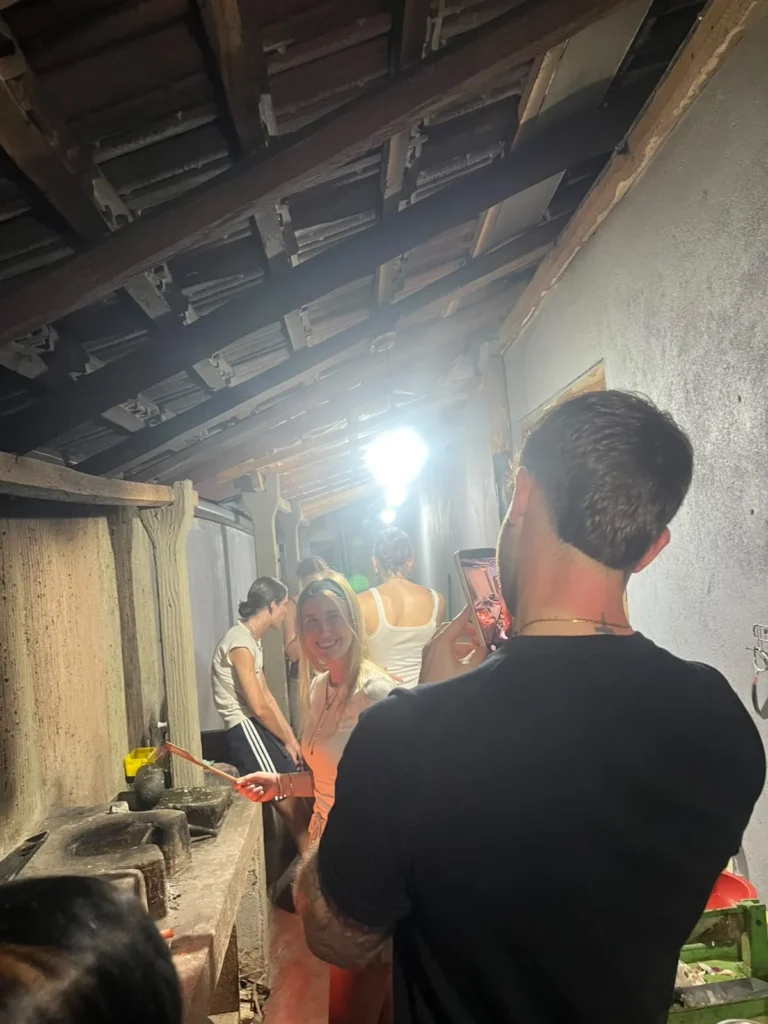
Classes run from households in and around Galle, and from villages along the coast towards Weligama and Mirissa. The fort itself has few working kitchens, being mostly guesthouses and shops inside a UNESCO listed colonial town, so most classes are a short drive out.
Ask two questions before booking. Does it include the market, and is the fish bought that morning. A class that starts at eleven with fish from the fridge is a cooking lesson rather than a seafood one.
Season matters here more than for a vegetable class. The south coast fishing is best from roughly November to April, when the sea is calmer. During the southwest monsoon the boats go out less and the market is thinner, though never empty.
Lonely Planet is right that Galle is the most photogenic base on this coast. It is also a genuinely good food town, which is less widely noticed.
If you want the wider context of how these classes work, we wrote about cooking with local families and about spotting an authentic cooking experience.
Frequently asked questions
What fish is used in a Galle seafood cooking class?
Whatever landed that morning. Commonly skipjack tuna, seer, small reef fish, prawns and cuttlefish. Tuna is the usual choice for ambul thiyal.
What is ambul thiyal?
A dry, sour fish curry cured with goraka and heavy on black pepper. It was developed as a preservation method and keeps for days without refrigeration.
Does the class include the fish market?
Some do, and those are the better ones. Market classes start early, usually around seven, and add roughly an hour.
What is goraka?
A dried, smoked fruit used as a souring agent, sharper than tamarind. It is what gives ambul thiyal its dark colour and long keeping quality.
Is Sri Lankan seafood very spicy?
Ambul thiyal is peppery rather than chilli hot. Prawn curry is hotter. White curry is mild. You can ask for the chilli to be adjusted in any of them.
When is the best time of year for a seafood class in Galle?
November to April, when the south coast sea is calm and the boats go out daily. Classes run year round but the market is better in season.
Can I do a seafood class if I do not eat shellfish?
Yes. Fish curries alone make a full menu, and the household can leave out prawns and cuttlefish entirely.
Want to cook the day’s catch?
We are on this coast, an hour from Galle, and we book seafood classes most weeks. If you want one that starts at the market rather than the kitchen, tell us your dates. A driver makes the early start considerably easier.
Related reading
This is one of a series on eating and cooking in Sri Lanka. For the wider picture, see our guide to the best food experiences in Sri Lanka, and if you are still choosing a class, our guide to picking the best cooking class in Sri Lanka.