Key takeaways
- The clearest test of an authentic cooking experience is where it happens. A working family kitchen behaves differently from a hotel demonstration room.
- Real village classes cook whatever the garden and the market gave them that morning, so the menu shifts week to week.
- Wood fire, clay pots and a hand grinding stone are not staging. They change the flavour, which is the point.
- You eat with the family at their table rather than being served at a separate one.
- Group sizes stay small because the kitchen is a real room in someone’s house, not a venue.
How to tell the difference before you book
Look at the photographs on the listing and ignore the wording entirely.
If you see a stainless steel bench, matching aprons and a row of identical prep bowls, you are booking a demonstration. It may be a good one. The chef may be excellent. But you will watch more than you cook, and the food will be adjusted for what the hotel thinks you want.
If you see a soot-blackened hearth, mismatched clay pots and a floor that is clearly swept rather than mopped, you are booking a kitchen. The lesson will be less organised and you will learn more.
The second test is the menu. A fixed menu listed in advance means the same class runs every day regardless of season. “Whatever we buy that morning” is a better sign, even though it makes the listing harder to sell.
What a working kitchen actually looks like
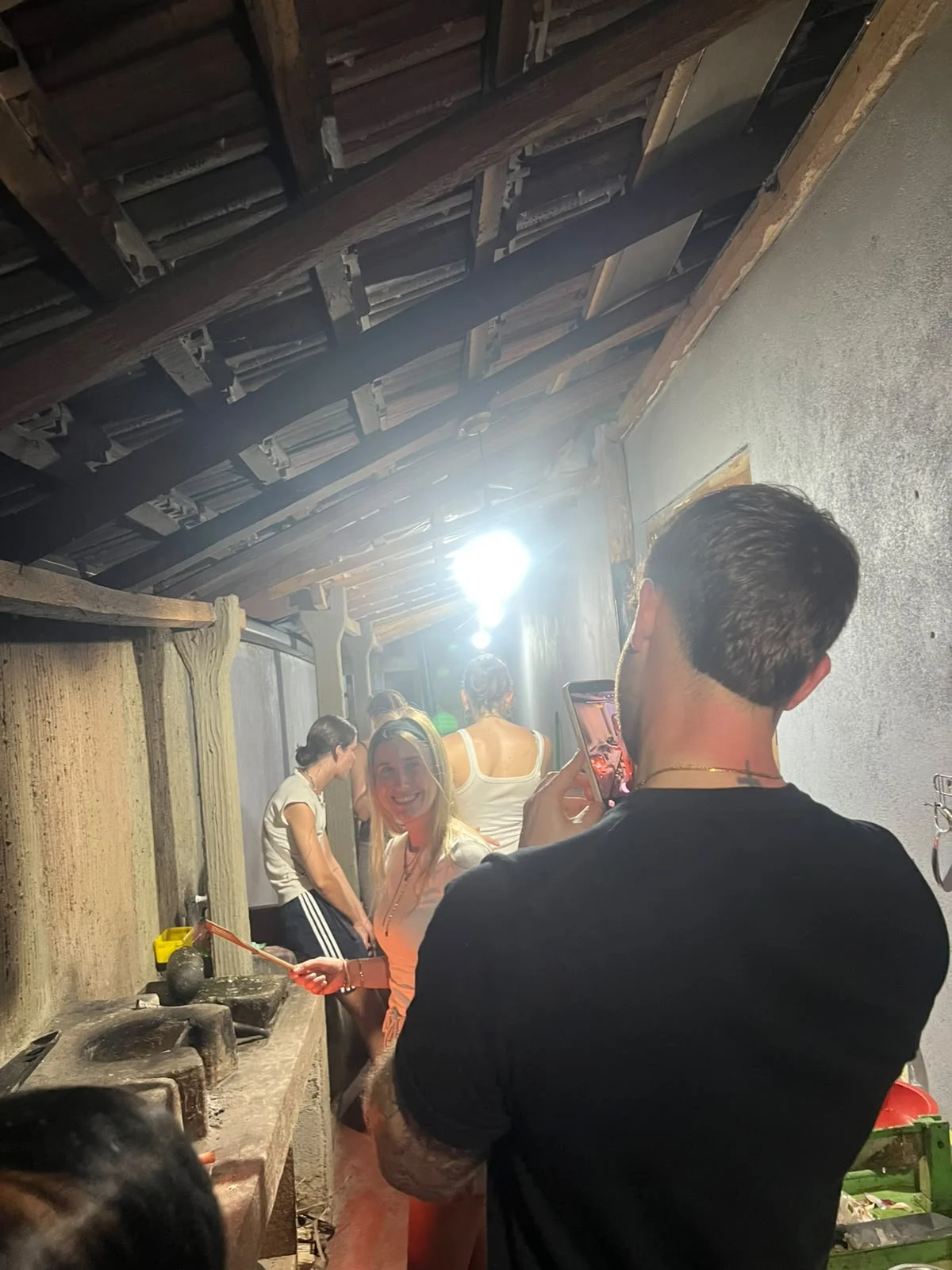
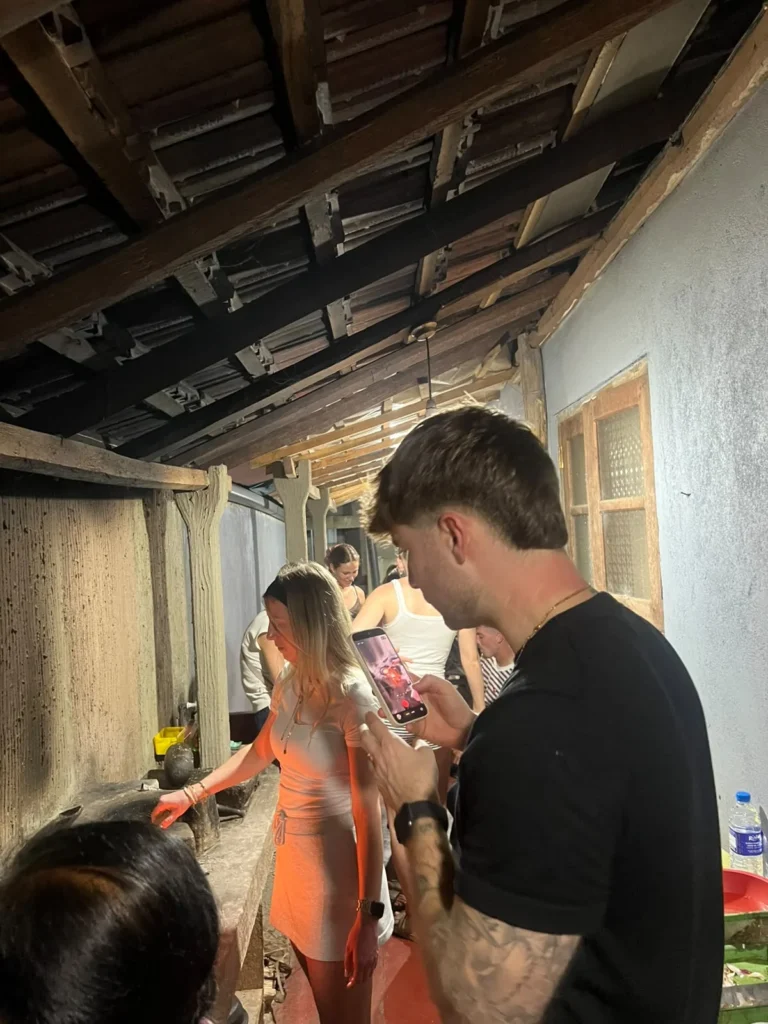
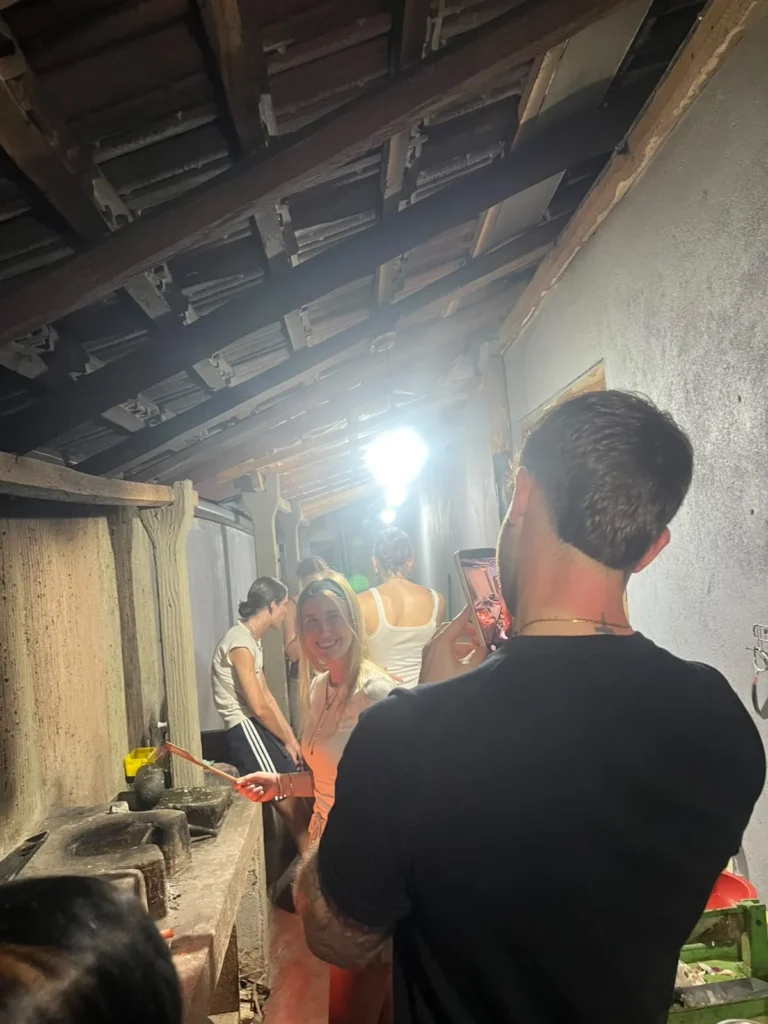
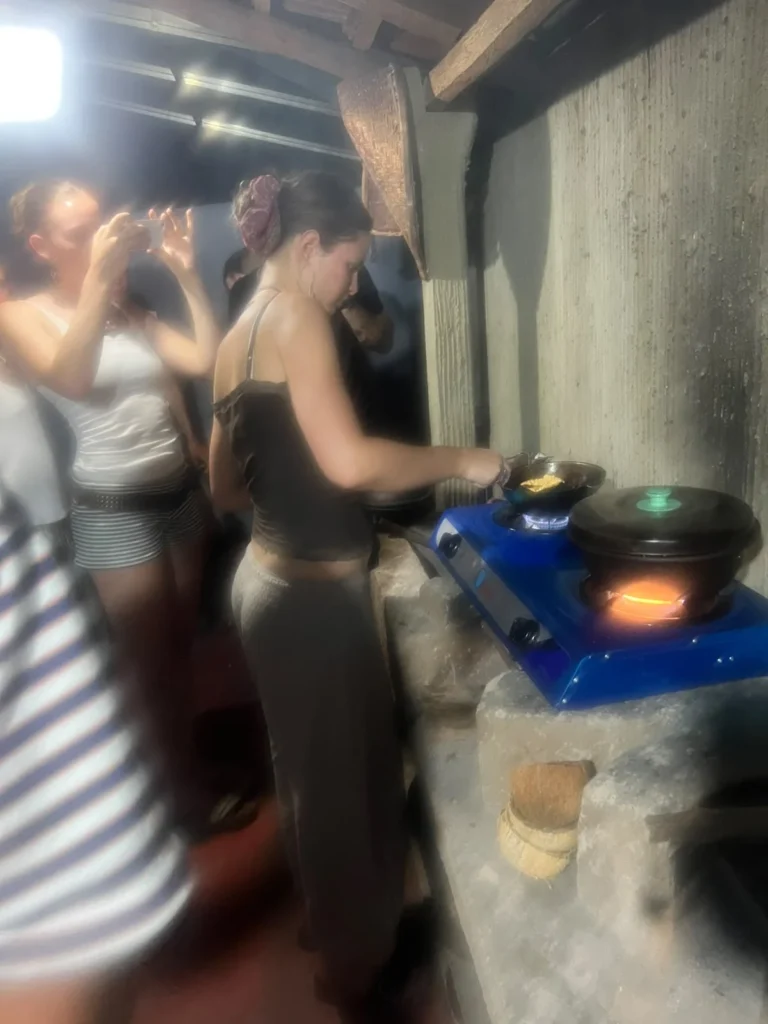
Low roof, clay tiles laid over timber rafters, and a single bulb. The hearth is raised stone with a fire underneath and a gap where sticks get pushed in as the heat drops. Beside it there is often a gas burner, because families use both and pretending otherwise would be theatre.
The smoke is real. It gets in your clothes and your hair and it will still be there tomorrow. Anyone who tells you an open fire kitchen is not smoky has not stood in one.
You will also notice how little equipment there is. A grinding stone, a coconut scraper, a few clay pots, one flat pan, a couple of spoons. No thermometer, no timer, no scales. Quantities are judged by hand and doneness by smell, which is why the lesson is worth taking in person rather than from a video.
Why clay pots and wood fire matter
This is the part that sounds like romanticism and is not.
Clay heats slowly and holds temperature, so a curry simmers rather than boils, and coconut milk is far less likely to split. Sri Lankan cooks add the thick first pressing of coconut milk at the very end for exactly this reason, and a clay pot makes that forgiving. A thin steel pan does not.
Wood fire adds a faint smokiness you cannot get from gas, particularly to anything cooked long, like jackfruit or a dark roasted curry powder. It also runs at a lower, less even heat, which is why village curries take longer and taste deeper.
The grinding stone does something a blender cannot. Pounding coconut and chilli crushes and bruises rather than slicing, releasing oils differently. Pol sambol made in a food processor is a different, flatter thing. Once you have tasted both, you notice immediately.
None of this is unique to Sri Lanka. Sri Lankan cuisine shares the technique with much of South and Southeast Asia. It is simply that here it is still the everyday method rather than a revival.
The market, if it is included
Classes that start at a market are more work and worth it. You go before the cooking, usually early, and buy what you are about to eat.
What you learn there is not shopping. It is what the season actually is. Which greens are cheap this month, what the fish stall has, how the vendors talk about ripeness. You also see the difference between a coconut sold for cooking and one sold for drinking, which nobody explains in a recipe.
Bring small notes. Take fewer photographs than you want to, at least at first, because the stalls are working and a camera in the face slows them down.
Eating at the family’s table
The meal is the giveaway. In a demonstration you are served, often at a separate table, sometimes by staff who did not cook.
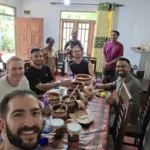
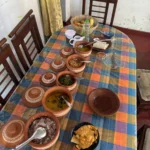
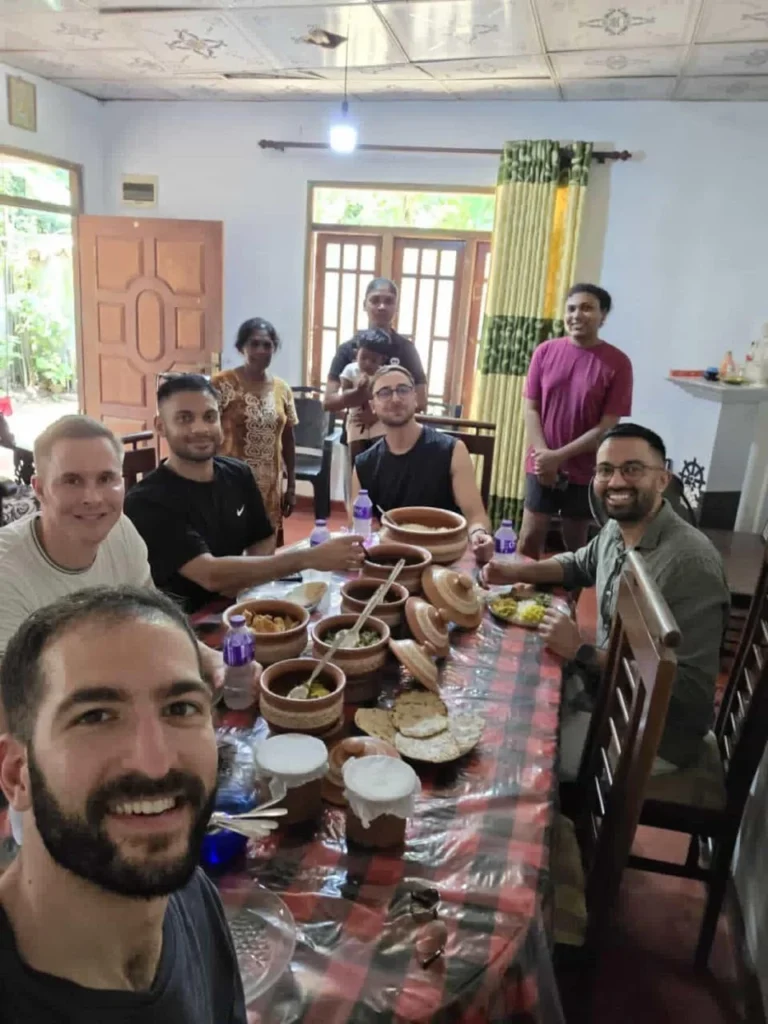
In a home you eat with the household. The pots come to the table with lids on, everyone reaches across each other, and the person who taught you sits down and eats too. Somebody’s aunt appears. A child wanders through. The food goes round twice because you are expected to have seconds and refusing the first offer is normal.
Eating with your right hand is optional and nobody minds either way. If you want to try, mix the rice and curry into a small ball with your fingertips and push it in with your thumb. You will be bad at it and the table will enjoy that.
Being a decent guest
This is somebody’s home, and a few small things make the difference.
Take your shoes off if others have. Ask before photographing people, particularly older women, who are often less comfortable with it than the men who will happily pose.
Eat more than you think you need. Food is the currency of welcome here, and leaving a full plate reads as a verdict on the cooking.
Pay in cash and tip directly. Booking platforms take a cut, and the household sees more of your money when some of it goes into a hand at the end.
Lonely Planet makes the general point about Sri Lankan hospitality, which is that invitations are usually genuine rather than transactional. If you are asked to stay for tea after the class, that is not an upsell.
Where these classes run on the south coast
Villages inland from Weligama, Mirissa and Unawatuna, mostly within half an hour of the coast road. Far enough that the kitchens are still household kitchens, close enough to fit into a day.
If you are staying in Galle, you can combine a morning class with an afternoon inside Galle Fort, the UNESCO listed Dutch colonial town, which makes for a full but unhurried day.
Frequently asked questions
What makes a cooking class authentic rather than staged?
It runs in a working family kitchen, the menu changes with what is available, and you eat with the household at their table rather than being served separately.
Is a hotel cooking class worth doing?
It is comfortable, air conditioned and well organised, and you will learn recipes. You will not see how the food is actually cooked at home, which is the reason most people book one.
Do I need to speak Sinhala?
No. Most host families running classes speak enough English, and cooking is largely demonstrated rather than explained. Learning to say bohoma istuti, thank you very much, is appreciated.
How many people are in a village class?
Usually between two and ten. The room sets the limit. If a listing offers twenty places, it is not being run in a house.
Will the food be too spicy?
The curries are aromatic rather than hot. The heat sits in the sambol and a side dish of chilli paste, which can be served separately if you ask.
Is it hygienic?
Village kitchens are simple but the cooking is done at high heat and eaten immediately. Drink bottled or filtered water, which is standard advice everywhere in Sri Lanka.
Can I get the recipes afterwards?
Ask, and most families will write them down or let you photograph the ingredients. Quantities will be approximate because that is how they cook.
Looking for the real thing?
We live in Weligama and we book these classes constantly, which means we know which kitchens are houses and which are showrooms. If you want the former, ask us. We can also build one into a longer Sri Lanka itinerary or arrange a driver to get you there.
Related reading
This is one of a series on eating and cooking in Sri Lanka. For the wider picture, see our guide to the best food experiences in Sri Lanka, and if you are still choosing a class, our guide to picking the best cooking class in Sri Lanka.