Key takeaways
- Sri Lanka is straightforward for halal travellers. Muslims are close to a tenth of the population and halal food is normal rather than niche.
- Most village vegetarian cooking is halal by default. The question is always the meat, never the vegetables.
- Sri Lankan Muslim cooking has its own dishes worth learning, particularly buriyani and watalappan, not just halal versions of Sinhalese food.
- Ask your host to source meat from a halal butcher when booking. On the south coast this is easy in Galle and Beruwala.
- Alcohol is rarely used in Sri Lankan home cooking, so it is one less thing to check.
Sri Lanka is easier than most of Asia for this
Travellers who have spent time looking for halal food in Thailand or Japan tend to arrive braced for a hunt, and then relax within a day.
The Sri Lankan Moors have been on this island for well over a thousand years, arriving as Arab traders and settling along the coasts. They are around nine per cent of the population, with large communities in Colombo, Beruwala, Kattankudy and pockets throughout the south. Their food is not a parallel cuisine. It is part of the mainstream one.
What that means practically: halal butchers are common, most bakeries and short eats shops in Muslim areas are halal, and the concept needs no explanation. The halal certification system here is run by the All Ceylon Jamiyyathul Ulama, and certified products carry their mark.
Why most of the class is halal anyway
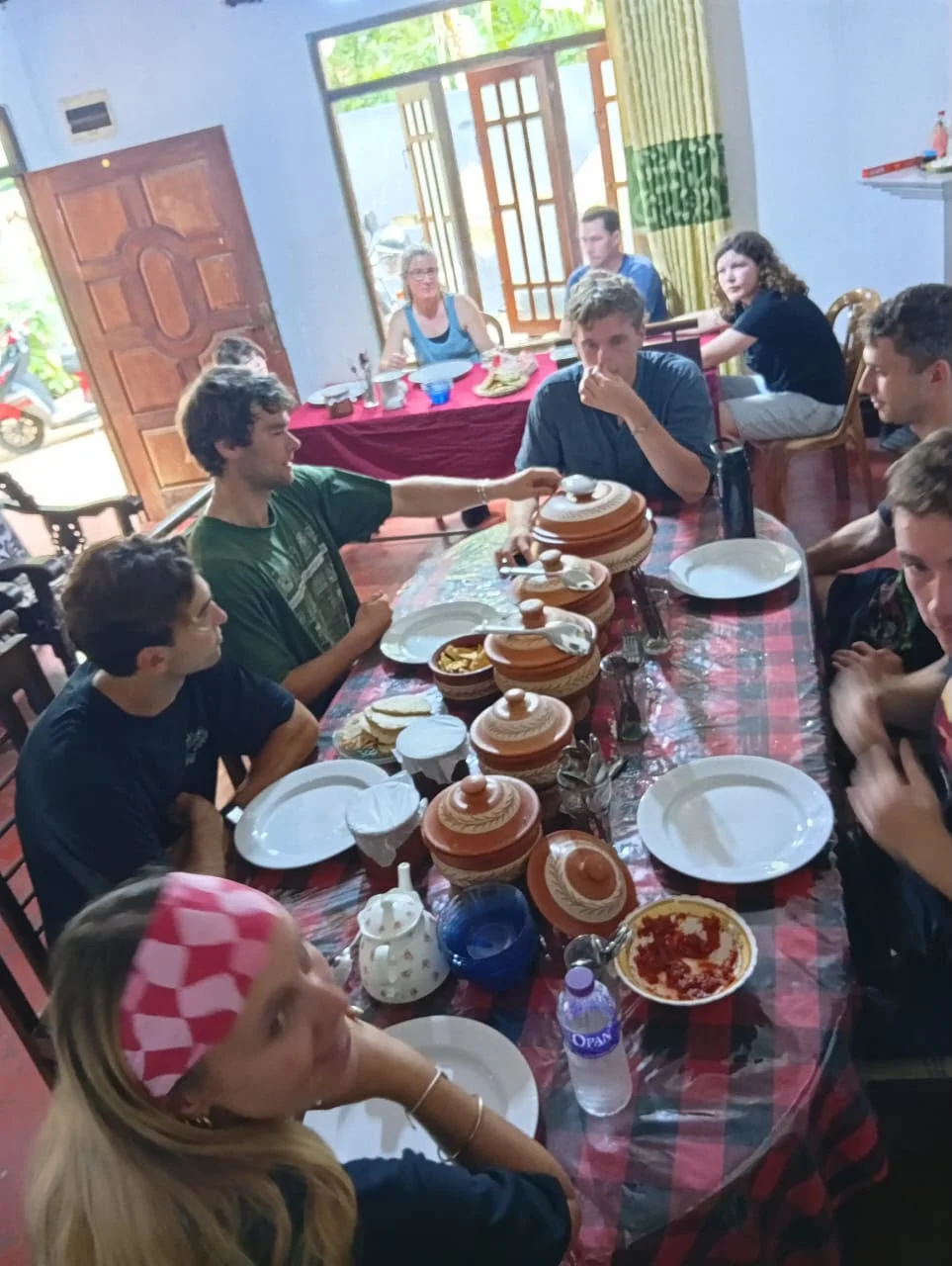
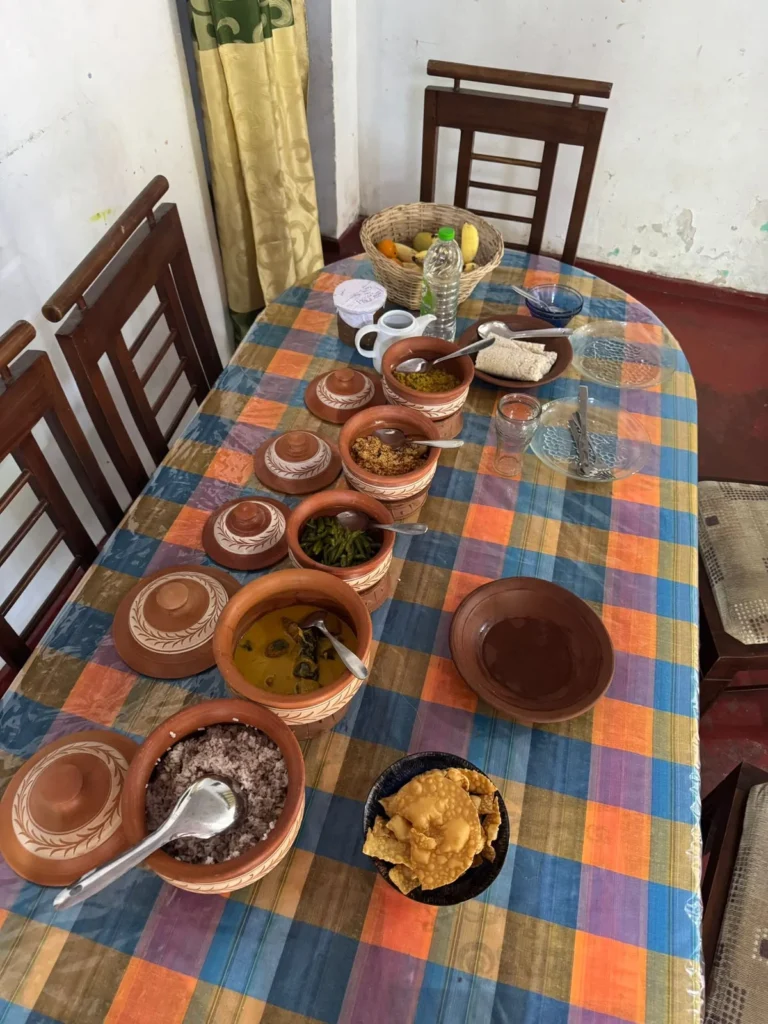
A Sri Lankan rice and curry spread is five to ten small dishes, and the great majority are vegetables cooked in coconut milk.
Dhal, pumpkin curry, green bean curry, jackfruit, coconut sambol, pickle, papadam, rice. None of that involves meat, and none of it involves alcohol, which is not part of Sri Lankan home cooking the way wine is in European kitchens.
So the halal question narrows to two things. Where the meat came from, if you are having any. And whether dried fish is being used as seasoning, which is a separate dietary question rather than a halal one, since fish is generally permissible.
Tell the household when you book that you eat halal and want the meat sourced accordingly. Any family on the south coast can do this. It costs them a trip to a different butcher, nothing more.
The dishes worth asking to learn
This is the part most halal travellers miss. Sri Lankan Muslim cooking has its own repertoire, and a good host will teach it if you ask.
Buriyani. The Sri Lankan take on biryani, brought by Moor and Malay communities and now eaten across the island. Milder than the South Indian versions, usually with chicken or mutton, cooked with ghee and whole spice. Friday lunch in a lot of households.
Watalappan. A steamed custard of coconut milk, jaggery, egg and cardamom, with a texture somewhere between creme caramel and a dense set custard. Watalappan came with the Malay community and is now the standard dessert at Eid and at most Sri Lankan celebrations regardless of religion. Learning to get the jaggery right is genuinely useful.
Mutton curry with roasted curry powder. Dark, slow, and a very different animal from the coconut milk curries.
Short eats. The fried snacks in every bakery window: fish rolls, cutlets, malu paan. Easy to make and easy to reproduce at home.
Booking a halal class on the south coast
Two routes, and they suit different travellers.
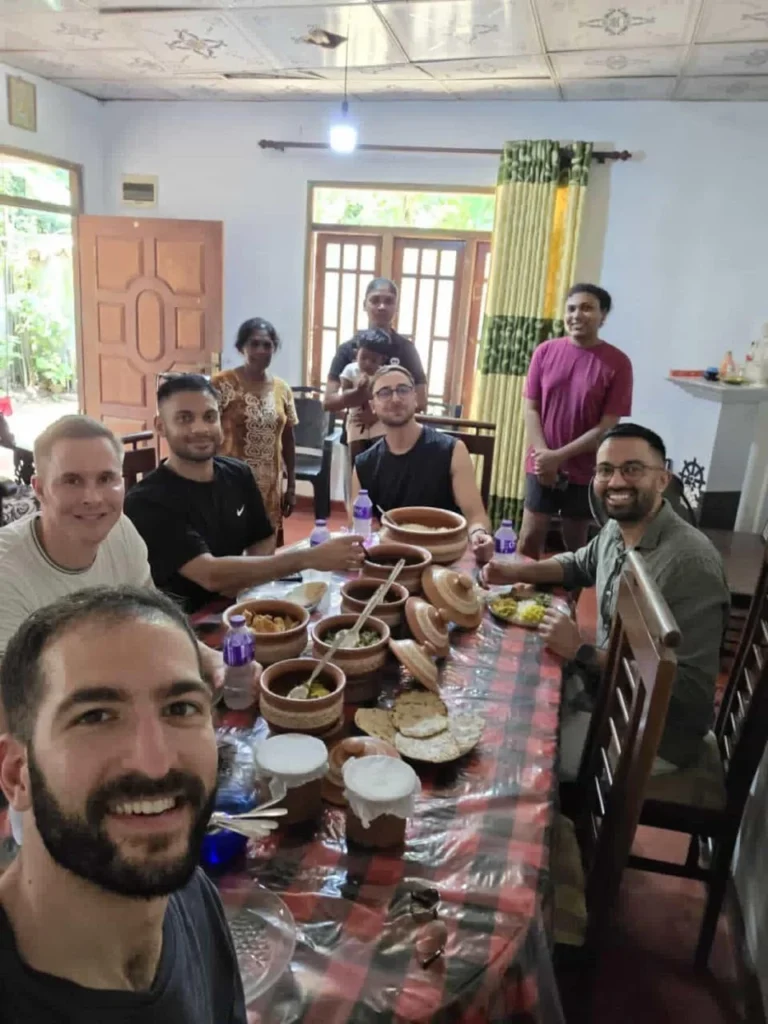
The first is to book a Muslim household directly. Galle has a long established Muslim community inside and around the Galle Fort, and Beruwala further up the coast is one of the oldest Muslim settlements in the country. Cooking with a Moor family gets you the buriyani and the watalappan alongside the standard curries.
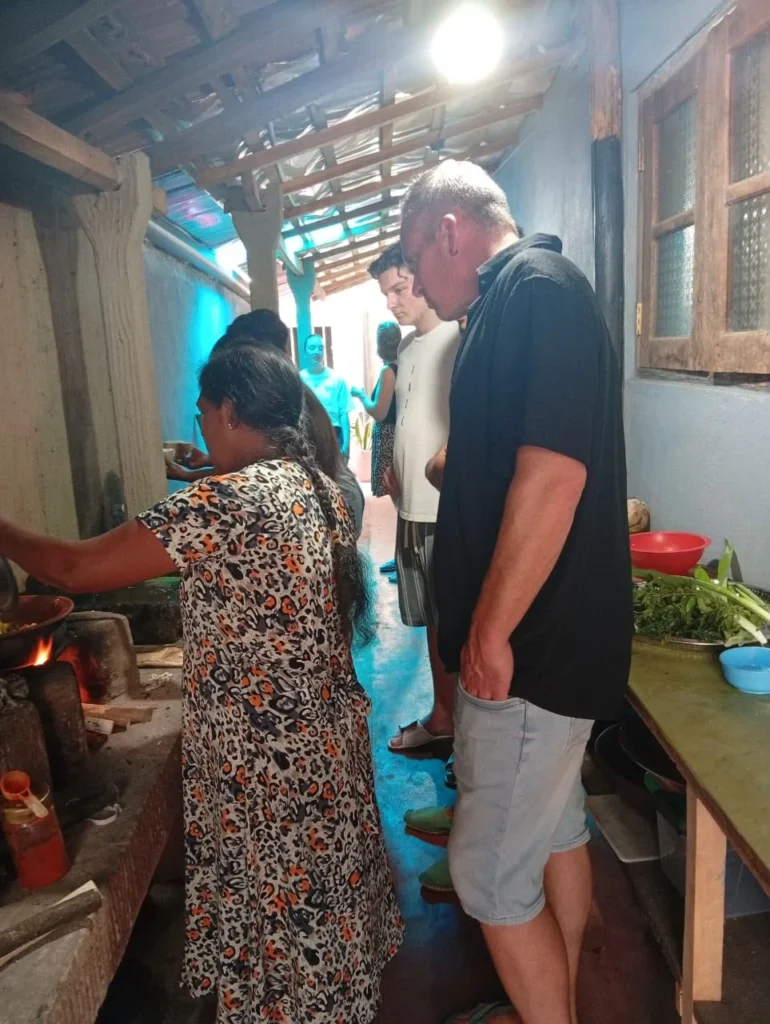
The second is to book any village household and specify halal sourcing. This works fine and is often more convenient, since most cooking class families on the south coast are within a short drive of a halal butcher. You will cook the Sinhalese village repertoire, which is mostly vegetarian anyway.
Either way, say it when booking and confirm on arrival. Not because anyone will try to deceive you, but because a message passed through a booking platform sometimes does not reach the person doing the shopping.
If you want to understand what separates a genuine home kitchen from a hotel demonstration first, we covered that in our guide to an authentic cooking experience.
Eating halal for the rest of your trip
Outside the class, the south coast is manageable with a little planning.
Rice and curry shops almost always have a vegetable plate, which sidesteps the question entirely. Kottu, the chopped roti dish you hear being made before you see it, is widely available in halal versions, and the vegetable or egg kottu is safe in most places.
Hotel restaurants in tourist areas usually serve pork and alcohol, so ask rather than assume. Beach bars in Mirissa and Unawatuna are not the place to look.
Lonely Planet notes that Sri Lanka’s food culture is regional, and the Muslim influence is strongest along the coasts and in the east, particularly around Kattankudy and Batticaloa. If your trip goes that way, the food shifts noticeably.
Frequently asked questions
Is it easy to find halal food in Sri Lanka?
Yes. Muslims are roughly nine per cent of the population, halal butchers are common, and certified products carry the ACJU mark. It is considerably easier here than in most of East and Southeast Asia.
Is a Sri Lankan cooking class halal by default?
The vegetable dishes are, and they make up most of the meal. Only the meat needs arranging, so tell your host when you book.
Is alcohol used in Sri Lankan cooking?
Very rarely in home cooking. It is not part of the traditional method, so it is one fewer thing to check.
What Sri Lankan Muslim dishes should I ask to learn?
Buriyani and watalappan are the two that will not appear in a standard class. Both are worth the request.
Is fish halal in Sri Lanka?
Seafood is generally considered permissible, which makes the coastal diet straightforward. Maldive fish, the dried tuna used to season sambol, is fish rather than meat.
Where are the main Muslim communities on the south coast?
Galle has a long established community, and Beruwala further north is one of the oldest Muslim settlements in Sri Lanka. Both are easy bases for a halal focused food trip.
Should I confirm halal arrangements more than once?
Yes. Confirm at booking and again on arrival, since a message left with a booking platform does not always reach the person shopping for ingredients.
Planning a halal food trip?
We live in Weligama and can put you with either a Moor household or a village family who will source halal meat, depending on what you want to cook. Tell us which and we will arrange it. Message us, and see our Sri Lanka tours if you want it built into a longer itinerary.
Related reading
This is one of a series on eating and cooking in Sri Lanka. For the wider picture, see our guide to the best food experiences in Sri Lanka, and if you are still choosing a class, our guide to picking the best cooking class in Sri Lanka.