Polonnaruwa ancient city is the ruined royal capital that Sri Lanka’s kings ruled from 1070 to 1232 (Wikipedia), and UNESCO put it on the World Heritage List in 1982 (UNESCO). When we checked the Central Cultural Fund’s price list on 16 November 2026, foreign adults paid USD 30, and the counters sell tickets from 7am until 5pm (CCF price list; CCF tickets). The main ruins lie along a 4.4 km loop that suits half a day by bicycle. The city is in the North Central Province, about 4 to 4.5 hours by road from Colombo airport and 75 to 105 minutes from Sigiriya.
Key takeaways
- Adults pay USD 30 and children from 6 to 12 pay USD 15, settled in rupees, and the Archaeological Museum is included.
- Buy it at the counter beside the museum, south of the ruins, then ride north. Our measured loop from the museum to Gal Vihara is 4.4 km by bike.
- Start at 7am. Average highs at the nearest weather station sit between 29 and 34°C all year.
- That station’s driest months are June and July; October to December is the wettest stretch.
- Dress to cover knees and shoulders, remove shoes and hats at each shrine, and never pose for a photo with your back to a Buddha statue.
- Pair the ruins with an afternoon jeep drive at Minneriya, 40 to 50 minutes away, or with Sigiriya the day before.
What Polonnaruwa ancient city is, and why people visit
In UNESCO’s words, Polonnaruwa became the second capital once Anuradhapura fell in 993. Besides Hindu monuments raised by the Chola invaders, it keeps what remains of a 12th-century garden city created by Parakramabahu I (UNESCO). King Vijayabahu I drove the Cholas out and made the city his capital in 1070 (Wikipedia).
The Central Cultural Fund, which has looked after the site since 1980, dates its time as capital from around the mid-11th century and calls it short-lived, at about two and a half centuries. Its builders worked mostly in brick, where Anuradhapura’s had used stone, so many large buildings went up quickly (CCF). The city had a walled citadel with the palace and council chamber, and an outer city of shrines and monasteries. Its chief shrine was the Quadrangle, where the Tooth Relic was once kept.
People come because the ruins are compact and well preserved. Wikivoyage notes that they sit in one compact area, which makes them easy to visit (Wikivoyage). Rough Guides finds nothing at Anuradhapura to match the Quadrangle and Gal Vihara (Rough Guides). Polonnaruwa is the eastern corner of the Cultural Triangle and number six in our round-up of Sri Lanka’s historical sites.
Must-see ancient ruins, in walking and cycling order
The order below runs from the ticket office in the south to Gal Vihara in the north. It follows the main road through the site, so you never double back until the ride home.
The Archaeological Museum
The ticket counter is at the Archaeological Museum, not at the main entrance to the ruins (Wikivoyage). The museum is included in the Polonnaruwa ticket (CCF tickets). The Restless Beans, who updated their guide on 15 November 2026, say it has scale models and relics with English labels (The Restless Beans). It makes sense to see the models first, then the ruins.
The Royal Palace group
Parakramabahu’s palace once rose seven storeys, and the chronicles give it a thousand rooms. Its brick walls, braced with heavy timbers, now stand two storeys high (CCF). The council chamber stood in the same citadel, and the fund names the nearby Kumara Pokuna among the ponds built to adorn the royal parks.
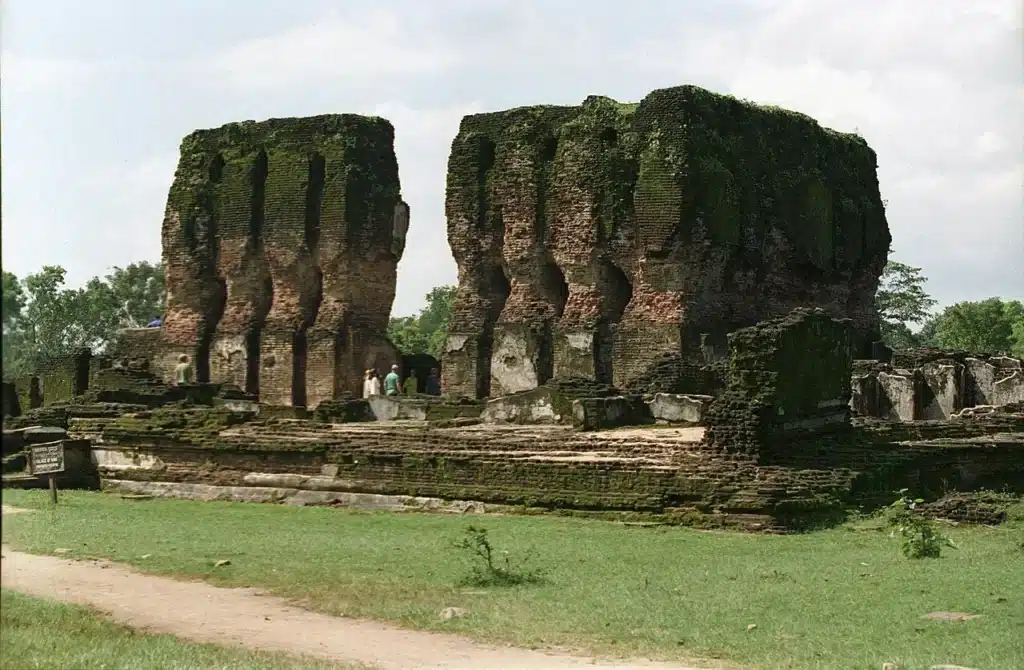
The Sacred Quadrangle (Dalada Maluwa): Vatadage, Hatadage and Gal Pota
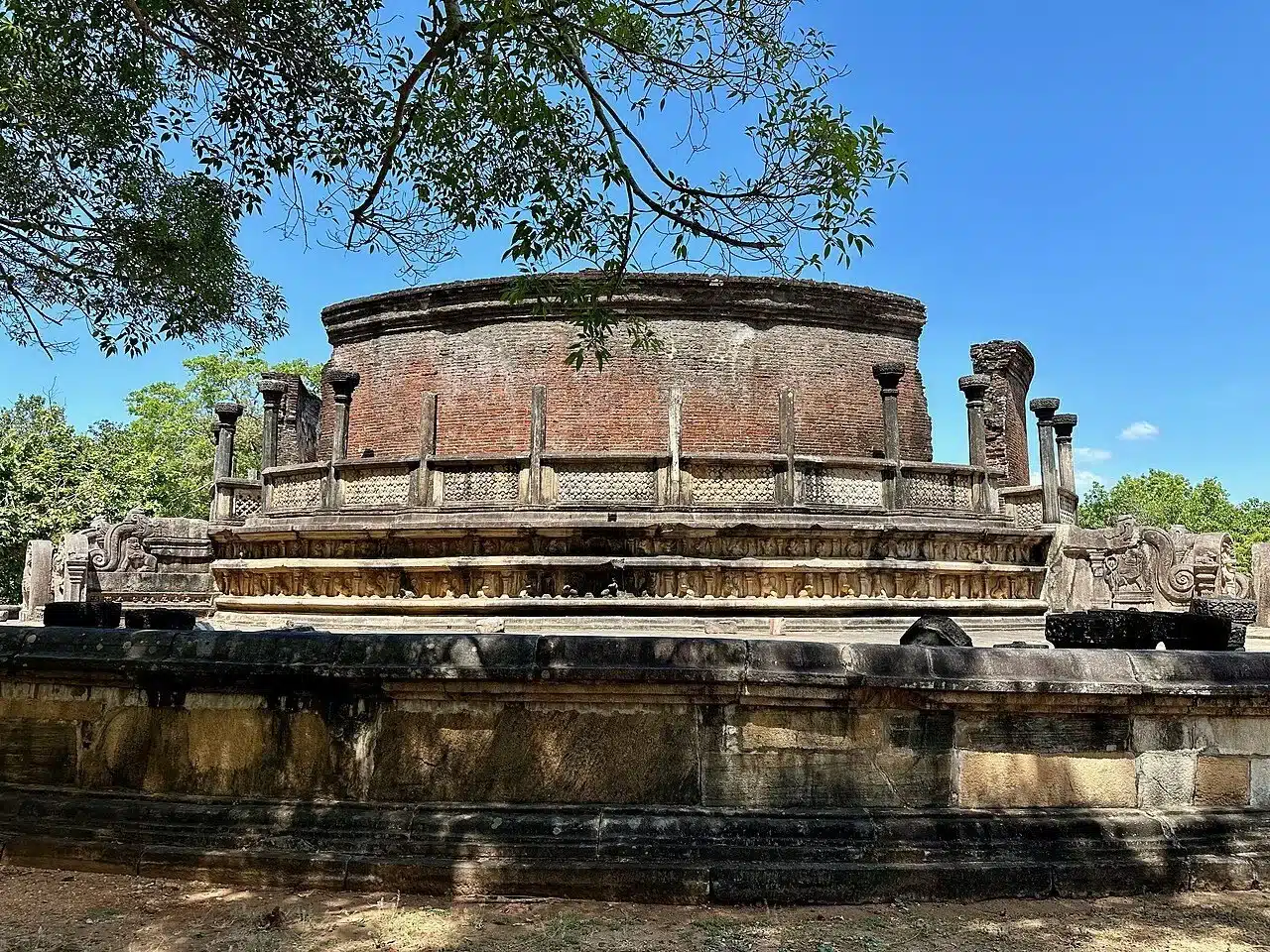
Rough Guides calls the raised Quadrangle the finest group of remains in the city (Rough Guides). At its centre, the Vatadage is a round relic house built to protect a small stupa. Four seated Buddhas face its four doorways, and Wikipedia calls it the best preserved vatadage in the country. Its builder is disputed between Parakramabahu I and Nissanka Malla, and excavation began in 1903 (Wikipedia).
Facing it, the Hatadage was built by Nissanka Malla (1187 to 1196) to hold the Tooth Relic. Two old chronicles and the Galpotha inscription say it was built in sixty hours, and three granite Buddhas still stand in its inner chamber (Wikipedia).
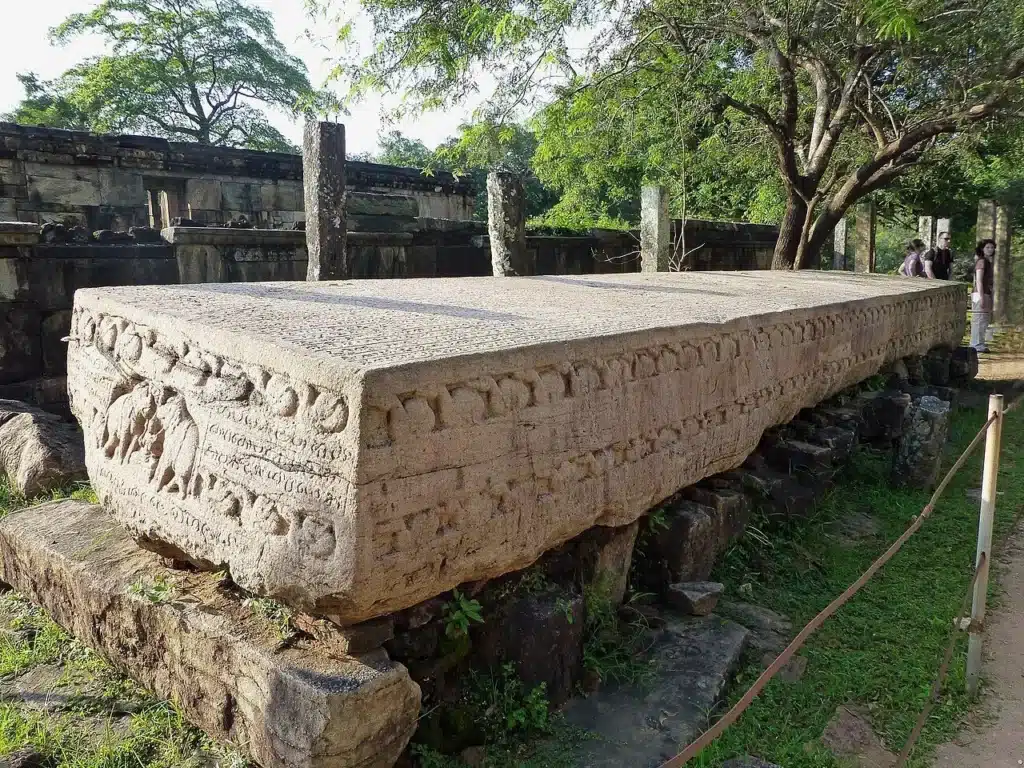
The Gal Pota is a long carved slab, known as the stone book, by the Hatadage’s eastern side (Wikipedia). Its inscription sets out Nissanka Malla’s claim that only a Buddhist should rule the island (Wikipedia).
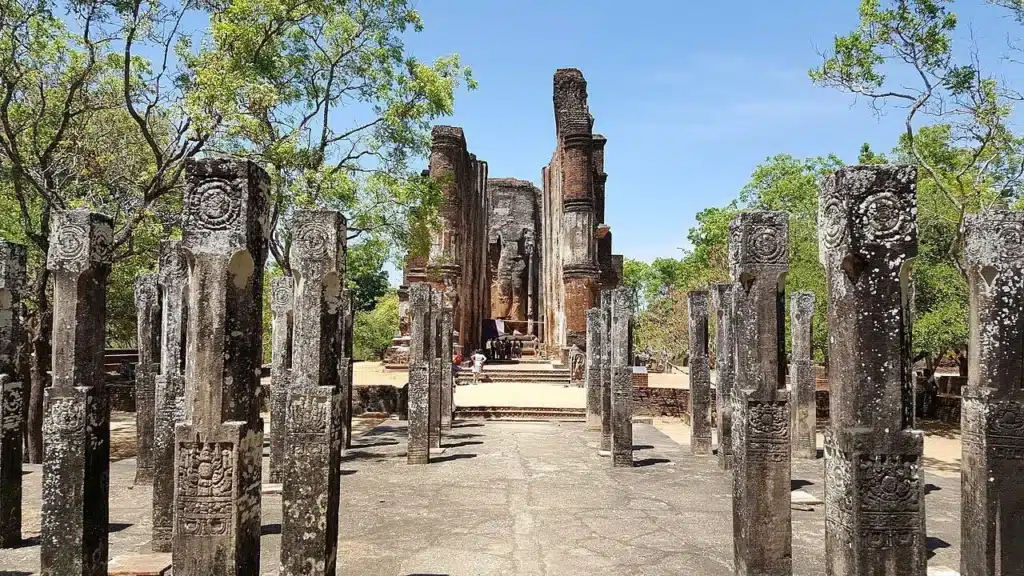
Two smaller buildings are easy to miss. The Nissanka Latha Mandapaya has eight granite pillars carved like curving lotus stems; an inscription says the king listened to chanting here (Wikipedia). The Satmahal Prasada, a seven-tiered brick tower in the north-east corner, is often compared with the stupa at Wat Kukut in Thailand and with Cambodian Buddhist architecture (Wikipedia).
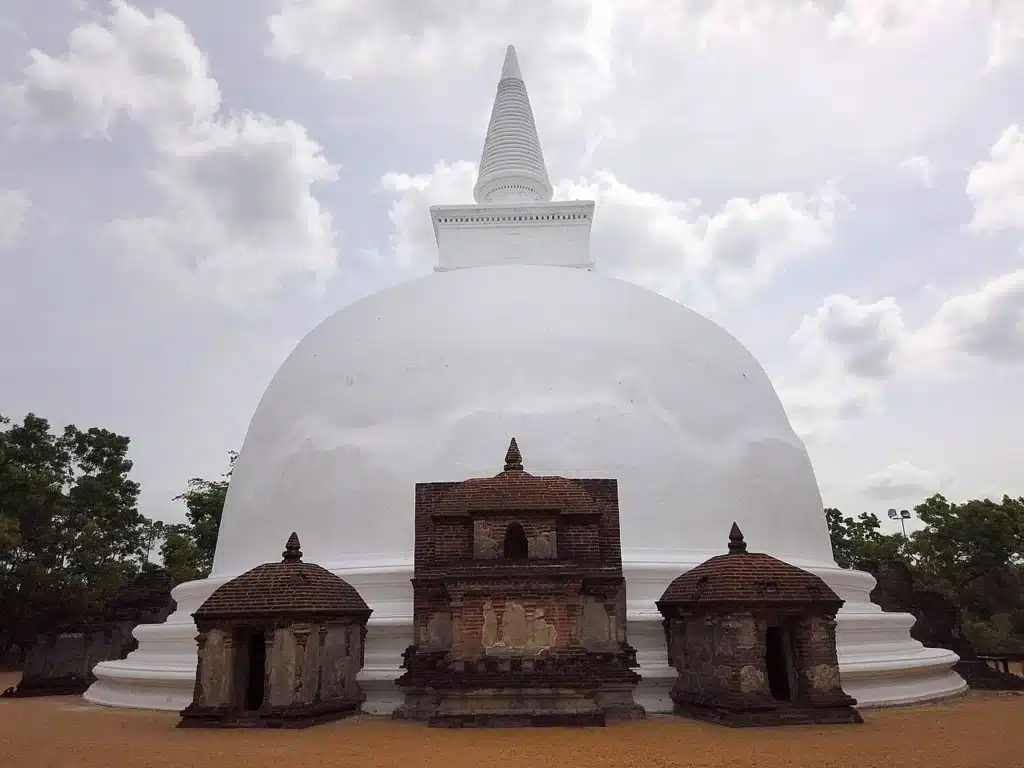
Rankoth Vehera
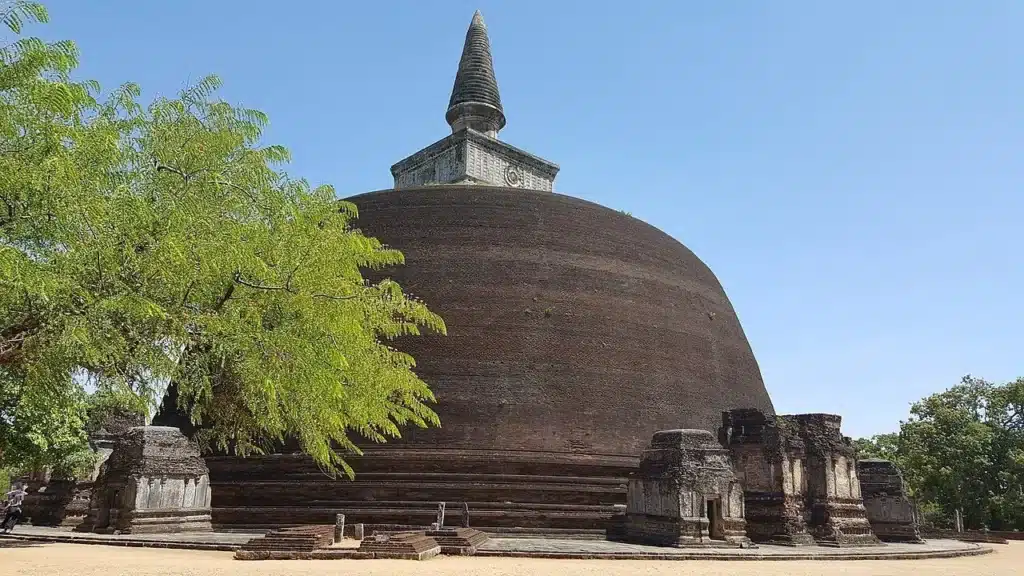
Nissanka Malla also built this brick stupa, which closely resembles Ruwanwelisaya in Anuradhapura. It is 33 m high with a base 170 m round, and it may once have reached almost 61 m. It is still the largest stupa in Polonnaruwa and the fourth largest in Sri Lanka (Wikipedia). Wikivoyage’s 2015 listing gives 54 m, so you may see that figure elsewhere (Wikivoyage).
Lankatilaka
The Lankatilaka is an image house from Parakramabahu I’s reign (Wikipedia). The CCF counts it, with the Tivanka and Thuparama image houses, among the massive vaulted brick buildings of the period. Their giant brick Buddhas are weathered, but the fund puts them in the same class as Gal Vihara’s (CCF).
Kiri Vehera
A few steps from Lankatilaka, Kiri Vehera is a white stupa about 29 m high in the Alahana Pirivena monastery. Queen Subhadra, one of Parakramabahu’s consorts, built it, and much of its 12th-century lime plaster survives (Wikipedia). The same monastery had a hospital, where a stone trough held herbal baths for patients (CCF).
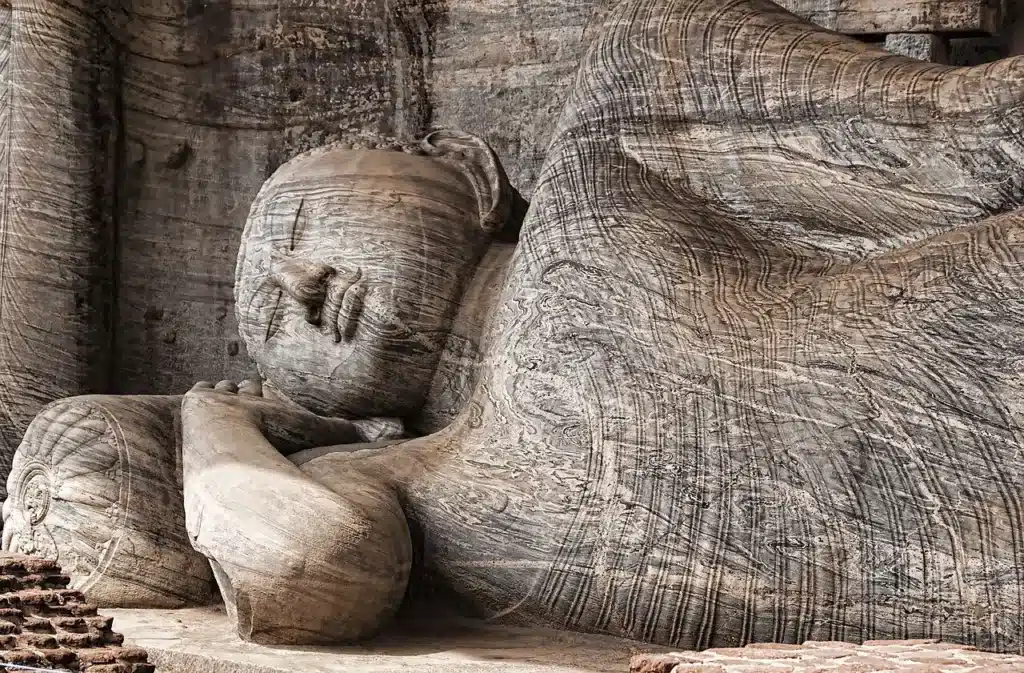
Gal Vihara rock statues
Parakramabahu I had four Buddha figures cut into one granite face in the 12th century. They are a seated figure 4.6 m tall, a small seated one inside a carved cave, a standing figure of 6.9 m and a reclining Buddha of 14.1 m. Some historians think the standing figure shows the monk Ananda rather than the Buddha. Wikipedia calls Gal Vihara the most visited monument at Polonnaruwa (Wikipedia).
The Tivanka image house, which keeps the best of the period’s wall paintings (CCF), lies further north (Wikivoyage). The Restless Beans describe a western exit in the northern half of the site, so you can leave without riding back through the ruins (The Restless Beans).
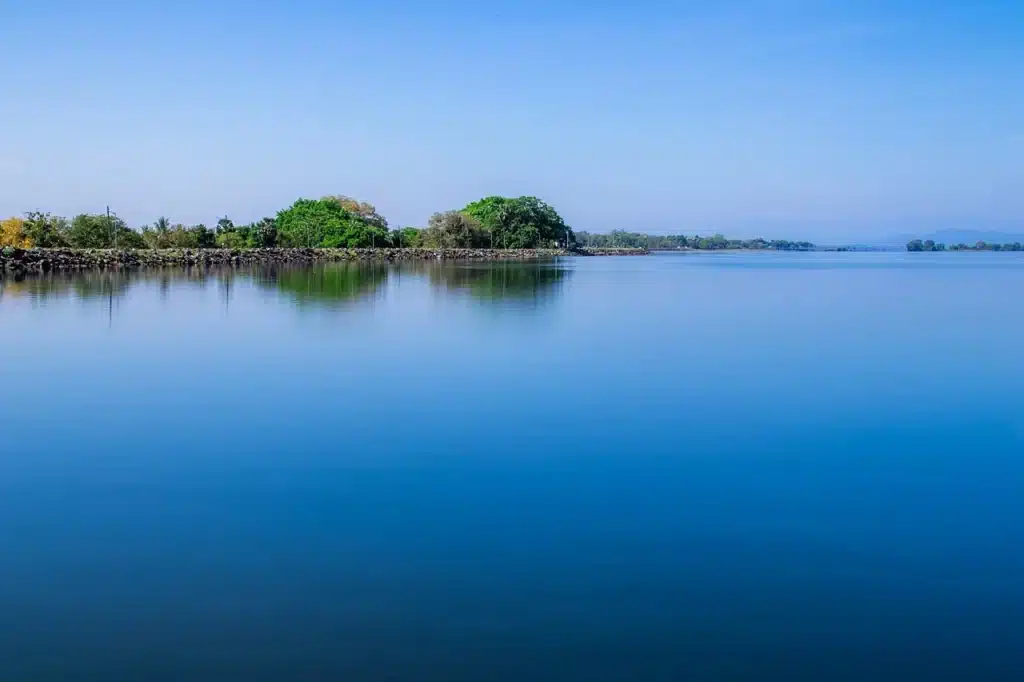
Parakrama Samudra
The reservoir west of the city is five reservoirs joined by narrow channels. Its northern part, Topa Wewa, dates to the 4th century AD, and Parakramabahu I enlarged the whole system (Wikipedia). Wikipedia gives it about 22.6 square kilometres of water behind an embankment some 12.4 km long. The CCF links it to a golden age of farming, when Sri Lanka could export rice (CCF). The Potgul Vehera statue, read as a king or a sage, stands 2.1 km south of the museum by bike (OpenStreetMap).
Polonnaruwa route map and how long you need
We ran the stops through OpenStreetMap’s cycling planner on 16 November 2026, using Wikivoyage’s coordinates for each monument. The loop from the museum to Gal Vihara is 4.4 km and about 30 minutes of riding (OpenStreetMap cycling map). Riding straight back is 3.1 km more, about 14 minutes.
| Stop | Leg by bike | Running total |
|---|---|---|
| Archaeological Museum and tickets | Start | 0 km |
| Royal Palace group | 1.2 km | 1.2 km |
| Quadrangle (Vatadage) | 0.6 km | 1.8 km |
| Rankoth Vehera | 1.5 km | 3.3 km |
| Lankatilaka | 0.5 km | 3.8 km |
| Kiri Vehera | 0.1 km | 4.0 km |
| Gal Vihara | 0.4 km | 4.4 km |
| Back to the museum | 3.1 km | 7.5 km |
Each leg is rounded to 0.1 km; the running total is the router’s own figure. On foot the same loop is 5.4 km and about 72 minutes of walking, plus 3.1 km back. By car it is 4.8 km.
How long you need depends on how you move. The Restless Beans suggest at least four hours inside the site if you cycle, and a little less by car (The Restless Beans). GoAsia advises a full day if you want several groups and the museum without a tight onward connection (GoAsia). We’d plan half a day for the loop above, and a full day if you linger in the museum and add the reservoir and Tivanka.
How to get around the Polonnaruwa ancient city
The groups are spread along 4.4 km of road from the museum to Gal Vihara, so it pays to ride or be driven between them and walk inside each one. Wikivoyage calls bicycles the best way round. Most guest houses rent them, and stalls in front of the main entrance charge LKR 750 to 1,000 a bike, in a line added in August 2025 (Wikivoyage; history).
| Way round | Price, as the source states it | Good to know |
|---|---|---|
| Bicycle | LKR 750 to 1,000 a bike (Wikivoyage, 2025); about LKR 1,000 (Laure Wanders, July 2026) | Hot by late morning; take breaks in the shade |
| Tuk-tuk | No price found in an official or recent source | Agree the stops and the price first (Laure Wanders) |
| Car with driver | See our driver cost guide | The loop is 4.8 km by road |
| Walking | Free | 5.4 km for the loop, best kept to one group at a time |
The Restless Beans found no extra charge for taking your own tuk-tuk or bike through the site, and no parking fee. They also met official guides at the museum (The Restless Beans). A guide is optional. Laure Wanders found stalls selling snacks, cold drinks and coconuts on site, and toilets (Laure Wanders).
Essential travel details: tickets, costs and opening hours
Entrance fees and visas
We read the fund’s price list on 16 November 2026; it was last updated on 14 October. It shows Polonnaruwa at USD 30 (LKR 10,080) for a full ticket and USD 15 (LKR 5,040) for a half ticket, at LKR 336 per dollar (CCF price list). Payment is in rupees at the current rate, with a 50% discount for SAARC citizens (CCF tickets). Half tickets go to visitors aged 6 to 12 and to International Student Identity Card holders, and children under six enter free if you can show their age (CCF concessions).
Online orders go through the CCF e-ticket system, and you show the receipt at the site counter to get the paper ticket. Orders last 90 days, each ticket allows a single entry that day, and the fund does not refund payments (CCF e-tickets). The Restless Beans paid by Visa card at the counter (The Restless Beans). Wikivoyage says staff check tickets at several points inside, so keep yours to hand.
| Item | What the source says |
|---|---|
| Ticket counters | 7am to 5pm daily (CCF tickets) |
| Polonnaruwa Museum | 8am to 5pm on the ticket page; 7am to 6pm on the heritage page |
| Cultural Triangle round ticket | Described on the ticket page for Sigiriya, Anuradhapura and Polonnaruwa, valid 2 months; no price on the list on 16 November 2026 |
| Drones and professional filming | Only with prior written CCF approval |
Some guides still print other prices. For example, Wikivoyage keeps a 2018 figure of USD 25, and Laure Wanders gives USD 35; we go by the fund’s own list. Every foreign visitor needs an ETA before arriving. From 25 May 2026 it costs nothing for citizens of 40 listed countries (ETA), and the ETA site lists them.
Dress code, etiquette and safety at the sacred sites
The ruins are still sacred. We read the UK Foreign Office page on 16 November; its last update was on 21 September 2026. It tells visitors entering a Buddhist temple to keep legs and shoulders covered and to remove hats and shoes. It warns against posing for pictures in front of Buddha statues. Disrespect towards Buddhist images is treated as a serious offence and may lead to arrest, and a visible Buddha tattoo can get you turned away at the border or deported (GOV.UK).
The CCF’s own rules for Polonnaruwa ban damaging or writing on monuments and harming trees, under the Archaeology Ordinance. They also ban photos taken with your back to a Buddha image, and commercial filming without permission (CCF).
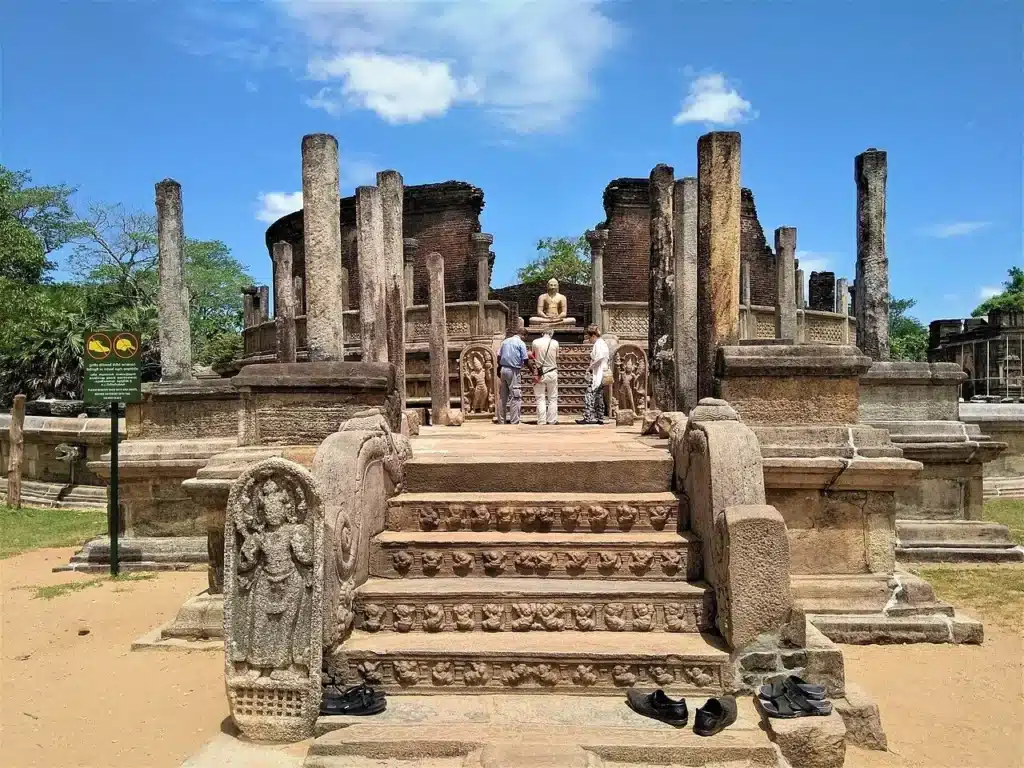
Shoes come off at the shrines where signs ask, and the stone gets hot, so both Laure Wanders and The Restless Beans suggest socks and shoes that slip off easily. Toque macaques have lived among the ruins for centuries (Wikipedia), so keep food out of sight. Wikivoyage warns against sleeping on the grass because of snakes (Wikivoyage). This guide gives no safety verdict of its own for the Cultural Triangle. Read the full GOV.UK page above, or our Sri Lanka safety guide, which goes through the official advice topic by topic.
Best time to visit and weather
Polonnaruwa lies in Sri Lanka’s dry zone, and the CCF advises seeing the monuments in daylight (CCF). In practice the heat decides the hour. Polonnaruwa has no station of its own in the 1991 to 2020 climate normals published by the World Meteorological Organization. The nearest is Maha Illuppallama, about 63 km to the west (WMO normals).
| Month | Rainfall, mm | Days with 1 mm or more | Mean max / min, °C |
|---|---|---|---|
| January | 92 | 7.0 | 29.7 / 20.8 |
| February | 82 | 4.4 | 31.4 / 21.0 |
| March | 63 | 5.6 | 33.9 / 22.1 |
| April | 179 | 11.0 | 34.0 / 23.7 |
| May | 113 | 6.7 | 33.0 / 25.0 |
| June | 22 | 3.0 | 32.3 / 25.0 |
| July | 21 | 3.0 | 32.7 / 24.7 |
| August | 40 | 3.8 | 33.0 / 24.5 |
| September | 90 | 5.3 | 33.1 / 24.2 |
| October | 270 | 13.8 | 31.9 / 23.3 |
| November | 274 | 16.5 | 30.4 / 22.6 |
| December | 209 | 12.5 | 29.3 / 21.8 |
June to August is driest, at 21 to 40 mm a month, and February and March come next. April has a wet spell of its own, and October to December brings the main rains, with 209 to 274 mm a month. Highs peak in March and April at about 34°C. December and January are the coolest months, with highs near 29 to 30°C.
So for the weather, aim for June to September or January to March, and arrive when the counter opens at 7am. Love Sri Lanka warns that crowds build at the Triangle’s temples at weekends and on poya, the full moon days (Love Sri Lanka). For the coasts and the hill country, see Sri Lanka weather by month.
Getting to Polonnaruwa from Colombo airport, Sigiriya, Dambulla and Kandy
We measured each road leg from the museum on 16 November 2026. The router (OpenStreetMap’s FOSSGIS service) times an empty road, so we rounded each result up into a range that allows for traffic and stops, in line with our Cultural Triangle guide where the leg appears there.
| From | Usual drive | Road distance |
|---|---|---|
| Bandaranaike airport | 4 to 4.5 hours | 200 km |
| Colombo Fort | 4.5 to 5 hours | 216 km |
| Negombo | 4 to 4.5 hours | 196 km |
| Sigiriya | 75 to 105 minutes | 56 km |
| Habarana | 50 to 65 minutes | 44 km |
| Dambulla | 1.5 to 2 hours | 68 km |
| Kandy | 3.5 to 4 hours | 138 km |
| Anuradhapura | 2.5 to 3 hours | 103 km |
| Trincomalee | 2.5 to 3 hours | 105 km |
| Weligama | 6 to 7 hours | 341 km |
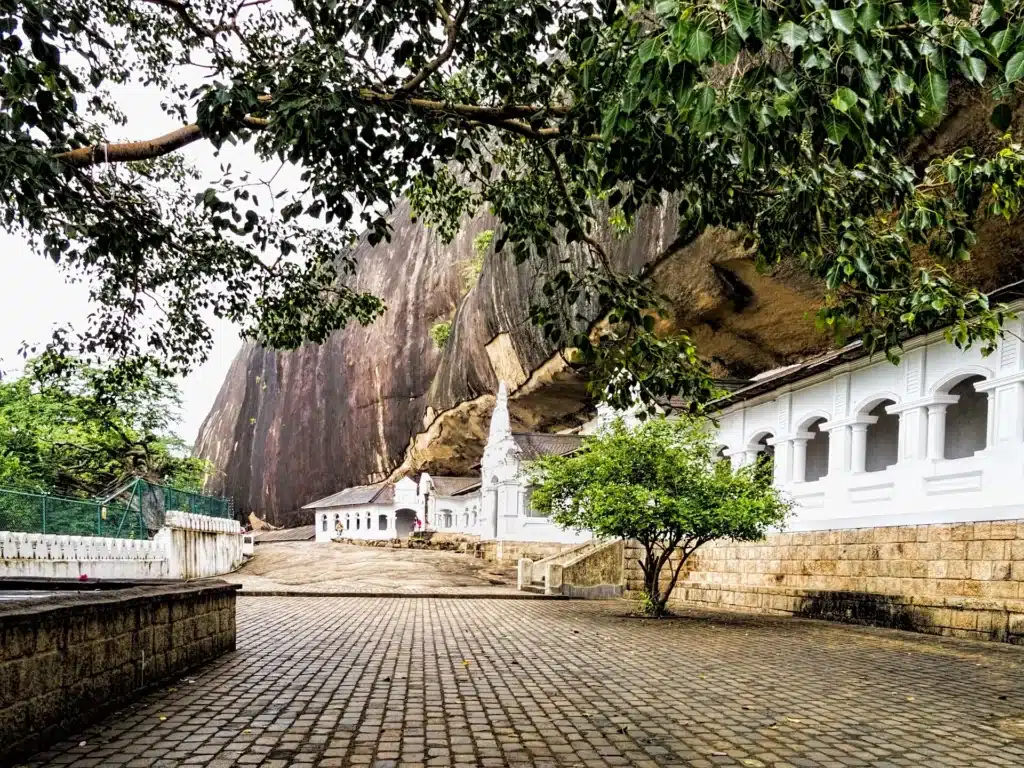
The Dambulla cave temple sits on the way from Kandy or Colombo, and Anuradhapura is the other great ruined capital, 2.5 to 3 hours north-west.
By train, Polonnaruwa is on the Batticaloa line (Sri Lanka Railways). Wikivoyage, in a line updated in August 2026, puts the station 5 km from the town centre and 5 hours from Colombo Fort, with three trains a day from Fort (Wikivoyage). After Cyclone Ditwah, the Pulathisi intercity returned on 9 January 2026 on Fridays only (Ada Derana). The daily Meenagaya express, which leaves Fort at 7pm, returned on 23 February 2026 (Ada Derana). Check times at the station.
Wikivoyage lists intercity buses from Colombo (6 to 8 hours) and buses from Kandy that stop at Dambulla. It puts the main bus stand 4 km east of the ruins (Wikivoyage). From Sigiriya there is no direct bus: you change at Inamaluwa junction on the main road (The Restless Beans; Laure Wanders).
Combining Polonnaruwa with Minneriya and Sigiriya
We measured the Minneriya leg the same way: the park gate is on the Habarana road, 35 km from the museum, a drive of 40 to 50 minutes (OpenStreetMap). That makes an easy pair: the ruins from 7am, lunch and a rest, then a jeep drive in the park. Love Sri Lanka dates the elephant gathering to the dry season between July and October, naming August and September as the top months. It recommends an afternoon drive, 3pm to 6pm, since the herds keep out of the daytime sun (Love Sri Lanka). Sightings are a chance, not a promise, and our Minneriya safari guide explains why the gathering has shrunk and what the park fees are.
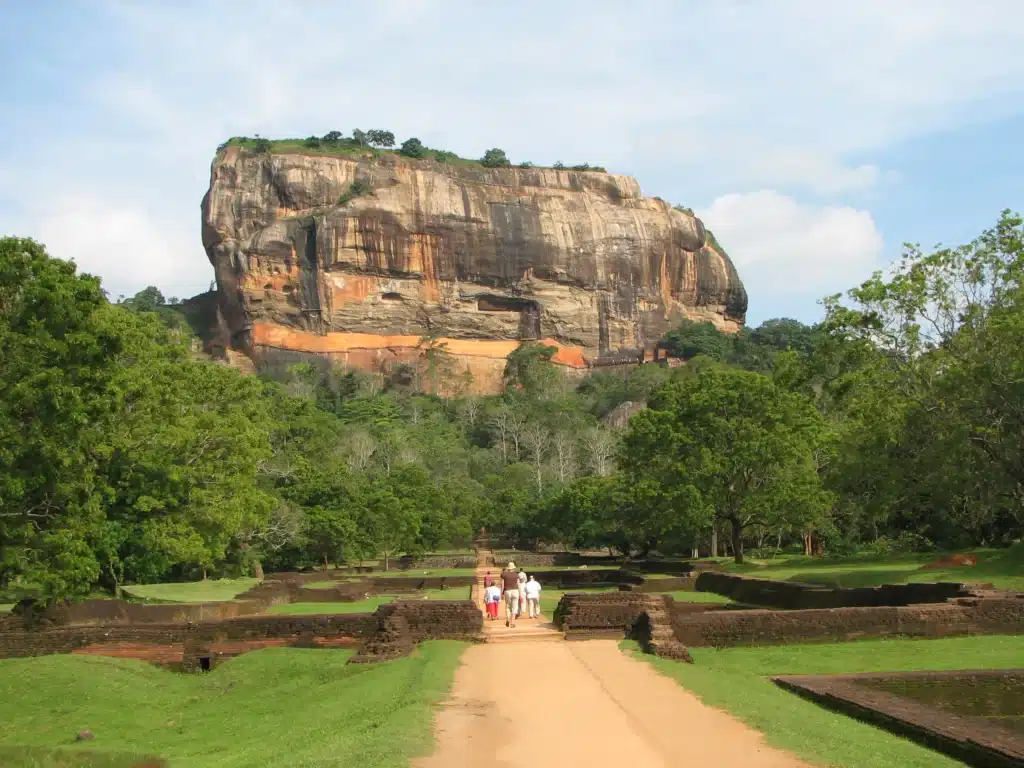
Sigiriya is 75 to 105 minutes away by road. Its CCF ticket was USD 35 on the same list (CCF price list), and the rock itself is in our Sigiriya guide. The Restless Beans note that many people visit as a day trip from Sigiriya or Dambulla.
| Plan | Day 1 | Day 2 |
|---|---|---|
| One full day from Sigiriya or Habarana | Polonnaruwa from about 8am, then Minneriya from 3pm on the drive back | None |
| Two days | Sigiriya at 7am, the Dambulla caves in the afternoon | Polonnaruwa by bike, then Minneriya or nearby Kaudulla |
| Two days with Anuradhapura | Anuradhapura, then 2.5 to 3 hours east | Polonnaruwa and an afternoon safari |
Frequently asked questions
How many hours do you need in Polonnaruwa?
Plan on about four hours for the main loop by bike, as The Restless Beans suggest, or a little less by car. Add the museum and the reservoir and it becomes a full day (GoAsia).
Is Anuradhapura or Polonnaruwa better?
Rough Guides calls Polonnaruwa smaller, better preserved and easier to take in. It gives Anuradhapura the edge for scale and living pilgrimage (Rough Guides). With one day based in Sigiriya, Polonnaruwa is closer.
How much is the Polonnaruwa entrance fee for foreigners?
Adults pay USD 30 and children aged 6 to 12 pay USD 15, according to the CCF price list dated 14 October 2026, which we read on 16 November (CCF price list). The museum is included.
Are there places to eat inside the complex?
Laure Wanders found stalls with snacks, cold drinks and coconuts, and toilets. The Restless Beans saw food and drink stalls across the road from the Quadrangle (The Restless Beans). Carry water.
Can you see elephants near Polonnaruwa?
The nearest herds gather at Minneriya National Park, 40 to 50 minutes away, and neighbouring Kaudulla. By Love Sri Lanka’s account the gathering is a dry-season event between July and October, with August and September as its peak (Love Sri Lanka). No one can promise a sighting.
Plan Polonnaruwa into your trip
Our team works from Weligama and builds private routes around the island. When you are ready, send us your dates, say if you’d like to tour the ruins on a bicycle or in a car, and we’ll fit Polonnaruwa, Sigiriya and Minneriya into one plan. Contact us to plan your trip.
Ticket prices, the GOV.UK advice, the rail reports and every OpenStreetMap route were checked on 16 November 2026. Rupee amounts change with the dollar rate, so confirm them at the counter. Hero photo: the Vatadage, by Josep Renalias (Lohen11), CC BY 4.0, via Wikimedia Commons.