Key takeaways
- Most of a traditional Sri Lankan rice and curry meal is already vegetarian, so a vegan cooking class here is not a modified version of anything.
- Coconut milk does the work that dairy does elsewhere, which means no substitutions are needed for creaminess.
- The two things to check are Maldive fish in the pol sambol and dried sprats in some vegetable curries. Both are easy to leave out.
- Jackfruit, breadfruit, banana blossom and cassava are everyday ingredients here, not novelty items.
- Ask for a plant based class when booking and the family will simply cook the version they already eat on poya days.
Sri Lanka is easier than you were told
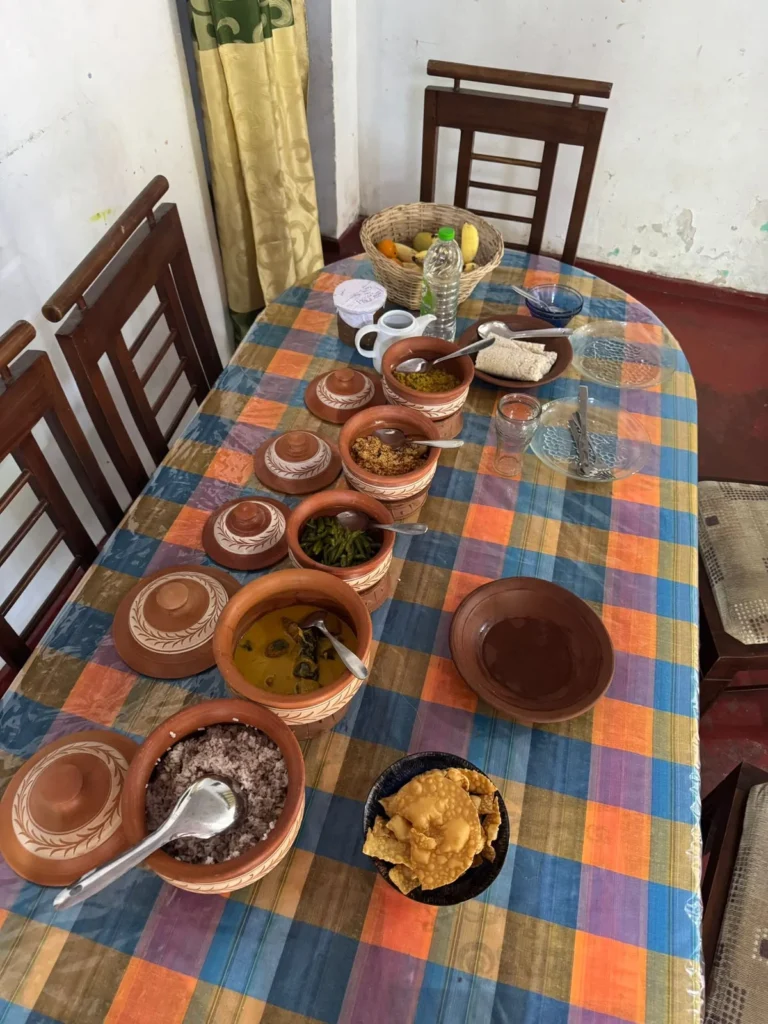
Vegetarians arrive in Sri Lanka braced for a fortnight of negotiation and then find the opposite. A standard rice and curry plate is rice with five or six small vegetable dishes around it. Fish or chicken, if it appears at all, is one more bowl on a table that already has plenty.
Take that bowl away and nothing collapses. You still have dhal, a green, something starchy, a coconut sambol and a pickle. That is the meal, and it is what a lot of Sri Lankan households eat on ordinary weeknights anyway.
Buddhist observance is part of why. On poya days, which fall on each full moon and are public holidays, many households cook entirely without meat. Every family kitchen therefore has a plant based repertoire it already knows by heart.
The two ingredients to ask about
Two things catch people out, and neither is obvious from looking at the food.
The first is Maldive fish. It is a dried, cured tuna, shaved or pounded into a coarse powder, and it goes into pol sambol as seasoning. You will not see it and you may not taste it as fish. Ask for the sambol without it and you lose very little, because the chilli, lime and coconut are doing most of the work.
The second is dried sprats, which sometimes get fried into vegetable curries the way anchovies get into a Western sauce. Less common in a class than in a restaurant, but worth naming when you book.
Say “no fish, no dried fish, no Maldive fish” and you have covered it. Ghee turns up occasionally in festive rice, so mention dairy separately if you are vegan.
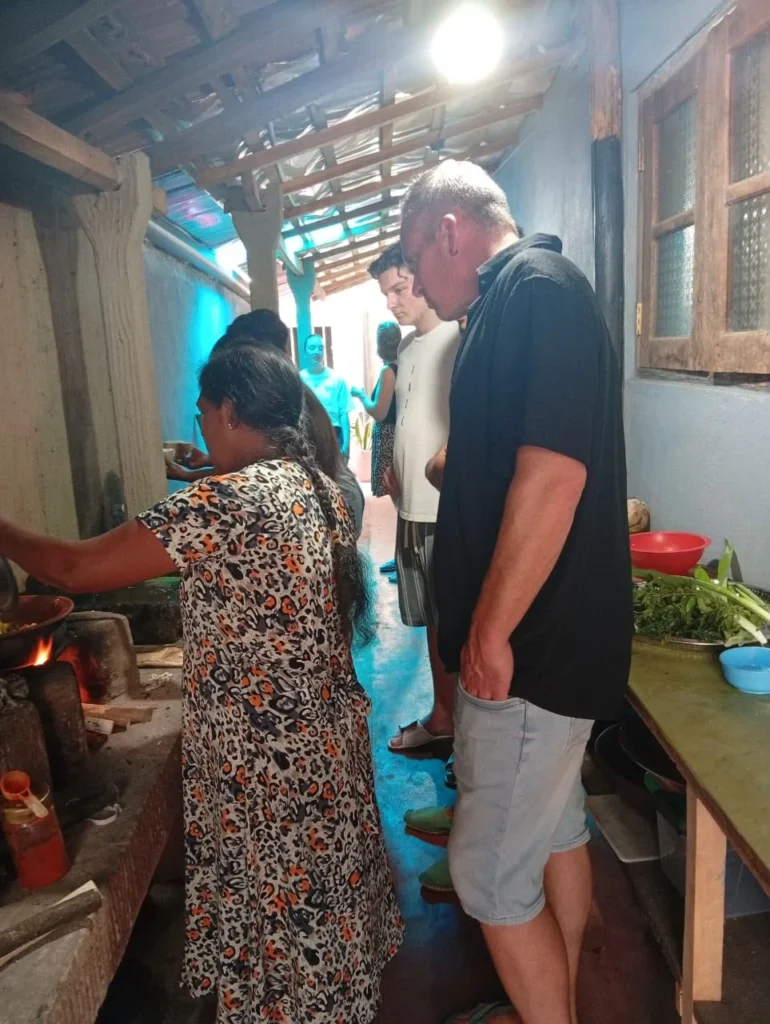
What you cook in a plant based class
The dishes are not a reduced menu. They are the ones the family cooks most often.
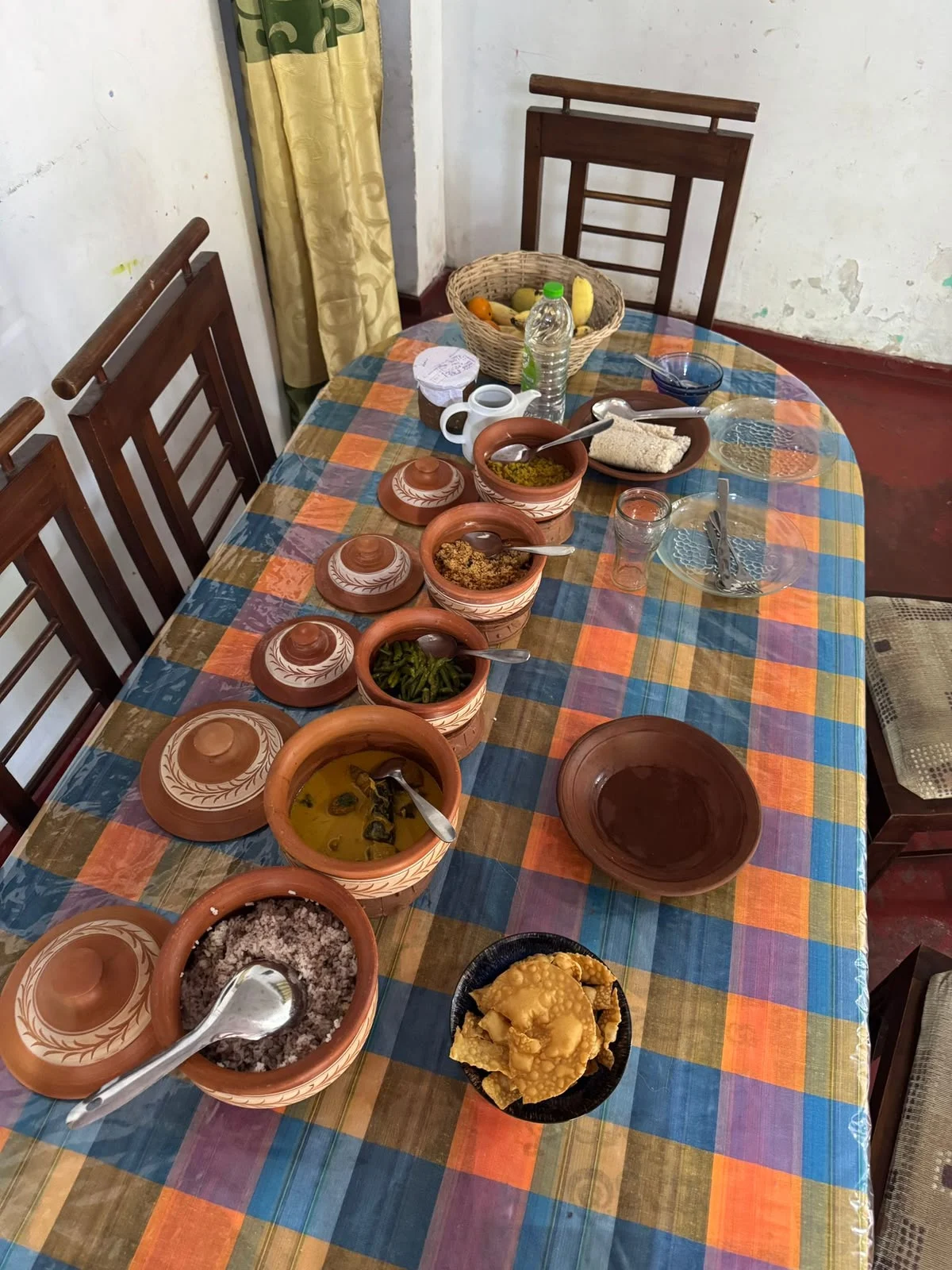
Parippu, red lentil dhal simmered in coconut milk with turmeric, curry leaves and pandan. The backbone of the meal and the easiest thing to make again at home.
Pol sambol without the fish. Fresh grated coconut, red chilli, lime, onion, pounded by hand.
Polos, young green jackfruit cooked long and slow in spice until it goes dark and dense. This is the one that startles people. It has the texture of slow-cooked meat and none of the tofu-ish apology of most substitutes. Jackfruit has become a fashionable meat replacement in the West, which is funny to Sri Lankans, who have been cooking it this way for centuries.
Kiri hodi, a mild coconut milk gravy with turmeric and onion. Pour it over rice.
Wattakka, pumpkin cooked with roasted spice and coconut milk, which comes out sweet and slightly smoky.
Plus pol roti, or hoppers if the family is set up for them, and whatever green is in the garden that week.
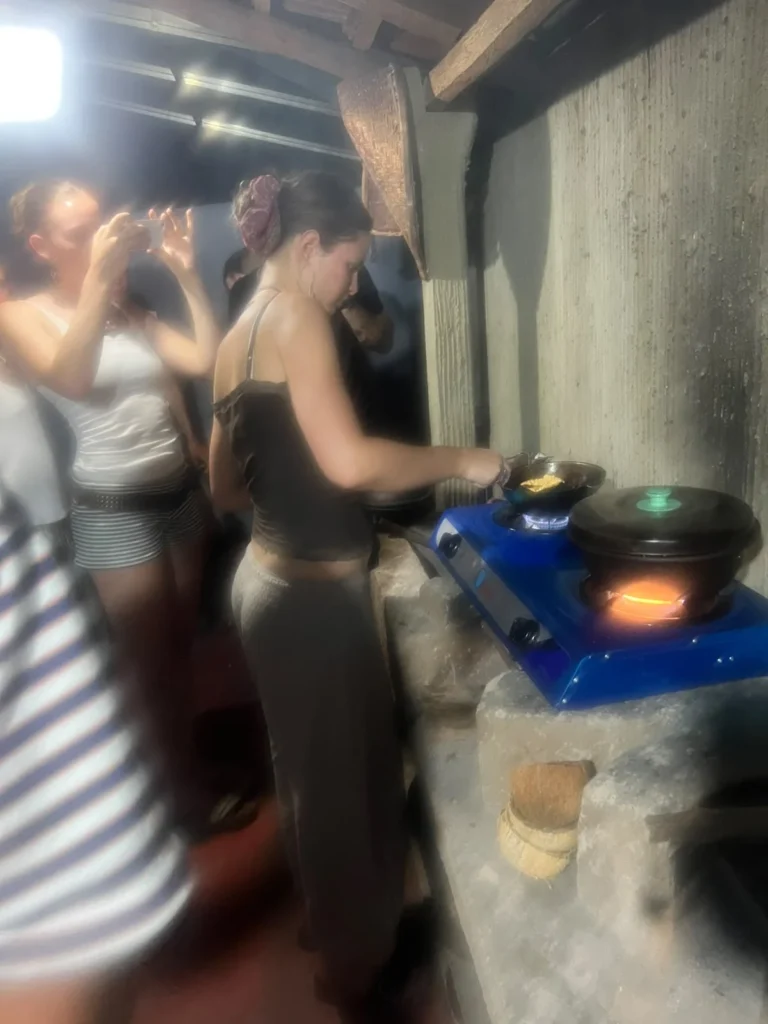
Why coconut changes everything
The reason Sri Lankan vegan food does not feel austere is coconut milk. It gives body, fat and sweetness, which is exactly what plant based cooking usually has to work around.
In a village class you extract it yourself. Scrape the flesh out of the shell, add warm water, squeeze it through your fists over a bowl. The first pressing is thick and goes in at the end. The second is thinner and cooks with the vegetables from the start. Once you have done this by hand, tinned coconut milk makes a different kind of sense.
The other lever is the spice blend. Sri Lankan cuisine roasts its curry powder darker than Indian cooking does, and that toasted depth is what stops a vegetable curry tasting thin.
Finding a good plant based class on the south coast
Village classes near Weligama, Mirissa and Unawatuna will nearly all cook a fully vegetarian menu on request, because it is what they eat anyway. Hotel classes tend to build the lesson around fish or chicken and then remove it, which is a worse meal.
Ask a specific question when you book: “what would you cook if we asked for no meat and no fish at all?” A family that answers with five dish names is the one to book. A family that pauses is going to serve you the same class minus a bowl.
If you are travelling around, Lonely Planet notes that the hill country around Kandy and Ella is even more reliably vegetarian than the coast, partly for religious reasons and partly because it is further from the fishing harbours.
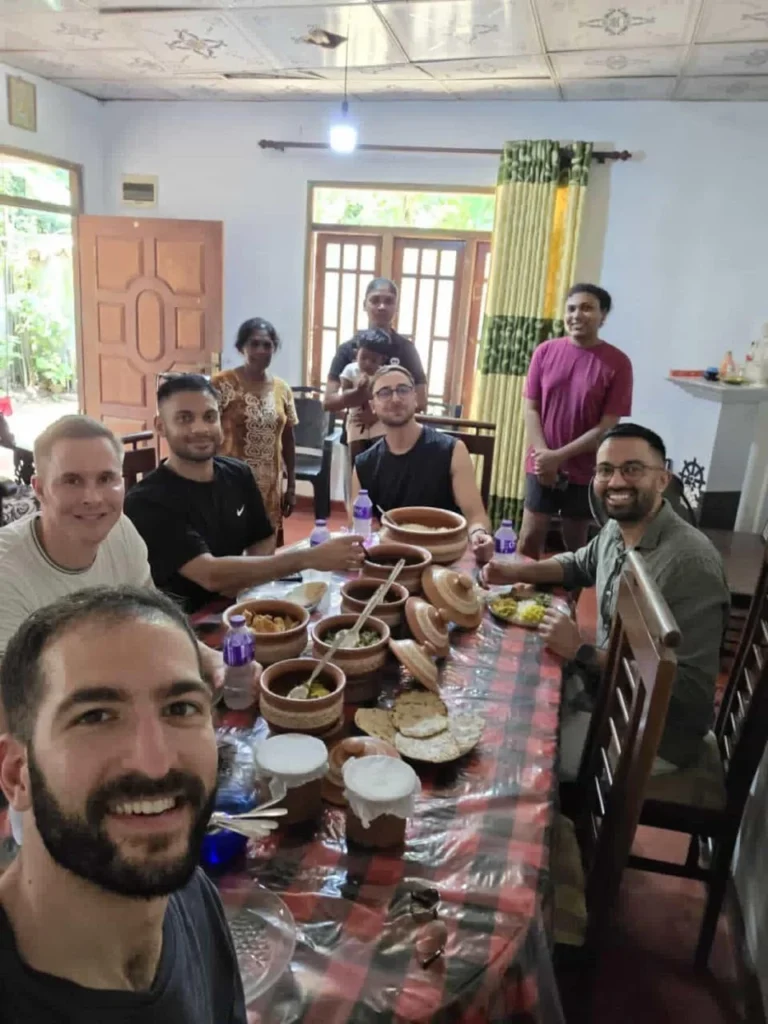
Practical notes
Say it twice. Once when booking and once on arrival. This is not distrust, it is how any kitchen works.
Vegan is understood, but the word may not be. “No fish, no meat, no milk, no ghee, no egg” travels better than the label.
Hoppers are usually vegan, being rice flour and coconut milk. Egg hoppers obviously are not, and they are often served as a treat, so decline politely if you need to.
Bring a container. You will be given more food than you can eat, and throwing it away in a village home feels bad.
Frequently asked questions
Is a vegan cooking class in Sri Lanka a compromise?
No. Most of a standard rice and curry spread is plant based already. You are learning the everyday version of the cuisine, not a modified one.
What is Maldive fish and why does it matter?
It is dried cured tuna used as a seasoning powder, mostly in pol sambol. It is invisible in the finished dish, so vegetarians should name it specifically when booking.
Is coconut milk used instead of dairy?
Yes, and it is the default rather than a substitute. Sri Lankan cooking barely uses dairy, so most dishes are accidentally vegan already.
Can I learn to make hoppers on a vegetarian class?
Yes, if the family has a hopper pan. Plain hoppers are rice flour, coconut milk and a little yeast, all plant based.
Are there vegan options outside the class?
Widely. Rice and curry shops serve vegetable plates everywhere, and kottu can be made with vegetables only. Ask about the sambol.
Is jackfruit really like meat?
Young green jackfruit cooked as polos has a dense, fibrous texture that reads as meaty. Ripe jackfruit is a sweet fruit and a completely different thing.
How spicy is vegetarian Sri Lankan food?
Same as the rest. Heat lives in the sambol and the chilli paste on the side, so ask for those separately if you want a milder plate.
Want a class built around this?
We are based in Weligama and we know which families cook the best jackfruit. If you are vegetarian or vegan and want a class that treats that as normal rather than a special request, let us know. We can also fold one into a wider Sri Lanka tour.
Related reading
This is one of a series on eating and cooking in Sri Lanka. For the wider picture, see our guide to the best food experiences in Sri Lanka, and if you are still choosing a class, our guide to picking the best cooking class in Sri Lanka.