Key takeaways
- A family friendly cooking class in Sri Lanka works best for children aged roughly six and up, mostly because of the open fire.
- Kids get the jobs that are fun and safe: scraping coconut, shaping roti, picking curry leaves, stirring off the heat.
- Ask for the chilli to be served separately rather than cooked in. Any family kitchen will do this if you ask when booking.
- Two to three hours is the realistic limit for younger children. Book the shorter session.
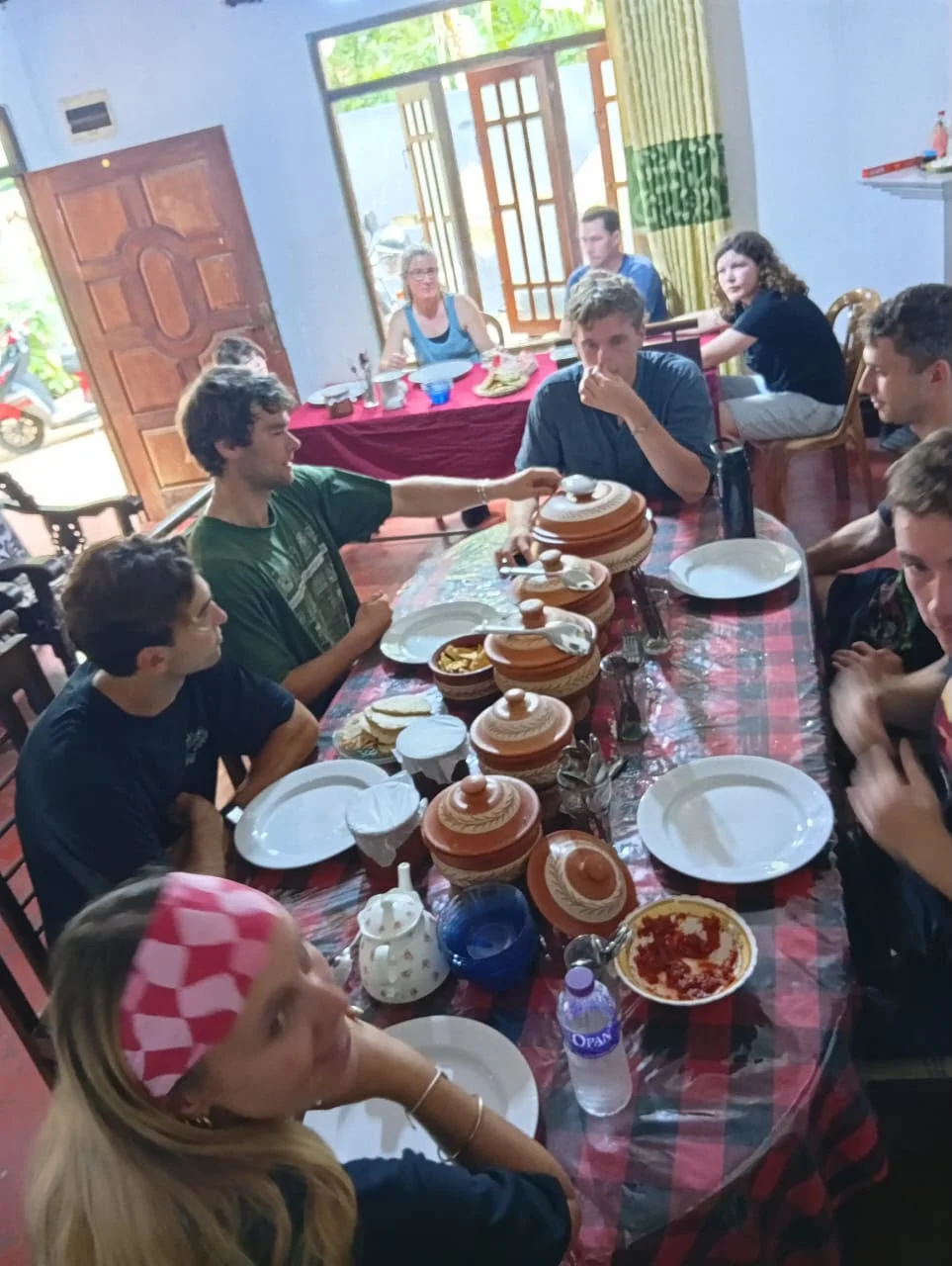
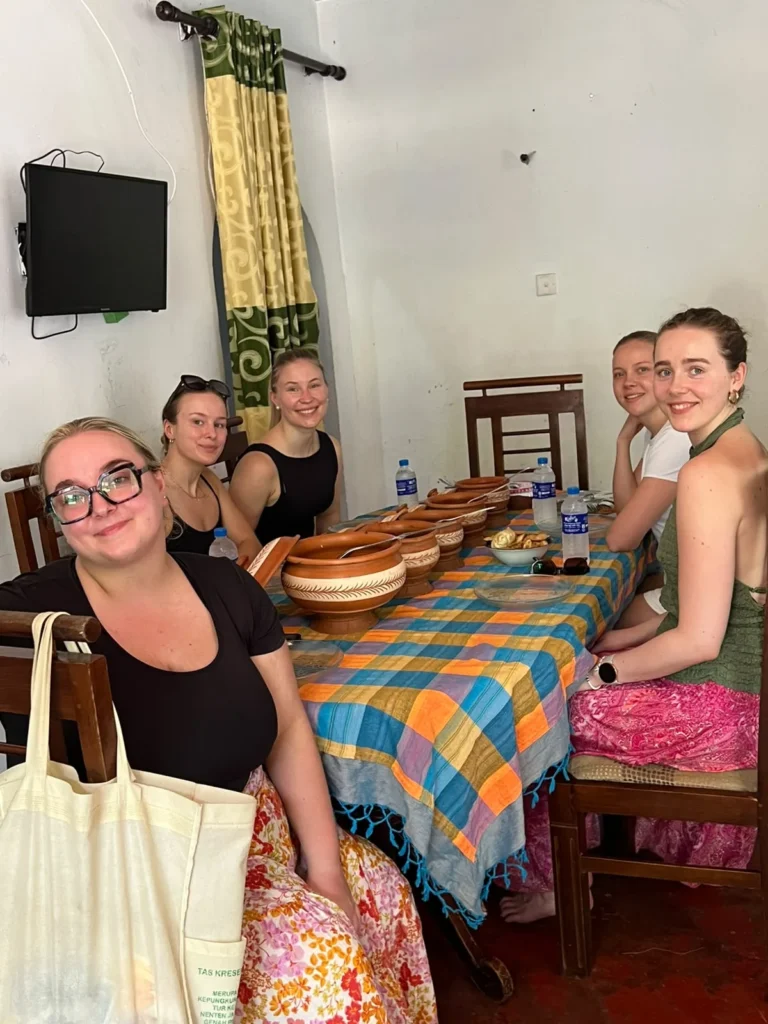
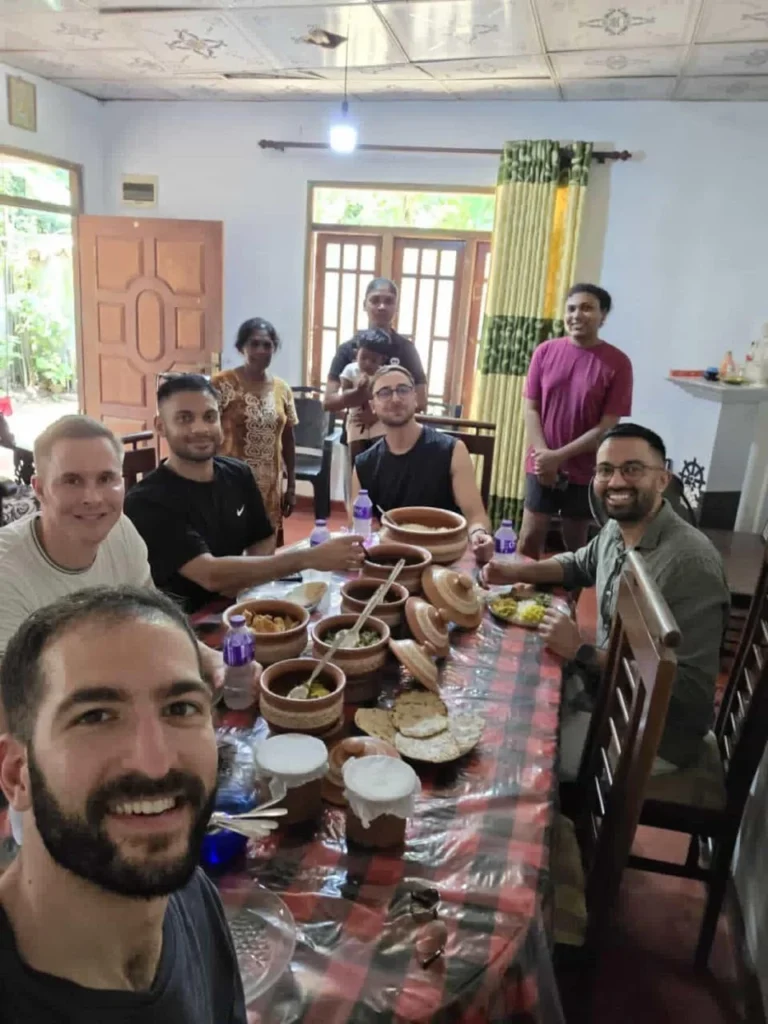
- The meal at the end is the part children remember, because they recognise everything on the table as something they helped make.
Will children actually enjoy this?
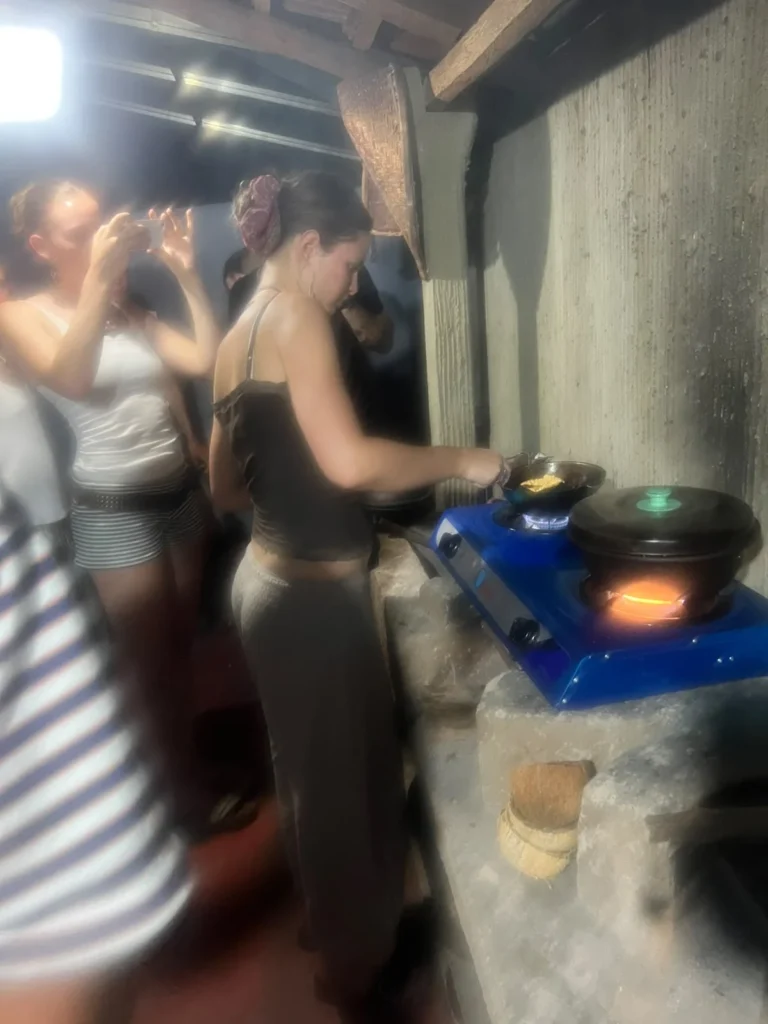
Mostly yes, and for a reason that has nothing to do with food. A village kitchen is a room where children are allowed to touch things.
There is a stool with a blade for scraping coconut, a stone for grinding spice, dough to flatten with your palms, and a fire someone is constantly feeding with sticks. For a nine year old this beats a museum by a distance. The cooking is almost incidental.
The honest caveat: very young children get bored around the ninety minute mark, and the kitchen is hot. If yours are under six, book a short session and accept that one parent may spend part of it outside in the garden.
What kids can safely do
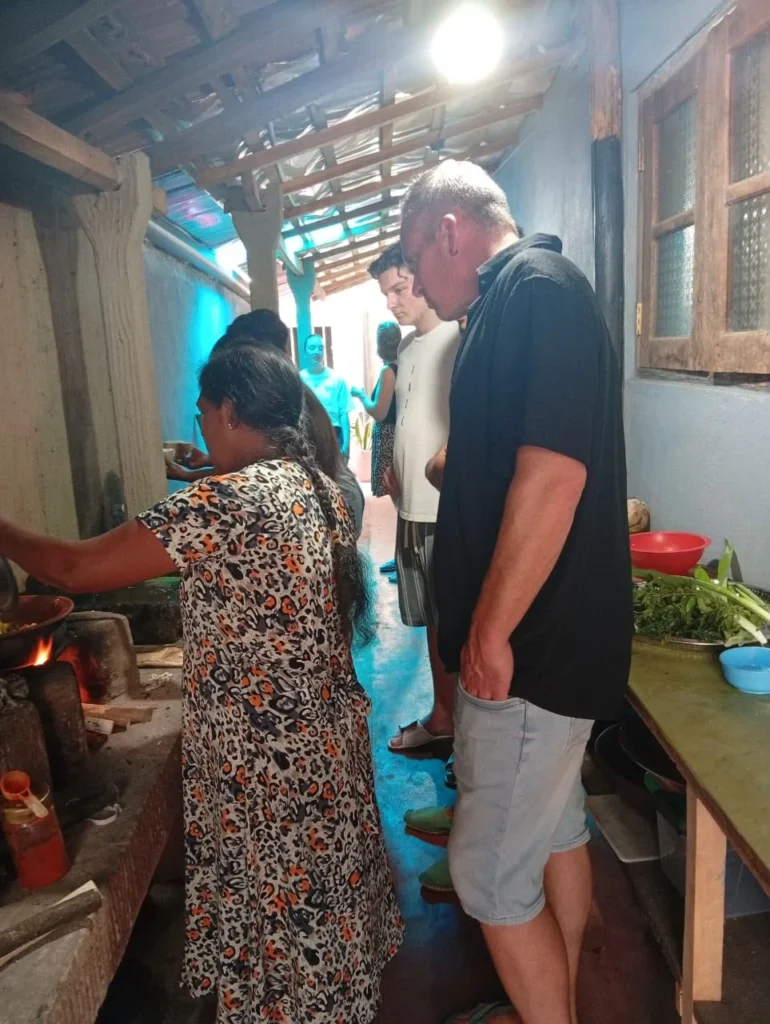
Sri Lankan home cooking has a lot of preparation and not much knife work, which suits children well.
Coconut scraping is the reliable winner. It looks like a job for adults, it makes a satisfying pile of white shreds, and the blade faces away from small hands when you sit properly. Most families will supervise this closely.
Shaping pol roti is the other one. It is essentially playdough that you get to eat, and children are often better at it than their parents because they are less worried about making it perfect.
Then there is the garden. Half the vegetables come from a few metres away, and being sent to fetch curry leaves or a lime is a small job that makes a child part of the meal rather than a spectator.
What they should not do: anything near the fire, and anything involving the fresh green chillies, which are considerably hotter than they look.
The spice question
This is the thing parents ask about first, and it has a simple answer. Sri Lankan heat is added, not baked in.
The chilli in a rice and curry meal comes mostly from pol sambol and from a small dish of chilli paste on the side. The curries themselves, the dhal, the pumpkin, the green beans, are seasoned with turmeric, curry leaves, pandan and coconut milk. Those are aromatic rather than hot.
Tell the family when you book that you have children eating. They will hold back the chilli and put it on the table separately, which means the adults can still eat the food properly. This is normal and nobody will find the request odd. Sri Lankan cuisine has plenty of mild dishes that are not a compromise version of anything.
Worth knowing separately: the Ceylon cinnamon used in Sri Lankan cooking is sweet and mild, and children usually like it. It is a different species from the cassia sold as cinnamon in most supermarkets.
Fitting it into a family holiday
Cooking classes on the south coast run from villages near Weligama, Mirissa and Unawatuna, which is a short drive from most family accommodation between Galle and Matara.
Timing matters more with children than it does with adults. A mid morning start works best: the kitchen is cooler, everyone is fresh, and you are eating by early afternoon with the rest of the day still available. Late afternoon classes end close to bedtime and the drive back in the dark is nobody’s favourite.
If you are pairing it with something else that day, keep it gentle. The class plus an hour inside Galle Fort is a good day. The class plus a whale watching trip is too much.
Families usually find their own rhythm here, and Lonely Planet rates Sri Lanka as one of the easier Asian destinations to travel with children, largely because of how Sri Lankan households treat them. Your kids will be fussed over. Expect it.
Practical notes for parents
Closed shoes for everyone, including children. Kitchen floors are uneven and there is a fire.
Bring water and a snack. There is a gap of a couple of hours between arriving and eating, and a hungry six year old will not enjoy the wait.
Clothes will smell of woodsmoke afterwards. This washes out, but do not put anyone in something precious.
Ask about the toilet before you commit to a long session. Village homes have them, but they are simple, and it is better to know in advance than to discover it with a child who needs one urgently.
Most families will cook a plain portion of rice with a little dhal for a child who decides at the last minute they do not want any of it. This happens more often than you would think and nobody minds.
Frequently asked questions
What age is a family cooking class suitable for?
Six and up works reliably. Younger children can join but will need a parent with them the whole time, and a shorter session.
Is the food too spicy for children?
Not if you ask. The heat comes from sambol and a side dish of chilli paste, both of which can be served separately. The curries themselves are aromatic rather than hot.
How long should we book for with kids?
Two to three hours. Skip the market visit version, which adds an hour of standing around before any cooking starts.
Do children pay full price?
Usually a reduced rate, and small children often eat free. It varies by family, so confirm when booking.
Is it safe with an open fire in the kitchen?
Yes, with normal supervision. The fire sits in a raised stone hearth rather than on the floor, and the family will keep children on the far side of it. Closed shoes are the sensible precaution.
What if my child is a fussy eater?
Rice, pol roti and dhal are the three things almost every child will eat. The roti in particular tends to win over children who have refused everything else on the trip.
Can we do this as a private family class?
Yes. A private session costs more per person but lets you set the pace, which is worth it with younger children.
Planning a family trip to the south coast?
We book these classes for families most weeks and we know which households are relaxed about children and which are not. If you want a class that fits the ages you are travelling with, or a driver for the village run, tell us who is coming and we will match you up. Our Sri Lanka tours can be paced for families too.
Related reading
This is one of a series on eating and cooking in Sri Lanka. For the wider picture, see our guide to the best food experiences in Sri Lanka, and if you are still choosing a class, our guide to picking the best cooking class in Sri Lanka.