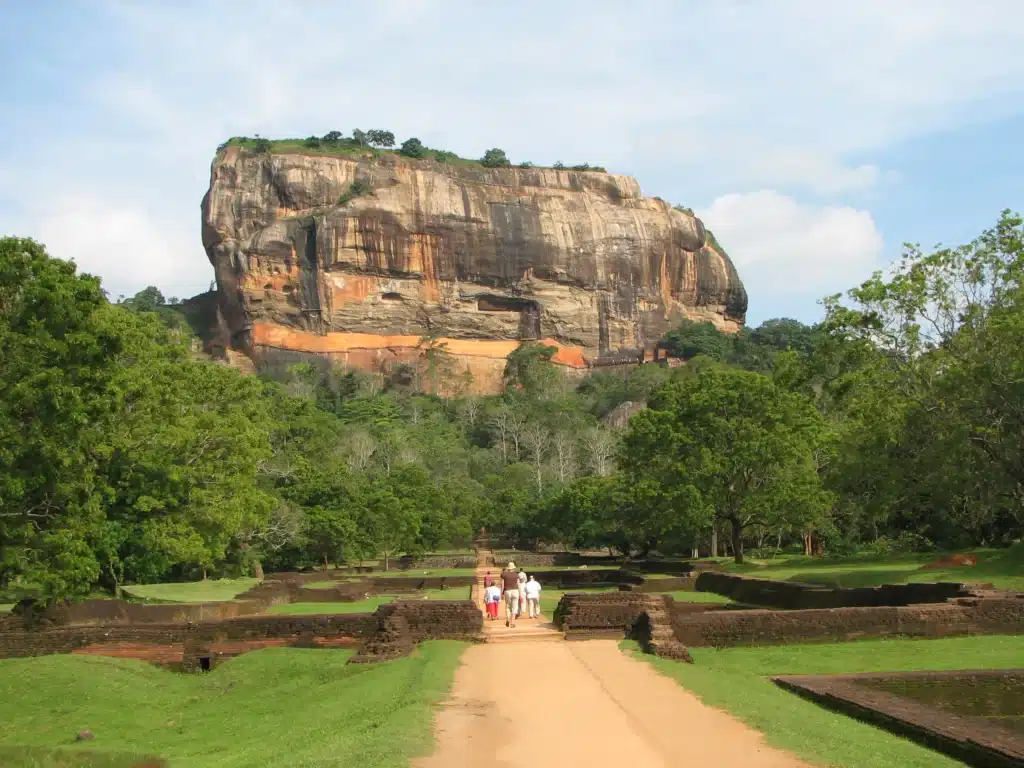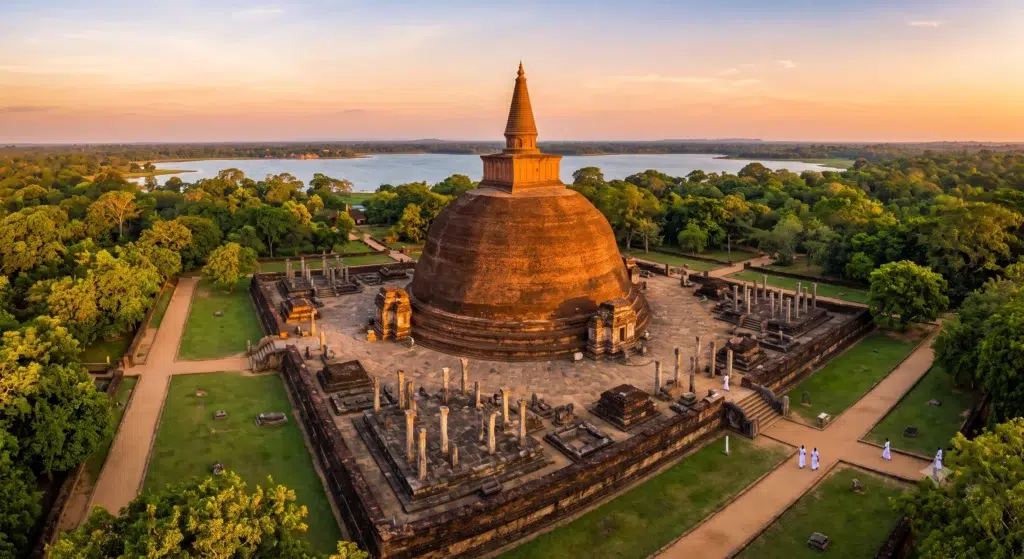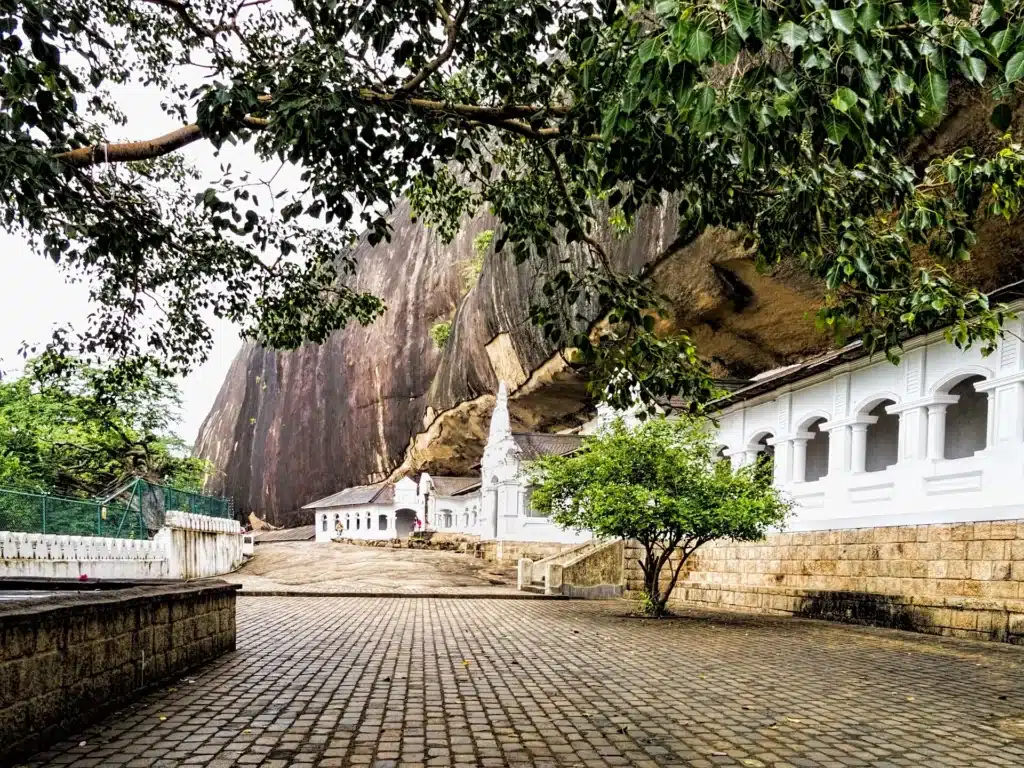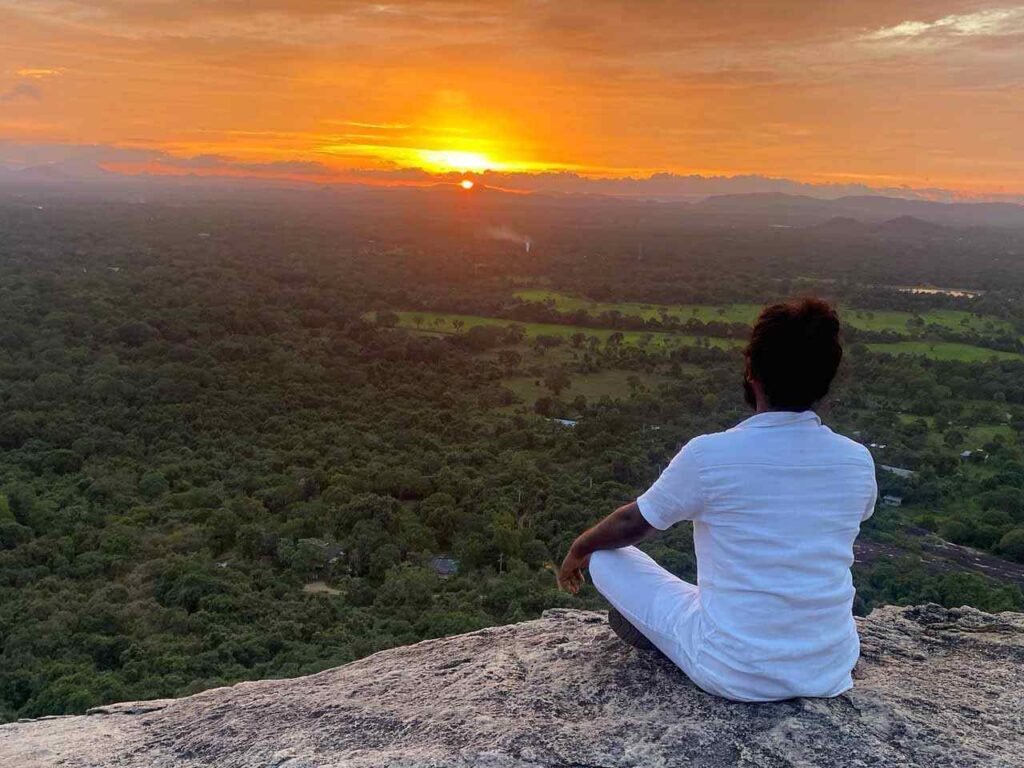
Anuradhapura was Sri Lanka’s first capital (CCF), and UNESCO added its Sacred City to the World Heritage List in 1982 (UNESCO). Give it one full day: Wikivoyage suggests a tuk-tuk if you want every main site in a day (Wikivoyage). A foreign adult ticket was USD 30 on the Central Cultural Fund’s list when we checked on 24 October 2026 (CCF price list). By road it is about 209 km from Colombo, usually 4 to 4.5 hours (OpenStreetMap), 3.5 to 4 hours from Negombo, and 2 to 2.5 hours from Sigiriya.
Key takeaways
- The CCF ticket costs USD 30 for an adult and USD 15 for a child aged 6 to 12. Wikivoyage lists separate rupee fees for Isurumuniya and Mihintale.
- The main ruins sit on a loop of about 12 km, so a bicycle or a tuk-tuk beats walking.
- Ticket counters open at 7am and close at 5pm, so start early and finish the paid sites first.
- June and July are the driest months at the town’s weather station, and October to December the wettest.
- The sacred sites are working temples: cover shoulders and legs, and take off shoes and hats.
What Anuradhapura is: a capital for 1,300 years
The city was founded around a cutting of the Buddha’s tree of enlightenment, which the nun Sanghamitta carried here in the 3rd century BC. It served as a political and religious capital for some 1,300 years, until an invasion in 993 left it abandoned (UNESCO). The Central Cultural Fund, which runs the site, dates the city to the 4th century BCE (CCF).
Today there are two Anuradhapuras. Under a preservation plan begun in 1949, government offices and law courts moved to a planned New Town to the east, leaving the ruins as the Sacred City (Wikipedia). It is still a place of worship, and Wikivoyage notes that most visitors are Sri Lankan pilgrims in white (Wikivoyage).
Anuradhapura is the northern corner of the Cultural Triangle and first on our list of historical places in Sri Lanka. Newswire reported on 1 October 2026 that a draft Sacred City development plan, covering access roads, sanitation and repairs, had gone to India’s High Commission for funding. The President’s Media Division expected work to start before the end of 2026 (Newswire).
The main ruins of Anuradhapura, in route order
This order starts at the southern edge, runs north through the old city and swings back to the biggest stupa, which is how our cycling loop below runs.
Isurumuniya
This rock temple beside the Tissa Wewa reservoir dates to King Devanampiya Tissa’s reign. Look for the elephants carved into the rock beside the pool, and the slab known as the Isurumuniya Lovers (Wikipedia).
Sri Maha Bodhi and the Brazen Palace
Sri Lankan tradition dates this Bo tree cutting to 236 BC, and Wikipedia calls it the oldest living tree planted by people with a known planting date (Wikipedia). Expect a metal detector and a bag check, and leave your shoes near the entrance (Wikivoyage). Next door stand the 1,600 stone pillars of Lovamahapaya, the Brazen Palace, named for its bronze roof tiles (Wikipedia).
Ruwanwelisaya
King Dutugemunu built this great white stupa in about 140 BC. Restored in the 20th century, it now stands 103 m high, and it is one of the city’s eight places of veneration (Wikipedia).
Thuparamaya
The smaller stupa a short walk north is the earliest one built on the island, from the reign of Devanampiya Tissa (247 to 207 BC) (Wikipedia).
Abhayagiri, its museum and the Samadhi Buddha
Abhayagiri was a monastery founded in the 2nd century BC, and by the 1st century AD it drew scholars from abroad (Wikipedia). The CCF’s Abhayagiriya Museum opened here in 1992 and remembers the Chinese monk Fa-Xian, who studied at the monastery in 411 and 412 AD (CCF). A few hundred metres away sits the Samadhi Buddha, a meditating figure carved in dolomite marble around the 4th to 6th century (Wikipedia).
Kuttam Pokuna, the Twin Ponds
These two stone bathing pools lie on the eastern edge of the Abhayagiri complex (Wikipedia). The CCF points to them as an example of the period’s advanced water engineering (CCF).
Jetavanaramaya
King Mahasena (273 to 301) began this brick stupa. At 122 m it was then the third tallest structure in the world, after two of the Giza pyramids, and roughly 93.3 million bricks went into it. Rebuilt in the 12th century, it now stands 71 m tall (Wikipedia).
Anuradhapura tickets in 2026: price, rules and what they cover
The CCF list we read on 24 October 2026 was dated 14 October. It priced a full foreign ticket at USD 30, or LKR 10,080, and a half ticket at USD 15 (CCF price list). You pay in rupees at the current exchange rate (CCF tickets). Children aged 6 to 12 and International Student Identity Card holders pay half, and under-sixes enter free with proof of age (CCF).
You can order online, but you collect the ticket at the site counter. Orders stay valid for 90 days, a ticket admits you once on the day, and payments are not refunded. Counters open from 7am to 5pm (CCF e-tickets). Wikivoyage says you can buy at the Archaeology Museum or at an entrance, and that staff check tickets at random on the roads between sites (Wikivoyage). Keep yours with you all day.
Neither the CCF nor Wikivoyage lists every monument the ticket covers, so this table gives only what the sources say. Wikivoyage still gave the main ticket as US$25 on 24 October 2026; we go by the fund’s own list.
| Site | Ticket, as the source states it |
|---|---|
| Sri Maha Bodhi | Free (Wikivoyage listing, last edited 2018) |
| Ruwanwelisaya | Free (Wikivoyage listing, last edited 2019) |
| Abhayagiri and the museums | In the paid northern area (Wikivoyage) |
| Isurumuniya | Rs 500 for adults, under-10s free, outside the main ticket (Wikivoyage line added in August 2026) |
| Mihintale | Rs 500 for the view from the top (on Wikivoyage since 2012) |
| Thuparamaya, Jetavanaramaya, Samadhi Buddha, Twin Ponds | Not named by either source |
We dated each Wikivoyage line from the page’s edit history (Wikivoyage history). None of these is an official price, so carry rupee notes and check at the gate. The CCF’s ticket page also describes a two-month Cultural Triangle round ticket (CCF tickets), but its price list showed no price for one on 24 October 2026. Filming and drones need the fund’s written approval in advance (CCF e-tickets).
A half day and a full day route, by bike or tuk-tuk
We ran the stops above through OpenStreetMap’s cycling planner, from Isurumuniya to Jetavanaramaya. The loop came to 12.4 km and 66 minutes of riding without stops; on foot it was about 10.3 km and 2 hours 20 minutes (OpenStreetMap). Add time at each site and the full loop fills a day.
| Plan | Stops | Distance |
|---|---|---|
| Half day | From 7am: Sri Maha Bodhi, the Brazen Palace, Ruwanwelisaya, Thuparamaya; rest through the afternoon heat | About 3 km |
| Full day | Morning: Isurumuniya and the central group. Afternoon: Abhayagiri museum, Samadhi Buddha, Twin Ponds, Jetavanaramaya | About 12 km |
| Full day plus | A shorter loop, then Mihintale in the late afternoon | Add 18 km each way |
The half day figure adds two legs on the same planner: 1.7 km from the Bodhi tree to Ruwanwelisaya, then 1.2 km to Thuparamaya. The old town is open to visitors until 5pm, though many temples stay open until 9pm or later on full moon poya days (Wikivoyage).
Wikivoyage gives 2023 prices: Rs 3,500 to 4,500 for a tuk-tuk tour and about Rs 1,000 a day for a hotel bicycle. The PickMe app works here for tuk-tuks and taxis (Wikivoyage). If you’d rather keep a car and driver for the day, our guide to what a driver costs compares listed day rates.
Anuradhapura city tour: how guided visits work
Wikivoyage describes guided city tours by bicycle or on foot, booked through local agencies or your hotel, alongside tuk-tuk drivers who charge by the tour. It warns that some tuk-tuk offers priced below the ticket mostly show the free sites, skipping the museums and Abhayagiri (Wikivoyage). Before you pay, ask which sites are on the route and whether the CCF ticket is included.
On our own routes, the 11-day Waves and Wonders: Coastal Escape tour gives Anuradhapura a full day. Its page describes a guided walk through the main group, including the Sri Maha Bodhi and Ruwanwelisaya, then Mihintale in the afternoon. Our 2 week itinerary also starts with a night here, straight from the airport.
Temple dress and conduct at the Sacred City
GOV.UK’s travel advice for Sri Lanka was updated on 21 September 2026 and was still current on 24 October (GOV.UK). For Buddhist temples it says to cover your legs and shoulders and to take off shoes and hats. It also says not to pose for photos standing in front of a Buddha statue. Showing disrespect to Buddhist images can get you arrested, and visible Buddha tattoos can mean refused entry or deportation (GOV.UK).
Wikivoyage adds two customs: walk round a stupa clockwise, keeping your right side towards it, and do not turn your back on an image of the Buddha. It also warns that macaques steal unattended belongings (Wikivoyage). A light scarf or sarong in your bag covers shoulders or knees.
When to go: heat and rain by month
The World Meteorological Organization’s 1991 to 2020 normals for the Anuradhapura station show a wet April, a long wet season from October to December, and drier months in between (WMO climate normals).
| Month | Rain (mm) | Rain days | Average high / low (°C) |
|---|---|---|---|
| January | 86 | 6.4 | 30.4 / 21.8 |
| February | 60 | 4.3 | 32.2 / 22.2 |
| March | 62 | 5.0 | 34.8 / 23.5 |
| April | 180 | 11.0 | 34.7 / 24.6 |
| May | 94 | 5.9 | 33.7 / 25.4 |
| June | 15 | 2.5 | 33.2 / 25.4 |
| July | 24 | 2.5 | 33.5 / 25.2 |
| August | 43 | 4.4 | 33.8 / 25.0 |
| September | 67 | 5.1 | 33.9 / 24.7 |
| October | 259 | 13.8 | 32.5 / 24.0 |
| November | 281 | 17.2 | 30.8 / 23.3 |
| December | 225 | 12.2 | 29.8 / 22.6 |
Rain days are days with at least 1 mm. Rain is lightest from June to August, at 15 to 43 mm a month, and again in February and March, at about 60 mm. Average highs peak in March and April. Our Sri Lanka weather by month table compares this with the coasts and hills.
Love Sri Lanka says the temples fill up at weekends and on poya days (Love Sri Lanka), and every full moon is a poya. Poson, in June, marks the arrival of Buddhism, with its main ceremonies in Anuradhapura and Mihintale (Wikipedia). The Central Bank’s list puts Poson poya on 18 June 2027 (CBSL).
Getting to Anuradhapura from Colombo, Negombo, Sigiriya and Kandy
We measured each leg on 24 October 2026 from the Sri Maha Bodhi area with OpenStreetMap’s route planner. It assumes empty roads, so we rounded each time up to a usual range that matches our Cultural Triangle guide.
| From | Distance | Usual drive |
|---|---|---|
| Colombo Fort | 209 km | 4 to 4.5 hours |
| Bandaranaike airport | 179 km | 3.5 to 4 hours |
| Negombo | 173 km | 3.5 to 4 hours |
| Habarana | 61 km | 1.5 to 2 hours |
| Dambulla | 68 km | 1.5 to 2 hours |
| Sigiriya | 78 km | 2 to 2.5 hours |
| Polonnaruwa | 104 km | 2.5 to 3 hours |
| Kandy | 138 km | 3.5 to 4 hours |
| Weligama | 320 km | 6 to 7 hours |
Our airport transfers page gives the airport run as 165 km and 3 hours 30 minutes, the low end of our range. Most routes pair the city with Sigiriya, and things to do in Sigiriya covers that end.
By train, Anuradhapura is on the Northern Line, 204.9 km from Colombo Fort on Sri Lanka Railways’ station list (Sri Lanka Railways). Cyclone Ditwah damaged the line in 14 places, and Sri Lanka Railways said services resumed in full on 9 April 2026 (Ada Derana). On 10 October 2026, though, the Station Masters’ Association said the line ran eight trains a day against 18 before the cyclone, with the Yal Devi Express on alternate days (Ada Derana). The railway’s own timetable page was down for an upgrade when we looked (Sri Lanka Railways), so confirm times at the station. Buses also run from Colombo, Kandy and Dambulla (Wikivoyage).
Mihintale and other trips from Anuradhapura
Mihintale is 18 km east by road, a drive of 30 to 40 minutes (OpenStreetMap). Tradition holds that the monk Mahinda met King Devanampiyatissa on this hill, bringing Buddhism to the island. The granite stairway to the top has 1,840 steps (Wikipedia). Shoes and hats are left at the top. From there, Wikivoyage says, you can pick out Anuradhapura’s three largest stupas rising from the forest to the west (Wikivoyage).
Ritigala, a forest monastery about 40 km south-east on the Habarana road (Wikivoyage), has its own CCF ticket of USD 6 (CCF price list). Heading on east, the elephants of Minneriya National Park are 1.5 to 2 hours away by road (OpenStreetMap).
Questions about Anuradhapura
Is one day enough for Anuradhapura?
Yes for the main ruins, by bicycle or tuk-tuk; Wikivoyage suggests a tuk-tuk to see all the sights in a day (Wikivoyage). Our measured loop is about 12 km. A second day suits Mihintale or a slower pace.
How much is the Anuradhapura entrance fee for foreigners?
USD 30 for an adult and USD 15 for a child aged 6 to 12 on the CCF list we read on 24 October 2026 (CCF price list). Wikivoyage lists Rs 500 each for Isurumuniya and Mihintale, outside that ticket; neither is an official price.
How do you get from Negombo to Anuradhapura?
By road: 173 km, usually 3.5 to 4 hours (OpenStreetMap). Rail is awkward, because the railway’s station list puts Negombo on the Puttalam Line and Anuradhapura on the Northern Line (Sri Lanka Railways).
Can you visit Anuradhapura as a day trip from Sigiriya?
Yes. It is 2 to 2.5 hours each way (OpenStreetMap), so leave around 5am to reach the counter soon after it opens at 7am. That is four or five hours in the car, which is why we’d rather sleep a night here.
Plan Anuradhapura into your trip
We’re based in Weligama and plan private routes with a car and a driver-guide. Tell us your dates and whether you’d rather see the ruins by bike, tuk-tuk or on foot, and we’ll fit Anuradhapura and Mihintale into the route. Send us your dates.
Ticket prices, the rail reports, the GOV.UK advice and every OpenStreetMap route were read again on 24 October 2026. Rupee prices move with the exchange rate and temple fees change without notice, so check them before you go.