Key takeaways
- Yes. Sri Lankan home cooking is one of the more forgiving cuisines to start with, because almost nothing in it depends on precision.
- There is no knife work to speak of, no sauces to break, and no timing window that ruins a dish if you miss it by a minute.
- The two genuinely hard parts are scraping coconut and timing six pots at once. Neither matters if you get them wrong in a class.
- You will be able to reproduce dhal, pol sambol and a vegetable curry at home within a week. Those three alone are a full meal.
- Households teach beginners constantly. Say so when you book and nothing about the class changes except the pace.
The honest answer
Yes, and more easily than most cuisines you could pick as a first one.
The reason is structural. Sri Lankan home cooking runs on judgment rather than measurement. Nobody weighs anything. Turmeric goes in until the colour looks right. Coconut milk goes in until the consistency looks right. Chilli goes in until someone tastes it and nods.
For an experienced cook that can be unsettling. For a beginner it is the opposite, because there is no exact quantity to get wrong. You cannot fail to hit a number that was never specified.
Compare that to learning French sauces, where an emulsion splits if the temperature moves, or to baking, where being ten grams out changes the result. Sri Lankan curries are enormously tolerant. Add too much liquid and you cook it down. Too little and you add more. The dish survives.
What is genuinely easy
Dhal. Red lentils, coconut milk, turmeric, curry leaves, pandan, onion. It is close to impossible to ruin, it takes twenty minutes, and it is the dish most guests end up cooking weekly once they are home.
Pol sambol. Grated coconut, chilli, lime, red onion, salt, pounded together. No heat involved at all. The only difficulty is the coconut, and that is a sourcing problem at home rather than a skill problem.
Vegetable curries. Green beans, pumpkin, beetroot, ash plantain. All the same method: temper the whole spices, add the aromatics, add the vegetable, add coconut milk, cook until done. Learn it once and it works on almost any vegetable in your fridge.
Tempering. Whole spices into hot oil until they pop. It takes thirty seconds, it is the foundation of half the dishes, and you will have it after one go.
What is genuinely hard
Scraping coconut. A low wooden stool with a serrated blade bolted to one end. You sit on it and drag half a coconut across the blade. The grandmother who has done it for fifty years fills a bowl in ninety seconds. Your first attempt produces about a tablespoon and a sore wrist.
Everybody is bad at this. It is the running joke of every class and it does not matter, because somebody more competent will finish the bowl while you carry on badly.
Timing. A rice and curry plate is five to ten dishes landing hot at the same time. That is the actual skill of the cuisine and it is the one thing a single afternoon will not give you. What the class gives you is an understanding of the order things go in, which is most of the way there.
Judging sourness. Goraka is powerful. Too little and a dish is flat, too much and it is inedible, and the difference is small. Watching someone judge it by eye is one of the better reasons to take a class rather than read a recipe.
None of these three will be your problem on the day. Somebody is standing next to you.
What a class actually asks of you
Very little, and less than people expect.
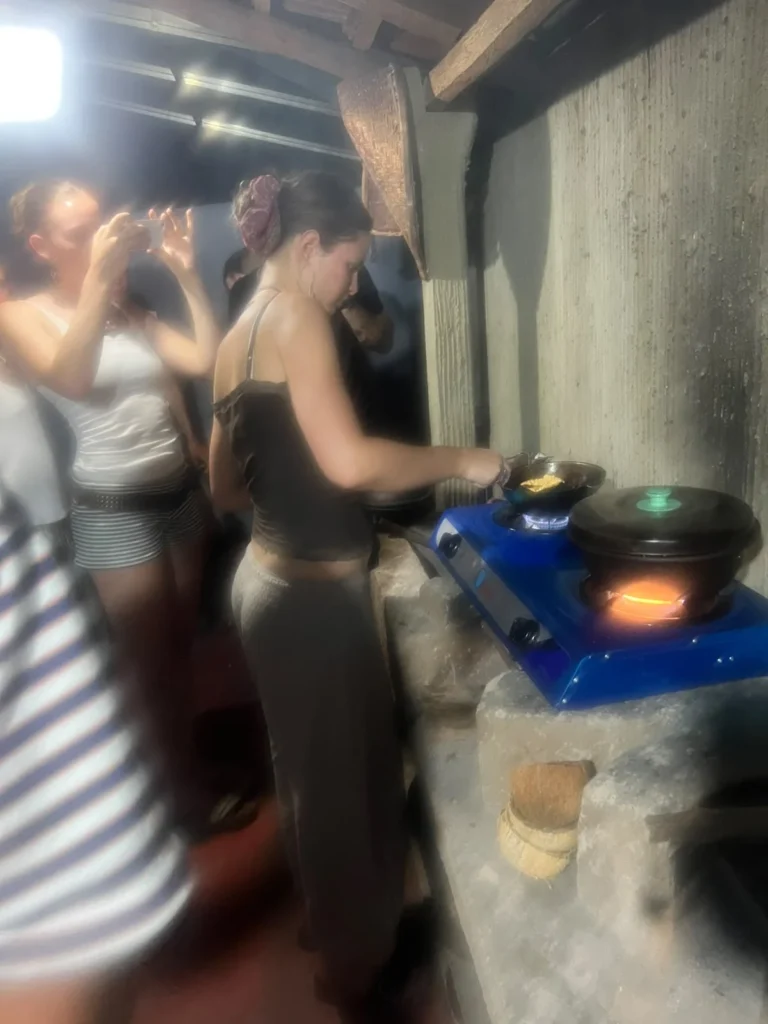
You will not be given a knife and a pile of onions and left alone. Prep happens communally, with your host doing the fast parts and you doing the slow ones. There is no station, no timer, and nobody watching to see whether you keep up.
You will not need to read anything. There are no recipes handed out in a village class. The lesson happens verbally while the food cooks, which suits people who learn by doing and frustrates people who want documentation. Take photographs of the ingredients rather than notes.
You will not need any English beyond the basics from the household’s side. Hosts on the south coast teach travellers constantly and the vocabulary involved is small and mostly pointed at.
And you will not need to have cooked before. Say it when you book. The only thing that changes is that somebody explains more and hands you the easy jobs first.
What you can actually cook when you get home
This is the test that matters, and Sri Lankan cooking does well on it.
Within a week of getting home, most people can reliably make dhal, a vegetable curry and a coconut sambol. That is a complete meal, and it uses no equipment beyond a pan and a mortar.
What stops people is sourcing rather than skill. Fresh coconut is the main one, and desiccated supermarket coconut genuinely is not a substitute in pol sambol. Frozen grated coconut from an Asian grocer works. So does buying whole coconuts if you have the patience.
Buy your spices before you fly home. Ceylon cinnamon is a different species from the cassia sold as cinnamon in most Western supermarkets, and curry powder roasted the Sri Lankan way, toasted until nearly black, is not something you will find easily at home. Both keep for months.
Beginner worries that turn out not to matter
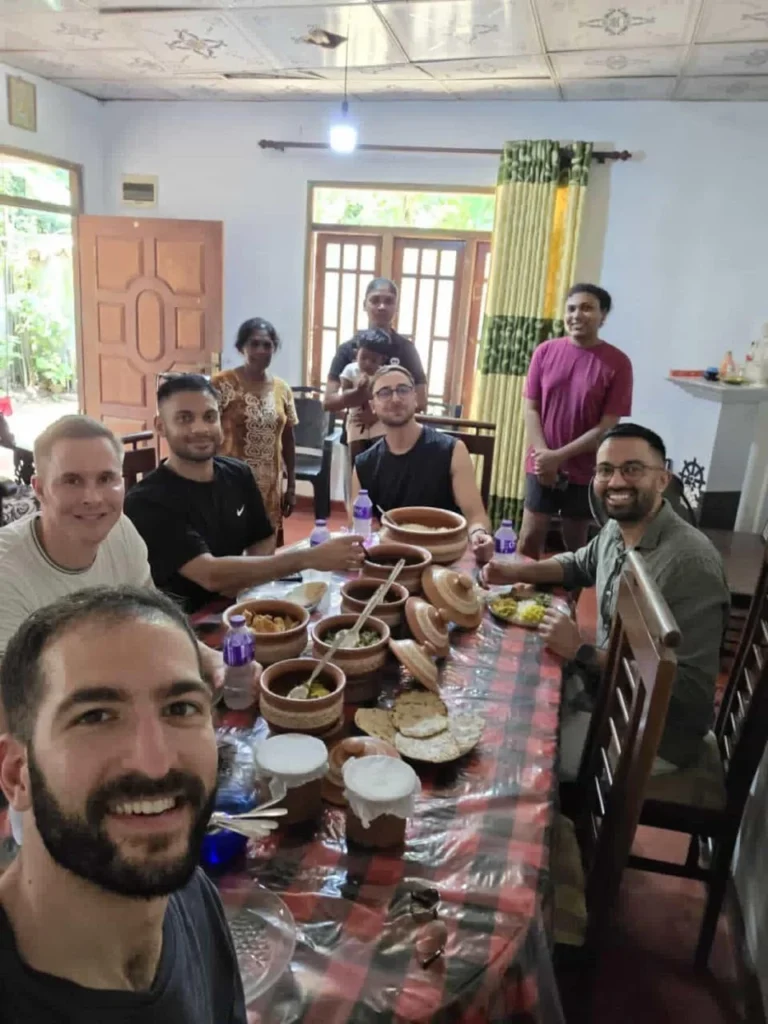
“I will slow everyone down.” A village class is not on a schedule. Guests move at different speeds and the food takes as long as it takes.
“It will be too spicy for me.” Households adjust chilli without complaint. Say so at booking rather than at the stove, since some of it goes in early.
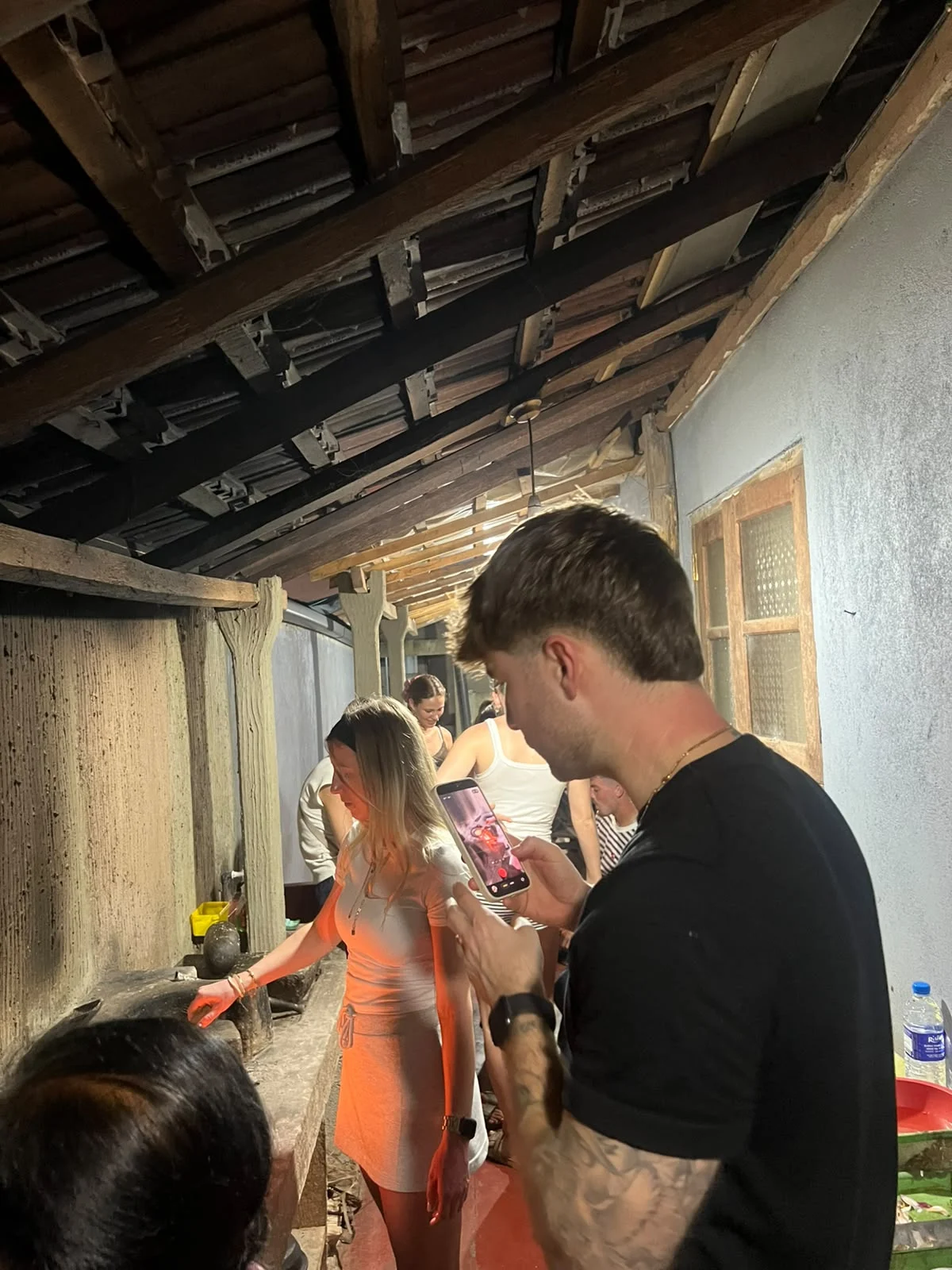
“I do not want to cook over an open fire.” You will, and it turns out to be the easy part, because managing the fire is somebody else’s job.
“I am vegetarian and will be left out.” Most of the standard menu is already plant-based. Vegetarian and vegan classes need no special arrangement, as we covered in the vegan and vegetarian guide.
“My children will be bored.” Six and up generally works well, and there are jobs children are better at than adults. The family guide has the detail.
Which class a beginner should book
Small, hands-on, three to four hours, and a household rather than a hotel. We laid out the reasoning in our guide to the best cooking class for beginners, and the practical chooser is in how to pick the right class in Sri Lanka.
Skip the ninety-minute hotel demonstration. It is the format least suited to someone learning, because watching is not the same as doing and a beginner needs the doing.
If you want the wider background on the cuisine before you go, the Sri Lankan cuisine overview is a decent primer, and Serious Eats has reliable beginner method guides for the techniques that carry across.
Frequently asked questions
Can beginners learn Sri Lankan cooking?
Yes. It is one of the more forgiving cuisines for a beginner because it uses judgment rather than exact measurements, involves very little knife work, and has no techniques that fail if your timing is slightly off.
Do I need cooking experience to join a Sri Lankan cooking class?
No. Village households teach complete beginners constantly. Mention it when booking and the host simply explains more and gives you the easier jobs first.
What is the hardest part of Sri Lankan cooking?
Scraping fresh coconut and timing several curries to finish together. Neither is a problem in a class, because your host handles what you cannot.
Is Sri Lankan cooking harder than Thai or Indian cooking?
Not for a beginner. There are fewer precise steps than in Thai cooking and less reliance on long-built spice layers than in much Indian cooking. The pastes are pounded fresh and the curries are tolerant.
What can I realistically cook at home afterwards?
Dhal, a coconut sambol and a vegetable curry, which together make a full meal. All three need only a pan and a mortar.
Do I need special equipment to cook Sri Lankan food at home?
No. A heavy pan and a mortar and pestle cover almost everything. A clay pot is nice and not necessary.
Will the class be in English?
Yes on the south coast. The vocabulary involved is small and much of the teaching is demonstrated rather than explained.
Is it safe for a beginner to cook over a wood fire?
Yes. The host manages the fire and the heat. You work at the pot, not at the flames.