Key takeaways
- The most famous Sri Lankan dish is rice and curry, which is not a single dish but a full plate of five to ten small curries, sambols and a starch, eaten together.
- The most famous single item internationally is probably kottu roti, thanks largely to the sound of it being made.
- Hoppers, string hoppers, lamprais, kiribath and watalappam are the other names worth knowing.
- Sri Lankan food is distinct from Indian food. More coconut, more sour agents like goraka and tamarind, and its own spice mix in the black roasted curry powder.
- You eat rice and curry with your right hand, mixing as you go. That is a technique, not a formality.
The answer, and why it needs explaining
If you ask a Sri Lankan what their most famous dish is, the answer is rice and curry. It is eaten daily by most of the country and it is the meal every household version of the cuisine is built around.
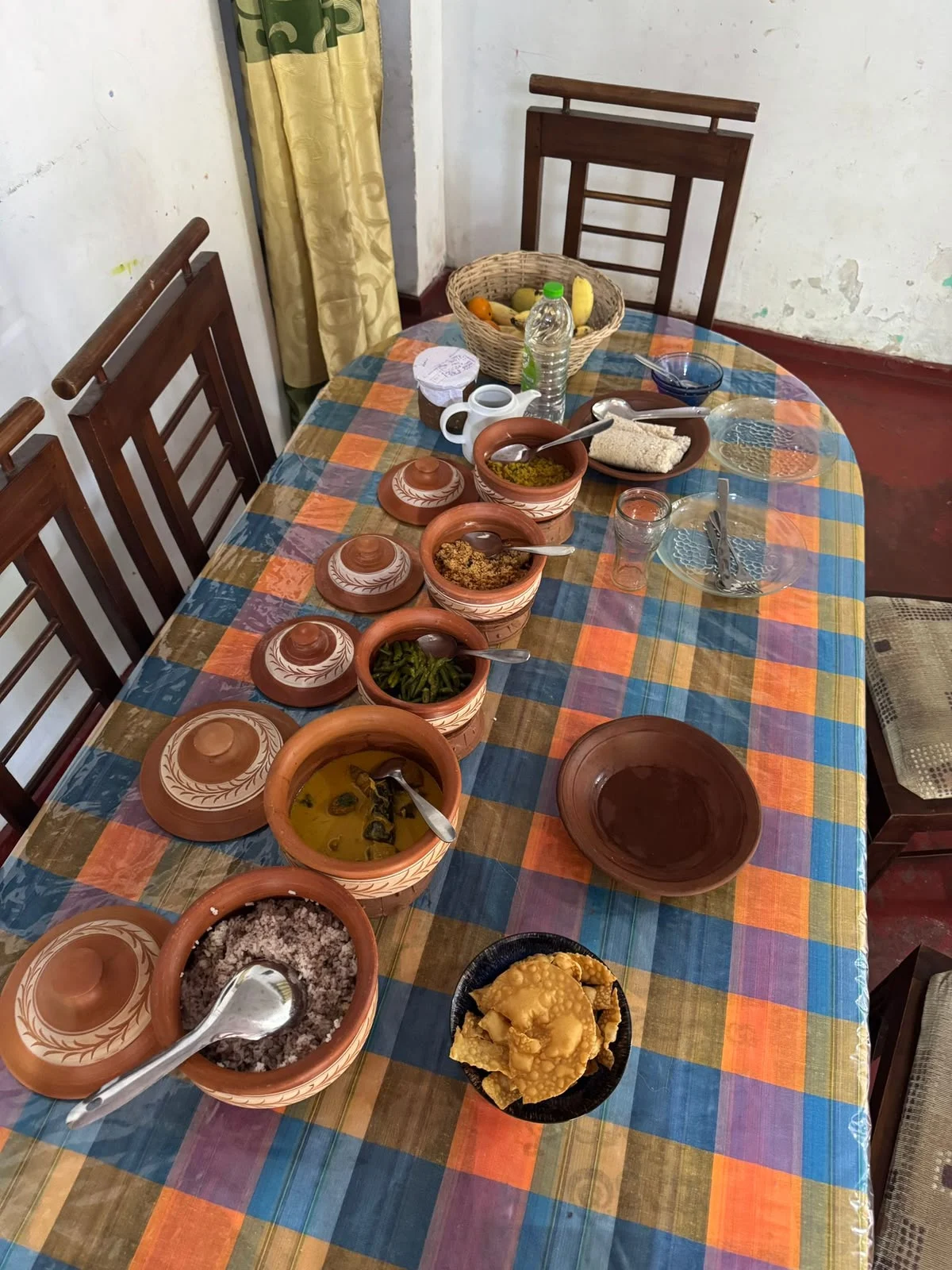
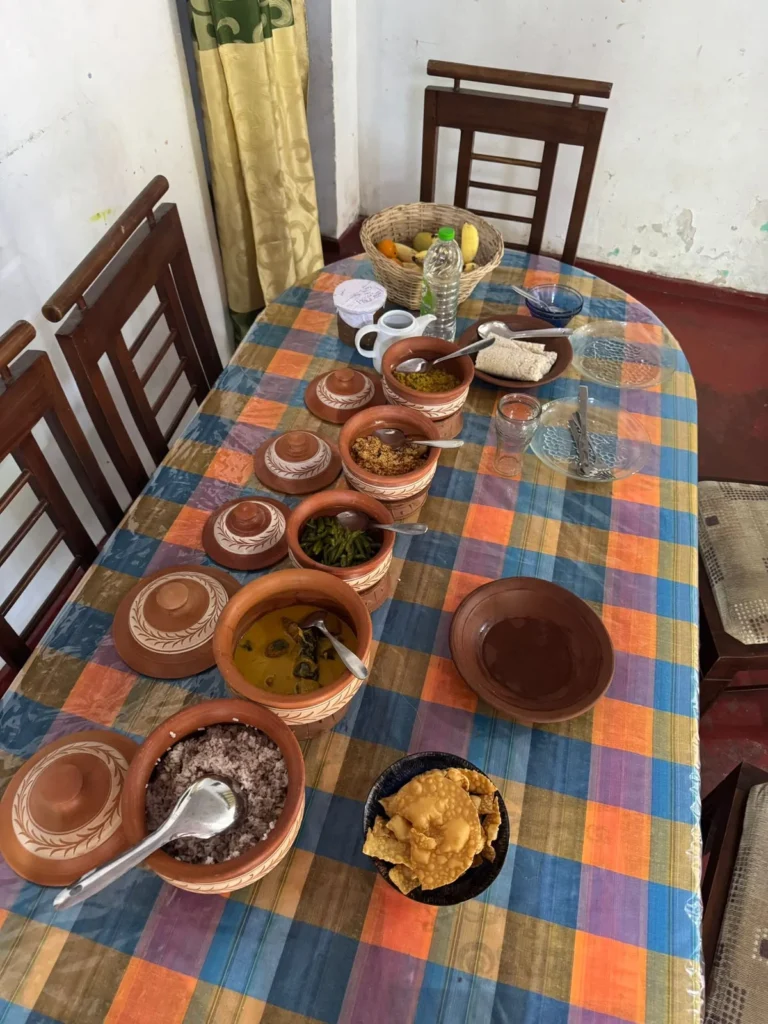
The complication for visitors is that it is not a dish in the way the question implies. Order rice and curry in a canteen and you get a mound of rice surrounded by five, seven, sometimes ten separate small preparations in their own dishes. Dhal. A green vegetable. A root vegetable. Something fried. A sambol. A papadam. Perhaps fish or chicken. You mix small amounts with rice as you go, so no two mouthfuls are quite the same.
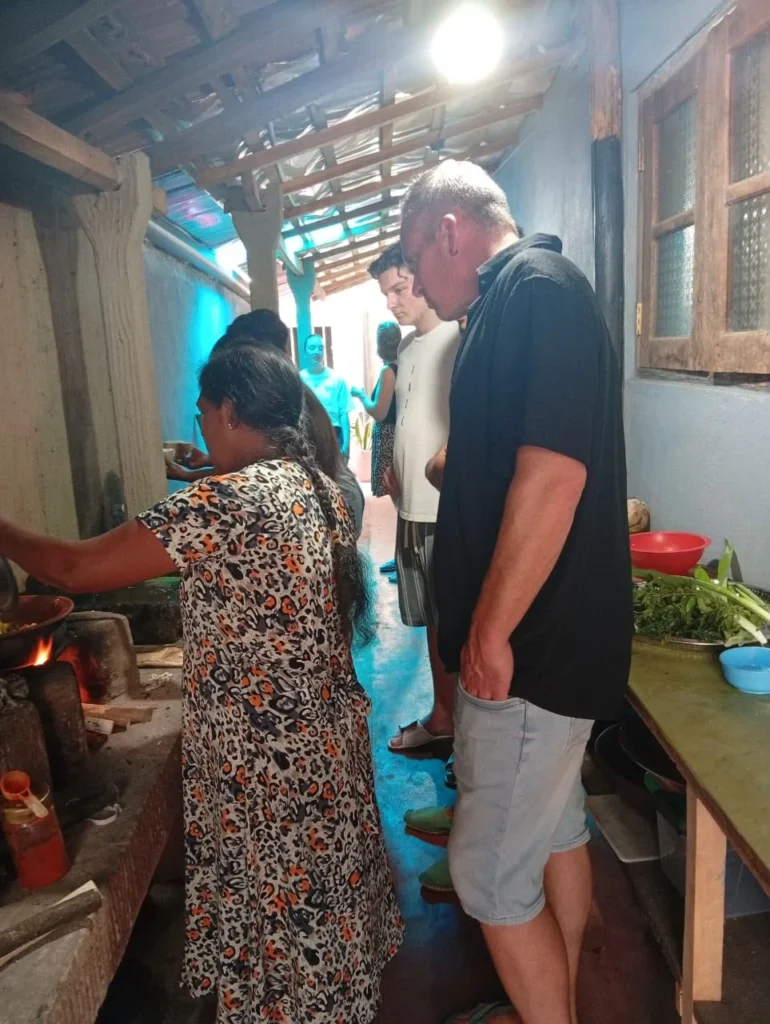
That structure is the reason a village cooking class runs three to four hours. The skill is not any individual curry. It is timing six of them to land hot at once.
What is on the plate
Parippu. Red lentil dhal cooked in coconut milk with curry leaves, pandan and turmeric. Present at nearly every meal, and the dish visitors most consistently underestimate.
Pol sambol. Freshly scraped coconut pounded with chilli, lime, red onion and Maldive fish. Not blended, because blending ruins the texture. This is the sambol most travellers try and fail to recreate at home, because desiccated supermarket coconut is a different ingredient entirely.
A garden vegetable curry. Green beans, pumpkin, okra, beetroot, or jackfruit when the tree is producing. Young jackfruit curry, polos, is worth seeking out specifically.
Red rice. Nutty, slightly chewy, and better than the white alternative.
Papadam, and often a fried something for texture.
Fish or chicken curry if the household eats it, frequently cooked in the dark roasted spice blend that gives Sri Lankan black curry its colour.
The sour note across many of these comes from goraka or tamarind rather than from tomato, which is one of the clearest markers separating Sri Lankan cuisine from its neighbours.
The other contenders
Rice and curry wins on ubiquity. These win on recognition.
Kottu roti
Kottu is chopped godamba roti stir-fried on a hot steel plate with vegetables, egg, and usually meat, worked with two metal blades. The clattering rhythm carries down the street and is the single most recognisable sound of a Sri Lankan evening. It is street food, it is loud, and for a lot of international visitors it is the dish they remember.
Hoppers
An appam is a fermented rice-flour and coconut-milk batter swirled up the sides of a small round pan so it cooks crisp and lacy at the edges and soft in the middle. Crack an egg into the centre and you have an egg hopper, which is the standard Sri Lankan breakfast worth setting an alarm for.
String hoppers are a different thing entirely: steamed nests of pressed rice noodles, eaten with dhal and sambol.
Lamprais
Lamprais is Dutch Burgher food. Rice cooked in stock, a mixed meat curry, a fried ash plantain, a frikkadel meatball and sambol, all wrapped in a banana leaf and baked. Labour-intensive, faintly ceremonial, and increasingly hard to find made properly.
Kiribath
Kiribath is rice cooked in thick coconut milk, set and cut into diamonds. Eaten at new year, on birthdays and at the start of significant occasions, usually with lunu miris. If you are offered it, something is being marked.
Watalappam
Watalappam is a set custard of jaggery, coconut milk, egg and cardamom, brought to Sri Lanka by the Malay community. It is the dessert to order.
Is Sri Lankan food just Indian food?
No, and the assumption irritates people for good reason.
The two cuisines share a spice cabinet and diverge almost immediately after. Sri Lankan cooking uses far more coconut, in three distinct forms: fresh scraped, first-press milk and second-press milk, each used at different points in the same pot. It uses goraka and tamarind for sourness where South Indian cooking would often use tomato or yoghurt. It has its own roasted dark curry powder, toasted until nearly black, which produces a flavour with no real Indian equivalent. And the plate structure, many small dishes around one starch, is its own thing.
Cinnamon is the other point of difference and the one worth acting on. True Ceylon cinnamon is a different species from the cassia sold as cinnamon in most Western supermarkets. It is paler, softer, sweeter, and crumbles under your thumb. Buy it before you fly home.
How to eat it, properly
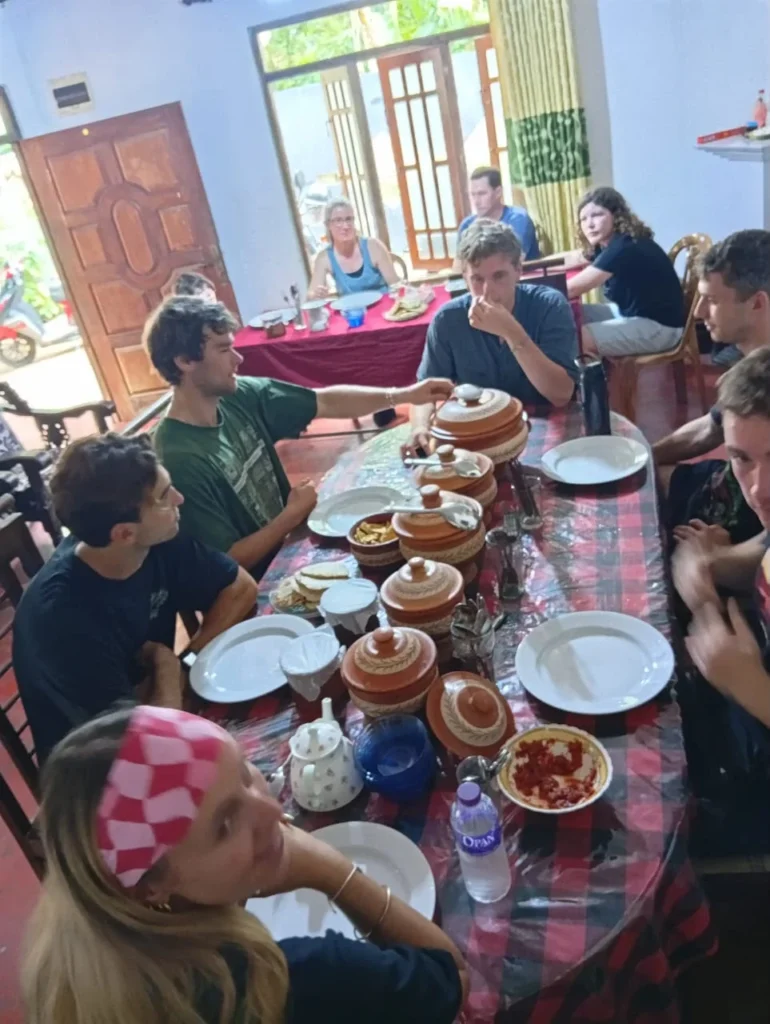
With your right hand. Fingers only, not the palm. You take a small amount of rice, add a little of one or two curries, mix it on the plate, compress it lightly and lift it with your thumb.
The mixing is the point. A Sri Lankan plate is designed to be recombined constantly, so you are effectively composing a new mouthful each time. Eating each curry separately with a spoon is not wrong, exactly, but it misses what the meal is built to do.
Ask for a fork if you would rather. Nobody minds. But try it their way for the first ten minutes.
Where to eat the famous dishes
Rice and curry is best at lunchtime in a local canteen, where it is cooked in volume and turned over fast, or at somebody’s house, which is better still. Hotel buffet versions are competent and diluted.
Kottu is an evening food. Follow the noise.
Hoppers are breakfast, and the good places stop making them by mid-morning.
Our Sri Lanka food guide covers where to find each of these regionally, and the food tour piece sequences them into an order that makes sense across a trip. If you would rather cook the plate than order it, we walk through how rice and curry is actually built in a village kitchen.
For wider context on the island, Lonely Planet, the Michelin Guide and the official Sri Lanka tourism site are all reasonable starting points.
Frequently asked questions
What is the most famous Sri Lankan dish?
Rice and curry. It is the national everyday meal: rice served with five to ten small curries, sambols and a papadam, all eaten together off one plate.
What is Sri Lanka’s national dish?
Rice and curry is widely treated as the national dish. Kottu roti is the most internationally recognised single item.
What is kottu roti?
Chopped flatbread stir-fried on a steel griddle with vegetables, egg and usually meat, worked with two metal blades. It is street food, and the rhythmic clanging is how you find it.
What is a Sri Lankan hopper?
A bowl-shaped pancake made from fermented rice flour and coconut milk, crisp at the edges and soft in the centre. An egg hopper has an egg cooked into the middle.
Is Sri Lankan food the same as Indian food?
No. Sri Lankan cooking uses much more coconut, sours with goraka and tamarind rather than tomato, and has its own dark roasted curry powder. The plate structure is also different.
Is Sri Lankan food very spicy?
Home cooking is often hotter than restaurant versions, but every household will adjust the chilli if you ask beforehand.
What is the most famous Sri Lankan dessert?
Watalappam, a set custard of jaggery, coconut milk, egg and cardamom.
How do you eat rice and curry?
With the fingers of your right hand, mixing small amounts of rice and curry on the plate before each mouthful.