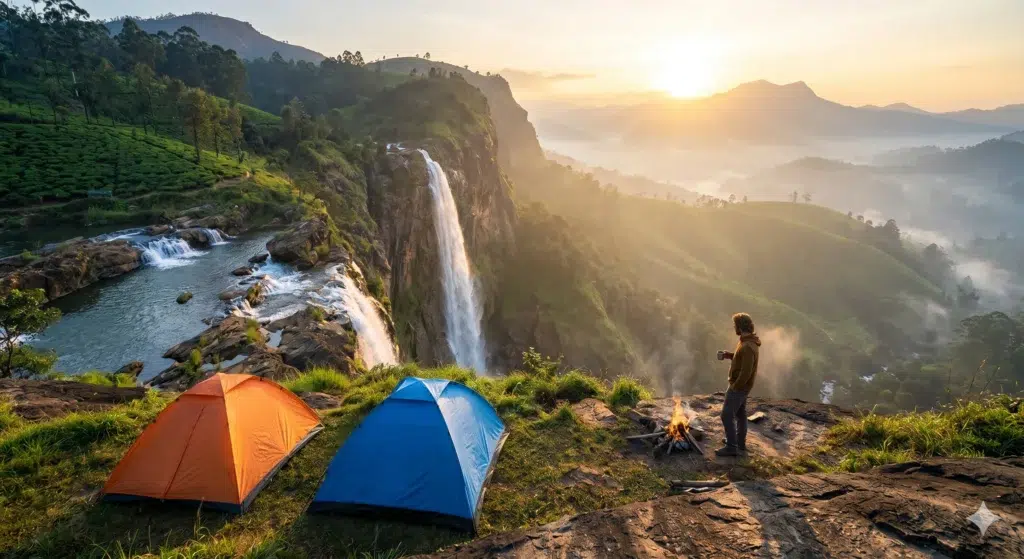
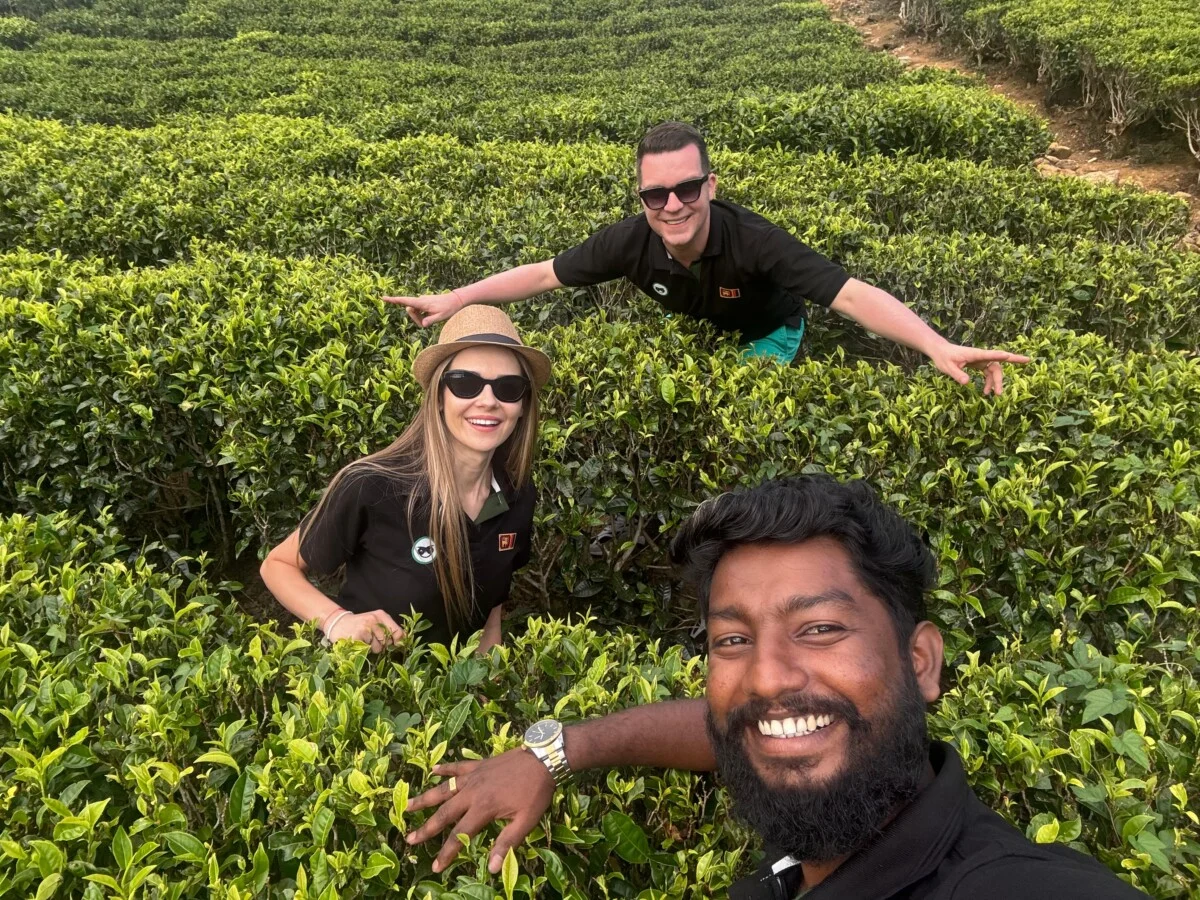
Nuwara Eliya tea plantations are easiest to see at five tea estates and factories that take visitors. Pedro is about 4 km from the town centre (OpenStreetMap). Damro Labookellie, Bluefield and Glenloch stand beside the A5 road towards Kandy, and the Heritance Tea Factory hotel at Kandapola keeps a small working factory (Heritance Tea Factory). A tea factory visit is a short guided walk past the machinery, then a cup of tea and a shop; at Pedro the tour takes 20 to 30 minutes (Love Sri Lanka; Wikivoyage). Few estates publish their hours or fees, so phone before you go.
Key takeaways
- Pedro is the closest of the five to town. Glenloch, Bluefield and Damro Labookellie are stops on the road up from Kandy.
- Of the five, only Heritance publishes its own hours: the mini factory opens daily from 8am to 5pm. Bluefield asks visitors to call first.
- February and March are the driest months, with a little over 70 mm of rain each. October and November are the wettest.
- Come by road. On 2 October 2026 the trains restarting from Colombo stopped short of Kandy station and Nanu Oya, and Nanu Oya’s own trains ran only towards Ella and Badulla.
Nuwara Eliya tea estates and factories you can visit
Hours and fees below are what each source showed when we checked on 2 October 2026. Distances are measured from the post office in the middle of town, and drive times are OpenStreetMap’s, rounded up for hill roads.
| Estate or factory | From town | What you can do | Hours and fee on record |
|---|---|---|---|
| Pedro Tea Estate | About 4 km east, usually 10 to 15 minutes (OpenStreetMap) | Factory tour, tea and snacks at the boutique overlooking the factory, tea to buy, free walks in the tea fields | Love Sri Lanka’s text says 8am to 5pm daily, closed to visitors from 12.30pm to 2pm; its tips box says 8am to 11am and 2pm to 5pm (Love Sri Lanka). Wikivoyage’s May 2025 listing has 8am to 11am and 2pm to 4pm, and LKR 1,000 for a guided tour with a cup of tea (Wikivoyage). The estate’s owner publishes neither, so ask before you set out |
| Damro Labookellie Tea Centre | About 12 km north on the A5, usually 20 to 30 minutes (OpenStreetMap) | Factory visit, tea with a valley view, tea shop (The Island) | We found no published hours or fee. Ask your hotel or driver to phone the centre |
| Bluefield Tea Gardens, Ramboda | About 19 km north on the A5, usually 35 to 45 minutes (OpenStreetMap) | Walk among the tea, factory tour, tasting, restaurant, tea shop, free parking | Bluefield says you can visit at any time during the day and asks you to call first; it publishes no fee (Bluefield Tea). Wikivoyage’s listing (9am to 6.30pm, free) dates from 2016 (Wikivoyage) |
| Glenloch Tea Factory | About 27 km north on the A5, usually 45 minutes to an hour (OpenStreetMap) | Tour covering cultivation, tea types, drying and packing; old British machinery; cafe and gift shop | No hours or fee published. Lonely Planet lists the factory’s phone number, so ring first (Lonely Planet) |
| Heritance Tea Factory, Kandapola | About 14 km east, usually 30 to 40 minutes (OpenStreetMap) | Mini tea factory tour, tea plucking, two-hour tasting sessions with a tea taster | Mini factory daily, 8am to 5pm: free for hotel guests, charged for visitors, with no price published and a phone number for reserving a place (Heritance Tea Factory). Tastings at 9am and 3pm need two people and a day’s notice (Heritance Tea Factory) |
Pedro Tea Estate
Pedro suits anyone staying in town with an hour to spare. Its factory dates from 1885 and still holds 19th-century machinery (Love Sri Lanka). Love Sri Lanka adds that the factory works only at night, so the machines may be standing still on a daytime tour, and that photography inside is forbidden. The estate belongs to Kelani Valley Plantations, which sells its single-origin teas at the Lovers Leap Ethical Tea Boutique here (Kelani Valley Plantations). Wikivoyage put a tuk-tuk from the town centre at around LKR 700 in 2024 (Wikivoyage).
Damro Labookellie, the old Mackwoods estate
Looking for the Mackwoods tea factory? This is it. Labookellie Estate was founded in 1870, Mackwoods was one of the plantation agents that later managed it, and the Damro Group took it over in 2017 (The Island). Its tea centre stands at 5,250 feet (about 1,600 m) beside the Kandy to Nuwara Eliya road (The Island).
Bluefield and Glenloch
At Ramboda, Bluefield offers a guided walk through its plantation and working factory (Bluefield Tea), and its restaurant serves Sri Lankan and European food, with a buffet at set times (Bluefield Tea). That makes it our choice for lunch. Glenloch is further down the same road, and Lonely Planet notes that, unlike many tea factories, it lets you take photographs (Lonely Planet).
Heritance Tea Factory
This hotel opened in 1996 in the disused factory of the Hethersett estate (Wikipedia). Its mini factory, housed in the tea-maker’s quarters from the 1930s, is still in working order. Day visitors pay for the tour, so ring first to reserve a place and ask the price (Heritance Tea Factory).
Two more places to taste and buy
The Sri Lanka Tea Board has a sales outlet at No. 10, Kelegala, on the Nanu Oya road. It opens from 8am to 5.30pm every day of the year, and you can drink a cup there and choose among many brands (Sri Lanka Tea Board). Kelani Valley Plantations also runs a tea centre called the Tea Train at its Edinburgh Estate in Nanu Oya (Kelani Valley Plantations).
What happens on a tea factory visit
Sri Lanka still makes black tea by the slow, traditional method the trade calls orthodox, and a tour follows the leaf through it. These are the main stages as the Sri Lanka Tea Board describes them (Sri Lanka Tea Board):
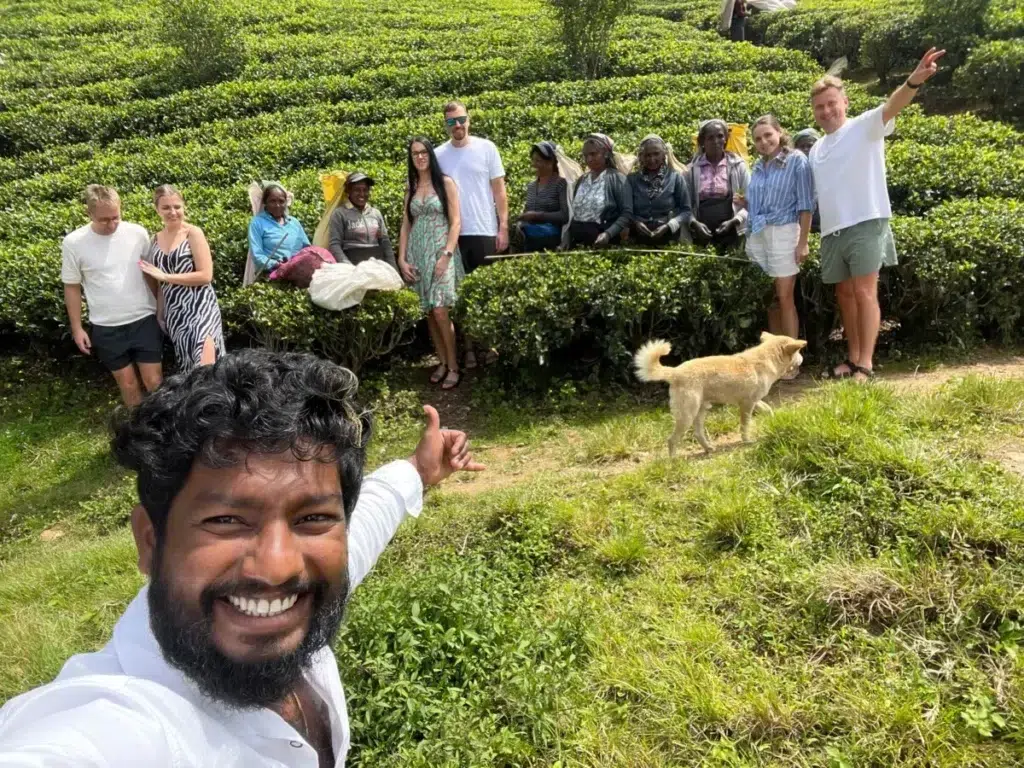
- Plucking: only the top two leaves and a bud are picked, mainly by women. A skilled plucker gathers up to 20 kg a day.
- Withering: the leaf lies on racks or troughs for 18 to 24 hours, until about two-thirds of its moisture has gone.
- Rolling: machines break the leaf cells open so that enzymes meet the air.
- Oxidising: the broken leaf is spread on tables for anything from 20 minutes to five hours. The Tea Board notes that it’s also called fermentation.
- Firing: drying at 99 to 104°C stops the reaction and turns the leaf black.
- Grading: a mechanical sifter sorts the tea by size into leaf, broken and dust grades.
Leaf size affects the colour and strength of the brew, the Tea Board says, but isn’t a measure of quality (Sri Lanka Tea Board).
Rough Guides advises checking ahead, because many factories close for holidays or switch off their machines in the afternoon, and recommends mornings (Rough Guides). Ask before you take pictures: Wikivoyage warns against photography inside tea factories, though outside is fine (Wikivoyage).
Ceylon tea in brief
Tea came to Sri Lanka because coffee failed. Coffee rust appeared on a plantation in 1869 and wiped out the island’s coffee in little more than a decade (Sri Lanka Tea Board). Two years before the rust appeared, James Taylor, a Scottish planter, had planted 19 acres of tea at the Loolecondera estate in the Kandy hills (Wikipedia). Around Nuwara Eliya the first tea plantations were doing well by 1875 (Sri Lanka Tea Board).
Today the Tea Board recognises seven tea-growing districts and restricts the use of their names: Nuwara Eliya, Dimbula, Uva, Uda Pussellawa, Kandy, Ruhuna and Sabaragamuwa (Sri Lanka Tea Board). Nuwara Eliya has the highest average elevation of the seven. The town stands at 1,868 m. Its cold air produces the palest cup of any Ceylon tea, golden and delicately fragrant, and Orange Pekoe and Broken Orange Pekoe are the grades buyers look for (Sri Lanka Tea Board).
Best time to visit, and Nuwara Eliya’s weather
Nuwara Eliya’s weather station stands at 1,894 m, and its 1991 to 2020 averages describe a cool town all year. Daytime highs run from 18.6°C in July to 22.5°C in April, and night lows from 10.2°C in February to 13.8°C in June (WMO normals for Nuwara Eliya).
The driest months are February and March, each with a little over 70 mm of rain on roughly seven days. January averages 116 mm and April 134 mm. May to September brings roughly 130 to 170 mm a month on 13 to 16 days. The wettest months are October (247 mm on 19 days) and November (226 mm on 18 days) (WMO normals for Nuwara Eliya).
That makes February and March the months least likely to rain on your visit, and the hills fit well into a trip to Sri Lanka in March. April has the warmest days, and it’s also festival time: the town’s festive season begins on 1 April, and rooms are hard to find around the Sinhala and Tamil New Year (Wikipedia).
Pack for cold and mist in any month. The Tea Board describes Nuwara Eliya’s nights as cold and sometimes frosty (Sri Lanka Tea Board), and the lowest temperature the station recorded between 1991 and 2020 was 2.0°C, in February 1997 (WMO normals for Nuwara Eliya). At nearby Horton Plains, the view from World’s End is often lost to mist by late morning (Wikipedia), and we’d treat estate viewpoints the same way: go early. Rain matters less for the factory tour itself, which is indoors.
Getting to Nuwara Eliya in 2026
By road from Kandy and Ella
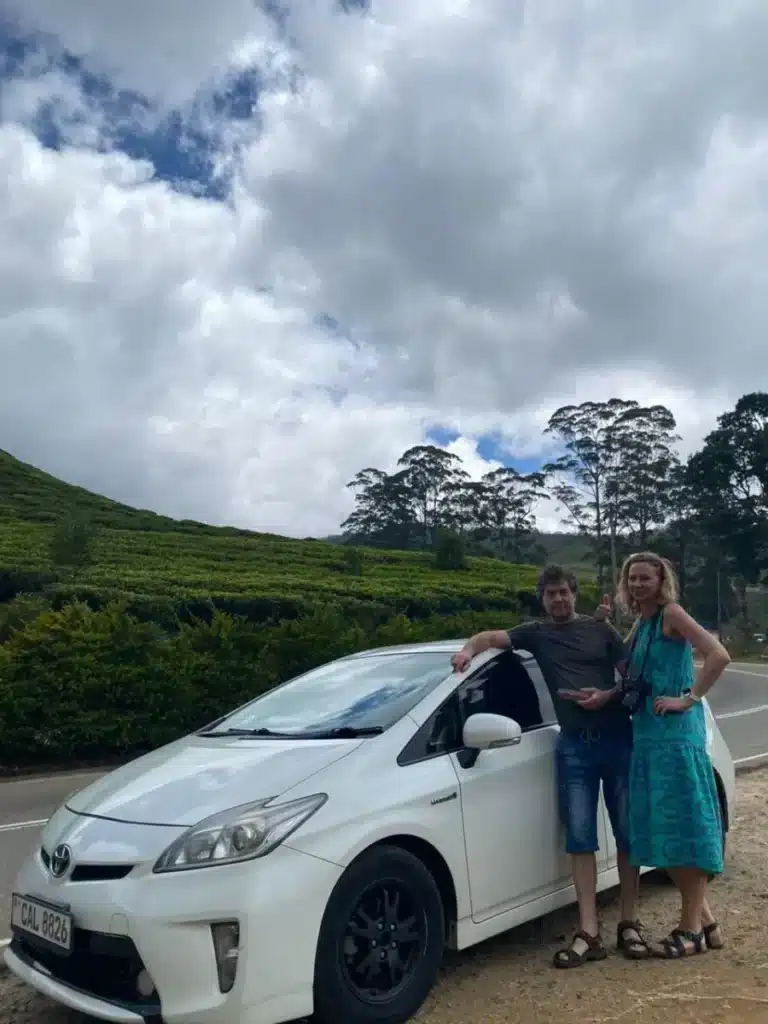
From Kandy, the A5 climbs about 73 km to Nuwara Eliya, and the drive usually takes 2.5 to 3 hours (OpenStreetMap). Ella is about 57 km away, usually 1.5 to 2 hours (OpenStreetMap). Leave slack in the day. Wikivoyage’s rule for touring this area is to assume you won’t exceed 20 km/h (Wikivoyage), and at that pace the drive from Kandy takes more than 3.5 hours. With a private car and driver, Glenloch, Bluefield and Labookellie become stops on the way up.
By train: what was running on 2 October 2026
Nanu Oya is the station for Nuwara Eliya, about 8 km from town (Wikivoyage), usually 15 to 20 minutes by road (OpenStreetMap). About 70% of Sri Lanka’s railways were damaged when Cyclone Ditwah struck in late 2025 (Wikivoyage). Trains between Nanu Oya and Badulla, through Ella, have run since 20 June 2026 (Onlanka; Newsfirst).
On 2 October 2026, Sri Lanka Railways said trains from Colombo to Peradeniya and Gampola were restarting that day, around ten months after the cyclone (Sri Lanka Mirror). Those trains end at Peradeniya or Gampola (Daily Mirror). Colombo Times reported the same day that nothing would run between Peradeniya and Kandy station until a damaged bridge at Peradeniya is repaired. It added that the Gampola to Nawalapitiya and Hatton to Nanu Oya sections were still under repair (Colombo Times). So no train from Colombo or Kandy reached Nanu Oya.
Don’t plan around a reopening date. In April 2026 The Morning reported a revised target of 31 December 2026 for the whole line, from an unnamed ministry official who said it depended on tests of that bridge (The Morning). Travel up by road, and if you want the rail journey, board at Nanu Oya for Ella. Services are still changing, so see what Sri Lanka Railways is running before you build a day around a train.
A one-day Nuwara Eliya tea plantation tour itinerary
This is the day we’d plan from a hotel in town, with a car and driver or a tuk-tuk hired for the day. The timings assume each estate is open when you arrive, so phone the day before.
| Time | Stop | Getting there | What to do |
|---|---|---|---|
| 8am | Pedro Tea Estate | Usually 10 to 15 minutes from town (OpenStreetMap) | Take the factory tour, then tea at the boutique |
| 10am | Damro Labookellie Tea Centre | About 15 km, usually 30 to 40 minutes (OpenStreetMap) | Walk through the factory and drink a cup above the valley |
| 12 noon | Bluefield Tea Gardens | About 8 km on, usually 15 to 20 minutes (OpenStreetMap) | Estate walk, factory and tasting, then lunch (call first) |
| 2.30pm | Drive back to Nuwara Eliya | About 19 km, usually 35 to 45 minutes (OpenStreetMap) | A rest before the shops |
| 4pm | Sri Lanka Tea Board outlet | On the Nanu Oya road | Buy tea to take home before it shuts at 5.30pm |
If you’d rather taste than tour a third factory, Heritance Tea Factory’s second tasting starts at 3pm and lasts two hours (Heritance Tea Factory). Kandapola is about 33 km from Bluefield, usually 1 to 1.5 hours (OpenStreetMap), so leave by 1.30pm and drop the Tea Board outlet, which shuts half an hour after the tasting ends. Book a day ahead, and ask the hotel whether non-residents can join.
How it fits between Kandy and Ella
Coming from Kandy, spread the same stops over two days. After a day in Kandy, drive up the A5 and stop at Glenloch, about 46 km and usually 1.5 to 2 hours from the city (OpenStreetMap). Bluefield for lunch and Labookellie follow, each about 8 km beyond the last (OpenStreetMap), and you sleep in Nuwara Eliya.
With a spare hour in Kandy first, the Ceylon Tea Museum at Hantane is 3 km from the city. On 2 October 2026 its website listed 8.30am to 4pm from Tuesday to Friday and 8am to 5pm at weekends, closed on Mondays, with a ticket price of LKR 1,000 for non-resident adults (Ceylon Tea Museum).
Next morning, see Pedro at 8am and drive on to Ella. Or keep a day for World’s End at Horton Plains, one of the hiking trails on our shortlist, and start it early.
Practical tips: clothes, photos and buying tea
- Dress for 10 to 20°C: a fleece or jumper, a rain jacket and closed shoes with some grip for wet paths.
- Carry rupees in cash. Rough Guides notes that entry fees and tastings don’t cost much, but you can’t always pay by card (Rough Guides).
- Treat the fields as a workplace. Ask before you photograph the pluckers, and keep out of the rows where they’re working.
- When you buy tea, look for the Lion logo. It belongs to the Sri Lanka Tea Board, and it guarantees that the pack holds nothing but Ceylon tea and was packed in Sri Lanka (Sri Lanka Tea Board).
Questions about Nuwara Eliya tea plantations
Which is the best tea factory in Nuwara Eliya?
No single factory wins: pick by what you want. We’d choose Pedro if you only have an hour, because it’s about 4 km from town (OpenStreetMap), though its machines may be idle by day (Love Sri Lanka). Coming from Kandy, Labookellie and Bluefield cost you no extra driving, and Glenloch is the one where Lonely Planet says you can take photographs (Lonely Planet). For two hours with a tea taster, ask Heritance.
How much does a Nuwara Eliya tea factory visit cost?
None of the five estates publishes a fee. Wikivoyage’s May 2025 listing put Pedro’s guided tour with a cup of tea at LKR 1,000 (Wikivoyage), and Heritance says its mini factory is chargeable for non-guests without naming a price (Heritance Tea Factory). Ask at the entrance.
Do I need to book a tea factory visit?
Call ahead even where you don’t need a booking. Bluefield welcomes visitors at any time of day and still asks you to ring first (Bluefield Tea). Heritance gives a phone number for reserving its mini factory tour (Heritance Tea Factory), and its tastings need a day’s notice and at least two people (Heritance Tea Factory). We found no booking rule published for Pedro, Labookellie or Glenloch.
How long does a tea factory tour take?
Love Sri Lanka lists Pedro’s tour at 20 minutes and Wikivoyage at 30 (Love Sri Lanka; Wikivoyage). Allow an hour at each estate once you add a cup of tea and the shop, and two if you stay for lunch at Bluefield.
Can I take the train from Kandy to Nuwara Eliya in 2026?
Not when we checked on 2 October 2026. The trains that restarted from Colombo that day ended at Peradeniya and Gampola (Daily Mirror), and Colombo Times reported that none were running between Peradeniya and Kandy station (Colombo Times). Nanu Oya’s trains ran only towards Ella and Badulla (Onlanka). Come up by road until that changes.
Plan a tea country stop with us
Our team in Weligama plans private trips with a driver-guide, and several of the round tours on our tours page include Nuwara Eliya. Tell us your dates and which of the Nuwara Eliya tea plantations you’d like to see, and we’ll work them into a route between Kandy and Ella.
Visiting hours, fees, rail services and drive times were last checked on 2 October 2026, using the pages linked in the text. Estates change their arrangements without notice and the railway is still under repair, so phone ahead and look again before you travel.