Sri Lanka destinations fall into six regions: the Cultural Triangle, the hills from Kandy to Ella, the south coast, the safari parks, the east coast and the north. Where to go in Sri Lanka depends mostly on the month. The south-west monsoon blows from May to September, and the north-east monsoon from December to February (Department of Meteorology). Galle’s weather station is driest from January to March, and the east-coast stations at Batticaloa and Pottuvil from March to September (WMO climate normals). That’s why the best places to travel in Sri Lanka in February aren’t the best ones in July.
Key takeaways
- For a first trip we’d link four regions in a loop: the Cultural Triangle, the hills from Kandy to Ella, a safari park and the south coast. Allow 10 to 14 nights.
- Going by the weather stations, Galle is driest from January to March, Ella’s two nearest stations from June to August and Arugam Bay’s from March to September. November is among the three wettest months at 19 of the 20 stations we checked.
- The roads are slow. The airport to Sigiriya is usually 3.5 to 4 hours, and Kandy to Ella 4 to 5.
- In early October 2026 no through train ran from Kandy to Ella. Yala’s Blocks 1 and 2 were shut until 15 October, and the 30-day ETA was free for 40 nationalities.
Where to go in Sri Lanka: 14 destinations compared
Each row is a base to sleep in, not a sight. For the sights, our list of 20 Sri Lanka tourist attractions goes place by place.
| Destination | Region | Driest months (weather station) | Nights | Suits |
|---|---|---|---|---|
| Sigiriya or Dambulla | Cultural Triangle | June to September, January to March (Maha Illuppallama) | 2 to 3 | A first trip: ruins, cave temples, elephants |
| Anuradhapura | Cultural Triangle | May to September, January to March (Anuradhapura) | 1 | Pilgrim sites and the first capital |
| Kandy | Hill country | February and March (Katugastota) | 1 or 2 | The Temple of the Tooth, a break in the driving |
| Nuwara Eliya | Hill country | February and March (Nuwara Eliya) | 1 or 2 | Tea estates, cool air, Horton Plains |
| Ella | Hill country | June to August (Bandarawela, Badulla) | 2 | Walkers, and anyone who wants the train |
| Galle or Unawatuna | South coast | January to March (Galle) | 2 or 3 | Fort streets and a swimming beach |
| Weligama or Mirissa | South coast | January to March (Galle) | 2 to 5 | Learner surf, whale boats, beach days |
| Yala (Tissamaharama) | Safari country | January to August (Hambantota) | 1 | Leopards, elephants, birds |
| Udawalawe | Safari country | Any month, says Love Sri Lanka | 1 | Elephants, families |
| Trincomalee | East coast | February to August (Trincomalee) | 2 or 3 | Shallow beaches behind a reef |
| Pasikudah | East coast | March to September (Batticaloa) | 2 or 3 | Calm, shallow water |
| Arugam Bay | East coast | March to September (Pottuvil) | 3 or more | Surfers |
| Jaffna | North | January to September (Jaffna) | 2 or 3 | A second trip, Tamil culture |
| Colombo | West coast, by the airport | January and February (Colombo) | 0 or 1 | A first or last night |
The months come from the 1991 to 2020 climate normals that the World Meteorological Organization publishes for 20 Sri Lankan stations (WMO climate normals). The table uses 13 of them: the station nearest each base, and for Ella the nearest two. A month counts as dry when its station averages under 100 mm of rain and fewer than ten days with at least 1 mm. Four rows borrow a station 24 to 38 km away in a straight line: Sigiriya or Dambulla, Weligama or Mirissa, Yala and Pasikudah.
That’s a rainfall test on past averages, not a forecast, and any one month can turn out wetter or drier. Dry isn’t always best, so the sections below add heat, surf seasons and closures.
The table’s pattern fits the Department of Meteorology’s seasons. Its newsletter says the south-west monsoon typically makes the south-west cooler and wetter, and the north-east monsoon affects the north-east (Department of Meteorology). It counts October and November as the second inter-monsoon (Department of Meteorology).
When we ran all 20 stations through that test, Ella was the surprise. The stations 9 and 12 km from it are driest from June to August, when Nuwara Eliya averages 132 to 168 mm a month on 14 to 16 wet days. We found November, in that second inter-monsoon, among the three wettest months at 19 of the 20 stations, including all 13 in the table (WMO climate normals). Nights and the last column are our own judgement.
The Cultural Triangle: Sigiriya, Dambulla, Polonnaruwa and Anuradhapura
The Cultural Triangle lies in the centre of the island, and UNESCO’s regional report counts five World Heritage Sites inside it: Anuradhapura, Polonnaruwa, Sigiriya, Dambulla and Kandy (UNESCO). Sri Lanka has eight in all (UNESCO).
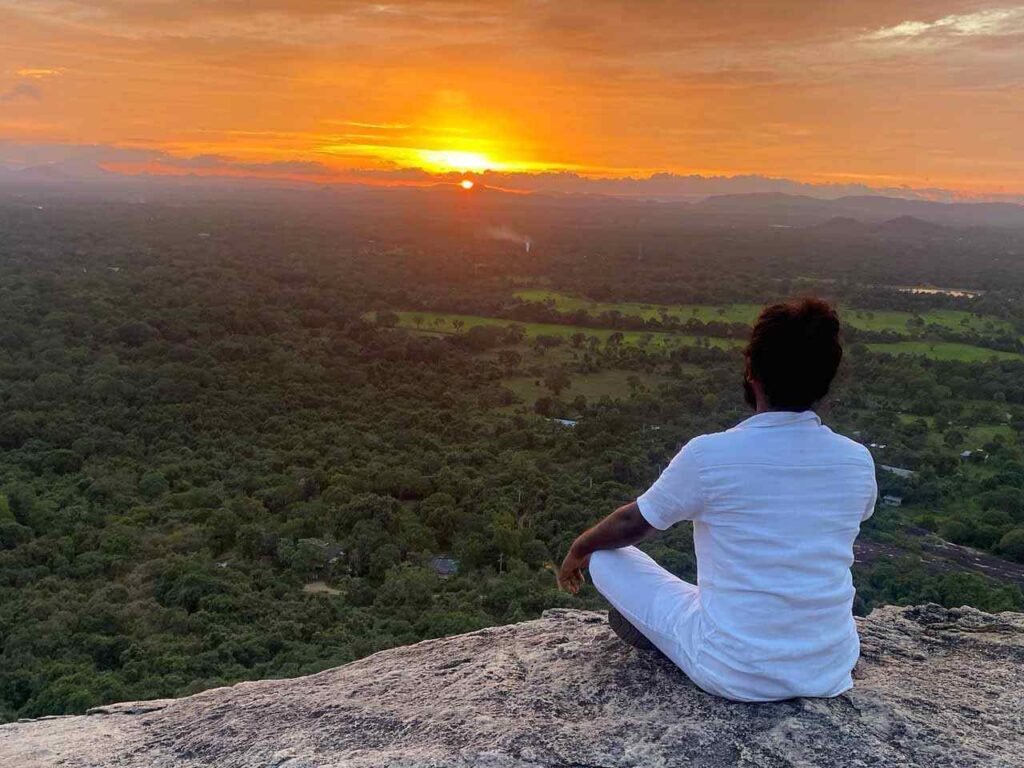
Sigiriya holds the ruins of King Kassapa I’s fifth-century capital, on a granite peak about 180 metres high (UNESCO). Anuradhapura was a capital for 1,300 years (UNESCO), and Polonnaruwa took over after it fell in 993 (UNESCO).
You don’t need a base for each. In our Cultural Triangle guide, the Dambulla caves and the Minneriya park gate are each 30 to 40 minutes from Sigiriya, and Polonnaruwa is 75 to 105 minutes. The guide puts three full days at one base and gives Anuradhapura a night of its own.
On the Central Cultural Fund’s list, a full ticket was USD 35 for Sigiriya and USD 30 each for Polonnaruwa and Anuradhapura when we checked on 4 October 2026 (CCF price list).

Kandy and the hill country: Nuwara Eliya and Ella
Kandy stayed the capital of the Sinhala kingdom until 1815, when the British occupied the island, and pilgrims still come to its Temple of the Tooth Relic (UNESCO). It lies between the Triangle and the tea country, so one or two nights break the drive. Kandy in one day shows how the temple, the lake and the Peradeniya gardens fit into a single day.
Nuwara Eliya sits at 1,868 metres (Wikivoyage), and Love Sri Lanka calls it the island’s most important region for tea production (Love Sri Lanka). Pack a jumper: at its station, average daily highs run from 18.6 to 22.5°C over the year and lows from 10.2 to 13.8°C (WMO climate normals). Horton Plains National Park, part of the Central Highlands World Heritage Site (UNESCO), is a trip Wikivoyage suggests from the town.
Ella is lower, at 1,041 metres (Wikipedia). Love Sri Lanka describes a small town ringed by tea plantations and cloud forest, with treks and waterfalls (Love Sri Lanka).
The two towns are 2 to 3 hours apart by road (OpenStreetMap), and their driest months fall at different times of year. In the reports we read on 4 October 2026, trains ran between Nanu Oya, near Nuwara Eliya, and Ella, but with no through train from Kandy (Colombo Times). Our Kandy to Ella train guide follows what’s open.
The south coast: Galle, Unawatuna, Weligama and Mirissa
We’d end a loop here, because the last drive is short: Galle is usually 2 hours 15 minutes to 3 hours from the airport (OpenStreetMap).
Galle’s fortified old town, founded by the Portuguese in the 16th century, is a World Heritage Site. UNESCO rates it the best example of a European-built fortified city across South and South-East Asia (UNESCO). Unawatuna is a beach resort town 5 km away, and Wikivoyage says its main beach is swimmable all year (Wikivoyage).
Weligama has small, predictable breaks that suit beginners, and its surf season often starts in September and lasts until the end of May (Love Sri Lanka). It’s where we’re based, and our Weligama beach guide covers the bay. Mirissa, about 5 km further east (OpenStreetMap), is the whale-watching harbour. Love Sri Lanka gives the season as November to April and warns that sightings aren’t guaranteed (Love Sri Lanka).
At Galle’s station, January, February and March each average 71 to 90 mm of rain. December and April, the shoulder months, average 176 and 202 mm, against 316 mm in May (WMO climate normals).

Safari country: Yala, Udawalawe and Minneriya
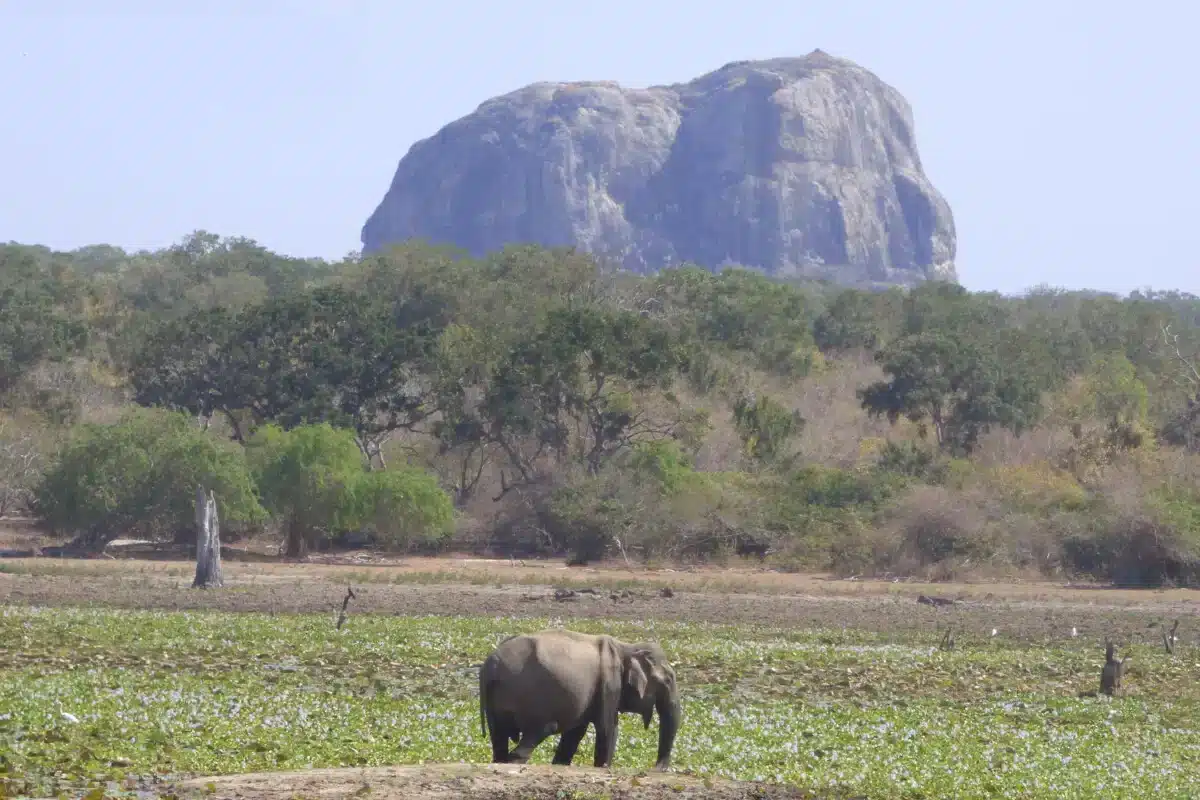
Yala has 44 species of mammals and 215 of birds (Ada Derana), and Wikipedia calls it important for conserving Sri Lankan elephants and leopards (Wikipedia). Guest houses and hotels in Tissamaharama, the nearby town, book the jeep tours (Wikivoyage).
At Udawalawe, about 250 elephants are believed to be resident all year (Wikipedia), which is why we’d pick it for families. Our elephant orphanage guide compares the Elephant Transit Home at the edge of the park with Pinnawala.
Minneriya belongs with the Cultural Triangle. Between July and October elephants gather on the bed of its reservoir, and Love Sri Lanka names August and September as the best months to see them (Love Sri Lanka).
Our Safari Excursion is a private jeep drive in either Yala or Udawalawe, and it starts with a hotel pickup early in the morning. See the page for the current price.
The east coast and Jaffna
Trincomalee’s beaches lie behind an offshore reef and are mostly shallow (Wikivoyage). Wikivoyage gives April to September as the dry months. At the town’s station, February to August pass our test and September averages 113 mm (WMO climate normals). The dry months are also the hot ones: the station’s daily highs average about 35°C from May to August. Boats go to Pigeon Island for snorkelling, but Wikivoyage reports that most of its coral had been killed by 2025 (Wikivoyage).
Further south, Love Sri Lanka describes Pasikudah as a place of gentle waves, with a shallow reef coastline that it counts among the longest in the world (Love Sri Lanka).
At Arugam Bay, Love Sri Lanka’s surf map has the season starting in July and ending with September (Love Sri Lanka). Wikivoyage says April to October, with most hotels and restaurants closed from November to March (Wikivoyage). Our Arugam Bay surf guide goes break by break, with drive times from Kandy and Weligama.
Love Sri Lanka calls Jaffna a predominantly Tamil city on the northern tip of the island (Love Sri Lanka). Its station, with 20 years of records, is dry from January to September (WMO climate normals), but Wikivoyage finds the region uncomfortably hot outside December to March (Wikivoyage). It’s usually 4.5 to 5 hours beyond Anuradhapura by road (OpenStreetMap), so we’d keep it for a trip of two weeks or more.
Drive times between the main bases
Distances look short, and the roads aren’t fast.
| From | To | Usual time by road | Road distance |
|---|---|---|---|
| Airport | Sigiriya | 3.5 to 4 hours | 145 km |
| Airport | Kandy | 2.5 to 3.5 hours | 115 km |
| Airport | Galle | 2 hours 15 minutes to 3 hours | 155 km |
| Airport | Mirissa | 2.5 to 3 hours | 175 km |
| Sigiriya | Anuradhapura | 2 to 2.5 hours | 75 km |
| Sigiriya | Kandy | 2.5 to 3 hours | 90 km |
| Sigiriya | Trincomalee | 2.5 to 3 hours | 100 km |
| Kandy | Nuwara Eliya | 2.5 to 3 hours | 75 km |
| Nuwara Eliya | Ella | 2 to 3 hours | 55 km |
| Kandy | Ella | 4 to 5 hours | 135 km |
| Ella | Udawalawe | 2.5 to 3 hours | 90 km |
| Ella | Tissamaharama, for Yala | 2 to 2.5 hours | 90 km |
| Ella | Arugam Bay | 2.5 to 3.5 hours | 130 km |
| Udawalawe | Mirissa | 2 to 2.5 hours | 110 km |
| Tissamaharama | Mirissa | 2.5 to 3 hours | 120 km |
| Mirissa | Galle | 45 minutes to an hour | 34 km |
| Trincomalee | Pasikudah | 3 to 3.5 hours | 105 km |
| Pasikudah | Arugam Bay | 3.5 to 4 hours | 145 km |
| Arugam Bay | Airport | 6 to 7 hours | 340 km |
| Anuradhapura | Jaffna | 4.5 to 5 hours | 205 km |
We ran every leg through OpenStreetMap’s route planner on 4 October 2026. The planner assumes empty roads, so no range starts below its figure: for example, it has Kandy to Ella at 2 hours 39 minutes.
Legs already timed on our Cultural Triangle, Kandy, airport transfers or private car pages keep that page’s range, or one that contains it. On the transfers page Galle is 2 hours 15 minutes, the low end of that row, and the private car page allows three hours from Nuwara Eliya to Ella. Ella to Arugam Bay starts from the surf guide’s 2.5 to 3 hours and adds half an hour, because the planner already needs 2 hours 27 minutes on empty roads.
For the rest we added 10% to the planner’s time, rounded up to the next half hour, or quarter hour under an hour, and allowed the same again as a spread.
Best places to travel in Sri Lanka by trip length
Colombo is usually 35 to 45 minutes from the airport (OpenStreetMap), so it only needs a night if your flight lands late or leaves early.
| Nights | Bases | Day by day |
|---|---|---|
| 7 | Sigiriya 2, Kandy 1, Ella 2, Weligama or Mirissa 2 | Our 7-day itinerary runs the same loop faster |
| 10 | Sigiriya 3, Kandy 1, Nuwara Eliya 1, Ella 2, Udawalawe or Yala 1, south coast 2 | The 10-day itinerary |
| 14 | Sigiriya 3, Kandy 2, Nuwara Eliya 1, Ella 2, Udawalawe or Yala 1, south coast 5 | The 2-week itinerary |
The 10-day and 2-week itineraries still board the train at Kandy. No through train ran from there to Ella when we checked, so swap that day for the road times above. To build a route of your own, work through our Sri Lanka itinerary planner.
The seven-night loop costs 17 to 20.5 hours in the car. That’s the table added up: airport to Sigiriya, Kandy, Ella, then Mirissa by way of Udawalawe or Tissamaharama, and back to the airport.
From May to September, swap the beach. From Sigiriya, Trincomalee usually takes 2.5 to 3 hours, so it fits straight after the Triangle. Arugam Bay fits after Ella, usually 2.5 to 3.5 hours away. It’s usually 6 to 7 hours from the airport, so we wouldn’t leave it for the night before a flight.
What’s different in 2026
Cyclone Ditwah damaged 70% of the railway network in late 2025 (Wikivoyage). The Sunday Times of 4 October 2026 reported that the service from Colombo to Peradeniya and Gampola resumed on Friday 2 October. The transport minister told journalists the service would stop at Peradeniya, because work on a bridge over the Mahaweli river wasn’t finished (Sunday Times).
Colombo Times reported on 2 October that Peradeniya to Kandy would stay suspended, that two stretches beyond Gampola were still under repair, and that Nanu Oya to Badulla, through Ella, was operating (Colombo Times). So no through train ran from Kandy to Ella when we checked on 4 October 2026. Sri Lanka Railways publishes the train schedule, so look there before you rely on a train.
At Yala, dry weather led the wildlife department to shut Blocks 1 and 2 on 14 September 2026, with reopening set for 15 October (Ada Derana). Blocks 3 to 6 stayed open (Daily Mirror). Those dates belong to this drought, so ask which blocks are open before you book.
Every foreign visitor needs an ETA before arrival, and our guide to visiting Sri Lanka sets out the entry rules. On 4 October 2026 the 30-day tourist ETA was free for passport holders from 40 countries, including the UK, the USA and Australia, as it had been since 25 May 2026 (official ETA site).
Questions about Sri Lanka destinations
Where to go in Sri Lanka for the first time?
Follow the loop: Sigiriya, Kandy, Nuwara Eliya or Ella, one safari park and the south coast. It suits January to March, the driest months at Galle’s station (WMO climate normals). From May to September we’d swap the south coast for Trincomalee, Pasikudah or Arugam Bay.
What are the best places to travel in Sri Lanka in July and August?
The east coast, the Cultural Triangle and Ella. Pottuvil, the station for Arugam Bay, averages 17 to 19 mm of rain in each of those months, and Maha Illuppallama, the nearest to Sigiriya, 21 to 40 mm. The two stations nearest Ella average 54 to 72 mm. Galle averages 162 to 173 mm on 14 or 15 wet days (WMO climate normals).
How long do you need for Sri Lanka’s main destinations?
We’d allow 10 to 14 nights for the full loop. Seven nights on it already mean 17 to 20.5 hours in the car. With a week we’d drop either the Cultural Triangle or the coast.
Which part of Sri Lanka is best, the south coast or the east coast?
It depends on the month. The south, with Galle Fort, Weligama’s beginner surf and Mirissa’s whale boats, is driest from January to March. East-coast stations are dry from about March to September (WMO climate normals).
Plan the route with a driver-guide
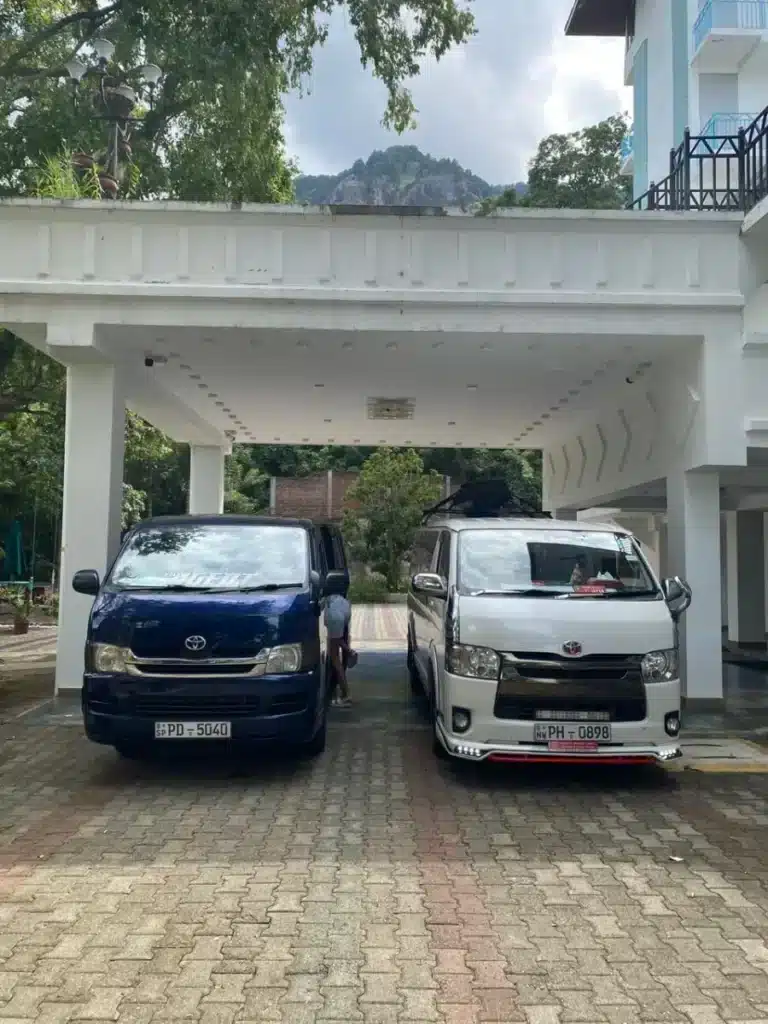
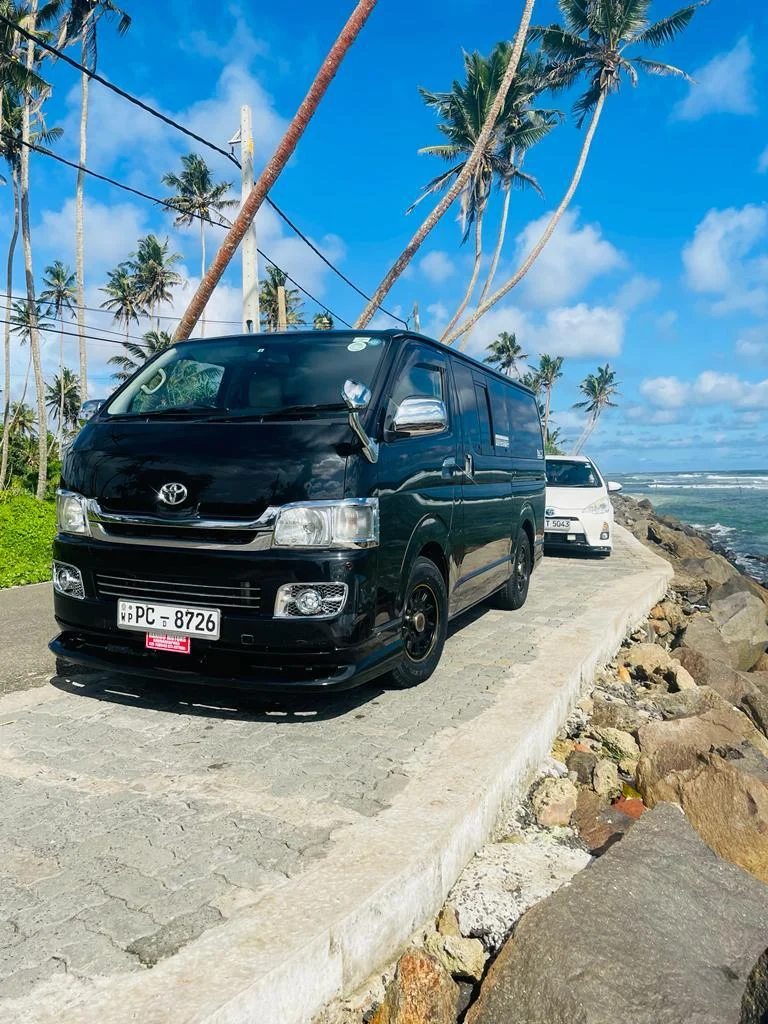
Our team in Weligama plans private routes and sends a driver-guide with each one. The private car with driver page explains what’s included, and says drivers get about ten hours off between driving days. Tell us your dates, group size and the Sri Lanka destinations you’ve picked, and we’ll put them in a workable order.
We reread the station normals, route planner, ticket list, rail and Yala reports and ETA notice on 4 October 2026. Rail repairs and park closures were still changing, so open the linked pages before you fix a route.