Key takeaways
- Rice and curry is not one dish. It is a plate of rice surrounded by five to ten small dishes, eaten together in combinations you build yourself.
- The skill being taught is timing, getting six pots to finish at once on one or two burners.
- Every plate needs a starch, a dhal, a green, something sour, something fresh and something crunchy. That balance is the actual recipe.
- Coconut milk goes in at two different strengths and at two different times, and getting that wrong is why home attempts split.
- Learn three dishes properly rather than eight badly. Dhal, pol sambol and one vegetable curry will carry you at home.
What rice and curry actually means
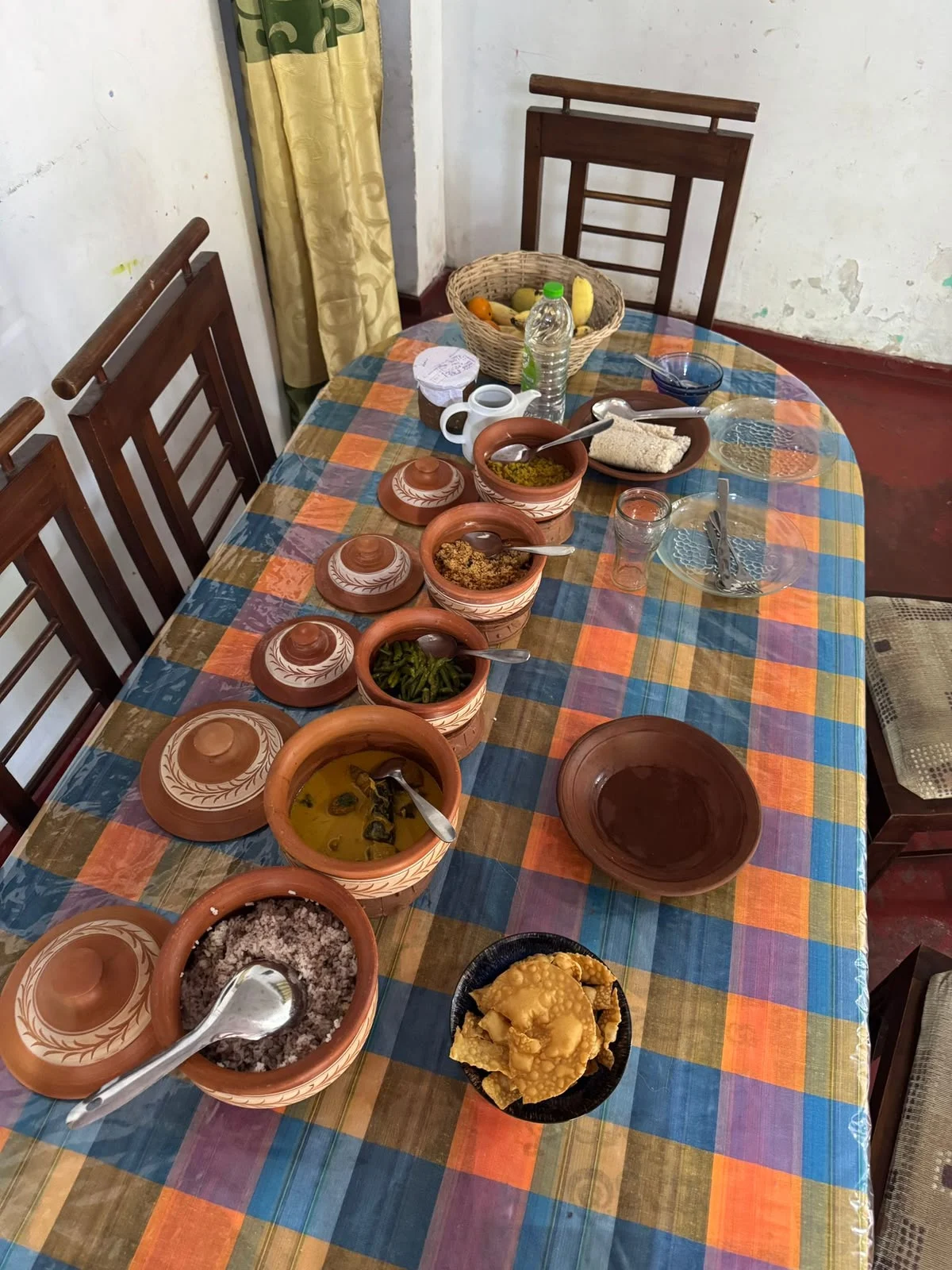
Visitors order it expecting a curry with rice, in the way a British curry house serves one. What arrives is a plate of rice ringed by six or seven small bowls, and a moment of confusion about how to proceed.
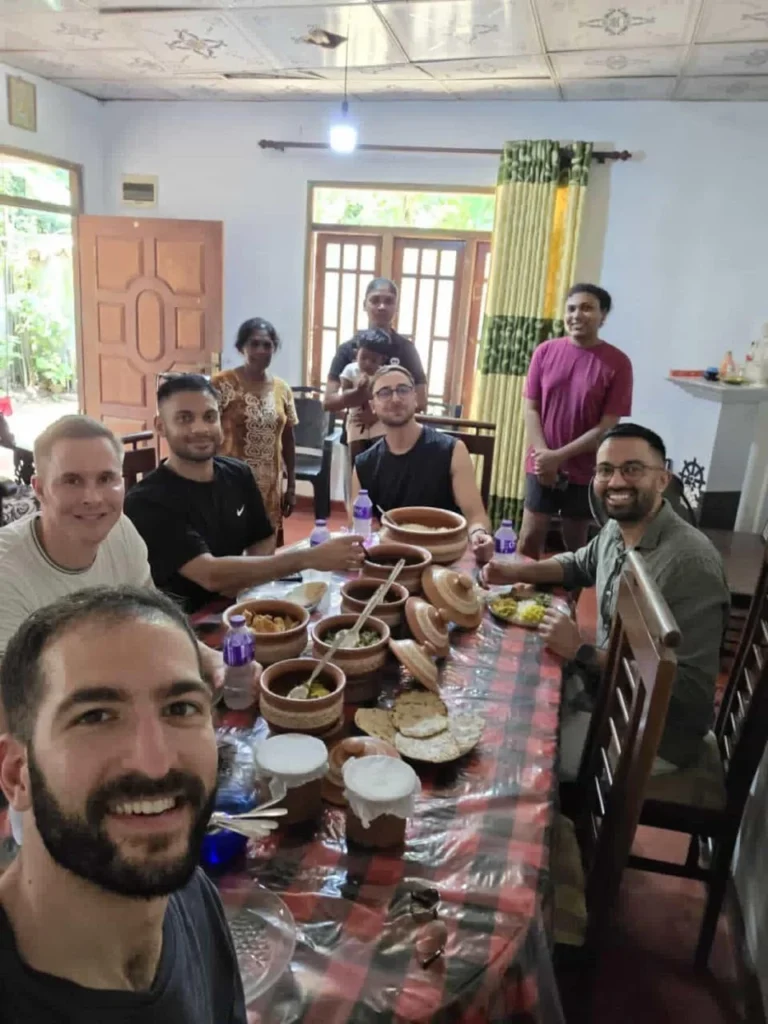
The answer is that you build each mouthful yourself. A little rice, some dhal, a scrape of sambol, a piece of something fried. The next mouthful is a different combination. No two are quite the same, and the meal changes as you eat because the proportions shift.
Understanding that is most of what a rice and curry class teaches. The individual recipes are simple. The composition is the dish.
The parts of the plate
A properly built plate has jobs that need filling, and once you know them you can improvise for the rest of your life.
The rice. Usually red rice on the coast, nuttier and firmer than white, and it takes longer. Some households serve white for guests, which is worth declining.
The dhal. Parippu, red lentils in coconut milk with turmeric, curry leaves and pandan. This is the anchor and the thing everyone eats most of.
A green. Often mallung, which is shredded leaves stir fried briefly with grated coconut, lime and a little chilli. Barely cooked, and the fresh note that stops the plate feeling heavy.
Something sour. A pickle, a lime achcharu, or a sour curry. It resets the palate between richer mouthfuls.
A coconut sambol. Pounded coconut, chilli, lime and onion. Sharp, raw and the loudest thing on the plate.
Something crunchy. Papadam, fried sprats, or a fried vegetable. Texture matters as much as flavour here.
Then one or two more curries depending on the household and the season. Jackfruit, pumpkin, beetroot, potato, or a fish curry.
The two coconut milks
This is the single most useful thing you will take home, and almost nobody explains it in a written recipe.
When you extract milk from grated coconut, the first squeeze gives a thick, fatty liquid. Add warm water to the same coconut and squeeze again and you get a thin, watery second pressing.
They do different jobs. The thin milk goes in early and cooks with the vegetables, doing the work water would do. The thick milk goes in at the very end, usually after the pot comes off the heat, and is stirred through rather than boiled.
Boil the thick milk and it splits into oil and solids. That is why coconut curries made from a tin at home so often turn greasy. Once you have seen it done in a clay pot you will never do it the other way again.
Timing, which is the real lesson
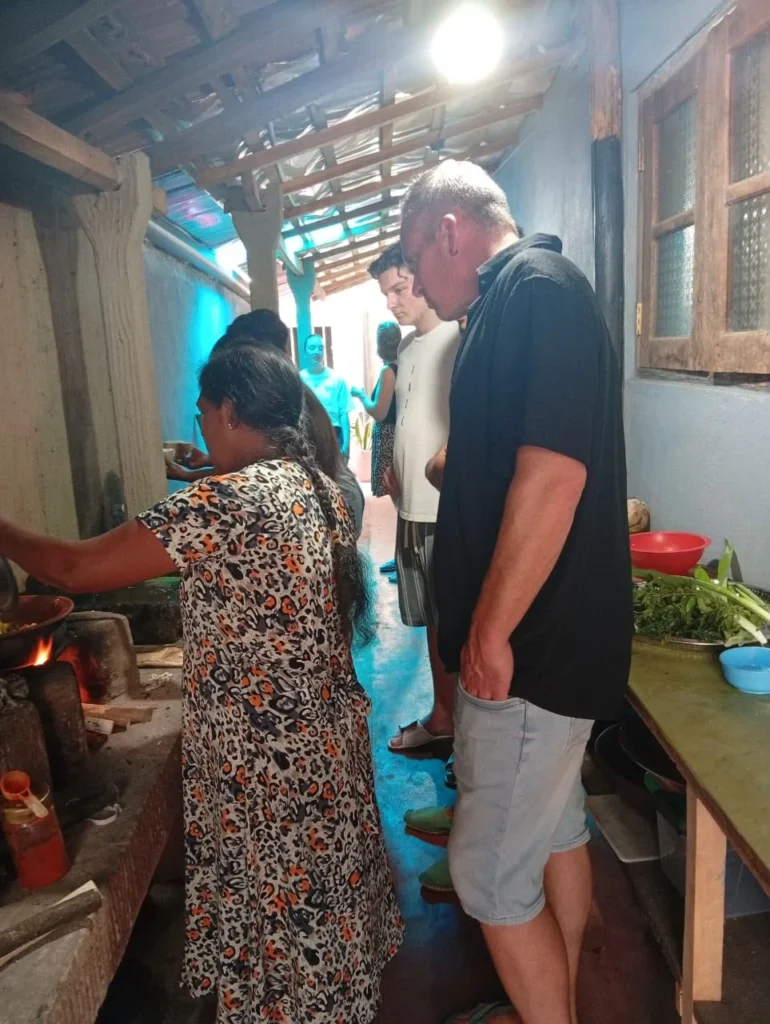
Six dishes, one wood fire and maybe one gas ring. Everything has to be hot at the same time.
The order is not arbitrary. Rice goes on first and gets left alone. Dhal next, because it tolerates sitting. Anything long, like jackfruit, starts early. The greens are last and take three minutes. The sambol is pounded while something else simmers, because it is not cooked at all.
Watching a household do this without a timer is genuinely instructive. They are not following a sequence they memorised. They are reading how fast the fire is running and adjusting, which is why the same cook produces the same meal on a windy day and a still one.
The roasted curry powder is worth attention too. Sri Lankan blends are roasted much darker than Indian ones, and that toasted depth is the flavour most people cannot place when they first eat here. Sri Lankan cuisine also uses whole Ceylon cinnamon bark, which is milder than the cassia sold elsewhere and can sit in a pot without taking over.
What to actually learn for home
Be realistic. You will not cook seven dishes on a Tuesday.
Learn the dhal properly, because it takes twenty minutes and works as a meal on its own. Learn pol sambol, accepting that desiccated coconut is a poor substitute and frozen grated coconut is a decent one. Learn one vegetable curry and apply the method to whatever is in your fridge, since the technique transfers.
Ask your host to write down proportions even though they will be approximate. “A handful” is more accurate than it sounds once you have seen the handful.
Buy curry powder and goraka before you leave. Both are hard to find abroad and neither is expensive here.
If you want the fuller picture of where to take a class, we wrote about telling a real kitchen from a demonstration, and about cooking with local families. Lonely Planet covers the regional variations if you are travelling beyond the south.
Frequently asked questions
How many dishes are in a rice and curry meal?
Usually five to ten small dishes around a plate of rice. Three is a light lunch, ten is a celebration.
How do you eat rice and curry properly?
Build each mouthful from rice plus two or three of the surrounding dishes. Mix with your fingertips on the plate rather than stirring everything together at once.
Why does my coconut curry split at home?
Almost always because the thick coconut milk was boiled. Add it at the end, off the heat, and stir it through rather than simmering it.
Is rice and curry always spicy?
The heat sits in the sambol and the chilli side dish. The curries themselves are aromatic. Ask for the hot elements separately and the plate is mild.
What is mallung?
Shredded green leaves stir fried very briefly with grated coconut, lime and chilli. It is the fresh, light element on the plate.
Can I learn rice and curry in a single class?
You can learn the structure and three or four dishes properly in one session. Trying to cover all seven usually means doing none of them well.
Is red rice better than white?
It has more texture and more flavour, and it is what most households eat. It takes longer to cook, which is why guests are sometimes given white.
Want to learn the whole plate?
We are in Weligama and the households we work with cook this every day rather than for visitors. If you want a class that teaches the composition rather than a list of recipes, tell us when you are here. Our Sri Lanka tours can build a class in.
Related reading
This is one of a series on eating and cooking in Sri Lanka. For the wider picture, see our guide to the best food experiences in Sri Lanka, and if you are still choosing a class, our guide to picking the best cooking class in Sri Lanka.