Key takeaways
- Cooking with locals in Sri Lanka usually means being invited into a family’s own kitchen for an afternoon, not attending a scheduled class.
- The money goes much further when you book directly or through a local operator than through an international platform.
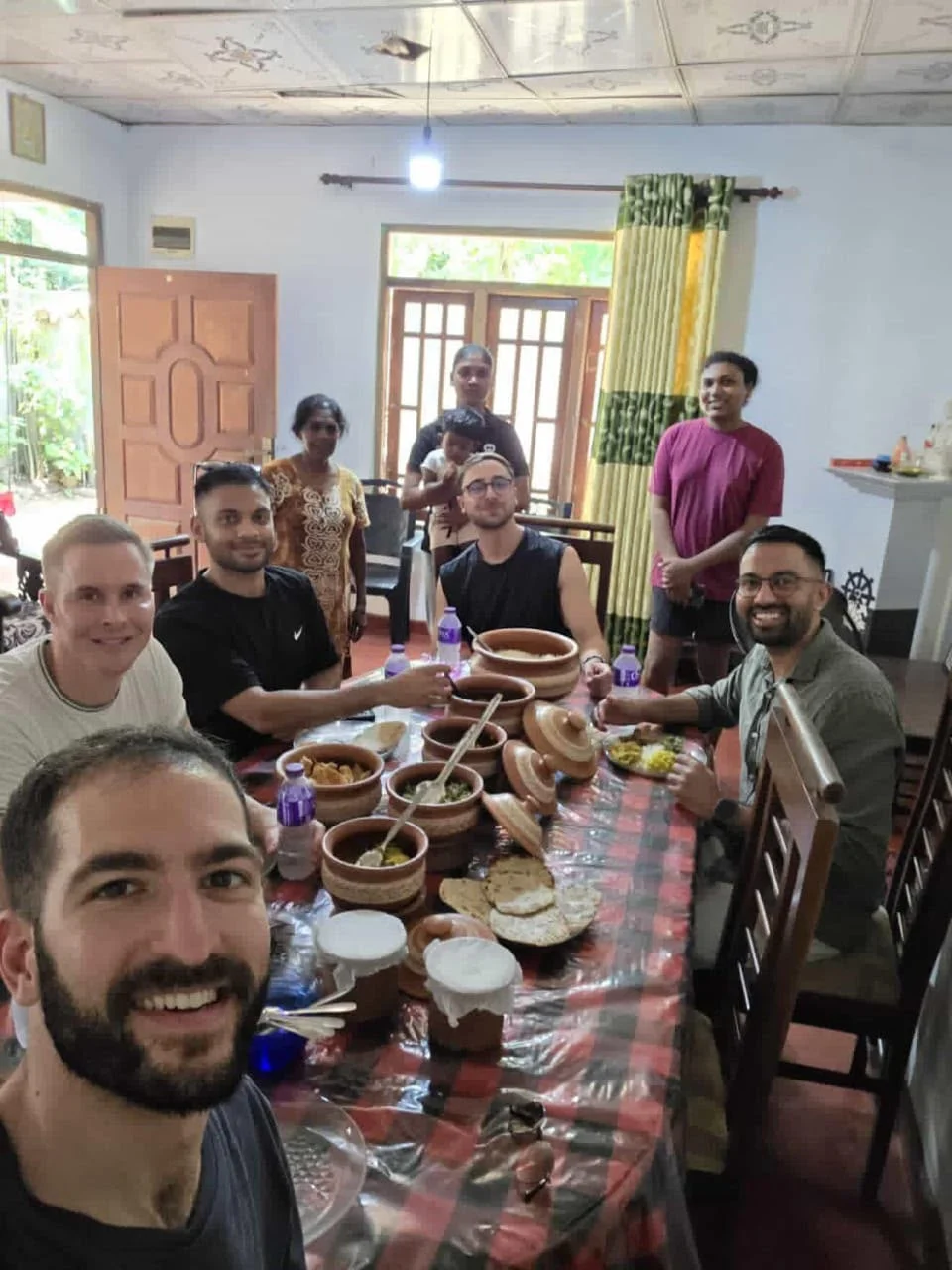
- Expect to be fed far more than you can eat. Refusing seconds once and then accepting is the polite rhythm.
- You will learn technique by watching hands rather than following instructions, because quantities are judged rather than measured.
- Bring small gifts if you want, but cash tipped directly at the end is more useful to the household.
What cooking with a local family is actually like
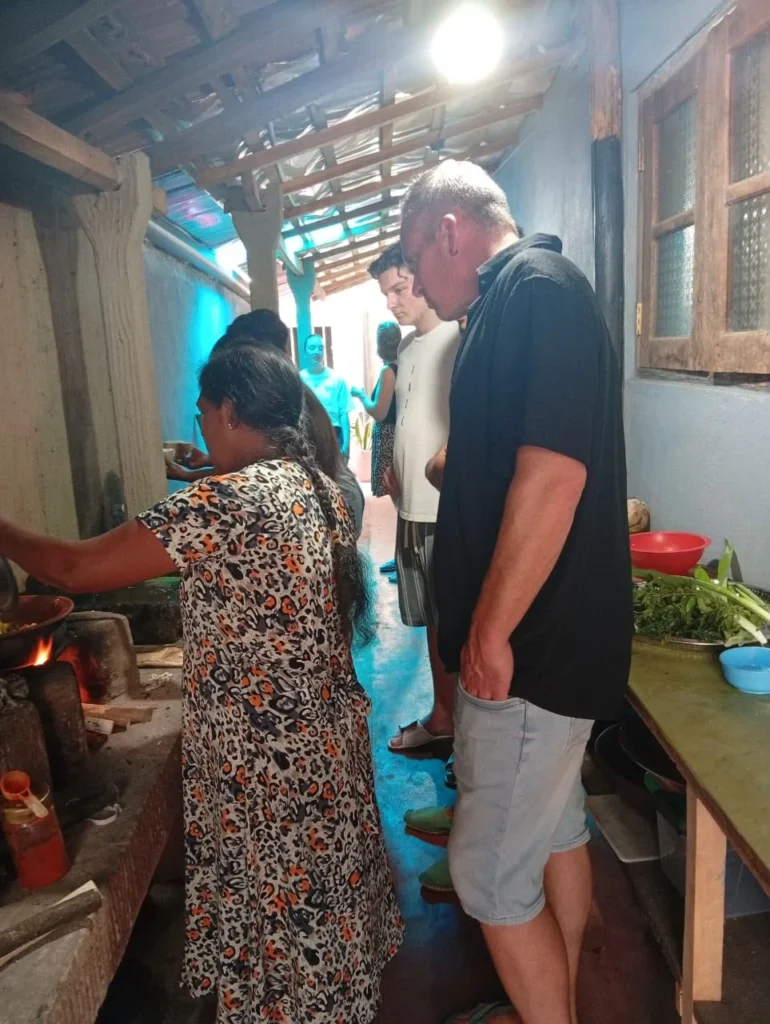
You arrive at a house. Somebody’s mother is already cooking, because the rice went on before you got there and the fire has been going for an hour.
There is a short, slightly awkward period where nobody knows quite how to begin. Then someone hands you a coconut and a scraper and the awkwardness ends, because now you have a job and you are visibly bad at it.
That is the shape of most of these afternoons. Less instruction than you expect, more standing around a hearth watching somebody’s hands. The teaching happens sideways. You notice that she adds the thick coconut milk only after the pot comes off the flame. Nobody announces this. You just see it, and then you understand why your own curries at home have been splitting.
Why it beats a restaurant meal
Restaurants on the south coast cook for tourists, and they have learned what tourists order. The rice and curry served in a beachfront place is usually milder, smaller and more uniform than what the family running it eats after closing.
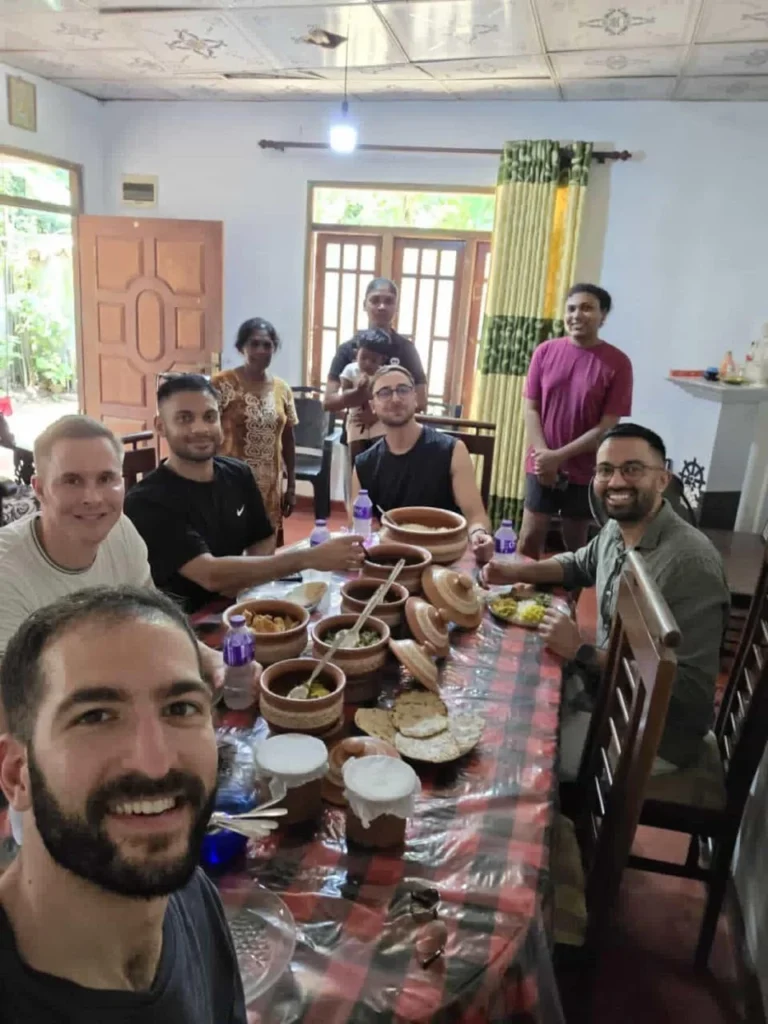
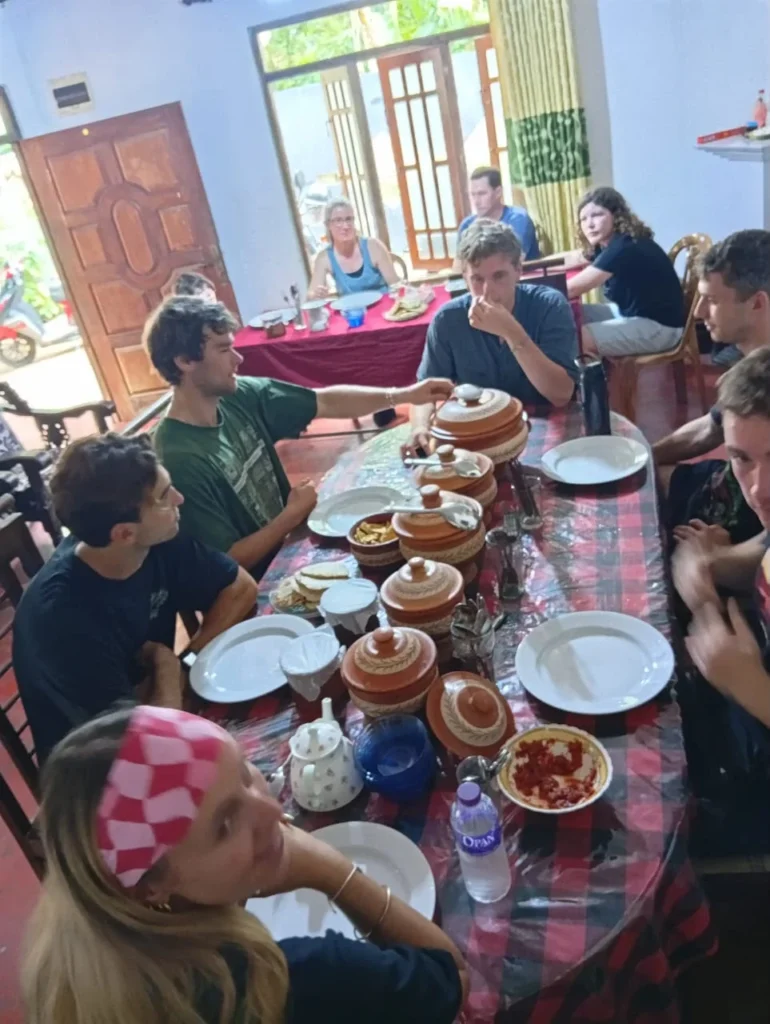
In a home you get the real proportions. Six or seven dishes for one plate of rice. A sambol so sharp with lime and chilli that the first mouthful is a shock. Red rice, which most restaurants replace with white because visitors prefer it.
You also get the conversation, which is the part people remember for longer than the food. You will be asked about your family, your job, how much you earn and whether you are married, in roughly that order. This is normal and not intrusive by local standards. Ask the same questions back.
Where the money goes
This matters more than it sounds, and it is worth being direct about.
When you book a village cooking class through a large international platform, a significant share of what you pay stays with the platform. Book through a Sri Lankan operator or directly with the household and far more of it reaches the family who cooked for you.
The practical version: pay in cash where you can, and tip at the end into a hand rather than through an app. Tipping is not obligatory in Sri Lanka and nobody will ask, which is exactly why it is worth doing.
If you want to give something beyond money, useful things beat souvenirs. School supplies, decent spices from your own country, or a printed photograph sent afterwards. A printed photo is disproportionately appreciated in households where every image lives on a phone.
The etiquette nobody tells you
A few things make you a better guest, and none of them are complicated.
Shoes come off at the door if others have taken theirs off. Look at the doorway before you walk in.
Accept the tea. You will be offered tea almost immediately, usually very sweet, and declining it is a slightly cold way to start.
Eat with your right hand if you want to try, and only your right hand. The left is not used for eating. Nobody will correct you, which is exactly why it is worth knowing.
Refuse seconds once, then accept. The first offer is a formality and the second is the real one. Clearing your plate signals you enjoyed it.
Ask before photographing anyone, especially older women. Younger family members will usually want photos and will ask you for them.
If you are offered a tour of the house, take it. It is a gesture of welcome, and refusing reads as disinterest.
What you will cook
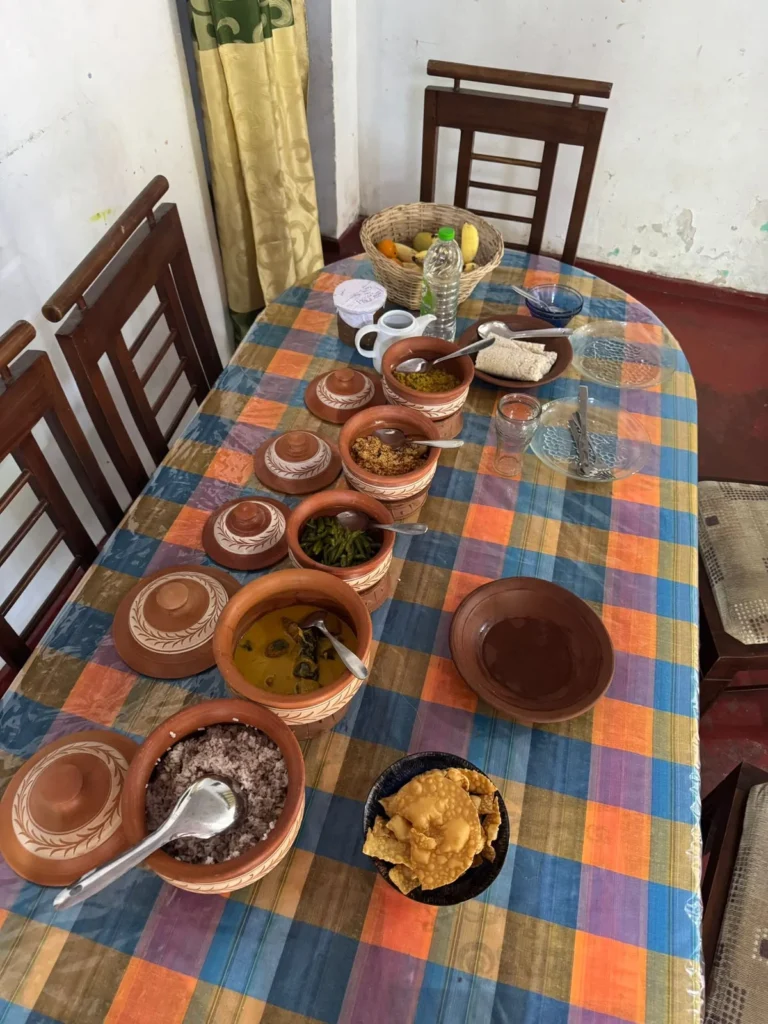
Whatever the household eats, which changes with the season and the garden. A typical spread includes dhal in coconut milk, a coconut sambol pounded on a stone, one or two vegetable curries, a pickle, and pol roti or hoppers.
If there is a fish curry it will probably be ambul thiyal, cured dark with goraka, a sour fruit that acts as a preservative and predates refrigeration on this coast.
Most of it is plant based by default, so vegetarians are easy to accommodate. Sri Lankan cuisine relies on coconut rather than dairy, which also makes it straightforward for vegans once the Maldive fish is left out of the sambol.
The spice you should pay attention to is the cinnamon. Ceylon cinnamon comes from this island and is a different species from the cassia sold as cinnamon almost everywhere else. It is milder and sweeter, and the difference is obvious when you taste them side by side.
Finding a household to cook with
Villages inland from Weligama, Mirissa and Unawatuna are where most of these afternoons happen on the south coast. Ask at your guesthouse first, because the person on the desk very often has a cousin who does this, and that is a better introduction than any listing.
If you are booking online, look for the small operators rather than the big aggregators, and read for specifics. A listing that names the family and describes the garden is more likely to be real than one selling “an unforgettable culinary journey.”
Lonely Planet notes that home hosted meals have grown quickly in Sri Lanka since tourism recovered, which is good for travellers and good for households, but it does mean quality varies. A recommendation from someone local beats a rating.
Frequently asked questions
How do I find locals to cook with in Sri Lanka?
Ask at your guesthouse, or book through a local operator rather than an international platform. Personal recommendation is the most reliable route.
How much should I pay?
Between 4,000 and 9,000 rupees per person is normal on the south coast, including the meal. Add a cash tip at the end.
Is it rude to refuse food?
Refusing the first offer of seconds is expected and polite. Refusing repeatedly, or leaving a full plate, reads as a comment on the cooking. Take a small portion if you are full.
Do I need to bring a gift?
Not required. If you want to, useful items or spices from home work well, and a printed photograph sent afterwards is genuinely valued.
Will there be a language barrier?
Some, and it matters less than you would think. Cooking is shown rather than explained. Most hosts speak enough English for the practical parts.
Is it safe to eat in a village home?
Yes. Food is cooked at high heat and served immediately. Stick to bottled or filtered water, which is standard advice throughout Sri Lanka.
Can I cook with a family if I only have one afternoon?
Yes. Most sessions run three to four hours including the meal, which fits comfortably into a single afternoon.
Want us to introduce you?
We live in Weligama and these are our neighbours. If you would rather be introduced than book blind, message us and we will put you with a household that suits how you travel. We can arrange a driver for the village run, or build the afternoon into a wider Sri Lanka tour.
Related reading
This is one of a series on eating and cooking in Sri Lanka. For the wider picture, see our guide to the best food experiences in Sri Lanka, and if you are still choosing a class, our guide to picking the best cooking class in Sri Lanka.