Key takeaways
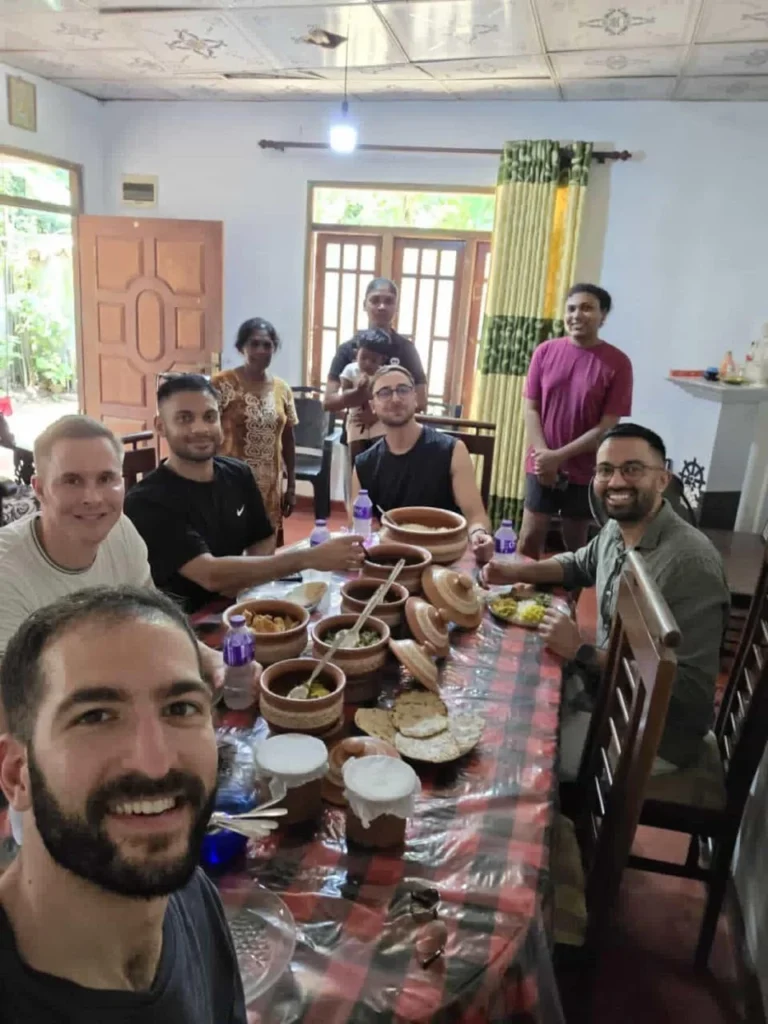
- A couples cooking class in Sri Lanka usually runs three to four hours and ends with you eating what you made, at the family’s own table.
- Most village classes cook six to ten dishes at once, because that is how a Sri Lankan rice and curry meal works.
- You cook over a wood fire and grind coconut by hand. There is no induction hob and no stainless steel demonstration kitchen.
- Book the morning session if you want the market visit included, and the afternoon session if you would rather sleep in.
- Vegetarian and vegan versions need no special arrangement. Most of the standard dishes already are.
The part nobody tells you about
You will be bad at scraping coconut. Both of you. It is a small stool with a serrated blade bolted to one end, you sit on it, and you drag half a coconut across the blade until the white flesh falls out in threads. The grandmother who has done it for fifty years fills a bowl in ninety seconds. Your first attempt produces about a tablespoon and a sore wrist.
This is the moment couples either laugh or get competitive. Usually both.
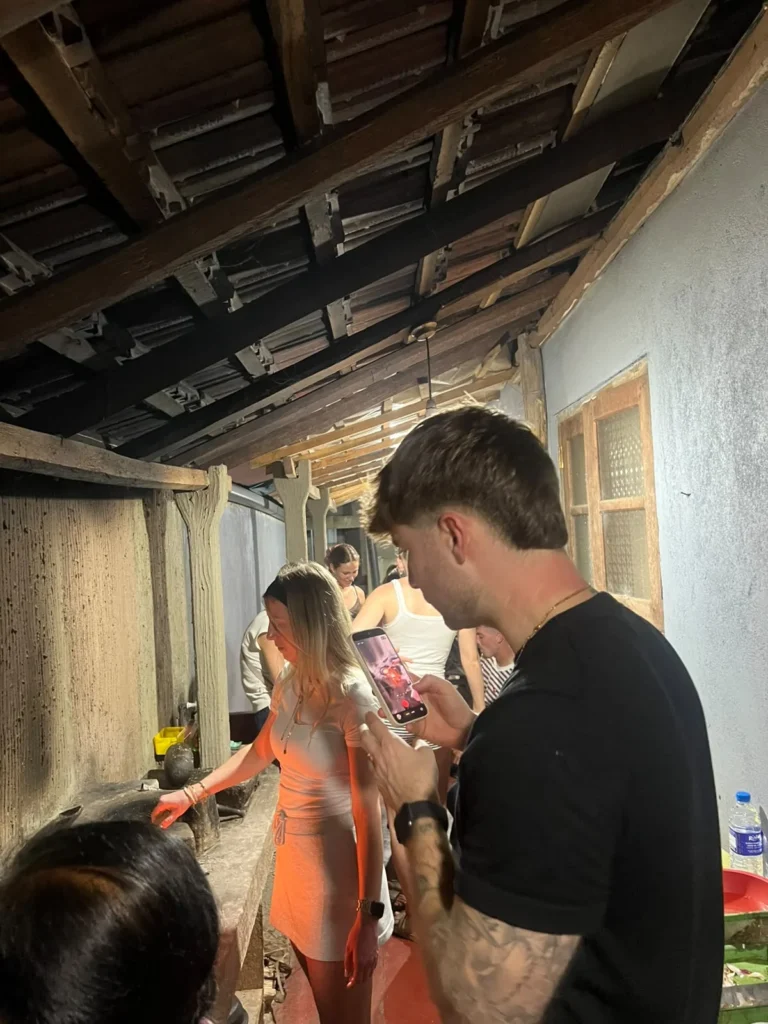
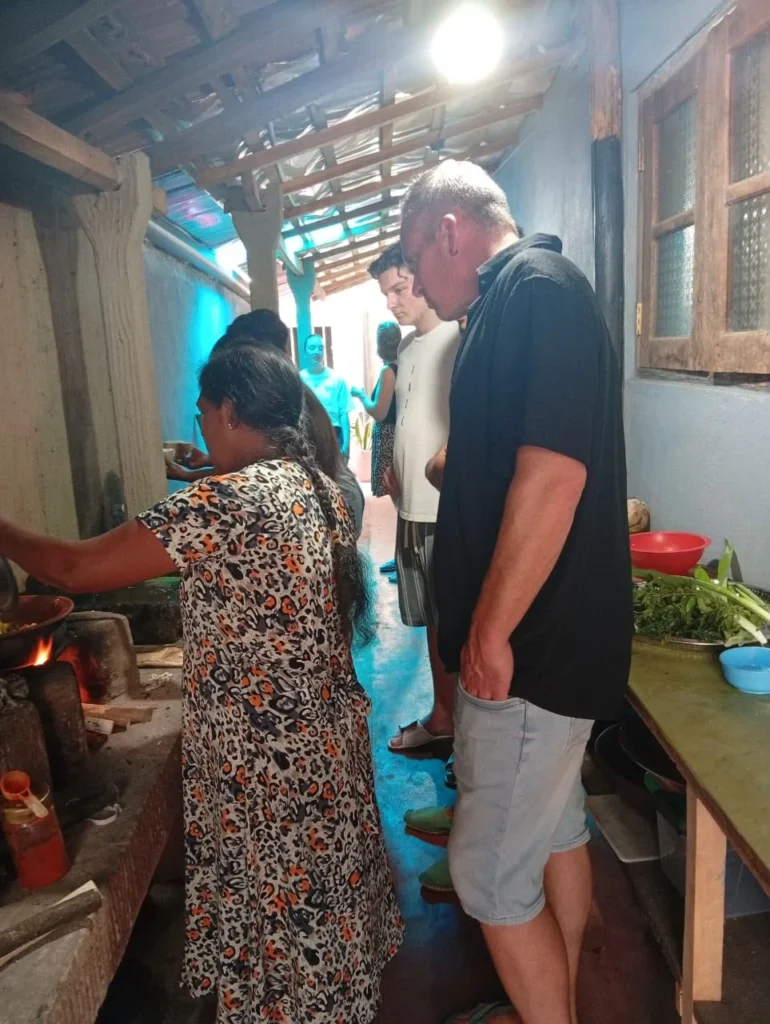
We send guests to a family home inland from Weligama, and the thing that surprises people is how little of it feels like a class. Nobody hands you a laminated recipe card. You stand in a kitchen with a clay-tiled roof and open rafters, someone puts a coconut in your hands, and the lesson happens while the food cooks.
What you actually cook
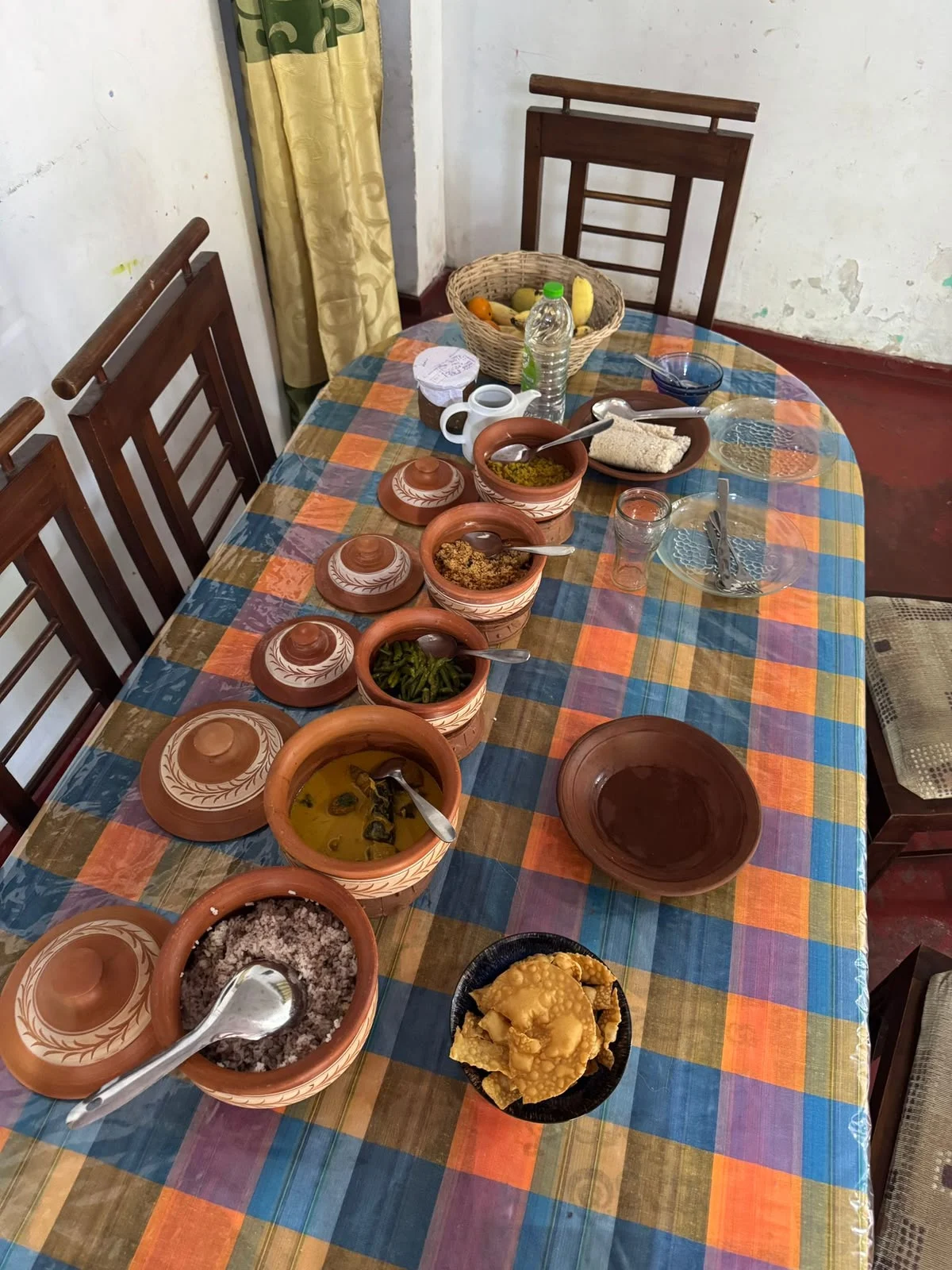
A Sri Lankan meal is not one dish with sides. It is five to ten small curries eaten together, and the skill is timing them so everything lands hot at once. Sri Lankan cuisine leans harder on coconut and on souring agents like goraka than most people expect from “curry.”
On a typical afternoon you will make:
- Pol sambol. Fresh coconut, chilli, lime, red onion, a little Maldive fish. Pounded, not blended. This is the one everyone tries to recreate at home.
- Parippu. Red lentil dhal cooked in coconut milk with curry leaves, pandan and turmeric. Sounds plain. Is not.
- A vegetable curry from whatever is in the garden that week. Often green beans, sometimes jackfruit, sometimes pumpkin.
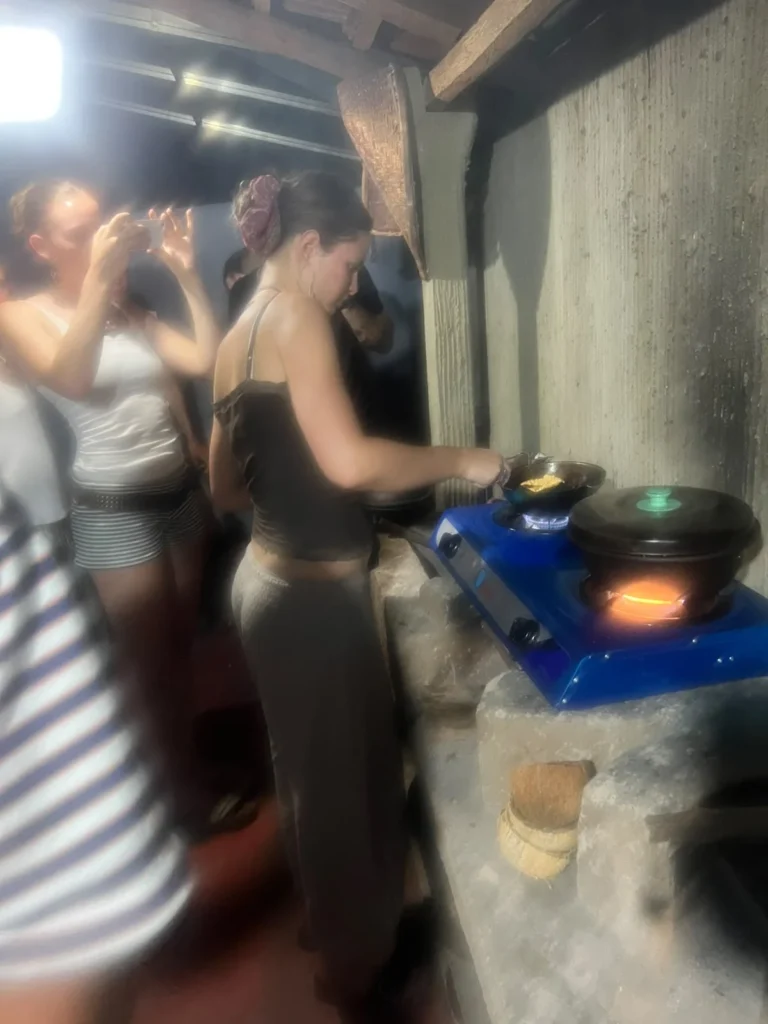
- Pol roti. Coconut flatbread you slap out by hand and cook on a flat pan.
- Red rice, which takes longer than white and tastes better.
The spice work happens in front of you. Cinnamon goes in whole, and it is worth knowing that Ceylon cinnamon is a genuinely different species from the cassia sold as cinnamon in most Western supermarkets. It is softer, sweeter, and it crumbles when you press it. Buy some before you fly home.
Why this works better for couples than a restaurant
A nice dinner gives you three hours facing each other across a table. A cooking class gives you three hours standing shoulder to shoulder doing something neither of you is good at.
That difference matters more than it sounds. You end up talking to the family, to the other guests, and to each other in a much looser way than you would over a set menu. Nobody is performing. Somebody’s coconut roti tears in half and the whole kitchen finds it funny.
The other thing: it fixes the problem that hits most couples around day five of a beach holiday, when you have swum, eaten, read, and are quietly running out of things to do together that are not just more of the same. Lonely Planet tends to file cooking classes under cultural experiences, which undersells them. It is the most reliably good afternoon we book.
Where to do it on the south coast
Most south coast classes run out of villages within thirty minutes of Weligama, Mirissa and Unawatuna. That puts them within easy reach if you are staying anywhere between Galle and Matara.
If you are basing yourselves in Galle, the drive inland takes about forty minutes and you can pair the class with an afternoon inside the Galle Fort, which is a UNESCO World Heritage Site and worth the separate trip.
A note on choosing: the classes held in hotel kitchens are cleaner, cooler and much less interesting. If the listing shows a stainless steel bench, you are getting a demonstration. If it shows a clay pot on a fire, you are getting a kitchen.
Practical things worth knowing
Wear clothes you do not mind smelling of woodsmoke, because they will. Bring a hair tie. The kitchen gets hot and there is no air conditioning, which is part of it.
Sessions usually run morning or mid afternoon. Morning classes often include a stop at the local market to buy the vegetables, which adds an hour and is the better option if you like markets. Afternoon classes skip the market and start with the cooking.
Tell the operator about allergies when you book, not on the day. Coconut is in almost everything, and Maldive fish turns up in sambol where you might not expect it.
Bring cash for the family. Tipping is not expected but it is normal, and it goes directly to the people who fed you.
If you are still working out how the day fits around the rest of your trip, our Sri Lanka tours can be built around a class, and a private car with a driver makes the village drive straightforward.
Frequently asked questions
How long does a couples cooking class in Sri Lanka take?
Three to four hours, including the meal. Morning classes with a market visit run closer to five.
How much does it cost?
Village classes on the south coast typically run between 4,000 and 9,000 rupees per person, and that includes the food you eat afterwards. Hotel classes cost more.
Do we need any cooking experience?
No. Most guests have never cooked with a wood fire or scraped a coconut, and the family assumes that. You will be shown each step before you try it.
Can we do a private class just for the two of us?
Yes, most families will run a private session if you ask when booking. It costs more per person than joining a group, and it is quieter, though some of the fun comes from the other guests.
Is a Sri Lankan cooking class suitable for vegetarians or vegans?
Very. The bulk of a traditional rice and curry spread is already plant based. Ask for the Maldive fish to be left out of the sambol and the whole meal is vegan.
What is the best month to book?
The south coast season runs roughly November to April, when the weather is dry. Classes run year round, but a wood-fire kitchen during monsoon downpours is a damper experience.
Will we actually be able to cook this at home?
The sambol and the dhal, yes. The roti takes practice. Sourcing fresh coconut is the real obstacle, and frozen grated coconut is a reasonable substitute.
Planning a trip to the south coast?
We are based in Weligama and we book these classes most weeks. If you want one slotted into your itinerary, or you are deciding between a village kitchen and a hotel session, get in touch and we will tell you which one suits you.
Related reading
This is one of a series on eating and cooking in Sri Lanka. For the wider picture, see our guide to the best food experiences in Sri Lanka, and if you are still choosing a class, our guide to picking the best cooking class in Sri Lanka.