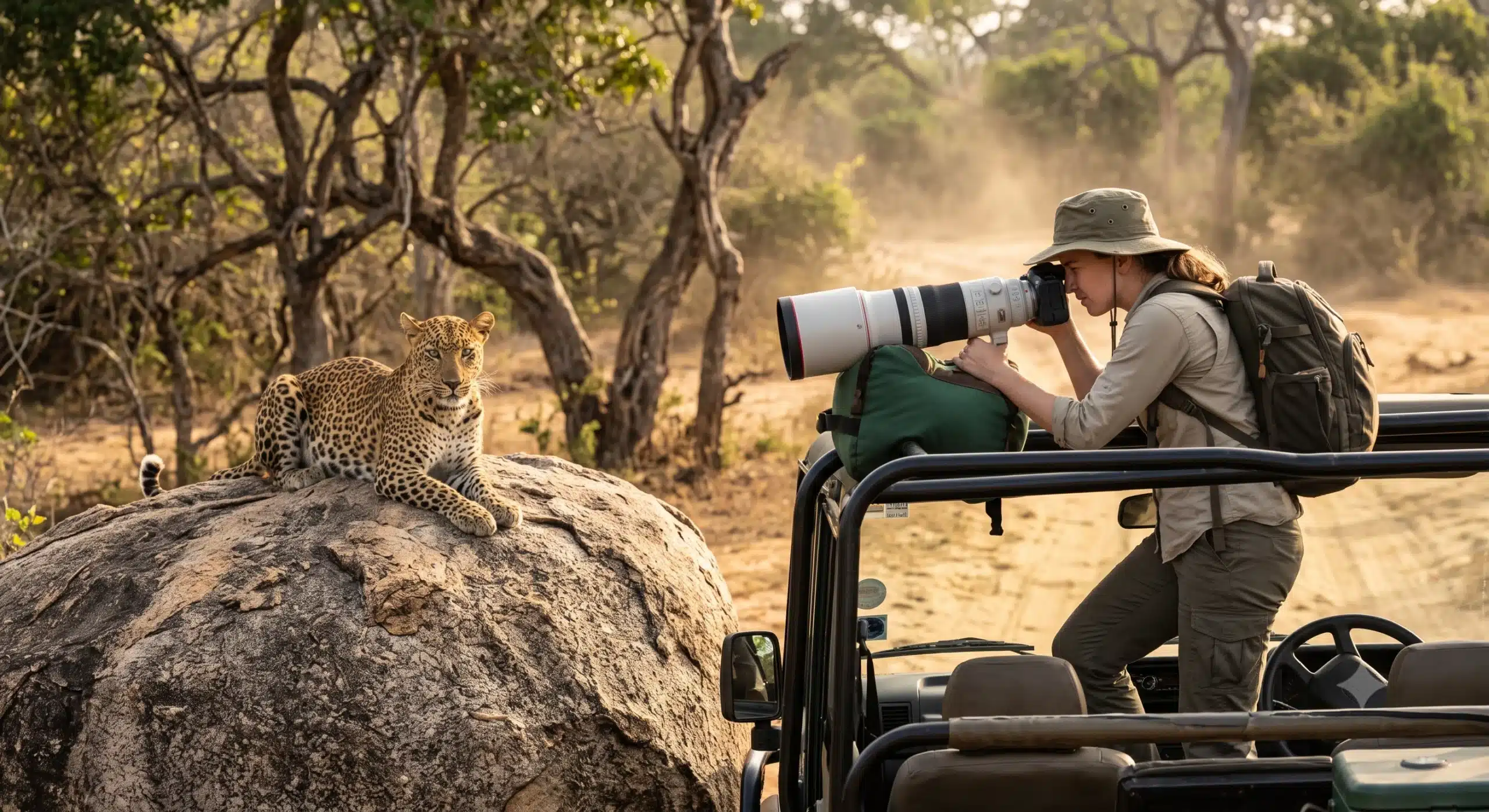
Mastering sri lanka wildlife photography requires more than just a long lens. You need the right timing, a knowledgeable tracker, and an understanding of our unique jungle terrain. Whether you want to capture an elusive leopard or a massive tusker, this guide shows you exactly how to succeed.
Sri Lanka is one of Asia’s premier destinations for wildlife photography. To get the best shots, visit during the dry season (February to September) when animals gather around shrinking waterholes. Bring a 300mm to 600mm lens, book a private jeep to ensure shooting space, and prioritise parks like Yala, Wilpattu, or Kumana.
Key Takeaways
- Best season: February to September (dry season) is ideal for visibility and waterhole action.
- Top locations: Yala (high leopard density), Wilpattu (forest terrain), and Udawalawe (elephants).
- Gear essentials: A telephoto lens (at least 400mm), bean bags for jeep stability, and dust protection.
- Expert tip: Morning safaris offer the softest lighting and the highest animal activity.
What is the Best Time for Wildlife Photography in Sri Lanka?
Timing your trip correctly makes all the difference in the field. Sri Lanka experiences two main monsoons, which divide the island’s weather patterns. As a result, the dry season is your golden window. From February to September, the thick scrub jungle thins out dramatically. Because waterholes shrink during these months, wildlife is forced out into the open to drink. This naturally creates predictable, high-action gathering spots for photographers.
For example, if you want to photograph sloth bears, May to July is peak season. During this time, the palu trees drop sweet fruit, drawing the normally shy bears out in broad daylight. On the other hand, if your goal is photographing the famous Asian elephant gathering, visit Minneriya National Park between July and September. Knowing these seasonal rhythms allows you to plan highly targeted Sri Lanka tours rather than relying on pure luck.
Top National Parks for Safari Photography
Every national park on the island offers a distinct backdrop. Planning your itinerary around the right locations is crucial for building a diverse portfolio.
Yala National Park
[Yala National Park] is famous worldwide for its big cats. It boasts one of the highest leopard densities on the planet. According to recent 2026 data from the Department of Wildlife Conservation, Yala Block 1 holds roughly one leopard per square kilometre. The park’s terrain mixes golden sand, twisted scrub, and rocky outcrops. Think of Yala like a natural outdoor photography studio; the contrasting lighting and open rocky plains frame subjects perfectly. However, Block 1 can get very crowded. If you prefer a quieter background without competing jeeps in your frame, ask your guide to take you to Block 5 instead.
Wilpattu National Park
Wilpattu is Sri Lanka’s largest protected park. It is known for its natural sand-rimmed lakes, known locally as villus, which are surrounded by dense emerald forest. Photographing here requires patience and skill. Because the thick canopy means light levels are lower, a fast lens (f/2.8 or f/4) is highly recommended. Because it is less crowded than Yala, Wilpattu offers incredibly serene, natural shots of leopards, barking deer, and crested serpent eagles.
Kumana and Udawalawe
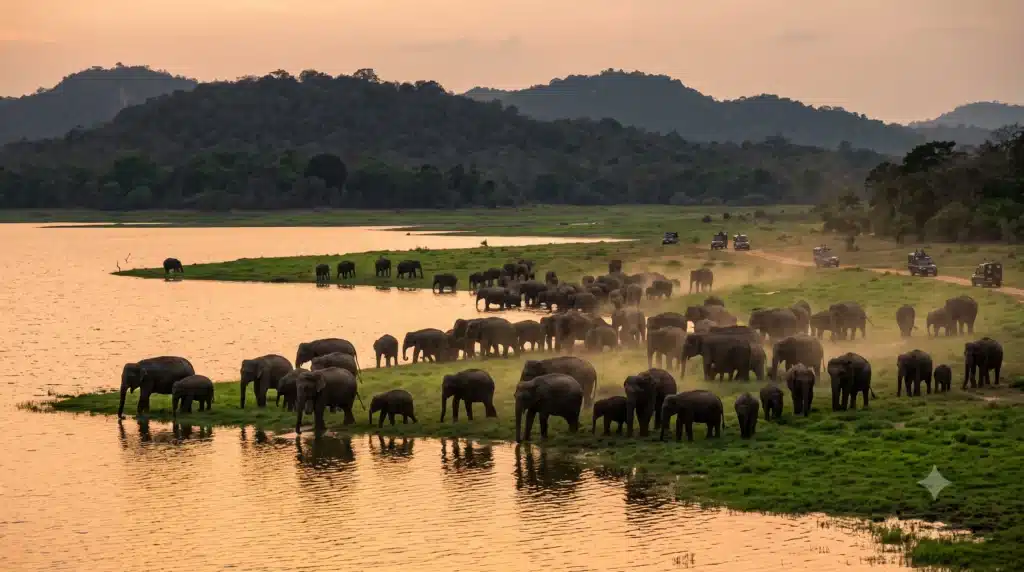
Kumana is emerging as a top-tier alternative for big cats, with a healthy density of 41 leopards per 100 square kilometres. Meanwhile, Udawalawe is the undisputed king of elephant photography. Sri Lanka’s wild elephant population now stands at roughly 7,451, and Udawalawe guarantees incredible sightings. The open, grassy plains make tracking and photographing herds beautifully simple.
Birding Hotspots: Bundala and Sinharaja
If you love birding, you must include Bundala National Park. This coastal wetland is a paradise for migratory birds, especially flamingos and painted storks. For endemic species, head into the UNESCO World Heritage rainforest of Sinharaja. You will need a macro lens for amphibians and a fast telephoto for the elusive Sri Lanka Blue Magpie.
Essential Gear: What to Pack for a Wildlife of Sri Lanka Tour
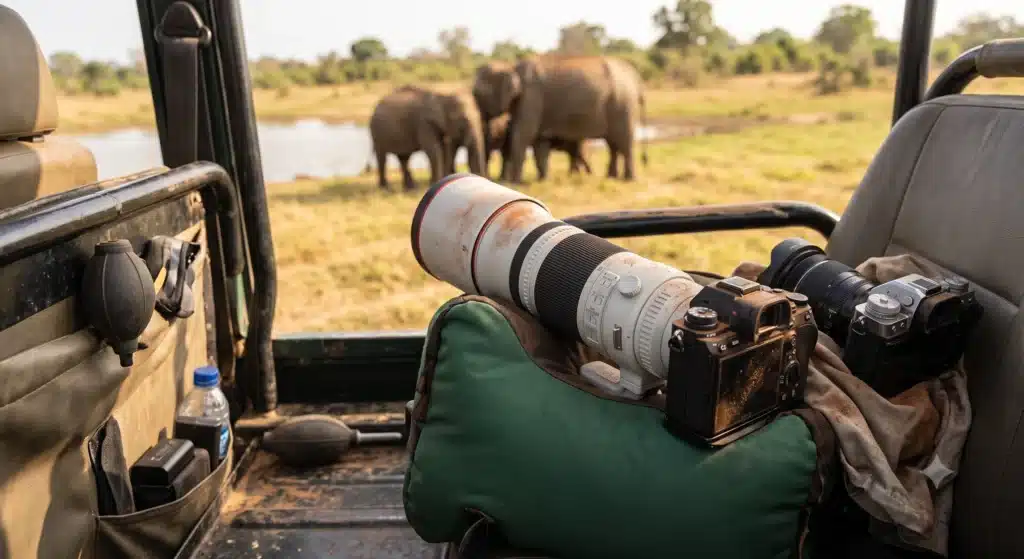
When you book a Wildlife of Sri Lanka Tour, bringing the correct equipment is vital. You do not need to pack a massive studio setup, but certain items are absolute necessities for success.
- Cameras: Two camera bodies are ideal. This stops you from changing lenses inside a dusty jeep.
- Lenses: You need reach. A 100-400mm or a 150-600mm lens is perfect for most encounters. Also, bring a 24-70mm for wide environmental shots.
- Support: Tripods are useless inside a moving jeep. Instead, bring a sturdy beanbag to rest your heavy lens on the vehicle’s metal roll-bars.
- Protection: The dry season is incredibly dusty. Pack dry bags and a simple dust cover for your gear.
Say you land in Colombo on a Tuesday morning. You might head straight to the coast for a safari the very next day. If you forgot a dust cover, a hotel pillowcase can work in a pinch, but bringing a proper protective sleeve from home is much safer for your expensive gear.
Practical Guide: Etiquette, Rules, and Getting Around
Knowing how to navigate the local rules ensures you get the shots respectfully and safely. Sri Lanka takes conservation seriously, and so should you.
Getting There and Getting Around
Most international travellers arrive at Bandaranaike International Airport near Colombo. From there, the easiest way to reach the remote national parks is by hiring a private vehicle with a driver. Public buses are cheap, but they cannot transport bulky camera gear safely. When you book a safari excursion through a trusted agency, all transfers are handled seamlessly for you.
Visas and Safety
Sri Lanka is very safe for tourists. Just ensure you apply for your tourist visa via the official Sri Lanka eVisa portal before flying. Regarding wildlife safety, never leave the jeep unless you are at a designated, fenced rest stop. The animals are wild, fast, and unpredictable.
Safari Costs and Honest Advice
Park entrance fees generally run around $30 to $40 USD per person. You must also pay for the jeep hire, which usually costs $40 to $60 USD for a half-day. Here is a mild, professional opinion: never book the cheapest jeep waiting at the park gate. Cheap drivers often rush from sighting to sighting and crowd the animals. For serious sri lanka wildlife photography, you need a driver who understands positioning, anticipates animal movement, and switches the engine off to stop vibrations. Investing in a knowledgeable tracker pays off immediately.
Respecting the Environment
Do not encourage your driver to speed or block the path of wildlife. Patience always yields the best images. Flash photography is strictly forbidden because it blinds and stresses nocturnal animals. Dress in muted colours like khaki, olive green, or brown to blend into the surroundings.
Frequently Asked Questions
How many days do I need for a wildlife photography trip?
We recommend at least 7 to 10 days. This allows you to visit two or three different national parks. Spending multiple days in one park increases your chances of spotting rare animals in perfect light, rather than rushing through a single afternoon session.
Can I fly a drone in Sri Lankan national parks?
No. Drone usage is strictly prohibited inside all national parks and protected areas managed by the Department of Wildlife Conservation. You will face heavy fines and immediate equipment confiscation if you break this rule.
What is the best time of day for safari photography?
The golden hours are unmatched. You should enter the park exactly when the gates open at 6:00 AM. The soft morning light is perfect, and animals are highly active. Late afternoon (from 3:30 PM until sunset) is your second best window.
Do I need a huge lens for elephant photography?
Not always. Because elephants often approach the dirt tracks, especially in Udawalawe, a 70-200mm lens is frequently enough. However, for leopards, sloth bears, and small birds, a 400mm lens or longer is absolutely necessary to capture fine details safely.
Is it safe to carry expensive camera gear in Sri Lanka?
Yes, it is very safe. Theft is rare, especially when travelling with a dedicated driver and guide. Always keep your gear in padded, dust-proof bags during transit, and never leave equipment unattended in open jeeps during rest stops.
Plan Your Custom Trip Today
Capturing world-class images requires deep local knowledge. Since 2014, our About Us team at Oura Travel has designed custom itineraries for passionate photographers and nature lovers. We know exactly which zones are quietest, which trackers have the sharpest eyes, and how to build a schedule that prioritises good light and animal welfare.
Are you ready to build your dream itinerary? Explore the official Sri Lanka Tourism highlights to get inspired, and then reach out to our local experts. Head over to our Contact page to start planning your perfect wildlife adventure today. Let us handle the logistics while you focus on the perfect shot.