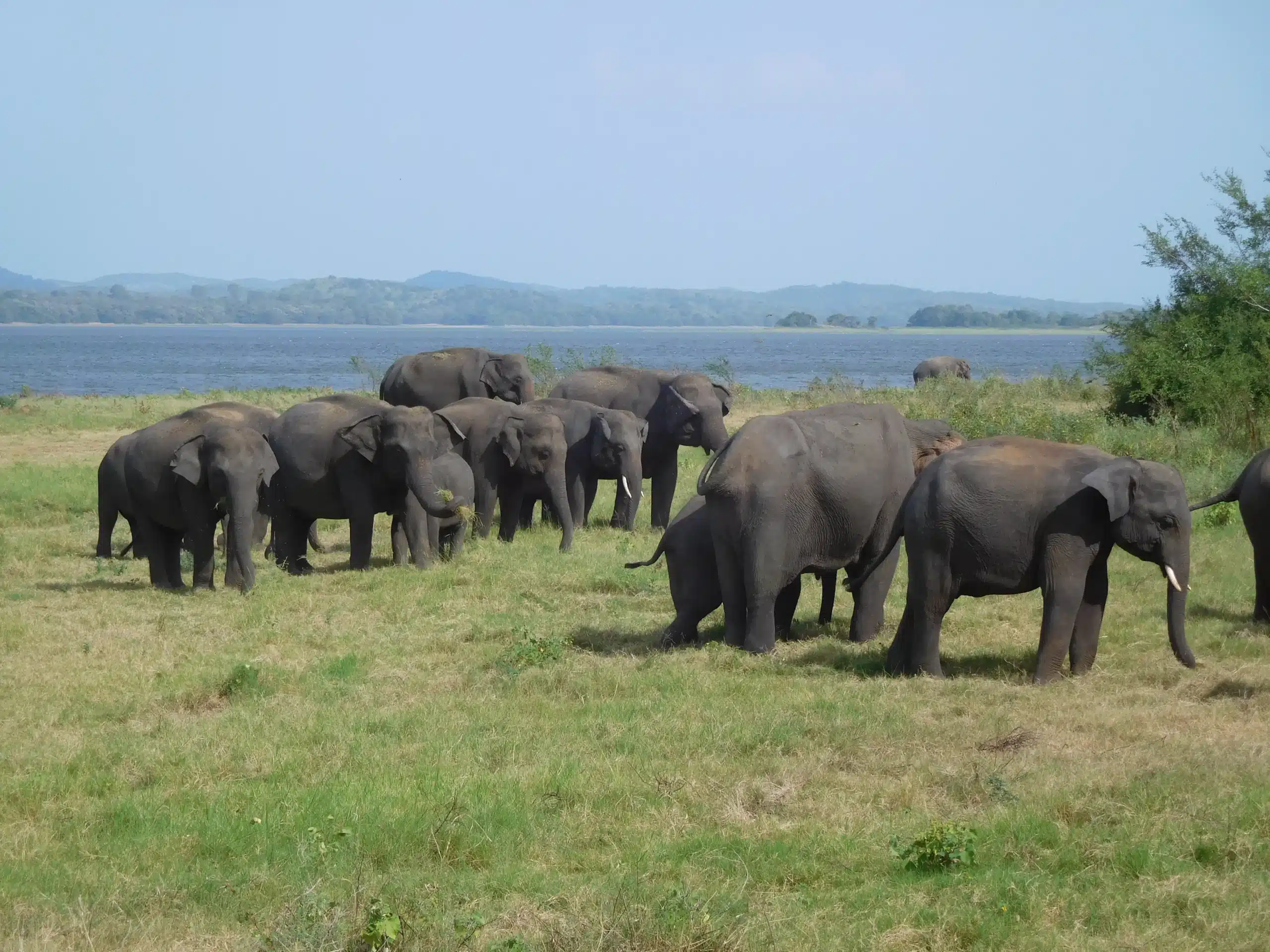
World Animal Protection says the wild is the best place to see elephants, and in Sri Lanka that means a national park such as Minneriya, Kaudulla, Udawalawe or Yala. World Animal Protection, Born Free and RSPCA Australia advise against riding elephants and other close contact, and the Department of Wildlife Conservation says feeding wild animals in Yala is illegal. When we checked on 8 November 2026, World Animal Protection’s list of elephant-friendly venues named no ethical elephant sanctuary in Sri Lanka. In the charity’s 2020 survey of 13 venues in Sri Lanka, the best score went to the government’s Udawalawe Elephant Transit Home. Visitors there watch orphaned calves being fed, and the calves are raised to go back to the wild.
Key takeaways
- Minneriya and Kaudulla follow the dry season. Udawalawe has elephants all year. The Department said Yala’s Blocks 1 and 2 would reopen on 16 October 2026, after a closure for dry weather.
- World Animal Protection’s elephant-friendly list, reviewed in December 2025, names no venue in Sri Lanka.
- Rules from 2021 regulate elephant rides rather than ban them. All three welfare groups advise against rides.
- Park rules cap vehicles at 20 km/h and ban noise likely to disturb an animal.
- In 2024, conflict between people and wild elephants killed 388 elephants and 155 people, by Department figures.
Ethical elephant sanctuary in Sri Lanka: does one exist?
Not on any list we could find. World Animal Protection lists the venues that meet its elephant-friendly guidelines and other high-welfare ones, reviewed in December 2025. They are in Cambodia, India, Laos, Nepal and Thailand.
Its 2020 report, Elephants. Not commodities, drew on visits made between January 2019 and January 2020. Researchers assessed all 13 Sri Lankan venues, holding 188 elephants. Only the Elephant Transit Home gave high-welfare conditions. The report credits the Transit Home’s “clear policy against elephant entertainment” and its aim of returning elephants to the wild. The charity’s 2026 report surveyed venues in Thailand only, so the 2020 figures are its latest for Sri Lanka.
The charity also warns that a place calling itself a sanctuary, rescue centre or retirement home may not be high welfare. Washing and hand feeding have surged, it says, often sold as ethical by venues that use the word sanctuary. RSPCA Australia describes a genuine sanctuary like this:
- No animals used for entertainment, such as riding, touching or selfies.
- As little contact between people and animals as possible.
- No animals taken from the wild unless injured or orphaned, and then only to rehabilitate them.
- Welfare standards, accreditation by an independent professional body, and teaching about welfare and conservation.
Two private venues near Kegalle sell visits. The Millennium Elephant Foundation describes itself as “Sri Lanka’s only ethical elephant sanctuary” and says it had six elephants in 2026. Its Elephant Walk Experience is a 30-minute walk beside an elephant, then a river bath. The Elephant Freedom Project says guests may feed its elephants but not wash or ride them, and that the elephants are chained at night for now. We found no published welfare assessment that names either, so compare their offers with the tests above.
What welfare groups say to avoid
If a venue lets you get close enough to ride, bathe or touch an elephant, World Animal Protection says, the animal has been cruelly trained. Elephant-friendly venues should not breed, it adds, so you should only see young elephants at orphanages taking in calves rescued from the wild.
Born Free strongly advises against riding elephants or taking part in other close-contact activities with them. The dangers of close contact should never be underestimated, it adds. RSPCA Australia lists riding elephants among the attractions with the greatest welfare risks. Elephants are often taken young from the wild and trained with punishment to be ridden or to perform, it says.
World Animal Protection’s survey found this in Sri Lanka in 2019 and 2020:
- Rides at 8 of the 13 venues, with 95% of the elephants at riding venues ridden bareback.
- Shows at two venues, which held 12 elephants.
- Washing at 8 venues, offered at all but one of the riding venues.
- 46 elephants, or 24%, in severely inadequate conditions, up from 36 in 2015.
Tourist rides are regulated, not banned. Rules gazetted in August 2021 put no more than four people on an elephant, on a well-padded saddle, AFP reported via Dawn. They also bar mahouts from drinking at work and stop baby elephants being worked or taken from their mothers.
Where to see wild elephants in Sri Lanka, park by park
The tourism trade makes the same point. Watching elephants in their natural habitat means you are not adding to their exploitation, says Love Sri Lanka, the travel site of the Sri Lanka Tourism Alliance.
| Park | Elephant season, as published | Source | Read next |
|---|---|---|---|
| Minneriya | July to October; August and September are best | Love Sri Lanka | Minneriya safari guide |
| Kaudulla | September to December, as Minneriya’s water rises | Report on the SLTDA site, Dec 2025 | Sri Lanka safari guide |
| Hurulu Eco Park | November to June | Report on the SLTDA site, Dec 2025 | Cultural Triangle guide |
| Udawalawe | Elephants all year; park season May or June to October | Love Sri Lanka | Sri Lanka safari guide |
| Yala | Blocks 1 and 2 due to reopen 16 October 2026 | Department of Wildlife Conservation, via Newswire | Yala guide |
Minneriya, Kaudulla and Hurulu share their herds through the year. A visitor management report dated December 2025, on the website of the Sri Lanka Tourism Development Authority (SLTDA), traces the moves and puts the dry-season gathering at Minneriya at over 400 elephants. Love Sri Lanka says as many as 300. Hurulu, a short drive from Habarana, comes under the Department of Forest Conservation, not the wildlife department.
Udawalawe began as a refuge for animals displaced by its reservoir, Love Sri Lanka says. Go early or late, it advises, when herds graze in the open. The Transit Home is on the park’s western edge.
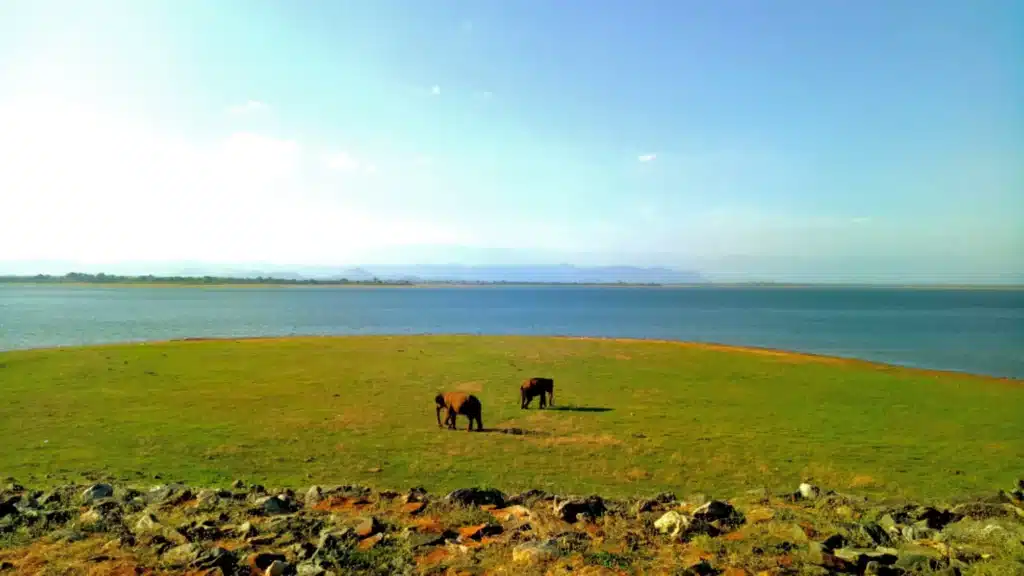
Yala was to close Blocks 1 and 2 from 14 September 2026 because of dry weather, News 1st reported on 7 September. On 13 October the Department said both would reopen on 16 October.
Wasgamuwa is joined to Kaudulla by the elephant corridor through Minneriya, says Love Sri Lanka. Guides disagree on Wasgamuwa’s best months, so we leave them out. The same site names Wilpattu and Gal Oya as parks with elephants all year.
The Udawalawe Elephant Transit Home
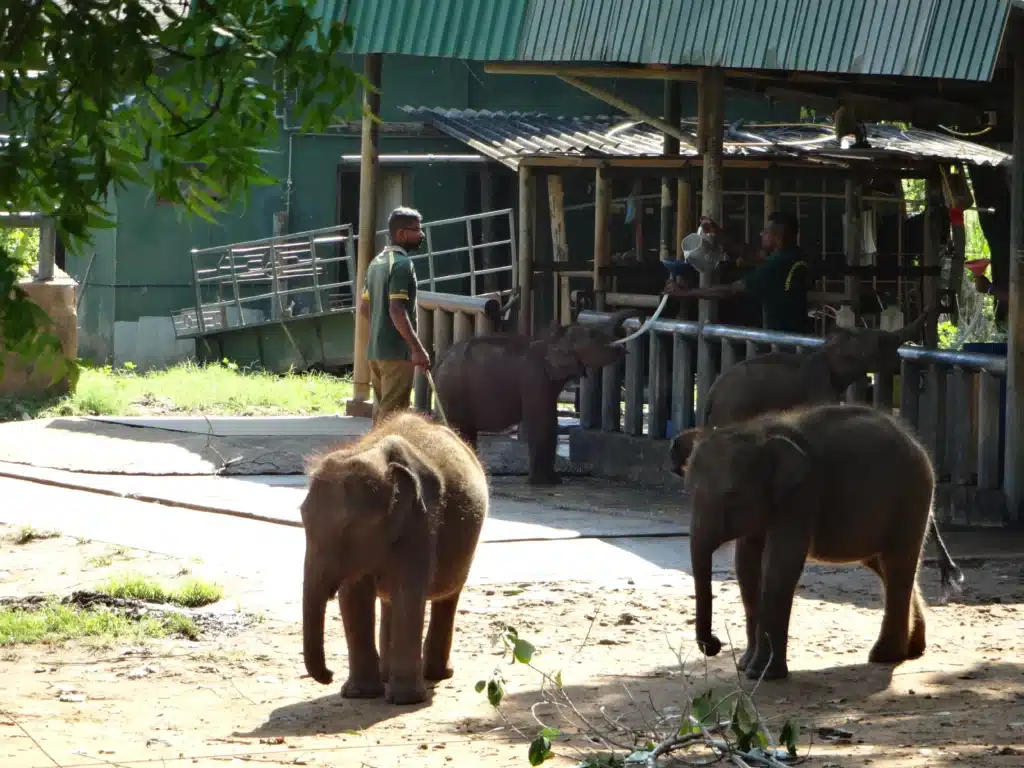
Set up in 1995 and run by the wildlife department, the Transit Home covers about 200 acres next to Udawalawe National Park. It raises calves left without mothers and releases them once they can live in the forest. That is how a Ministry of Environment article, written by the Department’s chief media officer, describes it. The same article also calls it the Udawalawe Elephant Sanctuary, and lists an elephant observation platform among its buildings. A June 2025 paper in Conservation Physiology, whose lead author works at the Transit Home, adds detail. For about 70% of each day the calves are out in nearby forest within the park. People handle them only to give milk and veterinary treatment, and they are released at around seven years old. Our elephant orphanage guide covers feeding times as reported and how a visit works.
In August 2025 its veterinary surgeon, Dr Malaka Abeywardena, spoke to the Wildlife and Nature Protection Society. The Island reported these figures from his talk:
- 442 orphans taken in since 1995, and 186 released into the wild.
- 40% of calves do not survive, and two in three arrive under a year old.
- 68 orphans in its care at the time.
- Releases into Uda Walawe, Maduru Oya, Kumana and Lunugamvehera national parks.
- 141,238 local and 98,156 foreign visitors in 2024.
Pinnawala: the debate, as reported
Most of the guides we compared argue over the Pinnawala Elephant Orphanage, between Colombo and Kandy. We give no verdict of our own. Its timetable, prices and paid programmes are in our elephant orphanage guide.
The December 2025 report on the SLTDA website says Pinnawala is not really an orphanage, since it has taken in no wild elephants for several decades. In practice, it says, Pinnawala is a place for breeding and research, and its welfare standards are relatively high. It notes that Pinnawala does not offer riding. Ideally, the report says, bathing as it is run now should end, or at least happen less, and tourists should not get close to the elephants while it does. The same report calls most of the private elephant facilities around Pinnawala purely commercial. It adds that some tour guides favour such places, where they can collect a commission. It names no venue.
How to choose a responsible safari
The rules a safari driver works under are published. Every park permit carries the Department’s conditions, and the 2022 regulations add to them:
- An officer named by the park travels with you, and you stay with them.
- Nobody may play an instrument, sing, shout, clap or make any noise likely to disturb an animal.
- Vehicles may not go over 20 km/h, and nobody may cause a nuisance or disturbance.
- You must follow officers’ directions given for safety or for the animals.
Love Sri Lanka’s 2020 dos and don’ts add more. Don’t urge your driver closer if it means crowding an animal. Leave food behind, because elephants have put their trunks into jeeps looking for it. Never feed animals, keep quiet at a sighting and avoid crowded spots. None of these sources gives a minimum distance in metres.
The December 2025 report estimates that about 700 jeep drivers work in Hurulu and the two national parks next to it. Some leave the official roads for unofficial tracks to get closer, it says, which is prohibited and harms the elephants. Drivers are told to switch the engine off when they are near an animal, Yala’s warden said to Mongabay in April 2026.
So ask for a driver who stays on the track and turns the engine off at a sighting. Love Sri Lanka also suggests asking drivers not to phone friends about a sighting, since calls fill a track with jeeps in minutes.
Elephants at the Kandy Perahera
Captive elephants walk in the Kandy Esala Perahera, and fewer remain. The Diyawadana Nilame, the lay custodian of the Temple of the Tooth, warned that Sri Lanka’s 93 tamed elephants could fall to 25 within a decade, Counterpoint reported on 2 August 2026. Our Kandy Esala Perahera guide covers the procession’s elephants, the planned gazette on their use and the police rules that protect them.
Why wild elephants and people clash
The conflict kills people and elephants every year. In November 2025 the Ministry of Environment put the minimum wild population at 7,451, drawing on a 2024 countrywide survey. An official stressed it was a minimum estimate, not an exact count, The Island reported.
| Period | Elephant deaths, as reported | People killed | Source |
|---|---|---|---|
| 2015 to 2024 | 3,477 | 1,190 | Minister in Parliament (Ada Derana) |
| 2024 | 388, due to the conflict | 155 | Department (Daily Mirror) |
| 2025 | 397 in all, most linked to the conflict (reported 18 Dec) | 113 (Jan to Sep) | Department (Daily Mirror) |
| 2026 to 21 Aug | 207, linked to the conflict | 88 | Department (Counterpoint) |
Of the elephants that died in 2025, 71 were shot, 56 electrocuted and 46 hit by trains, the Department told the Daily Mirror.
Visitors can add to the problem. Motorists and passengers who feed elephants on the road from Kataragama to Buttala face legal action, the Department announced in September 2026, Ada Derana reported. Part of that road lies in Yala’s Block 2. Elephants there had learned to stop vehicles for food, and some tried to overturn them when none came. Officials blamed bus and safari jeep drivers for the habit. Feeding wild animals and getting out of your vehicle on that road are both illegal, the Department stressed.
Fitting elephants into a Sri Lanka trip
The dry-season parks sit close to the Cultural Triangle, and Udawalawe lies between the hill country and the south coast. Travelling from Australia? Our guide to Sri Lanka in the Australian school holidays matches each break to a region. For a route planned around a park and its season, send us your dates.
Ethical elephant experiences: questions
Can I visit an ethical elephant sanctuary in Sri Lanka?
No welfare body we found lists one. World Animal Protection’s elephant-friendly list, reviewed in December 2025, has no Sri Lankan venue. Its 2020 report scored the government’s Elephant Transit Home at Udawalawe highest of 13 Sri Lankan venues, noting its policy against entertainment.
Can you ride elephants in Sri Lanka?
Yes. Rides are regulated, not banned: rules from 2021 limit an elephant to four riders on a padded saddle. World Animal Protection found rides at 8 of 13 venues in 2019 and 2020, and it, Born Free and RSPCA Australia all advise against riding.
Where is the best place to see wild elephants in Sri Lanka?
By the published seasons, Minneriya from July to October, then Kaudulla from September to December. Udawalawe has elephants all year. The Department said Yala’s Blocks 1 and 2 would reopen on 16 October 2026.
Is the Udawalawe Elephant Transit Home ethical?
We give no verdict. In World Animal Protection’s 2019 to 2020 survey it was the only Sri Lankan venue with high-welfare conditions. By August 2025 it had released 186 calves, The Island reported.
Can I feed wild elephants from the car?
No. In September 2026 the Department of Wildlife Conservation stressed that feeding wild animals on the road through Yala’s Block 2 is illegal, and wildlife officials said fed elephants there had attacked vehicles.
Every claim on this page went through a fact check against the linked sources on 8 November 2026. Parks, seasons and venue offers change, so check again before you go.
Hero photo: elephants gathering at Minneriya National Park on 19 June 2019, by Walter Gehr, CC BY-SA 4.0, via Wikimedia Commons.