Key takeaways
- The best cooking class for a beginner is one where you cook a whole meal with your hands, not one where you watch a chef and copy a single dish.
- Small group size matters more than anything else on the listing. Six to ten people means you get a pot. Twenty means you get a viewing position.
- Look for classes built around technique you can repeat at home, not around equipment you will never own.
- Home and village kitchens usually beat professional teaching kitchens for absolute beginners, because nobody there assumes you already know how to hold a knife.
- Book three to four hours. Ninety-minute classes are demonstrations with tasting attached.
What makes a class good for a beginner, specifically
Most cooking class advice is written for people who already cook. Beginners need different things.
You need repetition rather than variety. Learning one sauce and making it three times teaches you more than watching six dishes go past.
You need to touch the ingredients. There is a particular kind of class where everything arrives pre-chopped in little bowls and your job is to add them to a pan in order. That teaches sequencing and nothing else. If you have never held a knife properly, chopping is the lesson.
You need a teacher who does not assume. Professional-track schools like Le Cordon Bleu, the Culinary Institute of America and Leiths all run genuinely excellent short courses for amateurs, and they are worth the money if you want structured technique training. But their default register assumes a baseline. A family kitchen assumes nothing.
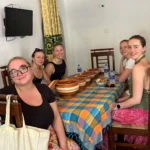
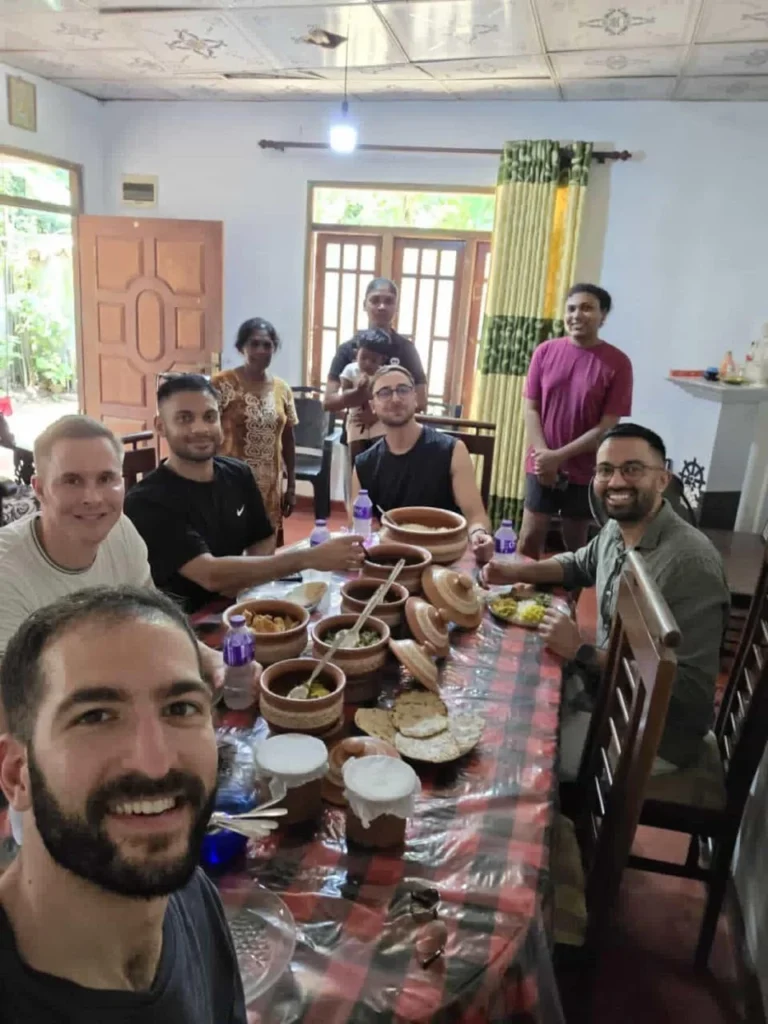
You need to eat what you made, sitting down, with the people who taught you. This sounds sentimental. It is actually pedagogy. You learn what you got wrong by tasting it next to a version someone competent made.
The three formats, and who each suits
The demonstration class
A chef cooks at the front, you watch, you taste at the end. Cheap, short, common in hotels. You will learn approximately nothing you can reproduce.
Fine as an hour of entertainment. Not a cooking class.
The teaching kitchen
Individual stations, aprons, printed recipes, a professional instructor. Excellent if you want to learn knife skills, sauces or bread properly, and the structure suits people who like structure.
The catch for beginners is pace. Everyone moves together, and if you fall behind you spend the session anxious rather than learning.
The home or village kitchen
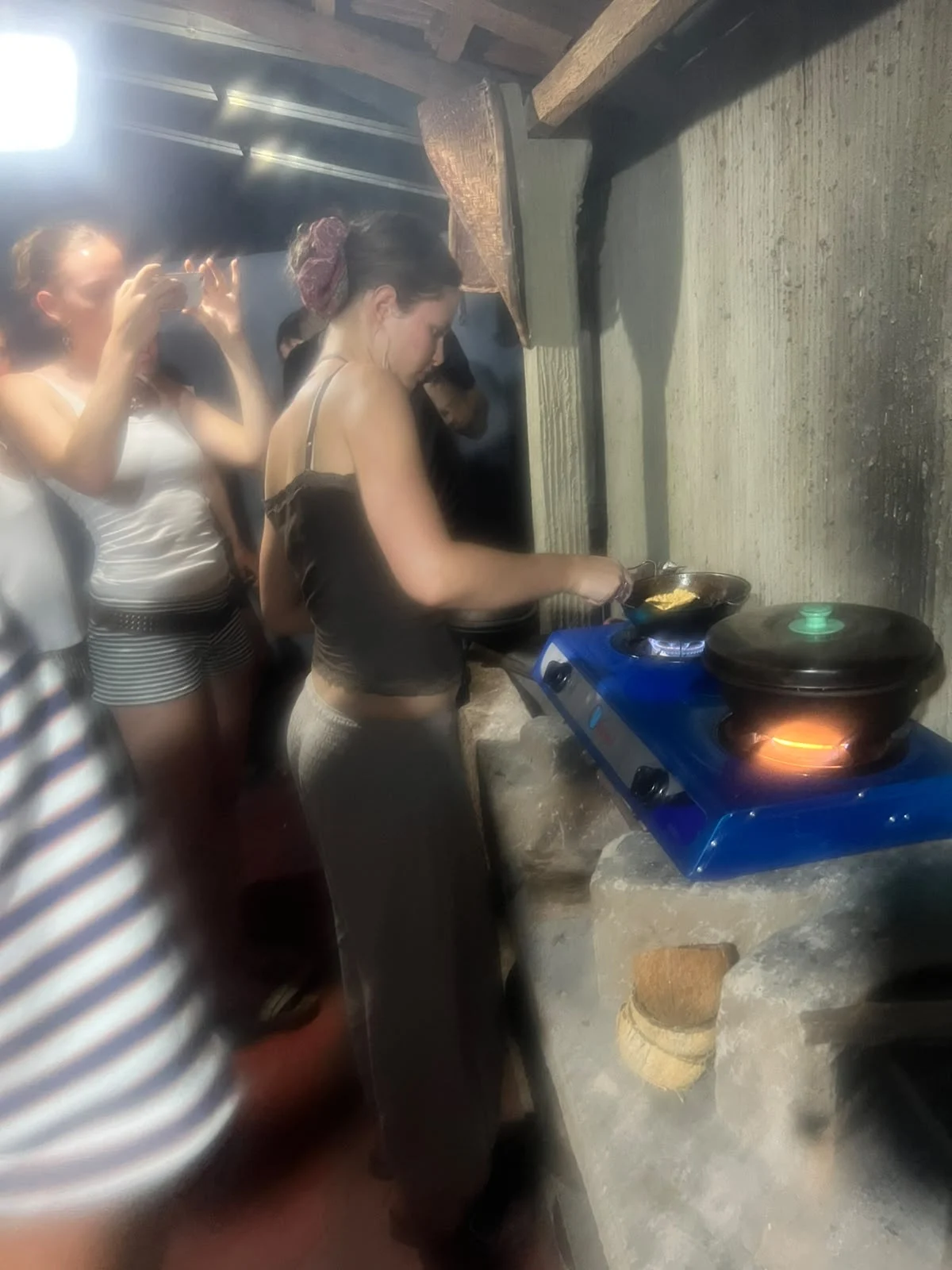
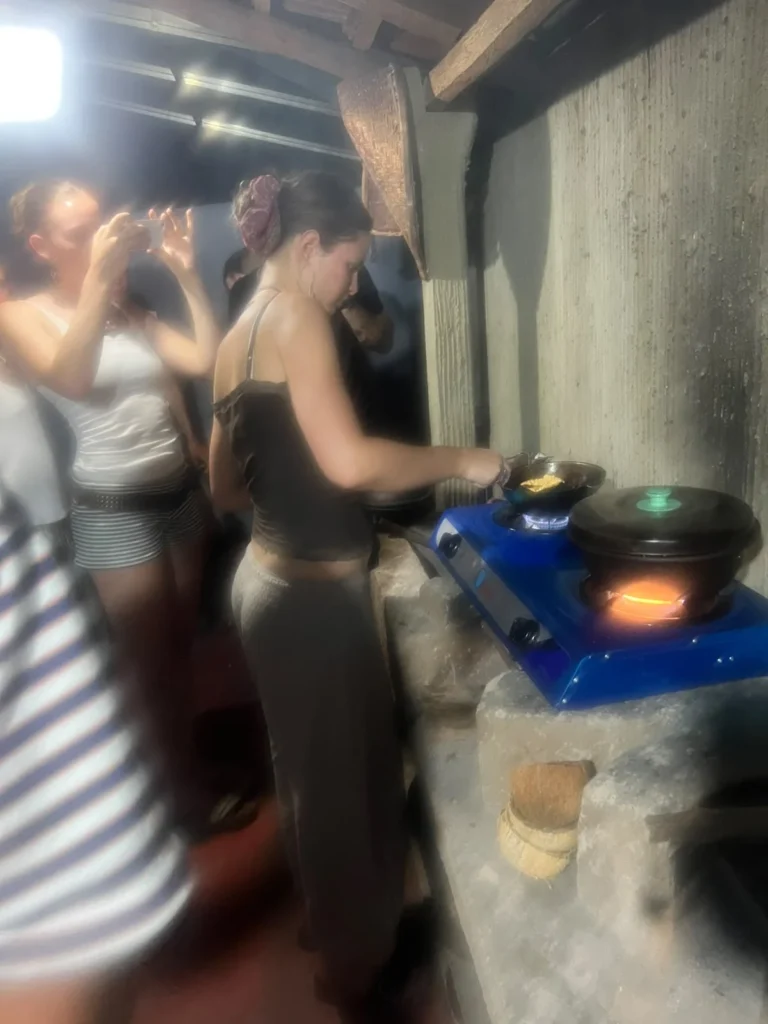
You cook alongside a household, using their equipment, making the food they actually eat. Slower, messier, no printed anything.
This is the format I would send a nervous beginner to every time. Nobody is timing you. The failure states are funny rather than embarrassing. And because home cooking is built around repetition and improvisation rather than precision, the techniques transfer straight to your own kitchen.
Why a Sri Lankan village class is unusually good as a first class
I am biased, since this is what we book for people. But there are specific structural reasons it works for beginners, and they are worth spelling out.
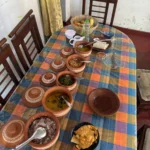
You cook a complete meal, not a dish. A Sri Lankan rice and curry is five to ten small dishes eaten together off one plate. Because everything is small and simple, a beginner can genuinely make all of it. Compare that to a class where you produce one restaurant dish and still have no idea what to cook on a Tuesday.
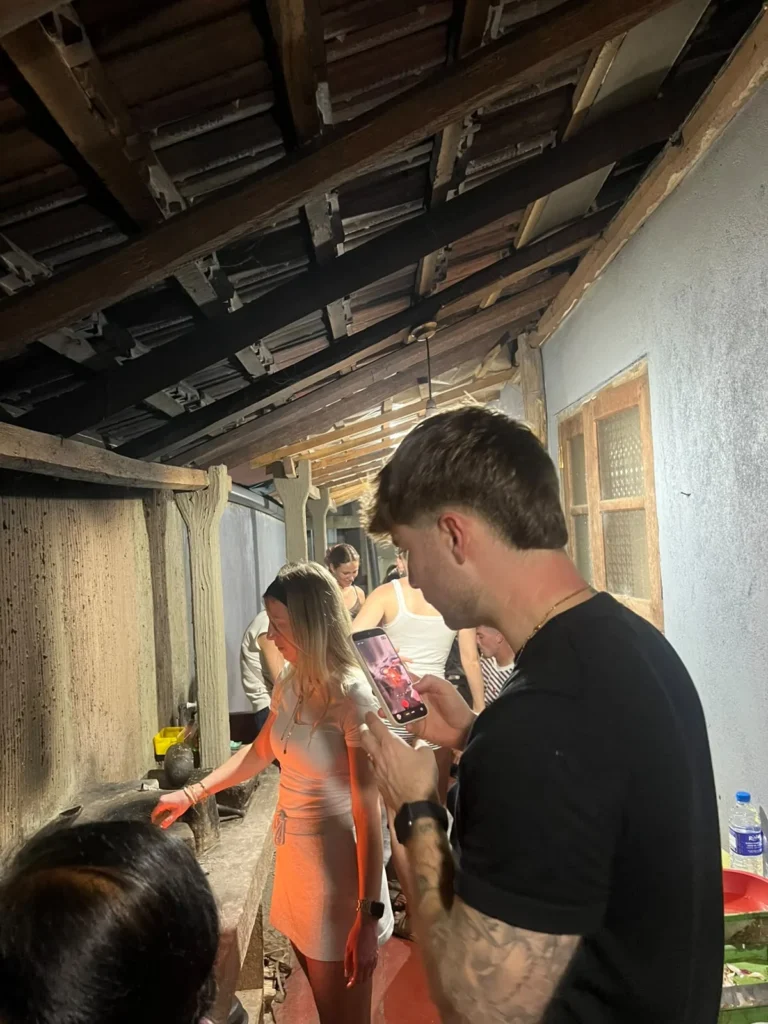
The techniques are hand techniques. Grinding on a stone. Scraping coconut on a stool. Slapping out roti dough by hand. Pounding sambol in a mortar rather than blitzing it. None of it needs equipment you do not own, and all of it is learnable in an afternoon.
Nothing is precise. Sri Lankan home cooking runs on judgment, not measurement. That is liberating for a beginner, because there is no exact quantity to get wrong. You add turmeric until it looks right, and your host tells you when it looks right.
The failure mode is low stakes. Your first pol roti will tear. Everyone’s does. The kitchen finds it funny and hands you more dough.
You eat it at the family table. Which is where you find out that yours is slightly worse than theirs and exactly why.
We run through the practical version of choosing one in our guide to picking a cooking class in Sri Lanka, and there is a separate piece on what a village kitchen looks like from the inside.
Questions to ask before you book anything
How many people are in the session? Under ten is the number that matters.
Do I cook or do I watch? Ask directly. Listings blur this deliberately.
How many dishes? Fewer than four in a three-hour class means a lot of standing around.
Is the ingredient prep done in advance? If yes, you are skipping the part beginners most need.
Do we eat together at the end? A yes usually indicates a home kitchen. A no usually indicates a commercial operation.
Can you accommodate me if I have never cooked before? The tone of the answer tells you more than the content.
Beginner mistakes worth skipping
Booking too short. Ninety minutes cannot contain a real class. Three to four hours can.
Booking on your first day in a new country. Jet lag plus heat plus a wood fire is a rough combination. Give it two days.
Trying to take notes. You will not use them. Take photographs of the ingredients instead, and buy the spices before you fly home.
Choosing by price alone. The cheapest classes are almost always demonstrations, and the most expensive are almost always hotels, and neither is what a beginner wants.
Assuming the fancy version teaches more. It teaches differently. For a first class, a grandmother in a kitchen with a clay roof beats a chef in a demonstration theatre.
If you want a structured course instead
Nothing wrong with wanting technique. If your goal is to actually learn to cook rather than to have a good afternoon abroad, a short amateur course at an established school is money well spent, and Leiths and Le Cordon Bleu both run beginner-level programmes. Pair it with a good technique reference. Serious Eats and BBC Good Food both publish beginner method guides that hold up.
The travel version and the training version are different things, and you can do both.
Frequently asked questions
What’s the best cooking class for beginners?
A small hands-on class where you cook a full meal from raw ingredients and eat it with your teacher. Home and village kitchens generally suit beginners better than professional demonstration classes, because the pace is set by you rather than the group.
How long should a beginner cooking class be?
Three to four hours. Shorter sessions are usually demonstrations with a tasting rather than a class you cook in.
Do I need any cooking experience to join a cooking class?
No. Village and home-kitchen classes assume nothing, and hosts are used to guests who have never chopped an onion.
Is a group or private class better for a beginner?
A small group. Other beginners take the pressure off, and it costs less. Book private only if you have dietary restrictions or a very tight schedule.
What should I look for in a cooking class listing?
Group size under ten, three hours or more, four or more dishes, ingredients prepped during the class rather than before, and a shared meal at the end.
Are cooking classes abroad worth it if I cannot cook?
Often more so. You are learning home cooking rather than restaurant cooking, and home cooking is built on repeatable, forgiving techniques.
Will I be able to cook the food again at home?
Yes, if the class used hand techniques and pantry ingredients. Buy the spices locally before you leave, since the quality gap is significant.