Sri Lanka wildlife photography starts with matching the animal to a park and a month. For leopards, start with Yala and Wilpattu: Love Sri Lanka’s best months are February to July for Yala (Love Sri Lanka) and February to October for Wilpattu (Love Sri Lanka). Elephants can be photographed at Udawalawe at any time of year (Love Sri Lanka), and August and September are the months for the gathering at Minneriya (Love Sri Lanka). Water birds fill Kumana’s swamp from April to July (Love Sri Lanka). The 2022 park regulations set daytime visits at 6am to 6pm (Gazette 2292/11), so the day’s best light falls right at the gate times.
Key takeaways
- Four published leopard figures are tabled below. They run from 17.9 resident adults per 100 square kilometres to 0.5461 leopards of all ages per square kilometre (54.61 per 100), both for Yala’s Block 1 in different years.
- Yala had 772,764 visitors in 2025 and Kumana had 44,887, so the famous leopard park is about 17 times busier than the quiet one.
- The 2022 regulations set daytime visits at 6am to 6pm, and the permit terms bar noise and artificial light. Drones need approval, and film crews need the Wildlife Department’s consent.
- Yala’s Blocks 1 and 2 were shut for drought from 14 September 2026. A reopening was announced for 16 October, so check before you book.
Sri Lanka wildlife photography by park: subjects, months and crowds
The best national parks for photography in Sri Lanka differ by subject, so read across each row. Months are Love Sri Lanka’s, the tourism promotion bureau’s pages, unless a cell names another source. Visitor counts are 2025 figures from the tourism authority’s Year in Review (Sri Lanka Tourism Development Authority).
| Park | Main subjects | Best months | Crowds and catches |
|---|---|---|---|
| Yala | Leopards, elephants, sloth bears, crocodiles (Love Sri Lanka) | February to July. March and April are rated highest (Love Sri Lanka) | 772,764 visitors, the most of any park. Blocks can close in a drought |
| Wilpattu | Leopards, and elephants at sand-rimmed lakes (Love Sri Lanka). Sloth bears (Mongabay) | February to October (Love Sri Lanka) | 164,925 visitors. Only 25% of the park is open, and last entry is 4.30pm (Love Sri Lanka) |
| Kumana | Nesting water birds (Love Sri Lanka). Leopards (Mongabay) | February to July. Birds mass at the swamp from April to July (Love Sri Lanka) | 44,887 visitors. A 1.5-hour drive from Arugam Bay (Love Sri Lanka) |
| Udawalawe | Elephants on open plains (Love Sri Lanka) | Any month, at the start or end of the day (Love Sri Lanka) | 368,871 visitors |
| Minneriya and Kaudulla | The elephant gathering (Love Sri Lanka) | July to October, with August and September the pick (Love Sri Lanka). Kaudulla around September (Wikipedia) | 155,146 and 81,112 visitors. Big herds are an afternoon subject |
| Bundala | Greater flamingos and other water birds (Wikipedia) | The northern winter, when migrants are in (Wikipedia) | 17,909 visitors, the fewest in this table |
| Sinharaja | Rainforest birds such as the Sri Lanka blue magpie (Wikipedia) | No season given in the sources we used | 73,170 visitors. On foot, with a licensed guide (Wikipedia) |
Love Sri Lanka dates the whale season off Mirissa from November to April (Love Sri Lanka), and our Mirissa whale watching guide covers the boats and the rules at sea.
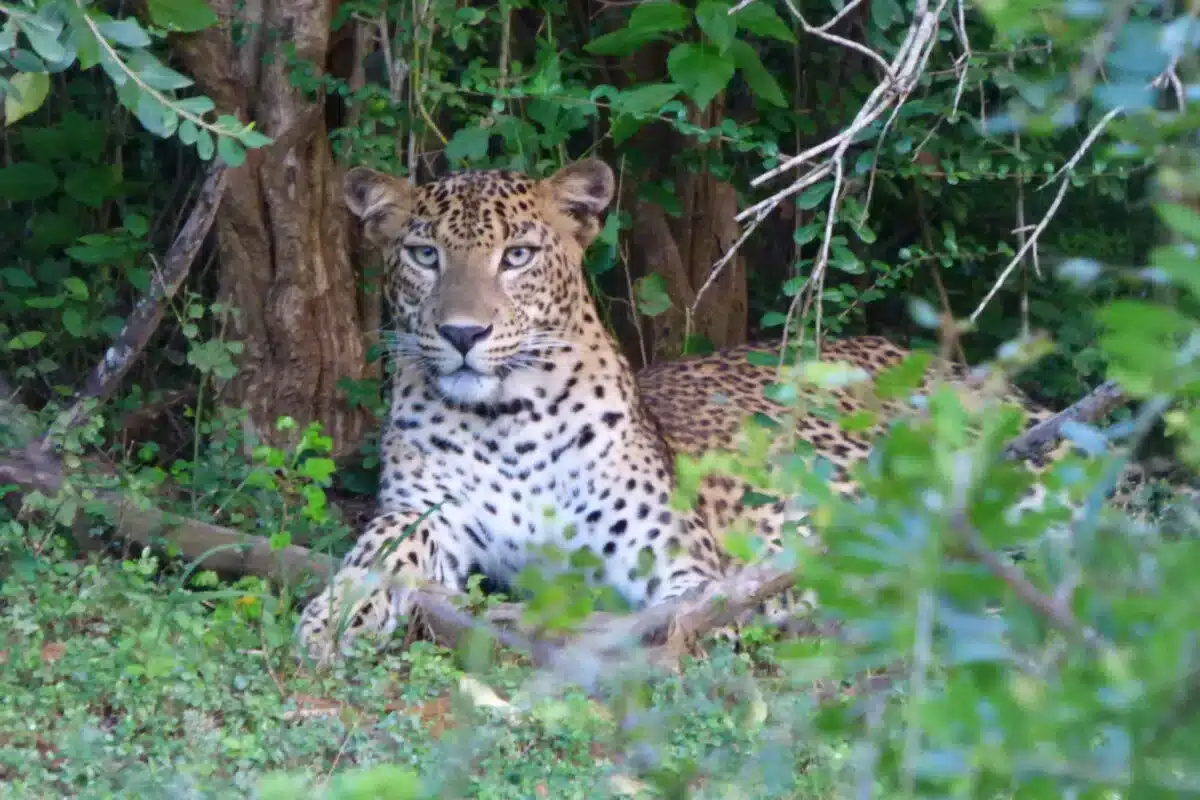
Leopard photography in Sri Lanka: the densities as published
You’ll often read that Yala’s Block 1 holds one leopard per square kilometre, and a Mongabay report repeated it in April 2026 (Mongabay). A 2022 paper on Block 1 gives a lower number, and it is a count of known animals, not a camera-trap estimate.
| Area | Figure as published | How and when | Source |
|---|---|---|---|
| Yala, Block 1 | 17.9 resident adults per 100 sq km | Field study over 237 days, February 2001 to May 2002, in a 92 sq km study area | Wilderness and Wildlife Conservation Trust |
| Yala, Block 1 | At least 77 leopards, or 0.5461 per sq km | Animals identified from photographs, counted on 31 March 2021, across 141 sq km | Animals, 2022 |
| Wilpattu | 18 per 100 sq km | Camera-trap survey, published in Global Ecology and Conservation in 2022 | Mongabay |
| Kumana, eastern region | About 41 per 100 sq km | Camera traps over 16 months, published in the Journal of Asia-Pacific Biodiversity in 2025 | Mongabay |
These four numbers weren’t reached the same way, so compare them with care. The 2021 Yala figure divides every identified leopard, cubs and sub-adults included, by the area of the block. The same paper cites a 2017 estimate of 0.217 per square kilometre for Block 1 (Animals, 2022).
Block 1’s figure is the highest of the four, and Mongabay’s 2026 report says most of its leopards have become used to people and safari jeeps (Mongabay). It also has the crowds, while Kumana pairs a high published figure with a small fraction of Yala’s visitors.
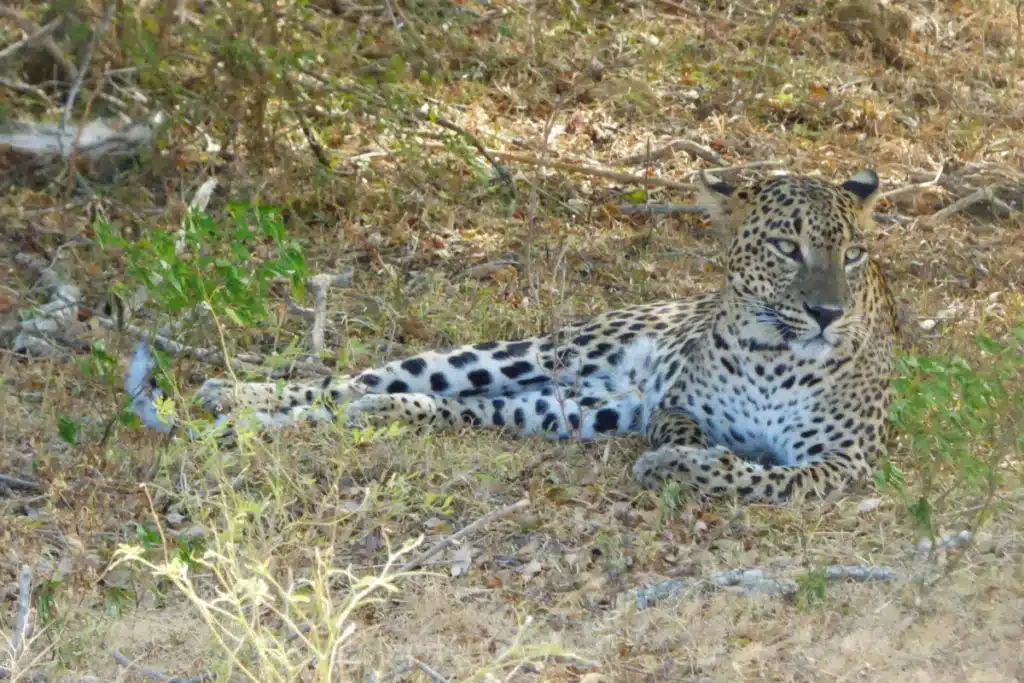
A naturalist quoted by Mongabay in March 2025 called the palu fruiting season, May to July, the best time to watch sloth bears. The same report describes Wilpattu as a prime place for sightings all year (Mongabay).
Elephants: the 2024 survey and where the herds are
Sri Lanka’s wild elephants were last surveyed from 17 to 19 August 2024, at 3,130 observation points (Daily Mirror). On 11 June 2026 Hiru News reported the environment minister’s figure: at least 7,451 wild elephants (Hiru News). The Wildlife Department has asked people not to read the exercise as a precise census (Daily Mirror).
Udawalawe has a herd of about 250 believed to live in the park permanently (Wikipedia), and they graze on open plains (Love Sri Lanka). If you want orphaned calves as well, our elephant orphanage guide covers the Elephant Transit Home at Udawalawe.
At Minneriya, the subject of our older Minneriya safari guide, the herds come down to the shrinking reservoir between July and October. Love Sri Lanka’s advice is an afternoon drive, 3pm to 6pm, in August or September (Love Sri Lanka).
Birds and rainforest: Kumana, Bundala and Sinharaja
Kumana is the nesting park. Love Sri Lanka counts over 255 bird species there. It says tens of thousands of birds arrive at the swamp between April and July, the black-necked stork and Eurasian spoonbill among them (Love Sri Lanka).
Bundala is the wintering park. Wikipedia records 197 bird species and rates the park of international importance for migratory water birds in winter. Greater flamingos visit in flocks of over 1,000 (Wikipedia). If birds are the reason for your trip, our older post on birding trips in February deals with one of those winter months.
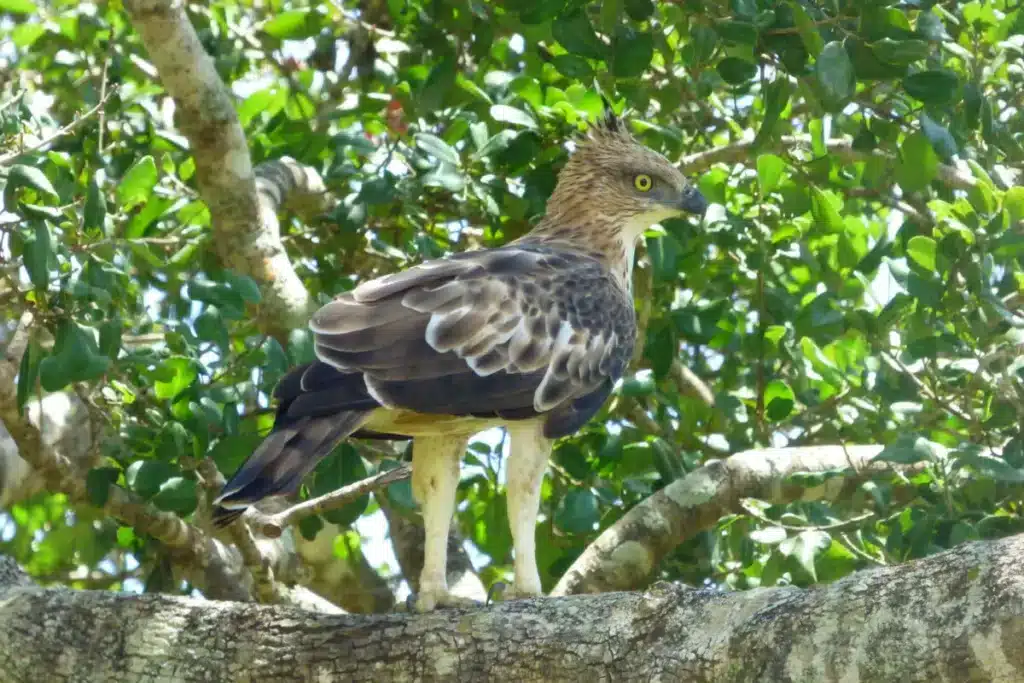
Sinharaja is rainforest, a UNESCO World Heritage Site since 1988, and every visitor has to go in with a licensed guide (Wikipedia). You walk, so you carry everything you shoot with, and the light under the canopy is dim. Its birds include the red-faced malkoha and the Sri Lanka blue magpie (Wikipedia).
Light and park hours: what the gate times do to your day
The park regulations gazetted in August 2022 set daytime visiting at 6am to 6pm (Gazette 2292/11). Love Sri Lanka lists the same hours for Yala and Udawalawe (Yala; Udawalawe) and 6am to 6.30pm for Kumana (Love Sri Lanka). The terms on the Wildlife Department’s online permit service are wider: no entry before 5am or after 6pm, and out by 6.30pm (Department of Wildlife Conservation). Ask your driver the evening before which time the gate is keeping.
Set those hours against the sun. At Tissamaharama, the town beside Yala, sunrise in 2026 moves between 5.47am in mid-May and 6.21am in early February. Sunset moves between 5.45pm in early November and 6.25pm in late July (sunrise-sunset.org, calculated for 6.28 N, 81.29 E).
So in February the gate opens about 20 minutes before sunrise, and the first part of the drive is in half light. In July the park closes about 25 minutes before sunset, and the warmest evening light arrives after you’ve left.
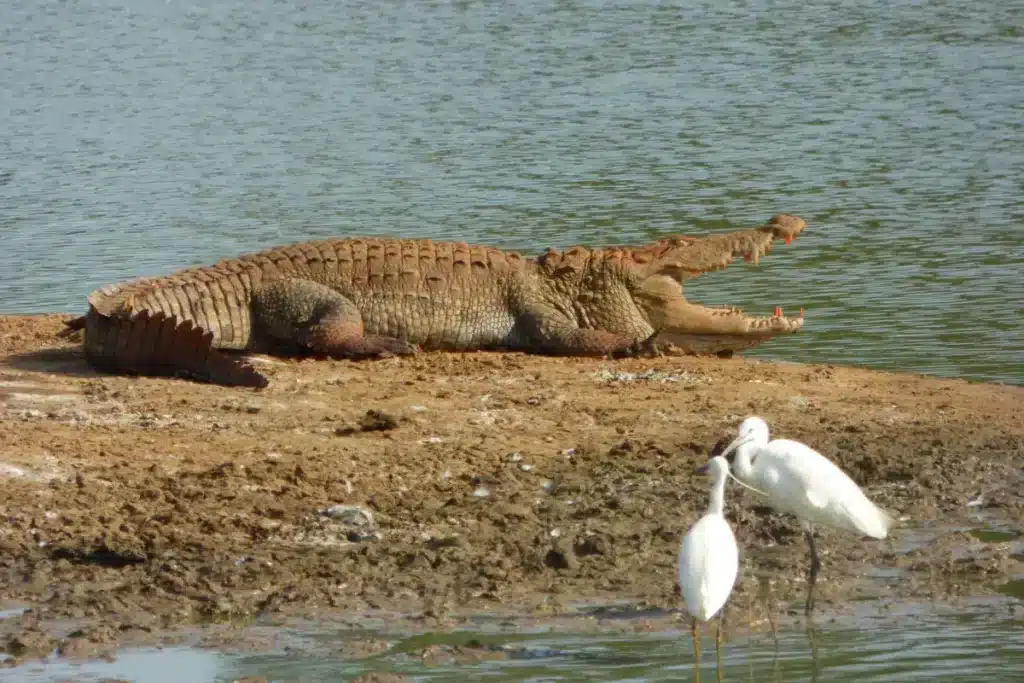
Yala is also generally closed to visitors over midday, from 12 to 2pm, according to a visitor management report the tourism authority published in December 2025 (report on SLTDA’s site). A 2024 paper in the Ceylon Journal of Science found that most high-speed driving in Yala came from jeeps trying to leave before closing time (Ceylon Journal of Science). Leave your last sighting with time in hand. Love Sri Lanka rates March and April highest for Yala (Love Sri Lanka), and our March guide has that month’s weather.
Park rules a photographer has to know
The August 2022 regulations write these conditions, among others, into every permit (Gazette 2292/11, Schedule VIII):
- Stay with the officer the park assigns to you at all times.
- Keep the vehicle to 20 km/h.
- Cause no nuisance or disturbance of any kind.
The terms on the Wildlife Department’s online permit service, read on 13 October 2026, add more (Department of Wildlife Conservation permit service):
- No singing, shouting, clapping, musical instruments or any noise likely to disturb an animal.
- No artificial light except to light the road, and then only from 5am to 6am and from 6pm to 6.30pm.
- No entering any part of the park that the warden has closed.
Flash isn’t named in either. We read the artificial light rule as covering it.
Staying in the vehicle
We couldn’t find this rule’s wording on an official page, but it is enforced. On 15 June 2026 Ada Derana reported that wildlife officers had arrested five people in Yala who were found walking outside their safari jeeps “in violation of park rules” (Ada Derana).
Drones
Assume the answer is no. The Civil Aviation Authority’s 2022 drone standard said a drone must not be flown over national parks without approval (Civil Aviation Authority, 2022 edition). From 1 April 2025 a new edition replaced that paragraph with a zone map, and no drone may fly over a zone without its controlling authority’s approval. The same edition requires prior approval from the local governing authority of the place, whatever the category of flight (Civil Aviation Authority, 2025 edition).
When we downloaded the map’s data on 13 October 2026, none of its zones was named for a national park (zone map). The authority’s drone page sends visiting tourists to its online portal and doesn’t mention parks (Civil Aviation Authority). So we could not confirm how a visitor gets a park’s approval. Write to the Wildlife Department first, and leave the drone in its bag unless you get a written yes.
Camera fees, filming and paid shoots
We found no camera or video charge for ordinary visitors. The fee regulations gazetted in August 2022 list entry fees, vehicle fees, bungalow and campsite charges and a few named activities such as boat tours. A camera isn’t among them (Gazette 2292/11). A 2025 review describes that gazette as the fee structure in force that January (Centre for a Smart Future).
The media guidelines of Sri Lanka’s High Commission in Canberra tell visiting crews that filming in wildlife protected areas needs the Department of Wildlife Conservation’s approval first, and that it takes at least two weeks (Sri Lanka High Commission, Canberra). The page doesn’t say where a paid stills shoot falls, so ask the department in writing before you take the job.
Yala’s blocks, the 2026 closure and the crowds
Love Sri Lanka describes Yala as five blocks and says its two most popular gates, Palatupana and Katagamuwa, serve Blocks 1 and 2 (Love Sri Lanka).
Dry weather shut both of them on 14 September 2026, for what was announced as one month (Ada Derana). The Daily Mirror reported that day that Blocks 3, 4, 5 and 6 were still open, which makes six by its count (Daily Mirror). On 12 October the park authorities announced a reopening from 6am on 16 October 2026 (Daily Mirror). The reports differ on one detail: Ada Derana wrote “Blocks 1 and 2” and the Daily Mirror wrote “Zones 1 and 1A” (Ada Derana).
That was the plan on 13 October 2026. Confirm which blocks are open before you book.
Block 1 is where the crowding is. The December 2025 report says up to 500 jeeps can be in the park at once in high season, almost all of them in Block 1. Drivers radio leopard sightings to each other and rush to them. The report gives Yala’s official speed limit as 30 km/h, not the 20 km/h in the 2022 regulations (Gazette 2292/11), and says many vehicles went much faster (report on SLTDA’s site).
Three things are in your hands:
- Ask for the engine to be switched off at a sighting. Yala’s warden told Mongabay that drivers are advised to do this when close to an animal (Mongabay). It also stops the vibration that blurs a long lens.
- Don’t ask a driver to chase a radio call or to edge closer to an animal.
- Use no bait and no calls. The Wildlife Photographer of the Year rules reject any picture made by luring with food, scent or sound, and bar lighting that may distress or blind a subject (Natural History Museum).
Gear for a jeep, in brief
The Yala leopard study made its photographs from vehicles, with DSLR cameras and a range of telephoto and fixed lenses (Animals, 2022). We’d pack much the same:
- A zoom that reaches 400mm or more for cats and birds, and a shorter one, around 70 to 200mm, for elephants and for animals in their setting.
- A beanbag. It steadies a long lens on the side of a jeep, where a tripod has nowhere to stand.
- Something to keep dust out: a rain cover, a dry bag, or a hotel pillowcase if you forgot both.
Booking a jeep for a Sri Lanka photo safari
For Yala, guest houses and hotels in Tissamaharama sell the jeep tours, and most leave at 5am or 2.30pm (Wikivoyage). Online permits must be reserved the day before, and the December 2025 report notes that a tour operator usually buys them and assigns the vehicle (report on SLTDA’s site).
For photography we’d book a private jeep. You decide where it stops, how long it waits and when the engine goes off. Which park suits a first safari, and how a jeep day runs, is the subject of our Sri Lanka safari guide.
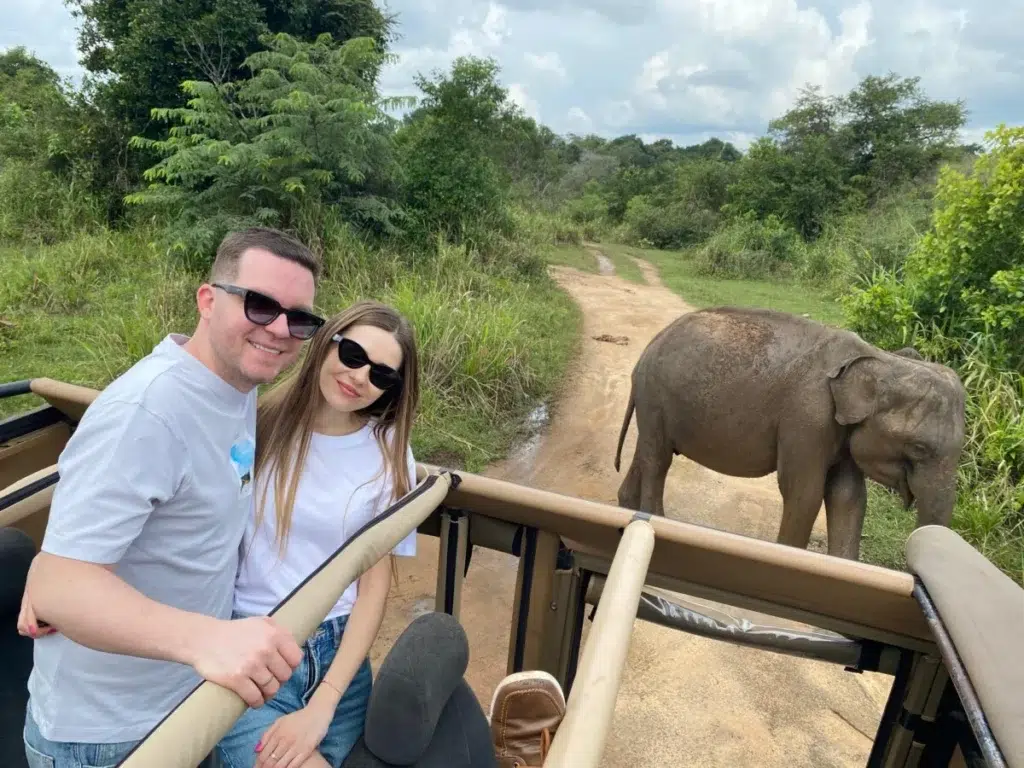
Our Safari Excursion is a private safari jeep with its driver in Yala or Udawalawe, with pick-up from your hotel early in the morning. Transport from where you’re staying is added to the listed price, so see the page for the current figure.
For a longer trip, our Wildlife of Sri Lanka tour visits Wilpattu, then Gal Oya, Yala and Sinharaja, and near the end goes out by boat from Mirissa harbour to look for whales and dolphins. It isn’t sold as a leopard photography tour, though its page gives Yala two days.
Questions about wildlife photography in Sri Lanka
When is the best time for wildlife photography in Sri Lanka?
It depends on the subject. Love Sri Lanka gives February to July for Yala and February to October for Wilpattu (Yala; Wilpattu). For the elephant gathering, choose August or September (Love Sri Lanka). Kumana’s birds mass from April to July (Love Sri Lanka).
Which park is best for leopard photography in Sri Lanka?
Of the four figures we tabled, the highest is for Yala’s Block 1: at least 77 leopards, or 0.5461 per square kilometre, on 31 March 2021 (Animals, 2022). Kumana’s eastern region was put at about 41 per 100 square kilometres and Wilpattu at 18 (Mongabay), by different methods.
Can I fly a drone in a Sri Lankan national park?
Not without approval, and we found no published way for a visitor to get it. The aviation authority’s 2022 standard named national parks outright (Civil Aviation Authority, 2022 edition). The 2025 edition works through a zone map and asks for prior approval from the local authority for the place (Civil Aviation Authority, 2025 edition).
Is there a camera fee, and can I use flash in the parks?
The fee regulations gazetted in August 2022 list no camera or video charge (Gazette 2292/11). Flash isn’t named in the rules we found, but the online permit terms ban artificial light except to light the road (Department of Wildlife Conservation permit service), so keep the flash off.
Plan a photo safari with us
Our base is Weligama, and the trips we set up are private: a car, a driver-guide and a route built around your subjects. Send us the animals you’re after and your dates through our contact page. We’ll suggest which parks fit the month and how many drives to allow.
We read the 2022 park regulations, the permit terms, the drone standard, the leopard studies and the Yala reopening notices on 13 October 2026. Gate times and closures change at short notice, so look again a few days before you set off.