Exploring the Polonnaruwa ancient city is a remarkable journey into Sri Lanka’s golden medieval era. If you love deep history, stunning stone carvings, and quiet pathways shaded by massive trees, this destination truly belongs on your itinerary. Here is everything you need to know to plan a perfect, stress-free visit.
What is the Polonnaruwa ancient city? Polonnaruwa is a UNESCO World Heritage site that served as Sri Lanka’s second royal capital from 1070 to 1232 AD. Today, it features remarkably preserved archaeological ruins, including grand royal palaces, intricately carved stone shrines, massive brick stupas, and the famous Gal Vihara rock statues.
Key Takeaways for Your Visit
- Arrive early: Aim for 7:00 AM to beat the intense midday heat and avoid the heavy crowds.
- Dress modestly: Ensure your shoulders and knees are covered to respect the active religious shrines.
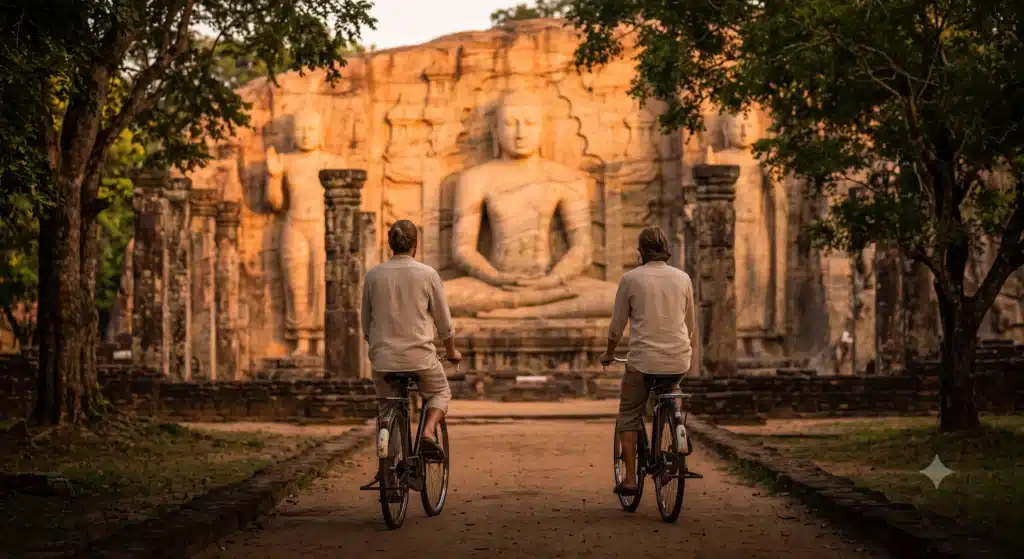
- Rent a bike: Cycling is the most enjoyable and independent way to explore the vast complex.
- Bring thick socks: The sun-baked stone terraces will quickly blister bare feet.
Why Do People Visit the Polonnaruwa Ancient City?
Many travellers wonder if they should include this destination when researching Sri Lanka tours. The answer is a resounding yes. Compared to the older, more sprawling capital of Anuradhapura, Polonnaruwa is incredibly compact and visually intact.
Think of it like a beautifully curated open-air museum; each zone acts as a distinct historical exhibit, rather than a massive jigsaw puzzle of scattered rocks. Because the ruins are located close together, you can comfortably see the highlights in a single half-day.
Say you are staying at a nearby hotel in Dambulla and wake up early on a Tuesday morning. By 8:30 AM, you could be wandering through the grand courtyard of a 12th-century king. Because the site sits beautifully beside the vast Parakrama Samudra reservoir, you also get a wonderful breeze and stunning natural scenery.
Must-See Ancient Ruins in the Complex
To help you navigate the expansive grounds, here are the absolute highlights. You will normally start at the Archaeological Museum to buy your entry ticket, which provides excellent context before you enter the main gates.
The Archaeological Museum
Before you step foot in the Polonnaruwa ancient city grounds, you should visit the museum. This modern facility sits right by the main road. It houses excellent miniature replicas of the original buildings. Seeing these detailed models helps you visualize the grand wooden roofs and vibrant colours that have long since vanished. Best of all, the air-conditioned rooms offer a pleasant break before you brave the tropical heat.
The Royal Palace Complex
Your first major stop is the Palace of King Parakramabahu I. Once standing seven storeys high with over a thousand rooms, its remaining massive brick walls still command respect today. Nearby, the beautifully carved Council Chamber features detailed friezes of elephants, lions, and dwarfs. You will also see the Kumara Pokuna, the royal bathing pool. Its brilliant geometric design reveals the highly advanced water engineering of the era.
The Sacred Quadrangle (Dalada Maluva)
This compact raised terrace holds the most concentrated collection of religious architecture in the entire site. The undeniable star here is the Vatadage. This circular relic house features stunning stone carvings, elegant guard stones, and a serene central Buddha. As a result, it is one of the most photographed spots in the Cultural Triangle of Sri Lanka.
Gal Vihara Rock Statues
Further north, you will discover Gal Vihara. This site is the undisputed masterpiece of Sinhalese rock carving. Four colossal Buddha figures are carved directly into a single massive granite rock face. The reclining Buddha alone is 14 metres (46 feet) long. The ancient craftsmanship is so precise that you can actually see the subtle depression in the stone pillow where the Buddha’s head rests.
Rankoth Vehera Stupa
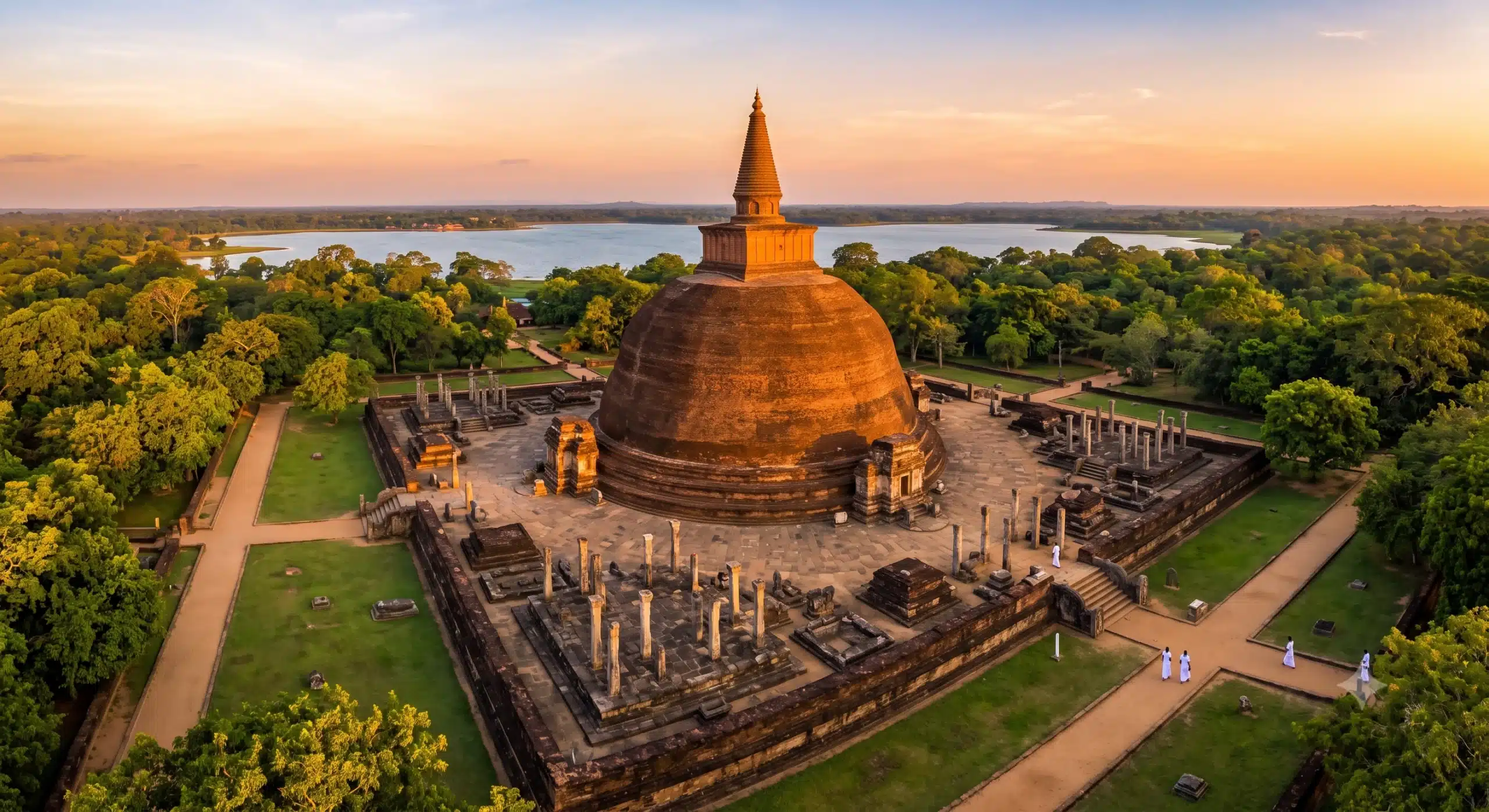
As you head deeper into the complex, you cannot miss Rankoth Vehera. Standing an impressive 54 metres tall, this massive brick dome is the largest stupa in Polonnaruwa. Local monks still consider it a highly sacred site. Walking around its massive base, you can truly feel the immense scale of medieval architecture. King Nissanka Malla built it in the 12th century, and it remains a striking testament to the devotion of the time.
How to Get Around the Polonnaruwa Ancient City
Because the site stretches over several kilometres, walking the entire complex is usually too exhausting. The sun gets incredibly hot by midday. Therefore, renting a bicycle is the most popular method. You can pedal slowly along the flat, shaded dirt paths, stopping exactly where you want.
If you are travelling with young children or just want to relax, hiring a local tuk-tuk is a fantastic alternative. In my professional opinion as a local guide, taking a tuk-tuk is absolutely nothing to feel guilty about. It saves your precious energy for actually exploring the monuments on foot.
| Transport Method | Cost Estimate | Pros | Cons |
| Bicycle Rental | ~$2 – $4 USD | Freedom to explore at your own pace; eco-friendly. | Requires physical exertion in the intense tropical heat. |
| Guided Tuk-Tuk | ~$15 – $20 USD | Effortless; includes local knowledge; offers welcome shade. | Fixed routes; slightly more expensive than biking. |
| Walking | Free | Great for specific compact zones like the Sacred Quadrangle. | Highly unrealistic for traversing the entire 5km stretch. |
If you book one of our custom round tours, we naturally handle all the internal transport logistics for you, ensuring a seamless experience.
Essential Travel Details: Weather, Costs, and Etiquette
Planning your logistics carefully will make your visit much more enjoyable. Here is exactly what you need to know before you arrive.
Best Time to Visit and Weather
The dry season from May to September is generally excellent, as is the window from December to March. However, daily temperatures routinely hit 32°C (90°F). Therefore, you should always aim to arrive right when the gates open at 7:00 AM, or wait until the late afternoon when the light softens.
Entrance Fees and Visas
The entrance fee for international tourists is typically $30 USD (payable in Sri Lankan Rupees at the museum). Remember that all international travellers need an approved visa before arriving in the country. Always check the official Sri Lanka government immigration portal for current requirements and processing fees.
Dress Code and Cultural Etiquette
Even though these are ancient ruins, they remain sacred Buddhist sites. Consequently, strict dress codes apply. Both men and women must cover their shoulders and knees. You must also remove your shoes and hats before stepping onto the sacred terraces. A brilliant local tip is to wear thick socks. The ancient stone bakes in the sun and will easily blister bare feet. Finally, never take a photograph with your back turned directly to a Buddha statue; stand sideways instead to show proper respect.
Frequently Asked Questions
How many hours do you need in Polonnaruwa?
Most visitors need three to four hours to comfortably explore the main sites. If you rent a bicycle and explore at a leisurely pace, allow at least four hours. A quick tuk-tuk tour covering just the highlights can take about two and a half hours.
Is Anuradhapura or Polonnaruwa better?
Both are incredible, but they offer different experiences. Anuradhapura is older, more spread out, and holds deeper active religious significance. Polonnaruwa is far more compact, easier to navigate in a half-day, and features ruins that are generally much better preserved.
Are there places to eat inside the complex?
No, there are no cafes or restaurants inside the main archaeological zones. However, there are a few small vendors selling fresh king coconuts near the exits. You should bring your own refillable water bottle and perhaps some light snacks.
Is it safe to travel to the Cultural Triangle?
Yes, the area is exceptionally safe for international tourists. The main hazards are severe sunburn, dehydration, and the occasional cheeky monkey trying to steal your snacks. Always carry plenty of bottled water and wear high-SPF sunscreen.
Can you see elephants near Polonnaruwa?
Absolutely. The nearby Minneriya and Kaudulla National Parks are famous for large wild elephant gatherings managed by the Department of Wildlife Conservation. After exploring the ruins in the morning, booking a wildlife safari excursion in the afternoon is the perfect combination.
Plan Your Sri Lankan Adventure with Oura Travel
The Polonnaruwa ancient city offers an unforgettable glimpse into a powerful medieval kingdom. However, piecing together tickets, transport, and expert guides can quickly become stressful. That is exactly where we come in.
For over a decade, Oura Travel has crafted unforgettable, tailor-made journeys across the island. We understand the local rhythms, the hidden historical gems, and the best ways to avoid the crowds. Check out our About Us page to see why international travellers trust our local expertise.
When you are ready to explore the island in total comfort, contact us to plan your trip today. Let’s make your dream Sri Lankan holiday a reality.