No vaccination is required to enter Sri Lanka from Australia, and yellow fever proof is needed only if you have been to, or transited, a yellow fever country first. Australian sources recommend routine vaccines and hepatitis A, and suggest you discuss typhoid, hepatitis B, rabies, Japanese encephalitis and dengue with your GP or a travel clinic.
This page sets out what Smartraveller, healthdirect, the Handbook and the Australian Technical Advisory Group on Immunisation (ATAGI) say. It adds Sri Lanka’s own dengue and rabies figures. We checked every source on 8 November 2026. It is general information, not medical advice. Your GP or a travel medicine clinic decides what suits you.
Key takeaways
- Coming straight from Australia, you need no vaccination certificate. The yellow fever rule applies only if you have been to, or through, a risk country.
- See your doctor 6 to 8 weeks before you go (Smartraveller), or at least 6 and preferably 12 weeks before (healthdirect).
- Dengue outbreaks occur in all regions, Smartraveller says. Sri Lanka’s Epidemiology Unit counted 95,104 notified cases in 2026 up to 20 September.
- A dengue vaccine has been available in Australia on private prescription since October 2026, ATAGI says. Its two doses are given at least 12 weeks apart.
- Rabies is present in dogs, cats, monkeys and bats. Get urgent medical care after any bite or scratch, Smartraveller says.
- The World Health Organization (WHO) certified Sri Lanka malaria-free on 5 September 2016.
Is any vaccination required to enter Sri Lanka?
Only yellow fever, and only for some travellers. WHO’s country list (2022 edition, the newest we found) gives Sri Lanka’s rule. Travellers aged 9 months or over need proof of vaccination if they arrive from a country with yellow fever risk. So do travellers who spent more than 12 hours in transit at an airport in such a country. WHO does not recommend the vaccine for Sri Lanka itself.
Smartraveller words the rule differently. You need a certificate, it says, if you have travelled to, or transited, an affected country in the 9 days before you travel to Sri Lanka. Babies under one year are exempt. So the two sources differ on the age limit, the length of a transit and the time window. Smartraveller also says travellers coming from a country with yellow fever or cholera need to show evidence of those vaccines. The Handbook, for its part, states that no country has official entry requirements for cholera vaccination.
Does a stopover in Africa or South America matter? It can. Yellow fever occurs only in parts of those two continents, the Handbook says, so the rule affects you only if your trip or a stopover takes you there. Smartraveller’s general advice is to contact the High Commission of Sri Lanka about quarantine rules before you travel. Border staff and airlines may ask for proof of vaccination, it adds, and all travellers should carry theirs in English. WHO’s list shows no polio rule for Sri Lanka.
Which vaccines do Australian sources recommend?
The Handbook’s chapter for international travellers starts with routine vaccines, then other vaccines based on the itinerary, activities and risk of disease. The table puts its advice beside the US CDC and the UK’s TravelHealthPro, for readers outside Australia.
| Vaccine | Australian advice | US or UK view |
|---|---|---|
| Routine (MMR, polio and others) | Be up to date; MMR if born in or after 1966 without 2 doses; consider flu vaccine (Handbook) | Both: be up to date |
| Hepatitis A | All travellers aged 1 and over to developing countries (Handbook) | UK: travellers at higher risk |
| Typhoid | May be advised from age 2 for the Indian subcontinent (Handbook) | CDC: most travellers |
| Hepatitis B | Long or frequent trips, or risk activities (Handbook) | CDC: travellers under 60 not yet vaccinated |
| Rabies | Based on a risk assessment; lower threshold for children (Handbook) | CDC: vaccine typically not readily available after an exposure there |
| Japanese encephalitis | A month or more in season; consider for some shorter trips (Handbook) | UK: risk all year, peaks around the monsoons |
| Dengue | After past dengue, or long or repeated stays; can be considered for short trips (ATAGI) | UK: mainly people who have had dengue |
| Chikungunya | No Handbook chapter when we checked | CDC: generally not recommended |
| Cholera | Most travellers do not need it (Handbook) | UK: some travellers to outbreak areas |
| Yellow fever | Proof only after a risk country (WHO) | WHO: not recommended for Sri Lanka |
Some travel vaccines may not be covered by the National Immunisation Program, and then you need to buy them, healthdirect says.
Dengue: case numbers and the new vaccine
Dengue is a mosquito-borne disease caused by the dengue virus, ATAGI says, and severe dengue is more likely during a second infection. Smartraveller says outbreaks occur in all regions of Sri Lanka. The risk of insect-borne illness rises in the wetter months: December to March in the north-east and May to October in the south-west. Our monsoon guide explains those seasons.
| Source | Dengue cases | Period |
|---|---|---|
| Epidemiology Unit, weekly report Vol. 53 No. 39 | 95,104 notified | 2026 up to 20 September |
| Same report, Colombo and Gampaha districts | 19,593 and 16,266 | 2026 up to 20 September |
| National Dengue Control Unit home page | 107,063 notified | No date or period given (read 8 November 2026) |
By our sums, Colombo and Gampaha together make up nearly 38 per cent of the national total. The weekly report was the newest on the Unit’s list when we checked on 8 November 2026.
The mosquitoes that spread dengue bite throughout the day, healthdirect says. They are most active in the hours before sunrise and before sunset. People with dengue should not take non-steroidal anti-inflammatory drugs (NSAIDs), it warns, because these can raise the risk of bleeding. If you get a fever, Smartraveller’s advice is to get medical help.
ATAGI’s statement of 24 September 2026, which the Handbook’s dengue page points to, covers the only dengue vaccine available in Australia. It was registered by the Therapeutic Goods Administration in April 2026 for people aged 4 and over. It reached Australia on private prescription in October 2026 and is not funded under the National Immunisation Program.
ATAGI recommends it for travellers aged 4 and over with a confirmed or likely history of dengue. It also recommends it for people who will live, work or spend long or repeated periods where dengue is endemic. For shorter trips, it can be considered after an individual risk and benefit assessment. The course is two doses at least 12 weeks apart. If only one dose fits before you leave, ATAGI says it is still recommended, with a plan for the second.
As it is a live vaccine, ATAGI says it must not be given to people who are immunocompromised. ATAGI does not recommend it in pregnancy. If travel cannot be avoided, it may be considered after an individual risk and benefit assessment. The vaccine does not replace avoiding mosquito bites, which ATAGI says remains important either way.
Rabies: before you go and after a bite
Rabies is an infection of the brain and nervous system that you get from the bite or scratch of an infected animal, healthdirect explains. It is found in animals in Sri Lanka and is 100% fatal, Smartraveller warns. Its advice is to avoid direct contact with dogs, cats, monkeys, bats and other mammals, and to get urgent medical care after any bite or scratch. The Epidemiology Unit’s weekly report lists 9 human rabies cases notified in 2026 up to 20 September.
The Handbook’s rabies chapter recommends a risk assessment by a health professional for anyone travelling to areas with rabies. It weighs how likely you are to deal with animals and whether you could get emergency care there. It says young children should not feed, pat or play with animals, because their height makes bites to the face and head more likely.
A vaccine before travel means you need fewer doses after a bite, the Handbook says, and no rabies immunoglobulin. That is often extremely expensive, and hard or even impossible to get in many developing countries. For Sri Lanka, the CDC adds that rabies vaccines are typically not readily available after an exposure.
If an animal that may have rabies bites or scratches you, healthdirect says to go to hospital straight away. Treatment should start at once, even before a diagnosis. Its first aid for a bite or scratch overseas:
- Wash the wound with soap and water for 15 minutes straight away.
- After washing, use an iodine-containing medicine or anti-viral medicine.
- Do not cover the wound.
- See a doctor as soon as you can, even if you have had the rabies vaccine.
If post-exposure treatment starts in Sri Lanka, the Handbook recommends finishing the vaccine course in Australia.
Japanese encephalitis, typhoid and hepatitis
Japanese encephalitis
Japanese encephalitis is an infection that can affect the central nervous system, healthdirect says, and it spreads to humans only through bites from infected mosquitoes. Smartraveller lists it among the insect-borne diseases that often break out in Sri Lanka. The Handbook recommends the vaccine for a month or more in endemic areas of Asia during the transmission season. Shorter trips may also qualify, it says, especially in the wet season or on repeated trips. So may a lot of time outdoors, or rooms without air-conditioning, screens or bed nets. It rates a traveller’s overall risk as likely to be low, under 1 case per million travellers.
Typhoid
Typhoid vaccine may be recommended from age 2 for travel to the Indian subcontinent, the Handbook says. Travellers there run a considerably greater risk than in other regions, it notes. Strains resistant to many antibiotics are also being found more and more often.
Hepatitis A and B
The Handbook recommends hepatitis A vaccine for travellers aged 1 and over going to any developing country. The exception is people with evidence of immunity from a past infection. For hepatitis B, it recommends the vaccine in regions of intermediate or high endemicity. That covers long trips, frequent short trips and activities that raise the risk. TravelHealthPro says Sri Lanka has an intermediate or high prevalence of hepatitis B.
For food and water, Smartraveller advises boiled water or bottled water with a sealed lid. It also says to avoid ice cubes and uncooked or undercooked food, such as salad. It names typhoid, hepatitis and leptospirosis among the diseases that sometimes occur.
Routine vaccines, measles and children
Most current measles outbreaks in Australia are traced to young adult travellers who were not fully vaccinated and caught measles overseas, the Handbook says. Anyone born in or after 1966 without the recommended two doses of MMR vaccine is advised to have MMR before travel. TravelHealthPro lists Sri Lanka as a country where measles is endemic or the risk is judged greater than in the UK.
Children should be vaccinated on the National Immunisation Program schedule, the Handbook says. Smartraveller’s travel health page asks parents to check those vaccinations are current. You can check your own record in the Australian Immunisation Register through myGov, healthdirect says.
Malaria, mosquitoes and chikungunya
WHO certified Sri Lanka malaria-free on 5 September 2016. It had recorded no locally transmitted cases since October 2012. It was the second country in WHO’s South-East Asia Region to eliminate malaria, after the Maldives. TravelHealthPro also says Sri Lanka has no malaria risk. A few clinic pages still describe a malaria risk in parts of the country, which does not match either source.
Mosquito bites still matter because of dengue, chikungunya and Japanese encephalitis. Smartraveller advises repellent and long, loose, light-coloured clothing. Healthdirect’s dengue page adds socks, covered shoes and a repellent with DEET, picaridin or oil of lemon eucalyptus on exposed skin.
The Handbook had no chikungunya chapter when we checked. The CDC says chikungunya vaccination is generally not recommended for Sri Lanka. TravelHealthPro says it may be considered from age 12 for travel during an outbreak or for long or frequent stays. It also lists a Zika risk and asks pregnant women to discuss travel with their health professional.
When to see a GP or travel clinic
Each of these sources asks for a month or more:
| Source | When to see a doctor |
|---|---|
| Smartraveller (Australia) | 6 to 8 weeks before you go |
| healthdirect (Australia) | At least 6 weeks before, preferably 12 |
| CDC (US) | At least a month before |
| TravelHealthPro (UK) | Ideally at least 4 to 6 weeks before |
Even if time is short, TravelHealthPro says an appointment is still worthwhile. Rabies and hepatitis B courses may need more than one visit, the Handbook notes, and the dengue vaccine needs at least 12 weeks between doses.
Your doctor will weigh your age, health, vaccination history and travel plans, healthdirect says. Smartraveller asks you to carry a copy of each prescription. Bring a doctor’s letter too, it says, naming the medicines and doses and stating they are for your personal use. Pregnant travellers should also talk to their obstetrician, it adds.
Medical care and insurance in Sri Lanka
Medical care in Colombo is below Australian standards and facilities outside Colombo are extremely limited, Smartraveller says. There is no agreement between Australia and Sri Lanka for free healthcare. Private hospitals will ask for a deposit or proof of insurance before treating you, and tourists must pay for all medical care.
On insurance, Smartraveller says your policy must cover all medical costs overseas, including evacuation, and the Australian Government will not pay them. If you cannot afford travel insurance, it says, you should not travel. For divers, it notes that the only working decompression chamber is at the Sri Lanka Navy base in Trincomalee.
Plan the rest of your trip
Our Sri Lanka visa guide covers the free ETA. For safety, see Is Sri Lanka safe for tourists?, and for recent changes, Sri Lanka travel updates. Families can match coasts to term breaks in Sri Lanka in the Australian school holidays. New Zealanders can start with Sri Lanka from New Zealand, and German readers have Sri Lanka Impfungen.
For help fitting a route around your travel dates, send us your dates.
Questions about vaccinations for Sri Lanka
Do Australians need vaccinations for Sri Lanka?
None is required if you have not been to, or transited, a yellow fever country on the way. The Handbook still recommends routine vaccines and hepatitis A for travel to developing countries, so see your doctor first.
Do I need a yellow fever vaccine for Sri Lanka?
Only if you arrive from, or transit through, a country with yellow fever risk. WHO’s list sets the age at 9 months and counts transits over 12 hours. Smartraveller counts any visit or transit in the 9 days before you travel to Sri Lanka, and exempts babies under one.
Is there a dengue vaccine in Australia?
Yes. ATAGI says one has been on private prescription since October 2026 for people aged 4 and over. It is recommended mainly after past dengue or for long or repeated stays.
Do I need malaria tablets for Sri Lanka?
Not according to WHO, which certified Sri Lanka malaria-free in 2016, or TravelHealthPro, which says there is no malaria risk. You still need to avoid mosquito bites because of dengue.
Do I need a rabies vaccine for Sri Lanka?
It depends on your trip, so ask your GP. The Handbook recommends a risk assessment, with a lower threshold for children. The CDC warns that rabies vaccines are typically not readily available in Sri Lanka after an exposure.
This page is general information from official sources, checked on 8 November 2026. It is not medical advice. Talk to your GP or a travel medicine clinic about your own health and plans.
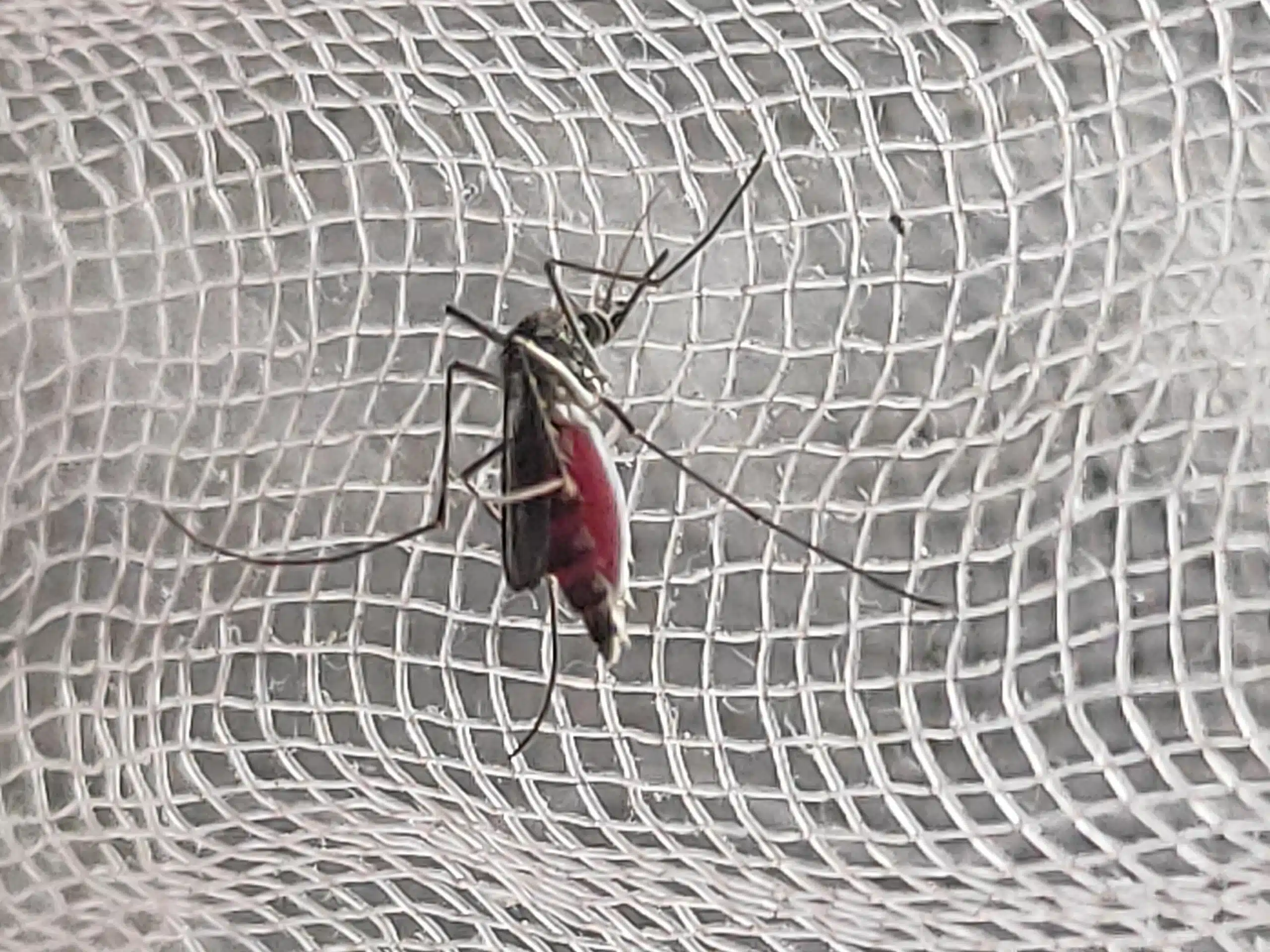
Top photo: an Aedes aegypti mosquito on a net. Photo: Apurv013, CC0, via Wikimedia Commons.