If you are thinking about surfing in Sri Lanka, you are looking at one of the most reliable, warm-water wave destinations on the planet. Whether you are catching your very first whitewater roller or carving down a long point break, this tropical island delivers world-class surf without the intimidating crowds of other major hubs.
Yes, you can absolutely surf in Sri Lanka. The island features two distinct coastlines that catch swells at different times of the year, making it a year-round surfing destination. The South Coast peaks from November to April, while the East Coast fires from May to October, offering warm waters, consistent reef and beach breaks, and waves suitable for all skill levels.
Key Takeaways
- Sri Lanka offers year-round surfing thanks to alternating monsoon seasons.
- The South Coast (Weligama, Hiriketiya) is best from November to April.
- The East Coast (Arugam Bay) is best from May to October.
- Water temperatures hover around 28°C, meaning you never need a wetsuit.
Key Facts: Surfing in Sri Lanka
| Fact | Detail |
| Best South Coast Season | November to April |
| Best East Coast Season | May to October |
| Water Temperature | 27°C – 29°C year-round |
| Top Beginner Spot | Weligama Bay |
| Top Advanced Spot | Arugam Bay Main Point |
| Nearest Airport | Bandaranaike International Airport (Colombo) |
| Wetsuit Needed? | No (Rash guard only) |
Can you surf in Sri Lanka all year round?
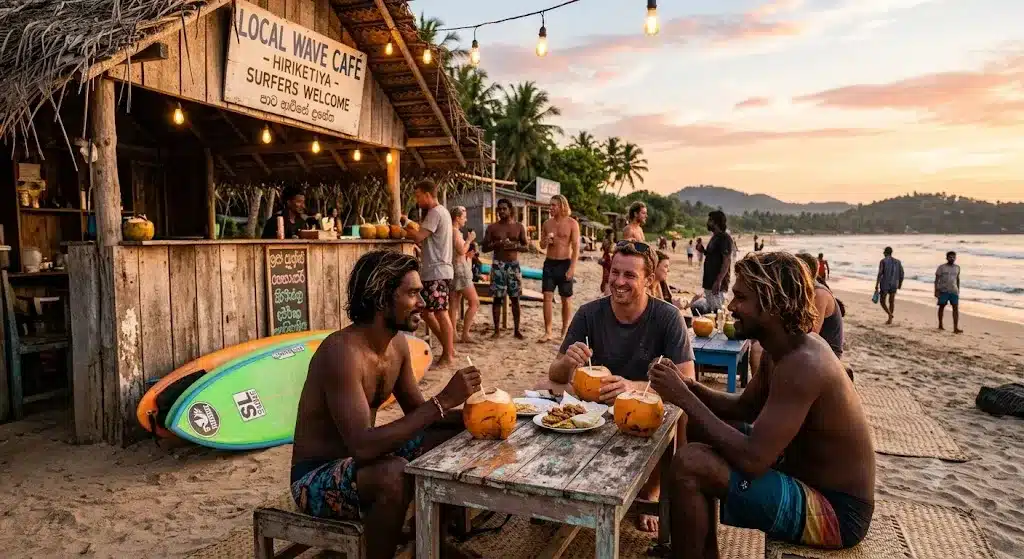
Yes, you can surf in Sri Lanka 365 days a year. Because the island experiences two separate weather systems, you simply switch coasts depending on the month to find offshore winds and clean swells.
The island sits in the Indian Ocean, catching deep southern ocean swells. According to official data from Department of Meteorology, the alternating monsoons dictate the prime beach seasons. When the Southwest monsoon brings rain to the Colombo side from May to October, the East Coast is dry and pumping with waves. For July specifically, our guide to surfing in Sri Lanka in July rates the Arugam Bay breaks by level. When the Northeast monsoon hits late in the year, the South Coast lights up with perfect, glassy conditions.
Oura Travel’s local guides have run custom Sri Lanka itineraries for over a decade, and we always tell guests: you just need to know which side of the island to drive toward when you land.
When is the best time to surf in Sri Lanka?
The best time to surf depends entirely on which coastline you plan to visit. The South Coast shines from November through April, while the East Coast takes the spotlight from May through October. For a month-by-month breakdown by coast and break, see our guide to the best time to surf in Sri Lanka.
If you visit the South Coast (covering towns like Weligama, Mirissa, and Hikkaduwa) between November and April, you will find morning offshore winds and highly consistent waist-to-head-high waves. The water temperature here fluctuates between 27°C and 29°C year-round, so board shorts or a swimsuit and a UV rash guard are the only gear you need.
For the East Coast, the prime window is May to October. This is when Arugam Bay awakens. On our last June safari excursion to nearby Yala National Park, we stopped in Arugam Bay and watched perfectly peeling right-handers wrap around the point for hundreds of meters. It is a surfer’s paradise during the northern hemisphere’s summer.
Where are the best surf spots in Sri Lanka?
The best surf spots in Sri Lanka are Weligama for beginners, Hiriketiya for intermediate longboarders, and Arugam Bay for advanced right-hand point breaks. The island packs dozens of breaks into small stretches of coastline.
Weligama
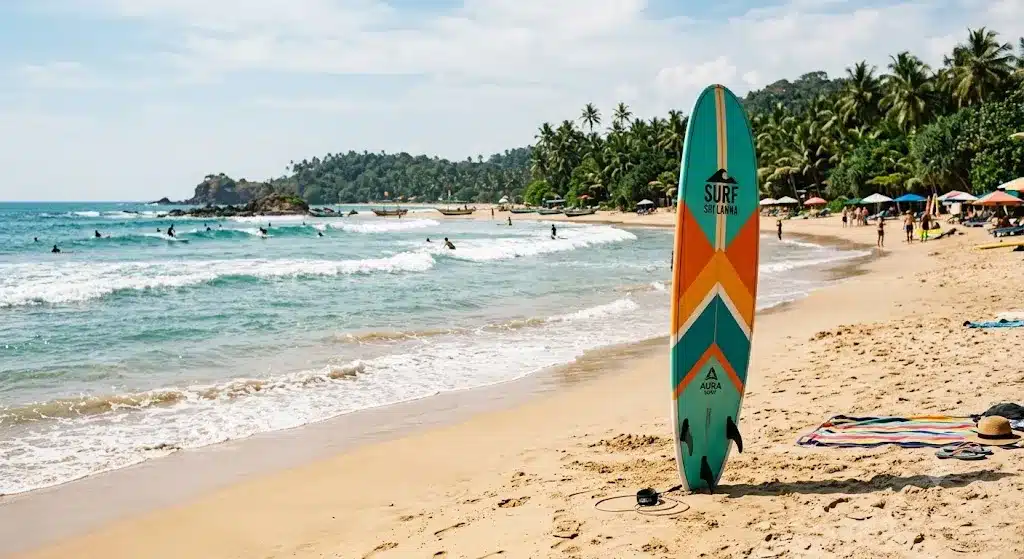
Weligama Bay is the ultimate beginner hub. It features a wide, horseshoe-shaped sandy bay with mellow, forgiving waves that rarely close out aggressively. You can walk straight into the water and find dozens of local surf schools ready to push you into your first wave.
Arugam Bay
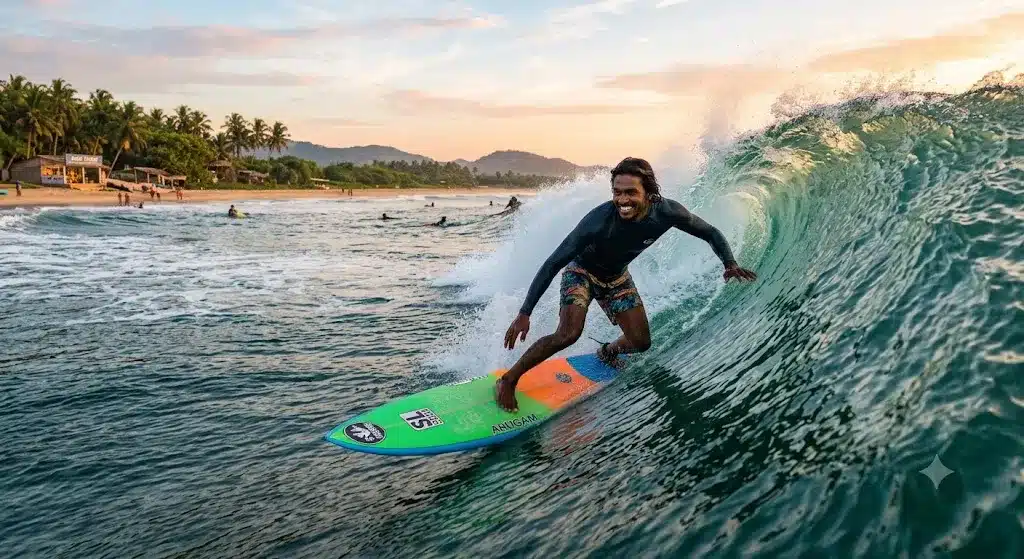
Located on the East Coast, Arugam Bay is the crown jewel of advanced surfing in Sri Lanka. It is a world-class right-hand point break. In fact, Arugam Bay hosted major World Surf League (WSL) competitions in 2011 and 2019, cementing its status on the global map.
Hiriketiya
Hiriketiya is a stunning, palm-fringed cove on the South Coast. It offers a soft sandy inside wave for learners and a punchier reef break on the outside left for intermediate and advanced riders.
Hikkaduwa
Hikkaduwa is one of the original surf towns on the southwest coast, offering a mix of A-frame reef breaks and beach breaks. It sits right near a beautiful marine sanctuary, meaning you often surf alongside sea turtles.
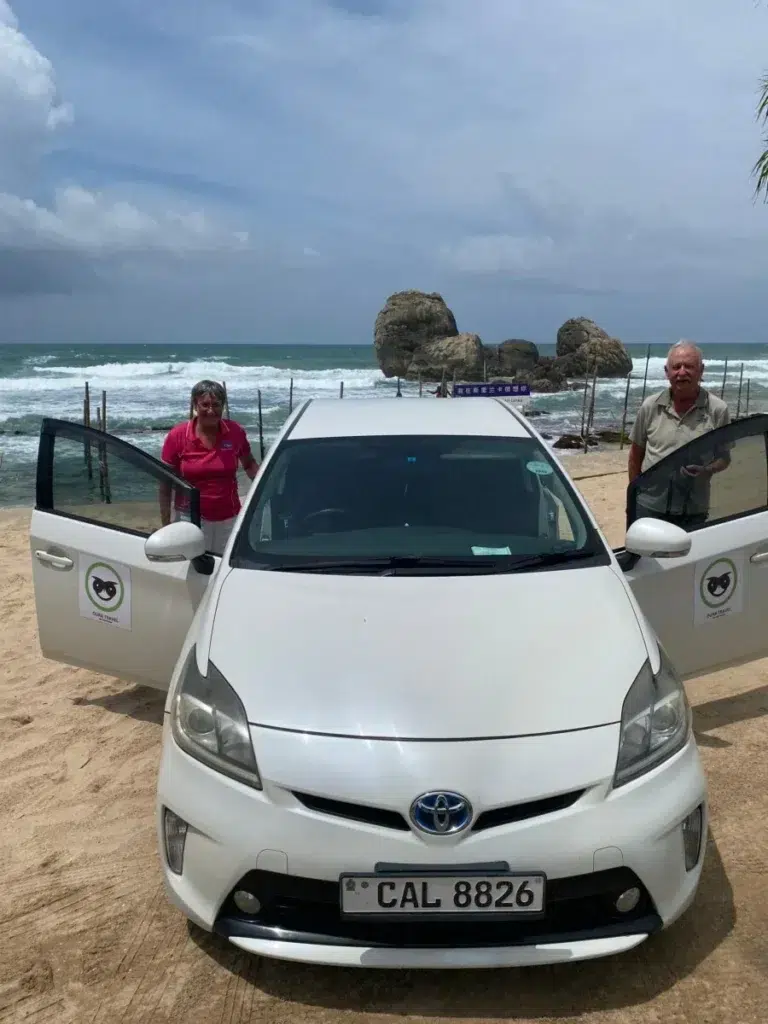
If you want to easily bounce between these spots, Oura Travel can arrange a dedicated airport pickup and transfer straight to the beach towns with your boards safely strapped to the roof.
Is Sri Lanka good for beginner surfers?
Sri Lanka is widely considered one of the best countries in the world for beginner surfers. The waves are famously softer, slower, and fatter than the heavy, hollow reef breaks found in places like Indonesia or Hawaii.
Say you land in Colombo on a Tuesday morning. By Tuesday afternoon, you can be in Weligama Bay, standing waist-deep in warm water with a foam board. The sandy ocean floor means wiping out is safe and painless. Learning to surf here is like practicing in a warm bath. The breaks are forgiving, and the local surf instructors are incredibly patient and skilled.
Beginners should stick to Weligama, the inside of Hiriketiya, or the sandy stretches of Hikkaduwa. Leave the shallow reef breaks like Rams or Main Point Arugam Bay to the seasoned pros until you build your confidence.
Which is better for surfing: Arugam Bay or Hiriketiya?
Choosing between Arugam Bay and Hiriketiya comes down to the month of your travel and your specific surfing ability. Arugam Bay dominates the East Coast summer, while Hiriketiya rules the South Coast winter.
Here is a quick breakdown to help you decide:
| Feature | Arugam Bay | Hiriketiya |
| Best Season | May to October | November to April |
| Wave Type | Long, right-hand point break | Cove with inside beach break & outside reef left |
| Vibe | Surf-focused, lively, rustic | Yoga-centric, boutique, intimate |
| Best For | Intermediate to Advanced | All levels (Beginners to Advanced) |
| Nearby Wildlife | Kumana & Yala National Parks | Blue Whale watching (Mirissa) |
If you want to combine your surf trip with wildlife, Arugam Bay is just a short drive from wild elephant corridors. In contrast, Hiriketiya is close to the southern ports where you can book a snorkelling excursion or whale-watching tour.
What else do I need to know before visiting?
Before booking your flight, you need to understand the transport logistics, visa requirements, and cultural etiquette of the island.
Travel times have drastically improved in recent years. Using the Southern Expressway, a drive from Colombo’s international airport to Weligama now takes just over two hours. To enter the country, most nationalities must apply for an Electronic Travel Authorization (ETA) via the official government portal prior to arrival. Ensure your passport has at least six months of validity remaining.
Culturally, Sri Lanka is a modest, Buddhist-majority nation. While bikinis and board shorts are perfectly normal on the beach and in the water, you must cover up when walking through town. If you plan to visit a temple on a rest day, you must cover your shoulders and knees.
Finally, do not limit yourself just to the coast. Oura Travel offers comprehensive Sri Lanka tours that seamlessly blend beach days with inland adventures. Oura Travel guarantees a price match on custom itineraries, letting you chase waves for a week and explore the ancient Cultural Triangle the next.
Frequently Asked Questions
Yes, you can easily surf in Sri Lanka. The island features consistent, warm-water waves year-round, with the South Coast peaking from November to April and the East Coast firing from May to October.
No, you do not need a wetsuit in Sri Lanka. The ocean water temperature stays between 27°C and 29°C all year long, so a swimsuit and a UV-protective rash guard are all you need.
You need at least 7 to 10 days for a proper surf trip. This allows you time to travel from the airport, acclimatize, take a few rest days, and explore multiple surf breaks along the coastline.
Yes, surfing in Sri Lanka is very safe. The beginner spots like Weligama have sandy bottoms, avoiding dangerous reef cuts. Always heed local advice regarding rip currents and never surf alone at isolated breaks.
Yes, you can rent surfboards easily. Every major surf town, including Weligama, Hiriketiya, and Arugam Bay, has dozens of rental shacks right on the sand offering foam boards, shortboards, and longboards.
Whether you want a dedicated two-week surf mission or a family holiday that mixes morning waves with afternoon safaris, we can build it. Check out our About Us
page to meet our local team, or head straight to our Plan Your Trip page to start designing your custom Sri Lanka adventure today!