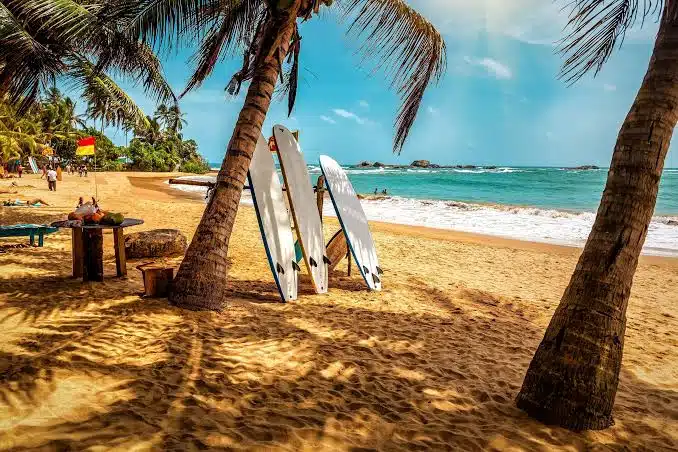
A carefully planned sri lanka surf tour offers warm water, consistent waves, and stunning palm-fringed coastlines for every skill level. Whether you want to catch your very first wave on a sandy beach or carve up world-class reef breaks, this island paradise truly delivers. Read on to discover the ideal seasons, top coastal destinations, and expert local secrets.
Sri Lanka offers year-round surfing by alternating between its two distinct coastlines. The southwest coast provides peak surf conditions from November to April, while the east coast shines from May to October. Because water temperatures average 28°C (82°F) annually, you can surf comfortably without ever needing a wetsuit.
Key Facts: Sri Lanka Surfing Basics
| Feature | Details |
| Best Seasons | Nov–Apr (South/West), May–Oct (East) |
| Water Temp | 27°C – 29°C (80°F – 84°F) year-round |
| Key Airports | Colombo (CMB), Mattala (HRI) |
| Top Waves | Arugam Bay, Weligama, Hikkaduwa |
| Wetsuit Needed? | No, boardshorts and rash guards only |
Key Takeaways
- Sri Lanka features two distinct monsoon seasons, guaranteeing rideable waves 365 days a year.
- Weligama and Hikkaduwa peak between November and April for south coast travelers.
- Arugam Bay dominates the east coast from May to October with world-class right-hand point breaks.
- Oura Travel customizes itineraries to match your specific surfing skill level and travel dates.
- Travelers should budget roughly $70 to $150 USD per day for a comfortable coastal holiday.
When is the best time for a Sri Lanka surf tour?
You can surf in Sri Lanka any day of the year, provided you visit the correct coastline. The island’s surf seasons run completely opposite to each other due to the annual monsoon cycles.
The island’s weather operates like a two-sided coin. According to the Sri Lanka Tourism Development Authority (SLTDA), the country boasts approximately 1,340 kilometers of tropical coastline. From November to April, the northeast monsoon pushes offshore winds toward the southern and western beaches. Therefore, spots along the south coast offer clean, glassy, and highly manageable waves during these winter months.
Conversely, the southwest monsoon hits from May to October. During this window, the east coast wakes up. Offshore winds groom the waves beautifully on the eastern shores, transforming places like Arugam Bay into surfer havens. As a result, you simply secure your vacation dates first, and then pick the coastline that matches your travel window.
Where are the best surf spots in Sri Lanka for beginners?
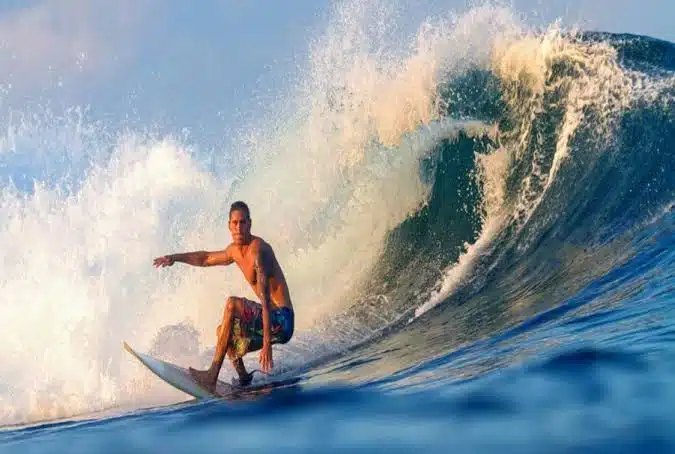
Weligama on the south coast and Elephant Rock on the east coast rank as the absolute best surf spots in Sri Lanka for beginners. Both locations feature soft sandy bottoms, dozens of local surf schools, and gentle, predictable waves.
If you are just starting out, you need a forgiving environment. Weligama is a massive, horseshoe-shaped bay that naturally protects surfers from heavy ocean swells. The gentle beach break here makes it incredibly popular for first-timers. Because the water remains shallow for a long stretch and the sea floor is entirely sand, taking a tumble rarely causes any scrapes or bruises.
On the east coast, beginners flock to Elephant Rock or Whiskey Point. These spots offer fatter, slower waves that give new riders plenty of time to pop up on their boards. Say you land in Colombo on a Tuesday morning in July; you will definitely want to head straight east to catch the friendliest summer waves.
Is Arugam Bay or Weligama better for surfing?
Arugam Bay is better for intermediate to advanced surfers seeking long right-hand point breaks, while Weligama is better for beginners needing safe, sandy beach breaks. Your final choice ultimately depends on your skill level and your travel month.
Let us compare the two heavyweights of the local surf scene to help you decide.
| Feature | Weligama (South Coast) | Arugam Bay (East Coast) |
| Best Time | November to April | May to October |
| Wave Type | Protected beach break | Fast right-hand point break |
| Ocean Bottom | Soft sand | Sand mixed with reef |
| Skill Level | Beginner to intermediate | Intermediate to advanced |
| Vibe | Bustling, cafe-heavy, instructional | Laid-back, legendary party scene |
Weligama offers a highly relaxed, instructional vibe with colorful board rental stands lining the entire beach. Meanwhile, Arugam Bay is famous worldwide for its “Main Point,” a fast, mechanical wave that requires a solid grasp of basic surf etiquette. In my honest professional opinion, beginners should always stick to Weligama to build core confidence before tackling the faster sections out east.
What to expect from intermediate and advanced waves?
Hikkaduwa serves as the original home of Sri Lankan surfing, offering fantastic A-frame reef breaks for experienced riders. Beyond Hikkaduwa, the rugged south coast holds dozens of hidden coves for those willing to explore off the beaten path.
While beginners naturally love the sandy bays, intermediate surfers constantly seek out the reefs. Hikkaduwa features a famous main reef that holds much larger swells during the winter months. Because the reef below can be quite sharp, packing reef booties is highly recommended for safety.
Oura Travel’s local guides have run custom coastal itineraries for over 10 years, ensuring your Sri Lanka surf tour hits the right breaks at the right tides. If Hikkaduwa feels slightly too crowded, we often take guests further south to Midigama or Kabalana. These specific areas provide powerful left and right-handers with a fraction of the typical crowd.
How much does a surf trip to Sri Lanka cost?
A comfortable surf trip to Sri Lanka costs roughly $70 to $150 USD per day, depending entirely on your accommodation style and dining choices. This budget easily covers comfortable guesthouses, daily board rentals, delicious meals, and local transport.
Sri Lanka remains one of the most budget-friendly surf destinations in the world. Board rentals typically cost between $5 and $10 USD per day on the beach. A hearty, authentic local meal of rice and curry will set you back just $3 to $5 USD at a beachside cafe.
You should also budget carefully for off-day activities. For example, according to the Department of Wildlife Conservation, entrance to Yala National Park costs approximately $30 to $40 USD for an international adult. Balancing your ocean days with a safari excursion makes your trip truly unforgettable.
What should I pack for a Sri Lanka surf tour?
Pack lightweight tropical clothing, high-SPF reef-safe sunscreen, a high-quality rash guard, and a reusable water bottle. You absolutely do not need a wetsuit for a Sri Lanka surf tour, as the Indian Ocean stays delightfully warm year-round.
The tropical sun here is beautifully intense. A fitted rash guard protects your back and shoulders during long, sunny sessions in the water. Packing plenty of zinc-based sunscreen prevents painful burns and actively protects the local marine life from harmful chemicals.
Bring basic first-aid supplies, especially if you plan to surf over shallow reef breaks. On our last June safari in Yala, we noticed many travelers regretting they forgot their mosquito repellent. Therefore, always pack bug spray for the warm tropical evenings. If you forget your surfboard wax, do not worry; every local surf shop actively stocks tropical-temperature wax.
What is the best transport for surfers in Sri Lanka?
The most popular way to travel between local surf spots is by hiring a tuk-tuk equipped with custom board racks. For longer intercity journeys, booking a private, air-conditioned van ensures you and your boards travel safely.
A tuk-tuk is Sri Lanka’s iconic three-wheeled taxi, famous for zipping effortlessly through coastal traffic. Many coastal drivers have cleverly welded metal racks onto the roofs of their tuk-tuks to carry longboards and shortboards alike. This setup makes hopping between neighboring bays incredibly easy, breezy, and affordable.
For the long drive from the international airport to the coast, a larger vehicle is essential. With our modern fleet of board-friendly vehicles, Oura Travel provides seamless airport transfers directly to the southern or eastern shores. You can sit back in an air-conditioned cabin while we handle the heavy lifting.
How do you balance surfing with culture and wildlife?
Taking a break from surfing allows you to experience Sri Lanka’s world-class wildlife safaris and breathtaking highland tea plantations. Mixing ocean time with cultural exploration creates the perfect balanced holiday.
You cannot visit Sri Lanka without seeing wild elephants. Parks like Yala and Udawalawe sit just a short drive from the southern surf towns. Swapping your surfboard for a jeep safari offers a thrilling change of pace. Oura Travel, one of Sri Lanka’s best travel agencies, routinely blends wave-riding with heritage stops.
Beyond the beach, Sri Lanka is a deeply traditional and religious country. If you leave the sand to explore a nearby town, throw a t-shirt over your boardshorts or bikini. Additionally, if you visit the stunning UNESCO-listed Galle Fort or a local Buddhist temple, you must cover your shoulders and knees.
Plan Your Ocean Adventure Today
A well-planned Sri Lanka surf tour perfectly combines thrilling Indian Ocean waves with rich cultural experiences, spicy cuisine, and incredible wildlife. Whether you want to conquer the legendary point breaks of Arugam Bay or enjoy a highly relaxed family holiday in Weligama, this beautiful island is waiting for you.
Ready to trade your wetsuit for boardshorts? Reach out to our local experts via our contact page and let Oura Travel design your flawless custom itinerary today.
Frequently Asked Questions
Sri Lanka offers year-round surfing by switching coasts. The south and west coasts are best from November to April. Meanwhile, the east coast offers peak conditions from May to October.
No, you do not need a wetsuit. The ocean temperature in Sri Lanka stays between 27°C and 29°C (80°F to 84°F) all year. A rash guard is recommended purely for sun protection and board rash prevention.
Weligama is the best place to learn to surf. It features a massive, protected bay with a soft sandy bottom, gentle rolling waves, and dozens of highly experienced local surf schools.
You need at least 10 to 14 days to fully enjoy a surf trip. This timeframe allows you to adjust to the tropical climate, surf multiple coastal locations, and take a few rest days to explore national parks.
Yes, most international travelers need an Electronic Travel Authorization (ETA) or e-Visa. You should always check the official Sri Lanka government e-visa portal for the most current entry rules and fees before booking your flight.