Planning birding trips in February can sometimes feel overwhelming if you do not pick the right global destination. Sri Lanka, however, completely removes that guesswork. Our tropical island transforms into a spectacular haven for both resident and migratory birds during this specific month. As a result, you will experience some of the most rewarding and accessible wildlife viewing on the planet.
Taking birding trips in February offers the absolute peak of Sri Lanka’s migratory season. During this month, over 200 migrant species join the island’s 34 rare endemics. The weather remains mostly dry and comfortable across the country. Because of this, February stands as the perfect time to explore lowland rainforests, highland cloud forests, and coastal wetlands.
Key Takeaways
- Peak Migration: February brings hundreds of migrant species down the Central Asian Flyway to join Sri Lanka’s native birds.
- Top Locations: Sinharaja, Bundala, and Horton Plains offer vastly different habitats within short driving distances.
- Ideal Weather: You will enjoy dry, sunny mornings that provide perfect visibility for early treks.
- Expert Guidance: Hiring a local tracker drastically increases your chances of spotting rare endemics.
Why are birding trips in February so popular in Sri Lanka?
If you wonder when to visit, February stands out for several specific reasons. First, the northern hemisphere experiences harsh winters. Consequently, massive flocks of migratory birds travel thousands of miles south to escape the freezing cold. Sri Lanka sits at the very bottom of this migratory route. Because we are the final stop, millions of exhausted birds settle in our wetlands and forests to feed and rest.
Say you land in Colombo on a Tuesday morning. By Tuesday afternoon, you could already be scanning the lush canopy of Kitulgala for the elusive Serendib Scops Owl. Our island is incredibly compact. Therefore, you can easily travel from a humid coastal marsh to a chilly mountain cloud forest in a single day. This geographical variety means you can check off dozens of different species without taking internal flights or wasting days on the road.
Top Birding Hotspots in Sri Lanka to Visit
You need to know exactly where to go to maximize your daily sightings. Therefore, we always include a mix of wetlands, dry zones, and rainforests in our custom itineraries. Here are the absolute best birding hotspots to explore on your journey.
Sinharaja Rainforest: The Endemic Heart
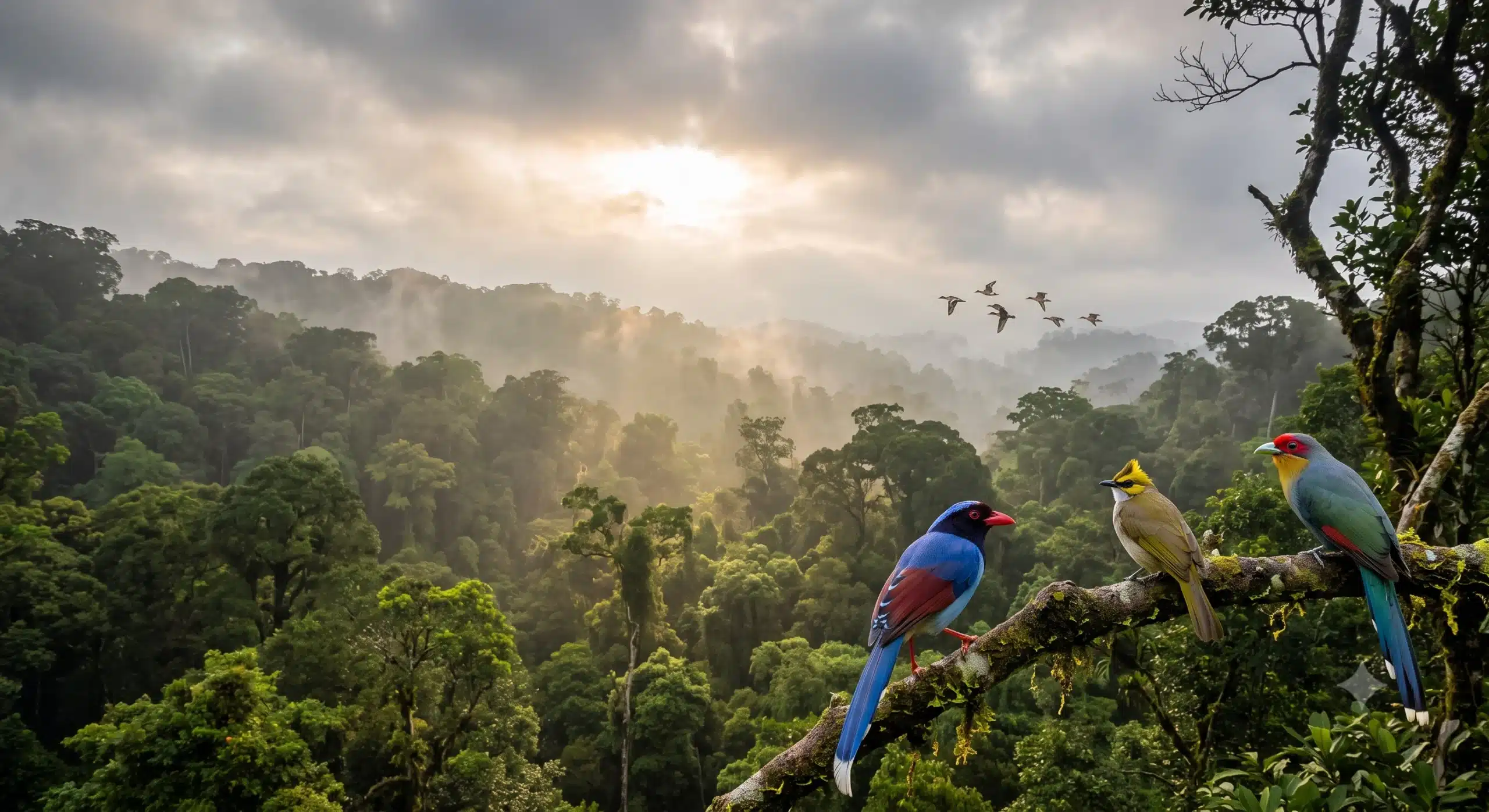
This dense, vibrant jungle represents the true crown jewel of any avian adventure here. UNESCO designated the Sinharaja Rainforest as a World Heritage site to protect its incredible biodiversity. Naturally, you can find over 20 unique endemic species hiding in this thick canopy. Spotting a Sri Lanka Blue Magpie in the wild is a bit like finding a sapphire hidden in a dense emerald carpet. It takes real patience, but the sudden flash of bright colour is truly unforgettable.
Bundala National Park: The Wetland Wonder
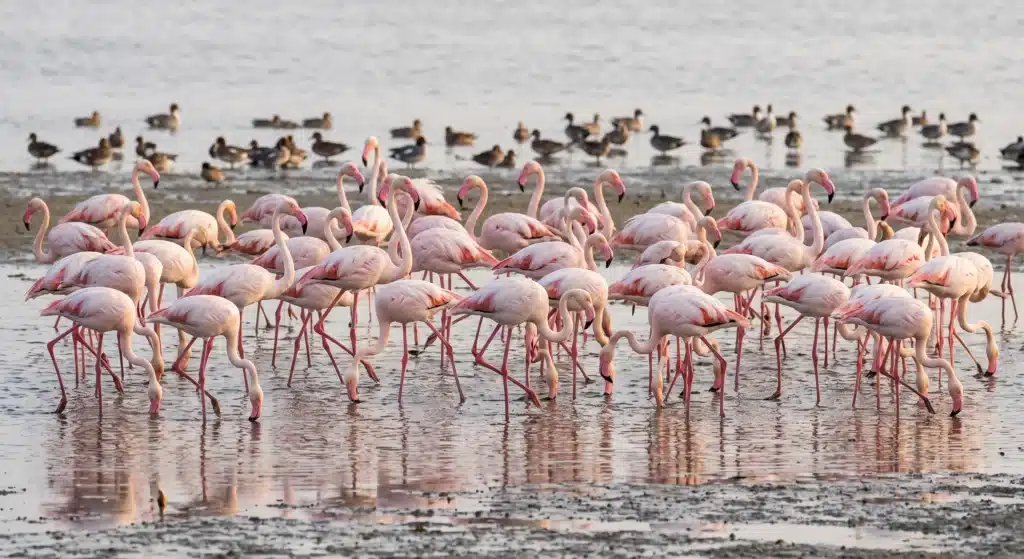
As local guides, we honestly believe that while Yala gets all the fame for leopards, Bundala reigns as the undisputed champion for serious birders. This Ramsar-recognized wetland serves as a crucial wintering ground. For instance, you will regularly see massive flocks of Greater Flamingos turning the shallow lagoons pink. You can easily book a targeted safari excursion with our team to explore these quiet, undisturbed waters away from the main tourist crowds.
Horton Plains: The Misty Highlands
Head up into the central mountains to find a completely different ecosystem. Horton Plains sits at a high elevation of over 2,000 metres. Because the air remains much cooler here, it attracts unique montane species. You might need a light fleece jacket, but the chance to see the Sri Lanka Whistling Thrush is entirely worth the early morning chill.
Mannar Island: The Migrant Haven
If you travel to the far northwest, Mannar Island offers an entirely different landscape. The shallow mudflats and salt marshes here provide a vital refuge for millions of overwintering birds. Specifically, adding the north to your birding trips in February ensures you see huge flocks of Eurasian Wigeon, Northern Pintail, and the striking Black-tailed Godwit. Because fewer tourists visit the north, your experience here feels wonderfully wild and remote.
Essential Endemic Birds of Sri Lanka to Spot
Every birder wants to check off rare, localized species. Finding the endemic birds of Sri Lanka remains a primary goal for most of our guests. Because they live nowhere else on Earth, seeing these birds makes your trip truly special.
| Bird Species | Typical Sri Lankan Habitat | Difficulty to Spot |
| Sri Lanka Blue Magpie | Wet zone rainforests (Sinharaja) | Moderate |
| Red-faced Malkoha | Thick, undisturbed forest canopies | Hard |
| Sri Lanka Junglefowl | National parks and scrub jungles | Easy (Very common) |
| Serendib Scops Owl | Lowland rainforests (Kitulgala) | Very Hard |
| Yellow-eared Bulbul | Highland cloud forests (Horton Plains) | Moderate |
To track down these specific beauties, we highly recommend our comprehensive Wildlife of Sri Lanka Tour. Our expert local trackers know exactly where these shy birds nest, feed, and roost.
Practical Tips for Sri Lanka Bird Watching
Good preparation makes a massive difference in the field. Preparing for birding trips in February requires a few specific items and a bit of practical local knowledge.
What to Pack for the Trails
Because the tropical sun shines intensely, always pack lightweight, breathable clothing in neutral greens and browns. Bright colours will quickly spook shy birds. Next, invest in good binoculars and a quality zoom lens (a wide aperture helps in the dark rainforest undergrowth). Also, bring sturdy, waterproof hiking boots for the damp trails. Leeches thrive in wet zones like Sinharaja. Therefore, we always provide our guests with protective leech socks before a hike.
Understanding the Local Weather
February falls perfectly between the two main monsoon seasons. As a result, you get bright, clear mornings that are ideal for spotting wildlife. However, the central highlands drop in temperature at night, so always pack a warm layer for early morning departures.
Respecting the Environment
We work closely with the Sri Lanka Department of Wildlife Conservation to ensure our tours remain strictly eco-friendly. You must always stay on marked trails to protect the undergrowth. Please do not use playback calls to attract birds, because this practice causes them unnecessary stress and disrupts their natural behaviour. Finally, remember to follow local cultural dress codes if your birding route passes near a rural temple, which you can read more about in our cultural triangle itinerary guide.
Visas and Logistics
Before you fly, you must secure your official travel authorization. Always check the official [suspicious link removed] website or the government e-visa portal to confirm the most current entry rules and fees.
Frequently Asked Questions
Are birding trips in February suitable for beginners?
Absolutely. February provides excellent visibility and a massive volume of birds. Because both migrants and common endemics are everywhere, beginners will enjoy constant, rewarding sightings without needing advanced tracking skills.
How many days should I plan for a birding tour?
We recommend at least 10 to 14 days. This timeframe allows you to comfortably visit the lowland rainforests, the dry zone wetlands, and the central highlands. As a result, you will experience the full spectrum of Sri Lankan birdlife.
Is it safe to hike in the rainforests?
Yes, hiking in our national parks is completely safe. However, you must always go with a certified local guide. They know the terrain perfectly and can easily navigate around slippery paths or wild elephants.
What is the best time of day to spot birds?
Early mornings are generally the most productive. We usually start our treks right at dawn, around 6:00 AM, because birds are highly active then. Similarly, the late afternoon just before dusk offers another fantastic window for sightings.
Ready to Start Your Journey?
Organizing a successful wildlife holiday requires deep, expert local knowledge. You need the right transport, the best eco-lodges, and guides who actually recognize the subtle calls of the forest. With over a decade of hands-on experience, our About Us page highlights exactly why we are a trusted choice for passionate nature lovers.
We handle all the complex logistics so you can simply focus on the canopy. If you want a journey designed purely around your specific wildlife goals, contact our team today to plan your trip. Let us show you the very best of our beautiful, wild island.