If you are reading sri lanka birding trip reports, you already know this island is a world-class destination for twitchers. You likely want to spot the cartoonish Sri Lanka Blue Magpie or the incredibly elusive Serendib Scops Owl. In this comprehensive guide, we break down exactly how to find them.
Based on recent sri lanka birding trip reports, the ideal bird-watching itinerary takes 10 to 14 days and targets all 34 endemic species. You will need to visit three distinct climate zones: the lowland rainforests of Kitulgala and Sinharaja, the cloud forests of Horton Plains, and the dry zone scrub of Yala.
Key Takeaways
- 34 Endemics: Sri Lanka boasts 34 officially recognised endemic bird species.
- Prime Season: The best time for birding is from November to April.
- Essential Route: A successful trip must include the lowlands, the highlands, and the dry zone.
- Local Expertise: Hiring a specialized tracking guide is vital for finding elusive owls and thrushes.
What Do Most Sri Lanka Birding Trip Reports Recommend?
When you read through dozens of field logs, a clear pattern quickly emerges. Successful birders do not just wander randomly across the island. Instead, they follow a very specific altitudinal circuit. This traditional route is designed to hit every major habitat efficiently. Say you land in Colombo on a Tuesday morning. By Tuesday afternoon, you should already be scanning the canopy in the wet zone.
Starting in the Kitulgala Lowlands
Nearly every good itinerary starts near Kitulgala. This riverside village offers a gentle, incredibly productive introduction to the island’s wet zone. You can easily find the Sri Lanka Hanging Parrot and the Green-billed Coucal here. The forest undergrowth is famously dense. Because of this, you must walk slowly and listen carefully. Our guides often locate the Chestnut-backed Owlet here before you even finish your first cup of morning tea.
Sinharaja Forest Reserve: The Holy Grail
You cannot write an honest birding guide without dedicating a massive section to the Sinharaja Forest Reserve. This UNESCO World Heritage site represents the epicentre of Sri Lankan birding. It is world-famous for its “bird waves,” which are massive mixed-species feeding flocks that move through the canopy.
Suddenly, a quiet jungle path erupts with chaotic noise. You might see the Red-faced Malkoha, the Ashy-headed Laughingthrush, and the vibrant Sri Lanka Blue Magpie all feeding together in a frenzy. In our professional opinion, rushing through Sinharaja in a single day is a huge mistake. You really need at least three nights here to account for the frequent rain and the highly unpredictable nature of these flocks.
Nuwara Eliya and Horton Plains: Montane Endemics
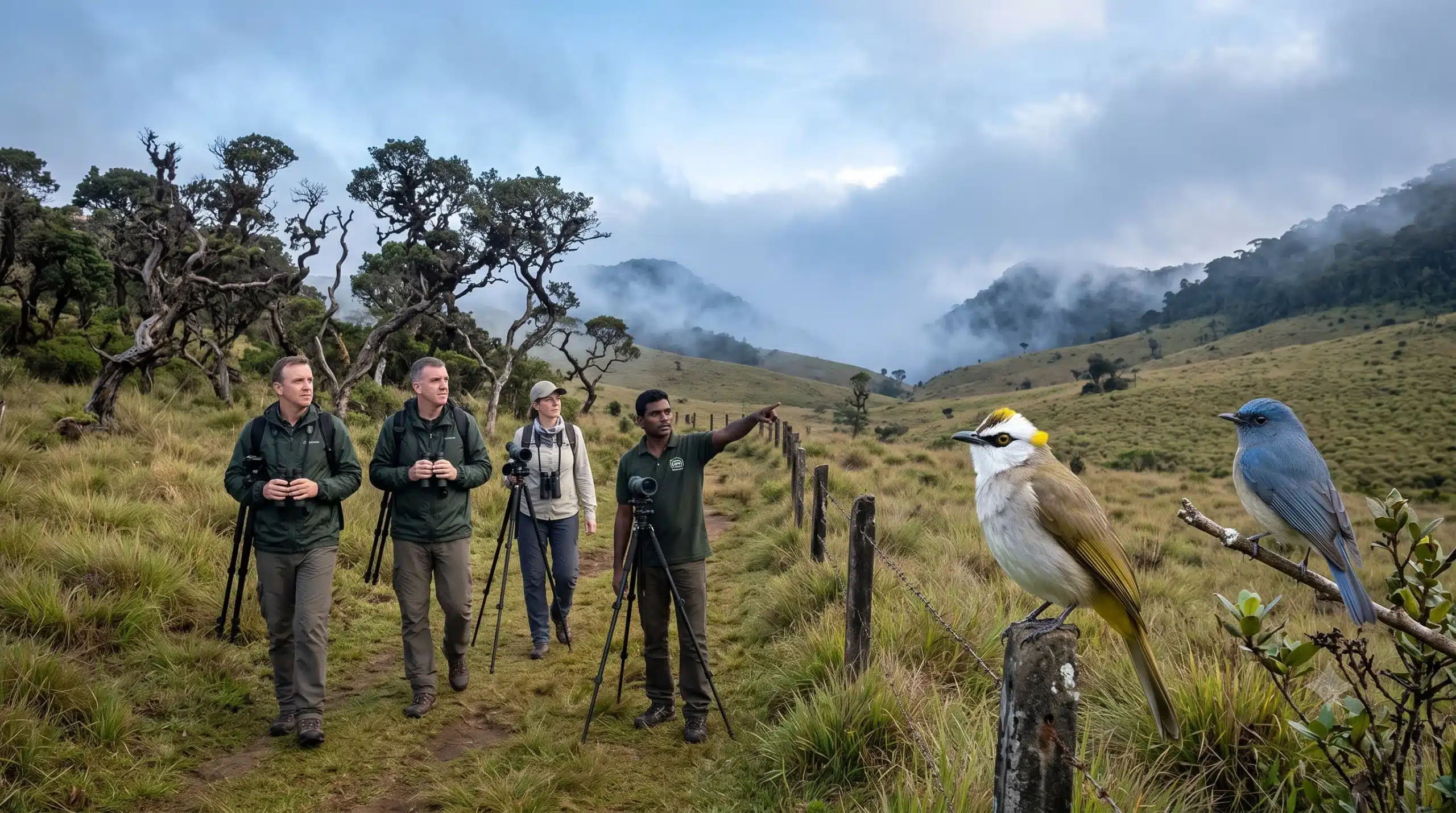
After sweating through the humid lowlands, you will head up into the central highlands. Nuwara Eliya and Horton Plains National Park offer a totally different, much cooler climate. You will trade jungle sweat for chilling mountain mist. Consequently, your target list changes completely.
Up here, you want to find the Yellow-eared Bulbul, the Dull-blue Flycatcher, and the secretive Sri Lanka Whistling Thrush. Searching for the Whistling Thrush in the dark ravines is like looking for a shadow in a coal mine. You will need immense patience.
Dry Zone Wetlands: Yala, Bundala and Udawalawe
Finally, the circuit drops down into the southern dry zone. The parks here are vast, sunny, and absolutely teeming with wildlife. You will trade dense canopy walks for open jeep safaris. This region is perfect for spotting waterbirds, raptors, and massive flocks of winter migrants. It is also the best place to tick off the Sri Lanka Woodshrike and the Brown-capped Babbler.
Tracking the Endemic Birds of Sri Lanka
Sri Lanka is officially home to 34 endemic bird species. Finding all of them on a single trip is entirely possible, provided you have the right logistics. The endemic birds of Sri Lanka evolved in total isolation. As a result, they possess incredibly unique behaviours and plumages.
The Toughest Targets
Some endemics will happily walk right up to you. For example, the Sri Lanka Junglefowl (our national bird) often scurries around hotel car parks. However, others require serious fieldcraft.
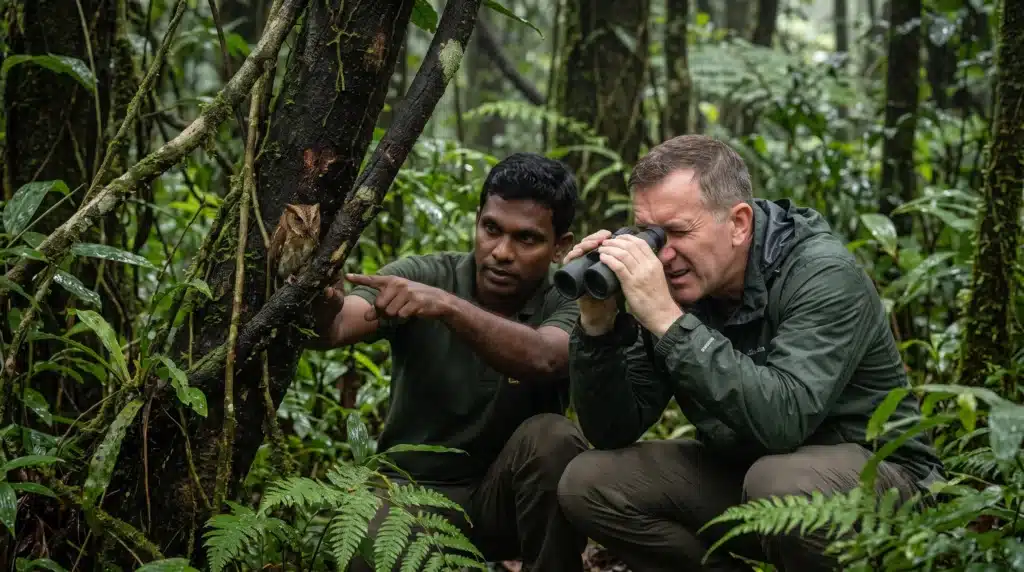
- Serendib Scops Owl: This tiny owl was only discovered by science in 2004. It hides deep in the darkest tangles of the rainforest.
- Sri Lanka Spurfowl: This bird is incredibly shy. You will hear its ringing call constantly, but seeing it requires sitting perfectly still in a camouflaged hide.
- Sri Lanka Scaly Thrush: Found scratching quietly in the leaf litter. One wrong step will send it flying away into the dense brush.
Best Time to Visit and Weather Patterns
Weather dictates absolutely everything on a serious birding trip. The absolute best window to visit is between late November and early April.
During these months, the northeast monsoon brings heavy rain to the eastern coast. However, the prime birding areas in the southwest and central highlands remain mostly dry. As a result, you successfully avoid the heavy southwestern monsoon that drowns Sinharaja between May and September.
Additionally, this winter window brings over 200 species of northern migrants down to the island. Therefore, you get to see the resident endemics alongside exciting wintering visitors like the Pied Thrush, the Indian Pitta, and the Kashmir Flycatcher.
Essential Packing & Field Etiquette
Packing correctly will make your trip significantly more comfortable and productive. Sri Lanka is a tropical island, but the highlands get surprisingly cold before dawn.
- Proper Clothing: Bring lightweight, highly breathable, and dark-coloured clothes. You must avoid bright whites or neon colours that startle nervous wildlife.
- Leech Protection: Leech socks are strictly mandatory for Sinharaja and Kitulgala. The wet zone forests are famously full of leeches after a rain shower.
- Reliable Optics: An 8×42 or 10×42 binocular is absolutely perfect for the dark forest understory. A spotting scope helps immensely when scanning the dry zone wetlands.
- Rain Gear: Always carry a lightweight, waterproof poncho. Rainforests rain frequently, even in the middle of the so-called dry season.
As a quick local tip, we highly recommend bringing a small, sturdy umbrella. It keeps the heavy rain off your expensive optics much better than a restrictive raincoat hood.
Planning Your Sri Lanka Wildlife Tour
Organising a highly specialized birding trip requires deep local knowledge. At Oura Travel, our seasoned guides have spent over 10 years tracking these specific birds. We know the exact, updated roosting spots for the island’s rarest owls.
If you are travelling with a mix of birders and non-birders, you can easily blend a serious twitching run with a broader Wildlife of Sri Lanka Tour. This way, your family can happily watch wild elephants and leopards while you focus intensely on finding the Malabar Trogon. For a quick taste of the spectacular dry zone, you can easily book a single Safari Excursion to Udawalawe or Yala National Park.
Visas and Official Regulations
You should always verify your visa requirements well before booking your flights. Please check the official Sri Lanka government e-visa portal to confirm the current entry rules and fees. Furthermore, all national parks enforce strict rules to protect the habitat. For a full list of official park regulations, you can read up on the Department of Wildlife Conservation website. We always ensure our tours comply strictly with these ethical guidelines.
Frequently Asked Questions
How many days do I need for a birding trip in Sri Lanka?
You need at least 10 to 14 days to realistically target all 34 endemic bird species. This timeframe allows you to comfortably visit the lowland rainforests, the central highlands, and the dry zone without rushing.
Is it safe to go birding in Sri Lanka?
Yes, it is very safe. The national parks and forest reserves are exceptionally well-managed. You must always walk with a registered local guide in places like Sinharaja, which ensures both your personal safety and the protection of the forest.
Can I see leopards and endemic birds on the same trip?
Absolutely. Many popular birding routes naturally pass through or near Yala National Park. You can easily spend your morning looking for the Sri Lanka Woodshrike and your afternoon photographing leopards.
What is the hardest endemic bird to find?
The Serendib Scops Owl is notoriously difficult to spot. It is a tiny, incredibly secretive owl that hides deep in dense rainforest undergrowth. You almost certainly need an expert local tracker to locate its daytime roosting spots.
Do I need a specialized birding guide?
Yes, a specialized birding guide is highly recommended. General cultural guides are wonderful, but finding a species like the Sri Lanka Scaly Thrush requires expert knowledge of specific calls, habitats, and hidden territories.
Let’s Start Planning Your Adventure
Reading through sri lanka birding trip reports is just the very first step of your journey. Honestly, nothing compares to hearing the chaotic call of the Sri Lanka Blue Magpie in real life. We take immense pride in showing off our beautiful island’s natural heritage to the world. Because we are a dedicated local team, we handle all the tedious logistics, from securing forest permits to booking the best boutique eco-lodges.
Read more About Us to see exactly why we are consistently rated as one of Sri Lanka’s best travel agencies. When you are fully ready to chase that life list, head over to our Contact page to start planning your custom trip. We will build a seamless, unforgettable itinerary that hits every single target on your list.