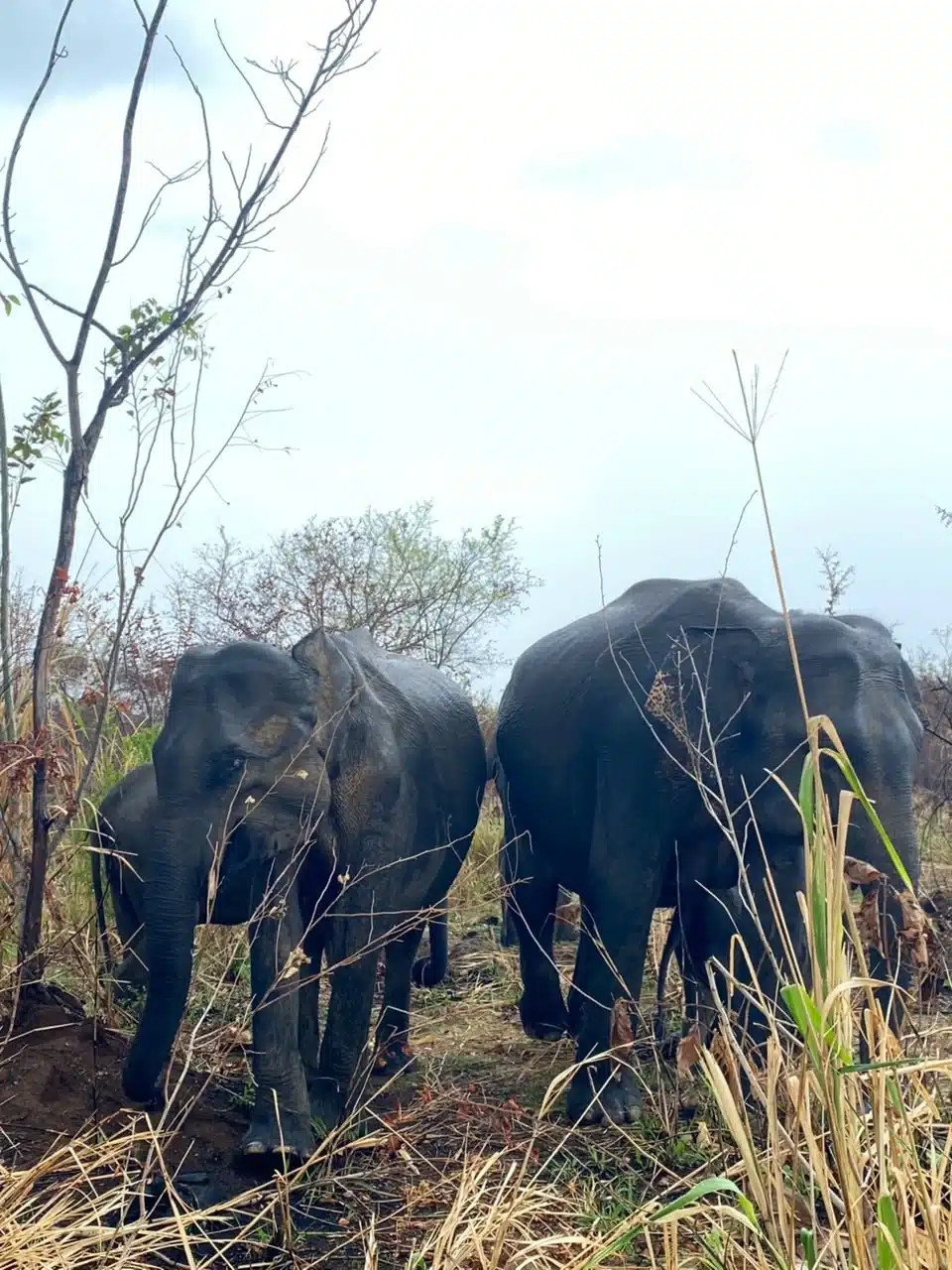
For an elephant orphanage Sri Lanka has two government-run choices, and they do different jobs. Pinnawala Elephant Orphanage, between Colombo and Kandy, keeps a herd of 65, and its foreign adult ticket was USD 17.70 on 5 October 2026 (Department of National Zoological Gardens). The Udawalawe Elephant Transit Home, in the south, raises orphaned wild calves and has released 162 of them in 30 years (Conservation Physiology). Visitors there only watch (World Animal Protection). Pinnawala also sells passes to feed, bathe or walk beside an elephant. ABTA, the UK travel trade association, classes riding and bathing elephants as unacceptable (ABTA). The two places are 164 km apart by road (OpenStreetMap).
Key takeaways
- Pinnawala opens at 8.30am every day. Its main herd walks to the Ma Oya river at 10am and again at 2pm, and the ticket counter closes at 5pm.
- On 5 October 2026 a foreign ticket for Pinnawala was USD 17.70 for an adult and USD 8.85 for a child. With Pinnawala Zoo added it was USD 23.60 and USD 11.80.
- We found no official visitor page for the Transit Home. A hotel company’s guide dated June 2026 lists public feeds at 10.30am, 2.30pm and 6pm, so confirm locally.
- World Animal Protection, ABTA and Born Free advise against bathing elephants. Pinnawala sells bathing passes, and at the Transit Home visitors only watch.
- For wild elephants, Udawalawe National Park is a year-round choice, and Minneriya’s gathering is best in August and September.
Elephant orphanage Sri Lanka: Pinnawala and Udawalawe compared
| Compared | Pinnawala Elephant Orphanage | Udawalawe Elephant Transit Home |
|---|---|---|
| Run by | Department of National Zoological Gardens (eTicket service) | Department of Wildlife Conservation (Ministry of Environment) |
| Opened | 16 February 1975, with five orphaned calves (official page) | 1995 (Conservation Physiology) |
| Elephants | 65: 27 males and 38 females (official page) | 50 to 70 at any one time (Conservation Physiology) |
| What happens to them | They stay in human care. The page counts 76 births since 1984 (official page) | Released at 6 to 8 years old, mainly into Udawalawe National Park (Conservation Physiology) |
| What visitors do | Watch the herd at close range and at the river. Fruit feeding, bathing and a walk cost extra (official page) | Observation only, with no rides (World Animal Protection). The site has an observation platform (Ministry of Environment) |
| Foreign adult ticket | USD 17.70 (official page) | No official price found online on 5 October 2026 |
| Visitors in 2025 | 635,018, including 196,381 foreigners (SLTDA) | 250,904, including 101,119 foreigners (SLTDA) |
| Nearest base | Kandy, 40 km (OpenStreetMap) | Udawalawe. Ella is 99 km (OpenStreetMap) |
Pinnawala Elephant Orphanage: hours, river times and tickets
Pinnawala’s own page calls it both a conservation centre and a major tourist attraction (Department of National Zoological Gardens). A 2011 paper says it took in orphans until 1995. From then on they went to the Transit Home, and the Pinnawala herd grew mostly through births (Gajah).
Opening hours and the daily timetable
These times come from the orphanage’s page, read on 5 October 2026 (official page).
| Time | What happens |
|---|---|
| 8.30am | Opens. The main herd moves to the free-roaming area, and a small herd of about 7 leaves for the Ma Oya river |
| 9.45am | The small herd returns |
| 10.00am | The main herd leaves for the river |
| 12.00 noon | The main herd returns, and the small herd leaves for the river |
| 1.45pm | The small herd returns |
| 2.00pm | The main herd leaves for the river again |
| 4.00pm | The main herd returns |
| 5.00pm | Ticket counter closes |
| 6.00pm | Closes to visitors |
The page shows two other closing times. Its header, shared with the department’s other venue pages, says 5.00pm, and the footer’s line for Pinnawala says 5.30pm. We’d treat 5pm, when the counter shuts, as the limit. To see the walk to the river, we’d be through the gate half an hour before 10am or 2pm, and allow two to three hours.
Ticket prices
| Ticket | Orphanage only | With Pinnawala Zoo |
|---|---|---|
| Foreign adult | USD 17.70 | USD 23.60 |
| Foreign child | USD 8.85 | USD 11.80 |
| SAARC (South Asian) adult | USD 11.80 | USD 11.80 |
| SAARC child, 3 to 12 years | USD 5.90 | USD 5.90 |
Those are the prices listed on 5 October 2026 (official page). The page gives no age range for the foreign child ticket, and lists the SAARC combined ticket at the single price. The department’s eTicket service takes online bookings for entry tickets, charges a convenience fee and says a printout of the permit is mandatory (eTicket service).
Bathing passes are separate from the river walk
The page lists three paid programmes apart from the daily timetable, and describes them like this (official page):
- Fruit feeding: Rs 590 for a basket, from 9.15am until the fruit runs out or 2pm.
- Elephant bathing: Rs 885 for a 10-minute pass, from 9.15am to 11.45am and from 2.15pm to 3.45pm. Heavy rain can suspend it without notice.
- Elephant walk: Rs 1,180 to walk beside an elephant for 10 minutes, between 9am and 2pm.
So the pass hours and the herd’s river times are two different things. Watching the herd at the river isn’t one of the paid programmes.
Udawalawe Elephant Transit Home: how the Udawalawe elephant orphanage works
The Department of Wildlife Conservation opened the Transit Home in 1995 on about 200 acres at the western edge of Udawalawe National Park (Ministry of Environment). It is often called the Udawalawe elephant orphanage, though its calves are meant to leave.
A 2025 paper, whose lead author is based at the Transit Home, sets out the routine (Conservation Physiology). Most orphans arrive at under six months old. Between milk feeds they spend about 70% of the day in forest inside the national park, and contact with people is limited to those feeds and veterinary care. At 6 to 8 years old they are released in groups, mainly into the park next door.
Not every calf gets that far. A 2016 paper by the same lead author counted 305 calves received in 21 years. Of those, 137 died, most within two months of arriving, 103 were released and 21 were moved to other elephant facilities (FAO AGRIS).
Feeding times: what we could and couldn’t confirm
The Department’s website had no visitor page for the Transit Home when we checked on 5 October 2026 (Department of Wildlife Conservation). So we found no official visitor timetable. These sources help:
- The 2025 paper says calves get milk five times a day: every four hours in the daytime and once at midnight (Conservation Physiology).
- A Ministry of Environment article from about 2021 says milk feeding begins at 6.00am, without saying which feeds visitors may watch (Ministry of Environment).
- A hotel company’s guide for guests of its Udawalawe hotel, dated 15 June 2026, lists visitor sessions at 10.30am, 2.30pm and 6pm, and adds that timings can change (Thema Collection).
- OpenStreetMap’s entry lists 9am, noon, 3pm and 6pm. A volunteer added those times in August 2019, and a December 2021 edit only changed their format (OpenStreetMap).
The two visitor lists disagree and neither is official. Ask your hotel the day before.
Tickets and time on site
We found no official price list either. The same OpenStreetMap entry shows Rs 500 for a foreign adult and Rs 250 for a foreign child, figures from August 2019 and too old to rely on (OpenStreetMap). Carry cash and ask at the counter.
The hotel company’s guide allows around an hour at the centre, and says there are no rides, bathing, touching or close-up posing (Thema Collection).
Is Pinnawala Elephant Orphanage ethical? What the published guidance says
These are the published positions we found, with dates, then what Pinnawala’s own page offers.
- World Animal Protection assessed 13 elephant venues in Sri Lanka between February 2019 and January 2020. The Transit Home scored highest, and the report credits its “clear policy against elephant entertainment”. It doesn’t name Pinnawala (World Animal Protection).
- The same charity’s tourist guide says a venue that lets you ride, bathe or touch elephants has trained them cruelly. Elephant-friendly venues shouldn’t breed, it says, and you shouldn’t see young elephants except at orphanages that rescue calves from the wild. Its venue list, reviewed in December 2025, names none in Sri Lanka (World Animal Protection). Its latest survey, from February 2024 to January 2025, covered Thailand only (World Animal Protection).
- ABTA revised its guidelines in December 2019 (World Animal Protection). They class contact with elephants, or feeding them, without a barrier as unacceptable, “including riding and bathing elephants” (ABTA). The guidelines are for travel companies and aren’t law.
- Born Free “strongly advises people not to ride elephants or participate in other close contact activities”, and counts feeding, bathing and walking with elephants among them (Born Free).
The ABTA and Born Free pages carry no date. We read them on 5 October 2026.
Pinnawala’s page sells feeding, bathing and walking passes and records 76 captive births. It presents the breeding as conservation: a herd kept in human care in case wild numbers fall drastically (official page). The orphanage doesn’t offer rides (report on SLTDA’s site).
A visitor management report dated December 2025, published on the Sri Lanka Tourism Development Authority’s website, makes three points (report on SLTDA’s site). It says Pinnawala is in practice a breeding and research facility with “relatively high standards in terms of animal welfare”. It also says bathing “should ideally be abolished in the current form, or at least reduced”. And it records that in August 2025 Tripadvisor’s listing said Pinnawala “does not meet animal welfare guidelines”.
On chains, the fullest published account we found is a 2011 paper co-written by Department of Wildlife Conservation staff. In 2011, it said, the females and young ranged as a herd by day, females were chained in stalls at night, and adult males were chained and managed individually (Gajah). We found no newer official description, and Pinnawala’s page doesn’t mention chains. Born Free’s page, which is about captive elephants in general, says chaining “can be both physically and psychologically damaging to elephants” (Born Free).
Other elephant sanctuaries in Sri Lanka: three private venues
Search for an ethical elephant sanctuary in Sri Lanka and you’ll also find private venues. These are three that such searches return, in their own words on 5 October 2026. We don’t recommend or rate any of them.
- Millennium Elephant Foundation calls itself “Sri Lanka’s only ethical elephant sanctuary dedicated to captive Asian elephants” and says it houses 6 elephants (Millennium Elephant Foundation). Its Elephant Walk Experience includes a 30-minute walk and bathing the elephant in the river (Elephant Walk Experience).
- Elephant Freedom Project says guests don’t wash or ride its two elephants but can feed them. It adds that the elephants are “currently chained at night”, which it puts down to managing rented elephants and to local practice (Elephant Freedom Project).
- Elephant Care Relief says day visitors watch its elephants graze and bathe and can feed them, but may not touch them (Elephant Care Relief).
World Animal Protection’s guide warns that a venue calling itself a sanctuary or rescue centre isn’t necessarily high welfare (World Animal Protection). The December 2025 report calls most private elephant facilities around Pinnawala “purely commercial operations”. It adds that some tour guides prefer them because they earn a commission (report on SLTDA’s site). Neither passage names a venue, so neither is a comment on the three above.
Seeing wild elephants instead: Udawalawe, Minneriya, Kaudulla and Yala
World Animal Protection’s guide says the best place to see elephants is in the wild (World Animal Protection).
| Park | What the sources say | When |
|---|---|---|
| Udawalawe | Its resident herd is put at about 250 (Wikipedia). A 2025 paper gives a seasonal population of 400 to 700 (Conservation Physiology) | Any time of year, early morning or late evening (Love Sri Lanka) |
| Minneriya | The gathering: 300 or more elephants on the bed of the reservoir (Love Sri Lanka) | July to October, best in August and September. An afternoon safari, 3pm to 6pm, gives the best chance of a large herd (Love Sri Lanka) |
| Kaudulla | Elephants move on to its reservoir from Minneriya (Wikipedia) | Around September (Wikipedia) |
| Yala | Important for conserving Sri Lankan elephants (Wikivoyage) | Blocks 1 and 2 shut on 14 September 2026, and reopening was planned for 15 October (Ada Derana) |

On 14 September the Daily Mirror reported that the Wildlife Department was keeping Blocks 3 to 6 open (Daily Mirror). After 15 October, check which blocks are open before you lean on our Yala National Park guide. For the gathering, our Minneriya safari guide gives the same best months, and our Sri Lanka safari guide compares the parks.
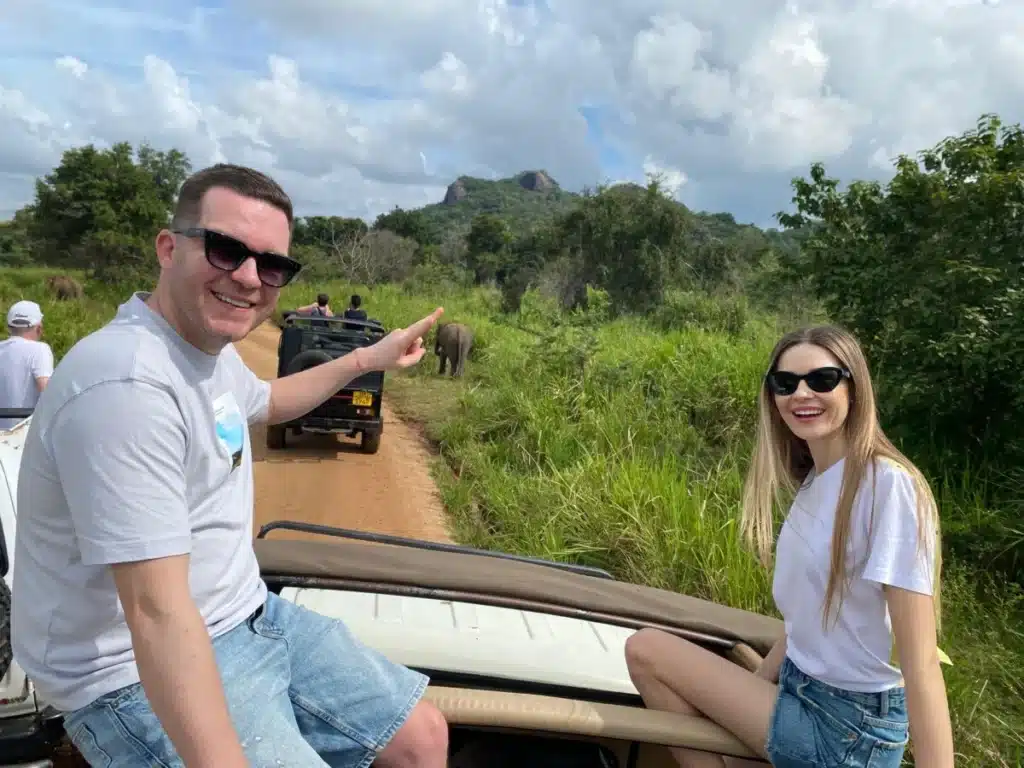
Udawalawe is the one that pairs with the Transit Home, which is 9 km from the park gate (OpenStreetMap). On our Safari Excursion page you choose Udawalawe or Yala. It says we collect you from your hotel early in the morning, that the jeep and its driver are private, and that transport from your location costs extra. The page calls Udawalawe the better option for seeing elephants in abundance. See it for the current price.
Getting to Pinnawala and the Transit Home
Distances and times are from the OpenStreetMap route planner. It assumes clear roads, so each time below is rounded up.
| From | To Pinnawala | To the Transit Home |
|---|---|---|
| Kandy | 40 km, usually 1 to 1.5 hours (OSM route) | 193 km, usually 4 to 5 hours (OSM route) |
| Colombo Fort | 87 km, usually 2 to 2.5 hours (OSM route) | 153 km, usually 3 to 4 hours (OSM route) |
| Colombo airport | 80 km, usually 2 to 2.5 hours (OSM route) | 189 km, usually 3.5 to 4.5 hours (OSM route) |
| Ella | 149 km, usually 3.5 to 4.5 hours (OSM route) | 99 km, usually 2.5 to 3 hours (OSM route) |
| Weligama, south coast | 212 km, usually 3.5 to 4.5 hours (OSM route) | 102 km, usually 2 to 2.5 hours (OSM route) |
Our other guides measure Ella to the Udawalawe park gate, 9 km nearer, and give the same 2.5 to 3 hours.
Neither Sri Lanka elephant orphanage fills a day, so both work as stops on a longer drive. Pinnawala suits the leg between the airport or Colombo and Kandy. From Kandy we’d give it a half day of its own and keep it out of a single day in Kandy. The Transit Home suits the run between Ella and the south coast, with a night at Udawalawe for a safari.
We wouldn’t try to see both in one day. Allow 3.5 to 4.5 hours for the drive between them (OpenStreetMap).
Questions about elephant orphanages in Sri Lanka
Is Pinnawala Elephant Orphanage ethical?
Published views differ. A December 2025 visitor management report on the tourism authority’s website credits it with relatively high welfare standards for a breeding facility. It also says bathing should ideally be abolished in its current form, or at least reduced (report on SLTDA’s site). ABTA and Born Free advise against bathing elephants (ABTA; Born Free). Watching the herd at the river isn’t a paid programme, but the bathing pass is.
Is there an ethical elephant sanctuary in Sri Lanka?
World Animal Protection’s 2020 report ranked the Udawalawe Elephant Transit Home highest of the 13 Sri Lankan venues it assessed (World Animal Protection). Its current list of elephant-friendly venues names none in Sri Lanka (World Animal Protection). Its latest survey, though, covered Thailand only (World Animal Protection). Several private venues describe themselves as ethical sanctuaries, so compare what each offers with the published guidance.
What time is feeding at the Udawalawe elephant orphanage?
We found no official visitor timetable on 5 October 2026. A hotel company’s guide dated 15 June 2026 gives 10.30am, 2.30pm and 6pm (Thema Collection). OpenStreetMap’s entry, with times added in August 2019, gives 9am, noon, 3pm and 6pm (OpenStreetMap). Confirm with your hotel before you set off.
Can you ride, touch or bathe elephants in Sri Lanka?
Pinnawala doesn’t offer rides (report on SLTDA’s site), but it sells 10-minute bathing passes and elephant walks (official page). The Transit Home is observation only, and 8 of the 13 venues assessed in 2019 and 2020 sold rides (World Animal Protection). ABTA’s guidelines class riding and bathing as unacceptable (ABTA).
Which is better with children, Pinnawala or Udawalawe?
The Transit Home has an observation platform (Ministry of Environment). Pinnawala’s page promises elephants “at close range”, and its rules say unauthorised contact with the animals may cause injury (official page). ABTA warns that touching, riding or feeding dangerous wild animals carries significant risks, because they are unpredictable (ABTA). Both stops are in our list of things to do with kids, and the family holiday planner has a route that includes Udawalawe.
Planning a route with elephants in it
We’re based in Weligama and arrange private trips with a car and a driver-guide. A river walk at 10am or a feed in the afternoon fixes the rest of that day’s driving, so decide early. Tell us your dates and which elephant orphanage or park you’d like to see, and we’ll plan the drive around it.
We read Pinnawala’s timetable and prices, the welfare and travel bodies’ pages and the route planner on 5 October 2026. We found no official visitor times or prices for the Transit Home, and Yala’s closure dates are particular to this year, so confirm each one before you go.